Getting a tattoo is permanent. It’s personal. And people want it to be perfect. That’s why the number one question we hear from clients walking through the door is some version of “how much is this going to cost me?” The honest answer is: it depends. Tattoo pricing isn’t like buying something off a shelf. Your final bill is shaped by the size of the piece, where it sits on your body, the artist’s experience, and a handful of other factors most people don’t think about until they’re already in the chair. Average tattoo prices by size and body placement can range from $50 for a tiny flash design to $5,000 or more for a full sleeve. That’s a massive spread. And if you don’t understand what drives those numbers, you’re walking in blind. This guide breaks down real pricing so you can budget smart, ask the right questions, and avoid sticker shock. Whether you’re a first-timer or planning your next big piece, knowing how the money works gives you power in the conversation.
Understanding Tattoo Pricing: Shop Minimums and Hourly Rates
Every tattoo shop has a pricing structure. Some charge by the hour. Some charge by the piece. Most use a combination of both. But before any of that matters, you need to understand two baseline numbers: the shop minimum and the hourly rate.
The shop minimum is the lowest price you’ll pay for any tattoo, no matter how small or simple. Hourly rates are what kick in once a piece requires real time in the chair. These two numbers set the floor and the ceiling for your quote.
The Importance of the Shop Minimum
A shop minimum exists because every tattoo requires the same setup. Fresh needles, new ink caps, sterilized equipment, disposable barriers: that prep happens whether you’re getting a tiny heart on your wrist or a full back piece. The artist also spends time on consultation, stencil placement, and breakdown after the session.
Most shops in 2026 set their minimum somewhere between $80 and $150. In major cities like New York, Los Angeles, or Miami, that number can climb to $150 or $200. A small town in the Midwest might sit closer to $60 or $80. Tattoo costs vary significantly by region and shop reputation, so always check before you assume.
Here’s the thing clients often miss: the shop minimum isn’t a rip-off. It’s the cost of doing business safely and professionally. Supplies aren’t free. Autoclave maintenance isn’t free. And the artist’s time has value even if the tattoo takes fifteen minutes.
How Artist Experience Levels Impact Cost
Not all tattoo artists charge the same rate. And they shouldn’t. An apprentice fresh off their training might charge $100 to $150 per hour. A mid-career artist with a solid portfolio and steady clientele usually falls between $150 and $250 per hour. Top-tier artists with national recognition or competition wins? You’re looking at $250 to $500 per hour, sometimes more.
Experience shows up in the work. A veteran artist can lay cleaner lines in fewer passes, which means less trauma to your skin and faster healing. They make fewer mistakes. They handle tricky placements with confidence. You’re not just paying for ink in skin: you’re paying for thousands of hours of practice and problem-solving.
A two-hour tattoo session can cost anywhere from $200 to $1,000 depending on who’s holding the machine. Don’t pick your artist based on price alone. Pick them based on their portfolio, then figure out the budget.
Average Costs by Tattoo Size
Size is the single biggest factor in tattoo pricing. A bigger piece means more time, more ink, and more sessions. Here’s a realistic breakdown of what you can expect to pay in 2026. For a quick estimate tailored to your piece, plug your size and placement into our free tattoo pricing calculator.
Small Tattoos and Flash Designs
Small tattoos are anything roughly the size of a credit card or smaller. Think initials, small symbols, minimalist line work, or flash designs pulled off the wall or an artist’s digital gallery. These pieces usually take 30 minutes to an hour.
You’ll typically pay between $50 and $250 for a small tattoo. Flash designs often sit at the lower end because the artwork is already done: no custom design time needed. A simple black outline of a butterfly or a small script phrase might land right at the shop minimum.
Flash galleries have become a big part of how shops move volume. Artists post pre-drawn designs online, clients pick what they want, and the booking process gets faster for everyone. Platforms like Apprentice let artists organize and publish flash collections so clients can browse and book in one step. That saves time on both sides.
Medium-Sized Custom Pieces
Medium tattoos cover an area roughly the size of your hand up to a half-sleeve or a large chest panel. These pieces require custom design work, multiple stencil revisions, and sessions that run two to five hours.
Expect to pay between $300 and $1,500 for a medium piece. The price depends heavily on detail. A bold traditional rose on your forearm costs less than a photorealistic portrait of the same size. Custom work means the artist is spending hours drawing before you even sit in the chair.
Most medium tattoos get quoted as flat-rate projects rather than hourly. The artist estimates total time, factors in design work, and gives you a number. If you want changes mid-session, that can push the price up.
Large Scale Work and Full Sleeves
Large tattoos: full sleeves, back pieces, full leg work: are serious commitments of time and money. A full sleeve typically costs between $2,000 and $6,000 depending on complexity, color, and the artist’s rate. A full back piece can run $3,000 to $10,000 or more.
These projects happen over multiple sessions, often spread across months. Each session might last four to eight hours. Your body needs time to heal between appointments, and the artist needs time to plan the next section.
Large-scale work is where hourly rates really matter. An artist charging $200 per hour on a 30-hour sleeve puts you at $6,000 before tip. An artist at $150 per hour for the same work lands at $4,500. That difference adds up fast.
Budget for the whole project, not just the first session. Ask your artist for a total estimate upfront so there are no surprises. For a deeper size-by-size breakdown, from micro pieces to full sleeves, see our tattoo cost by size guide.
How Body Placement Affects the Final Price
Where the tattoo goes on your body changes the price. Some areas are easy to tattoo. Others are painful, awkward, or technically demanding. That difficulty translates directly into cost. We dig deeper into this in our tattoo cost by body part guide.
Complexity of High-Sensitivity Areas
Ribs, feet, hands, neck, inner bicep, sternum, kneecaps: these spots hurt more and they’re harder to tattoo. The skin is thinner. It moves differently. It doesn’t hold ink as predictably.
An artist working on your ribs has to deal with your breathing, flinching, and the natural curve of the bone. That slows everything down. A piece that might take two hours on a forearm could take three hours on the ribs. More time means more money.
Hands and fingers are especially tricky. The skin on your fingers is rough and doesn’t retain fine detail well. Many artists charge a premium for hand tattoos or won’t do them at all on first-timers because the healing is unpredictable. Expect a 10% to 25% upcharge for high-sensitivity placements.
Easier Canvas Areas for Faster Sessions
The outer forearm, upper arm, calf, and thigh are the sweet spots. These areas have relatively flat surfaces, thicker skin, and good blood flow for healing. Artists can work faster and more comfortably here.
A tattoo on your outer forearm will almost always cost less than the same design on your stomach or spine. The session is shorter, the artist can maintain a comfortable position, and the ink goes in clean. If you’re on a budget, choosing an easier placement can shave real dollars off your quote.
That said, don’t pick placement based only on price. You’ll live with this tattoo for decades. Put it where it makes sense for your body and your vision.
Hidden Factors That Influence Your Quote
Size and placement are the obvious pricing drivers. But several less visible factors can push your total higher than expected.
Color vs. Black and Grey Work
Color tattoos cost more. Period. Color ink requires more passes, more precision, and more time to pack in evenly. Blending multiple colors: think a watercolor-style piece or a neotraditional design with heavy saturation: adds significant chair time.
A black and grey piece might take three hours. The same design in full color could take four or five. That extra time shows up on your bill. Color work also tends to need more touch-ups down the road, which may or may not be included in your original price.
Some artists specialize in color and charge accordingly. Others focus on black and grey and price their work differently. Ask about color upcharges during your consultation.
Design Complexity and Custom Details
A simple geometric pattern costs less than a hyperrealistic portrait. That should be obvious, but many clients underestimate how much detail affects price. Fine line work, dot shading, intricate mandala patterns, and photorealism all demand extreme precision and slow the artist down.
Custom design work also costs more than picking something off a flash sheet. Your artist might spend five to ten hours drawing a custom half-sleeve before the first appointment. That design time is baked into your quote, and it should be. You’re paying for original art.
Tattoo pricing reflects the full creative process, not just the time in the chair. Respect the design phase. It’s where great tattoos start.
Preparing for Your Appointment and Extra Costs
The sticker price of your tattoo isn’t the only expense. There are costs before, during, and after your session that catch people off guard.
Deposits and Booking Systems
Almost every reputable shop requires a deposit to book your appointment. This deposit is non-refundable and typically ranges from $50 to $200, depending on the size of the project. It gets applied to your final bill, but if you no-show or cancel last minute, the artist keeps it.
Deposits exist because no-shows are one of the ugliest problems in the industry. An artist who blocks out four hours for your appointment and you don’t show up just lost real income. That empty chair doesn’t pay rent.
Shops that collect deposits upfront and enforce clear booking rules see far fewer no-shows. Apprentice handles this automatically: clients pay their deposit when they book, and the artist’s schedule stays protected. It’s one of those unsexy operational things that makes a massive difference for the artist’s bottom line.
Tipping Your Artist and Aftercare Supplies
Tipping your tattoo artist is standard practice. The general guideline is 15% to 25% of the total cost. On a $500 tattoo, that’s $75 to $125 on top of your bill. Budget for it. Your artist just spent hours creating permanent art on your body. That deserves recognition.
Aftercare products are another cost to factor in. Your artist will recommend a healing routine, and the supplies: unscented lotion, specialized tattoo balm, sunscreen for healed tattoos: add up. Plan on spending $20 to $40 on aftercare products.
Some shops sell aftercare kits at the front counter. Others send aftercare instructions digitally after your appointment. Either way, don’t skip this step. Poor aftercare ruins good tattoos.
How to Get an Accurate Quote from Your Artist
The best way to avoid pricing surprises is to communicate clearly with your artist before anything else happens. Here’s how to get a quote you can trust.
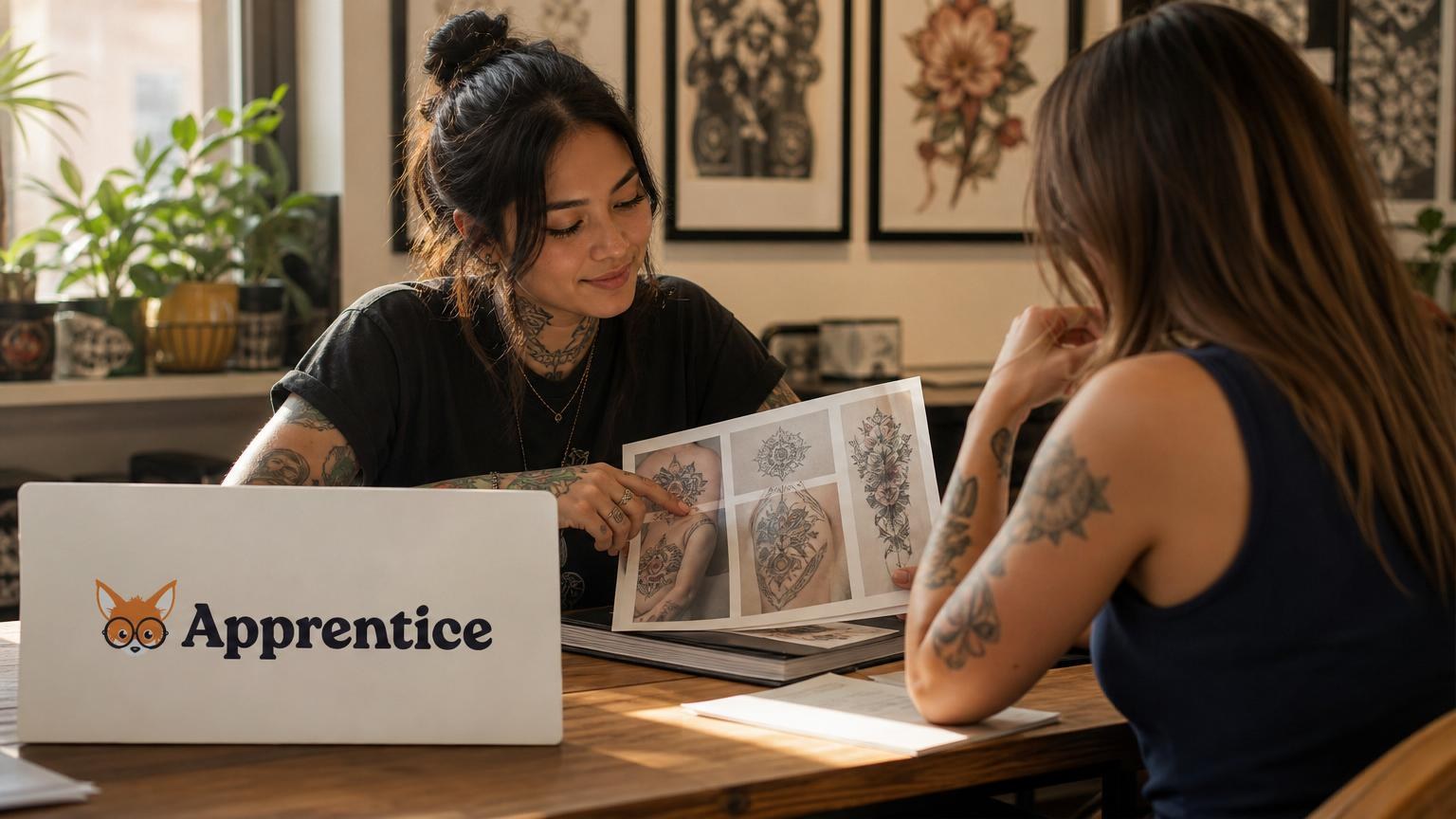
Come prepared with reference images. Show your artist what you want, where you want it, and how big you’re thinking. The more specific you are, the more accurate their estimate will be. Vague ideas get vague quotes.
Ask whether the quote includes design time, touch-ups, and multiple sessions. Some artists include one free touch-up within the first few months. Others charge for every visit. Get this in writing or confirmed in your booking thread so there’s no confusion later.
Don’t haggle. Tattoo pricing isn’t a flea market negotiation. If an artist quotes you $800, that number reflects their time, skill, materials, and overhead. Asking for a discount tells them you don’t value their work. If the price is outside your budget, be honest about it. A good artist will work with you to adjust the scope of the design rather than cut their rate.
Use your consultation to build trust. A solid artist-client relationship leads to better work. And if you’re an artist reading this, making the quote process easy for clients pays off in loyalty. Tools like Apprentice let you manage consultations, share design drafts, and keep everything tied to a single project thread: so nothing gets lost between the first message and the final session.
The bottom line: tattoos are an investment in yourself. They cost what they cost because they’re handmade, permanent, and deeply personal. Know the pricing factors, respect the craft, and budget honestly. You’ll walk out of the shop happy with both the art and the experience.
If you’re an artist looking to tighten up your booking and deposit process, Apprentice lets you get started in minutes. It’s free for 14 days: enough time to see how much smoother your shop can run.

Jason Howie
Founder & CEO
Jason Howie is the founder of Apprentice, passionate about empowering tattoo artists and shops with better tools to manage their business and serve their clients.