Getting your first small tattoo? Or maybe your fifth? Either way, the price tag can feel like a mystery. You’ve Googled “how much would a small tattoo cost” and gotten answers ranging from $50 to $300. That’s a huge spread. The truth is, pricing depends on a bunch of factors that most people don’t think about until they’re sitting in the chair. It’s permanent. It’s personal. People want it to be perfect. And perfect costs money. But it doesn’t have to cost a fortune. This guide breaks down every piece of the pricing puzzle so you walk into the shop confident, prepared, and not blindsided by the bill. Whether you’re a client doing your homework or an artist trying to explain your rates, this is the real talk on small tattoo pricing in 2026.
Understanding Small Tattoo Pricing Basics
Small tattoos are the bread and butter of most studios. They’re quick. They’re popular. And they’re often the first thing a new client books. But “small” is a relative term. A coin-sized symbol on your wrist and a detailed mini-portrait on your finger are both “small,” yet they’re wildly different jobs.
The price of a small tattoo isn’t just about ink and time. It covers the artist’s skill, the shop’s overhead, the cost of disposable supplies, and the years of practice behind every clean line. (Planning something bigger? Start with our guide to how tattoo prices scale with size.) A single needle costs pennies. The hand guiding it? That’s where the value lives.
The Shop Minimum: Why Size Isn’t Everything
Almost every tattoo shop has a minimum charge. In 2026, that minimum typically falls between $50 and $150 depending on the city and the studio’s reputation. This means even a tiny heart on your ankle will cost at least that much.
Why? Because the setup is the same regardless of size. The artist opens fresh needles, sets up ink caps, wraps the machine, preps the station, and sterilizes everything after. That process takes 20 to 30 minutes on its own. A five-minute tattoo still requires the same health and safety protocol as a five-hour session.
Think of the shop minimum like a base fare in a cab. You’re paying for the ride to start, not just the miles driven. And honestly, that minimum protects you. It means the artist isn’t cutting corners on hygiene to make a tiny tattoo “worth their time.”
Hourly Rates vs. Flat Fees
Artists price small tattoos in one of two ways: hourly or flat rate. Most small pieces fall under a flat fee because they take under an hour. But understanding both models helps you know what you’re paying for.
Hourly rates for experienced artists in 2026 range from $150 to $250 per hour in most U.S. markets. In major cities like New York or Los Angeles, that number climbs higher. For small tattoos, though, most artists quote a flat price based on the design’s complexity.
A flat fee is simpler for everyone. You know exactly what you’ll pay. The artist knows exactly what they’re committing to. There’s no awkward clock-watching. If your small tattoo takes 45 minutes, a flat rate of $120 to $180 is common. But if the design gets more complex mid-session, expect the price to adjust. Always confirm the pricing method before the needle touches skin.
Key Factors That Influence Your Final Quote
No two small tattoos cost the same. The price you pay is shaped by the design, the placement, and who’s holding the machine. Here’s how each factor moves the needle on your quote.
Design Complexity and Fine Line Details
A simple black outline of a star is a different job than a micro-realistic rose with shading. Complexity drives cost, even on small pieces. Fine line tattoos, which have exploded in popularity, require extreme precision. One shaky line is visible forever.
Fine line work often costs more per square inch than traditional bold-line tattoos because the margin for error is razor thin. Artists who specialize in this style charge a premium, and they should. The skill required is intense.
Custom lettering, tiny portraits, and geometric patterns also push the price up. If your “small” tattoo requires an hour of drawing before the session even starts, that design time gets factored in. A basic flash design might run you $80. A custom micro piece with fine detail? Expect $150 to $300 or more.
Body Placement and Skin Difficulty
Where you want the tattoo matters as much as what you want. Some body parts are just harder to tattoo. Fingers, ribs, feet, and the inner ear area are notoriously tricky. The skin is thinner, bonier, or more prone to blowouts.
Ribs and feet also hurt more, which means clients move more. That slows the artist down. A tattoo that would take 30 minutes on a forearm might take 50 on a ribcage. And time is money.
Some placements also affect longevity. Finger tattoos fade fast. Artists know they’ll likely see you again for a touch-up. That reality sometimes gets built into the initial price. Always ask your artist if placement will affect the quote. A good artist will be upfront about it.
Artist Experience and Studio Location
A first-year apprentice and a 15-year veteran don’t charge the same rates. Nor should they. Experience means cleaner lines, better color packing, and fewer touch-ups. You’re paying for consistency and confidence.
Studio location also plays a huge role. A shop in downtown Austin has different rent than one in rural Ohio. That overhead gets passed to you. In high-cost cities, small tattoos regularly start at $100 to $200 just to walk in the door. In smaller towns, you might find quality work starting around $60 to $80.
Don’t chase the cheapest price. A bad small tattoo is harder to fix than a bad large one because there’s less room to cover mistakes. Pay for skill. Your skin will thank you in ten years.
Saving Money with Flash Designs
If you want a small tattoo without a custom price tag, flash is your best friend. Flash designs are pre-drawn pieces ready to go. They save the artist design time, and those savings get passed to you.
Pre-Drawn Flash vs. Custom Artwork
Custom artwork means the artist creates something from scratch for you. That takes time: sometimes hours of drawing, revisions, and back-and-forth communication. All of that is billable, whether it shows up as a separate design fee or gets baked into the tattoo price.
Flash skips that entire process. The design already exists. The stencil is ready. The artist knows exactly how long it’ll take because they’ve likely done it before. That efficiency means flash tattoos often cost 20% to 40% less than comparable custom pieces.
But flash isn’t “lesser” work. Many artists pour serious creativity into their flash sheets. These are original designs they’re proud of. Choosing flash just means you’re picking from a curated menu instead of ordering off-menu.
Finding Deals Through Flash Galleries and Sale Badges
Smart shops use flash galleries to showcase available designs and move bookings faster. Some studios run flash sales, marking certain designs with sale badges to create urgency and fill open slots. It’s a win-win: clients get a deal, artists stay booked.
Platforms like Apprentice let artists organize and publish flash galleries online. Clients browse, pick a design, and book right from the gallery. Some shops even let clients join a flash-aware waitlist so they get notified when new designs drop. That kind of system keeps the pipeline full without the artist lifting a finger on admin work.
If you’re flexible on design and just want quality ink at a fair price, keep an eye on your favorite artists’ flash pages. Friday the 13th flash events, holiday specials, and shop anniversaries are prime times to score a small tattoo at a steep discount.
How to Book and Get an Accurate Estimate
Knowing the price range is one thing. Getting your actual quote is another. The booking process itself can make or break your experience, and your budget.
Using Online Booking Systems for Clear Pricing
The days of calling a shop and hoping someone picks up are fading. Most reputable studios in 2026 use online booking systems that show pricing upfront. You pick your design category, select a size, and see an estimate before you ever commit.
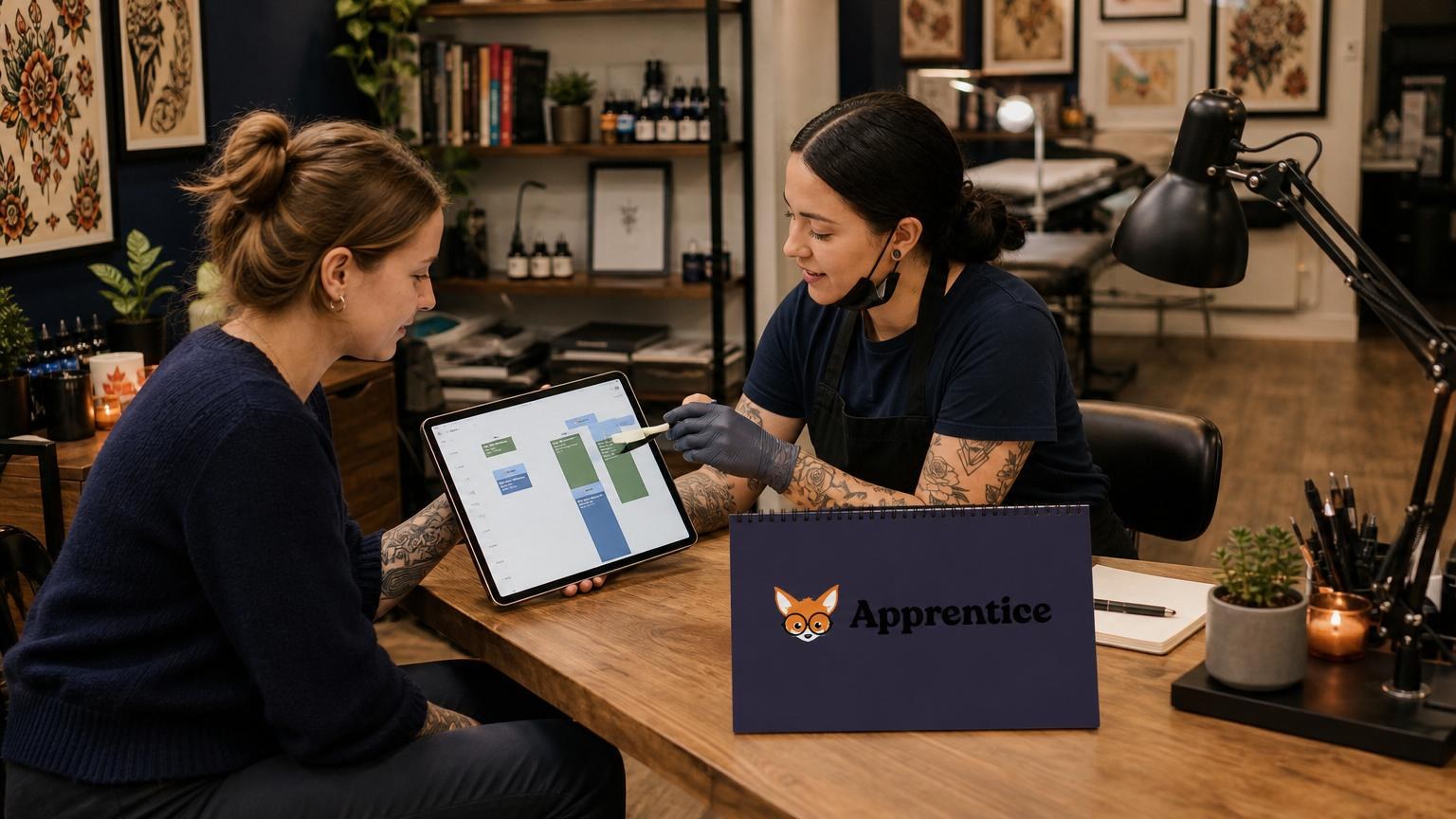
This transparency helps everyone. Clients don’t waste time on consultations for tattoos they can’t afford. Artists don’t spend 20 minutes on the phone quoting prices. A good booking system collects your deposit, confirms your appointment, and sends reminders automatically. Apprentice does exactly this: artists set up their booking rules once, and the system handles the rest. That means fewer no-shows and less time chasing down clients.
If a shop doesn’t offer online booking or clear pricing info, that’s not necessarily a red flag. But it does mean you’ll need to do more legwork to get a straight answer on cost.
The Value of Consultations and Messaging Your Artist
For custom small tattoos, a consultation is worth its weight in gold. This is where you discuss size, placement, style, and budget. A five-minute conversation can save you hundreds by aligning expectations early.
Many artists now handle consultations through direct messaging on their booking platform. You send reference images. They send back a rough concept or quote. It’s fast, documented, and less awkward than trying to describe what you want over the phone.
Messaging also creates a paper trail. If the artist quoted $150 and the final bill says $200, you’ve got the conversation to reference. That protects both sides. Tools like Apprentice centralize these artist-client conversations so nothing gets lost in a sea of DMs and texts.
Don’t skip the consultation to save time. It’s the single best way to avoid sticker shock on tattoo day.
Hidden Costs: Deposits, Tipping, and Aftercare
Your tattoo price isn’t the only number on the receipt. There are a few extra costs that catch first-timers off guard.
Deposits are standard. Most shops require $25 to $100 upfront to hold your appointment. This deposit usually gets applied to your final bill, so it’s not extra money: it’s a down payment. But if you no-show or cancel late, you lose it. That’s the point. Deposits protect artists from flaky clients who book and ghost.
Tipping is customary in the tattoo industry. The standard is 15% to 20% of the tattoo price. On a $150 small tattoo, that’s $22 to $30. It’s not mandatory, but it’s expected. Your artist just spent their skill, time, and supplies on your body. Tip them.
Aftercare products are another line item. Some shops include a small tube of healing ointment. Others sell aftercare kits for $10 to $20. You can also buy your own from a pharmacy. Either way, proper aftercare isn’t optional if you want the tattoo to heal well and look sharp long-term.
Add it all up: a $150 tattoo might actually cost you $180 to $200 after the tip and aftercare. Budget accordingly. No one likes doing math at the counter with a fresh bandage on their arm. Our free tattoo pricing calculator can run the numbers before you ever book.
Walk-ins and Waitlists for Small Tattoos
Not every tattoo needs a two-week booking lead time. Small pieces are perfect for walk-ins. You stroll in, pick a flash design, and get inked the same day. It’s spontaneous, it’s fun, and it fills gaps in an artist’s schedule.
But walk-in availability is unpredictable. Busy shops might have a two-hour wait on a Saturday afternoon. That’s where digital waitlists come in. Instead of sitting in the lobby hoping your name gets called, modern shops use real-time waitlist systems. You add your name, get an SMS notification when it’s your turn, and spend the wait time grabbing coffee instead of staring at the wall.
Some studios even let walk-in clients browse flash galleries and pre-select their design while they wait. That speeds up the whole process. By the time you’re in the chair, the stencil is ready and the artist knows exactly what they’re doing.
Here’s the reality check, though. Walk-in pricing can sometimes be slightly higher than pre-booked rates. Why? Because the artist didn’t plan for your session. They’re squeezing you in between scheduled clients. That flexibility has a small premium. It’s usually $10 to $25 more, not a dealbreaker, but worth knowing.
If you’re set on a specific artist, book ahead. If you’re flexible and just want solid work at a fair price, walk-ins are a great option. Either way, a small tattoo in 2026 is one of the most accessible ways to get quality art on your skin.
The cost of a small tattoo comes down to a handful of honest variables: shop minimum, design complexity, placement, artist experience, and location. Most people will pay between $50 and $250 for a small piece, with $100 to $180 being the sweet spot for quality work in a reputable studio. Factor in a tip, aftercare, and maybe a deposit, and you’re looking at $130 to $230 all-in.
Don’t let price be the only thing guiding your decision. A cheap tattoo that looks bad costs you twice: once for the ink, and again for the cover-up. Pay fairly, tip generously, and choose an artist whose work speaks for itself.
If you’re an artist looking to simplify your pricing and booking, Apprentice lets you get started with a free 14-day trial. Set up your flash galleries, collect deposits, and start booking clients in five minutes flat. Spend your time tattooing, not texting.

Jason Howie
Founder & CEO
Jason Howie is the founder of Apprentice, passionate about empowering tattoo artists and shops with better tools to manage their business and serve their clients.