No-shows are the silent profit killer in every tattoo shop. You blocked out three hours for a back piece. You turned away two walk-ins. You prepped the stencil. And then: nothing. No call, no text, just an empty chair and lost income. The tattoo industry is projected to reach $4.83 billion by 2032, and demand keeps climbing. But growth means nothing if your chair sits empty because clients ghost you. Reducing tattoo no-shows isn’t about being strict or mean. It’s about respecting your time, your craft, and your business. The strategies that actually work aren’t complicated. They just require the right systems and a willingness to stop treating bookings like casual promises. Here’s what we’ve learned from working with hundreds of artists and shops through Apprentice: the fix is mostly about removing friction, building commitment, and automating the stuff you shouldn’t be doing manually anyway.
Why No-Shows Happen and How to Stop the Cycle
Let’s be honest about why clients bail. It’s rarely malicious. People forget. Life gets chaotic. They get nervous about the pain. Or they simply booked on impulse and cooled off. Some clients treat a tattoo appointment like a dinner reservation: easy to make, easy to break.
But here’s the ugly truth nobody talks about. A lot of no-shows are your fault. Not personally, but systemically. If your booking process is a DM conversation with no deposit, no confirmation, and no reminder, you’re basically inviting people to flake. No skin in the game means no commitment.
The financial hit is real. A single no-show on a $500 session doesn’t just cost you $500. It costs you the walk-in you turned away, the supplies you prepped, and the momentum of your day. Tattoo shops that don’t enforce clear no-show policies often report losing thousands of dollars monthly to empty chairs.
Breaking the cycle starts with understanding the pattern. Most no-shows happen because of three gaps: no financial commitment, no communication, and no easy way to reschedule. Fix those three things and your no-show rate drops dramatically. The rest of this piece covers exactly how to do that, strategy by strategy.
Use Automated Reminders to Keep Your Calendar Full
Manual reminders don’t scale. You’re not a receptionist. You’re an artist. And chasing clients through Instagram DMs the night before their appointment is a waste of your creative energy. Automated reminders are the single easiest way to cut no-shows, and they take about five minutes to set up.
The data backs this up. Shops that send automated reminders see significantly fewer missed appointments compared to those relying on memory or manual texts. A well-timed reminder 48 hours before the session, followed by a same-day nudge, gives clients enough time to confirm or reschedule without leaving you stranded.
But reminders aren’t just about attendance. They’re also a chance to reinforce prep instructions. Eat before your session. Stay hydrated. Don’t drink the night before. These small details improve the client experience and reduce day-of cancellations caused by poor preparation.
Setting Up SMS Alerts to Reduce Babysitting
Email reminders get buried. Push notifications get swiped. SMS still wins. Text messages have open rates above 90%, and most get read within three minutes. That’s why SMS alerts are the backbone of any good reminder system.
With Apprentice, you can set automated SMS reminders at whatever intervals make sense for your workflow. Most artists use a 48-hour and a 2-hour window. The messages go out without you lifting a finger. No more “babysitting” your calendar or sending awkward follow-up DMs.
The key is keeping the tone friendly but clear. Something like: “Hey, just a reminder about your session tomorrow at 2pm. Reply YES to confirm or let us know if you need to reschedule.” Simple. Direct. Professional.
Sending Deposit Nudges for Unpaid Bookings
Here’s a scenario every artist knows. A client books, you send the deposit link, and they just never pay. Now you’ve got a slot held by someone who might not show. Deposit nudges fix this by automatically following up with unpaid clients.
These automated nudges remind clients to complete their deposit before a set deadline. If they don’t pay, the booking expires and the slot opens back up. No awkward conversations. No chasing. The system handles it.
This alone can recover a surprising number of bookings that would otherwise become ghost appointments. Clients who pay are clients who show up.
Combine Consent and Deposits into One Flow
Most shops still handle consent forms, deposits, and prep info as separate steps. The client books through DMs. You send a deposit link. Then on the day, they fill out paperwork at the front desk. Every extra step is a chance for them to drop off or forget something.
Combining these steps into a single pre-appointment flow does two things. It reduces friction for the client. And it guarantees they arrive ready to sit. No scrambling for IDs. No unsigned waivers. No unpaid balances.
Think of it like this: every hoop you make a client jump through before their session is a potential exit point. Fewer hoops, fewer ghosts.
Using Unified Prep Links to Get Clients Ready
A unified prep link bundles everything into one place. Consent form, deposit payment, reference photo uploads, aftercare acknowledgment - all in a single mobile-friendly flow. The client clicks one link and handles everything in five minutes.
Apprentice’s unified prep link is built exactly for this. You send it once after booking. The client completes consent, pays their deposit, and uploads any reference images. By the time they walk through your door, they’re prepped and committed. No paperwork shuffle. No “I forgot my ID” excuses.
This approach also creates a digital paper trail. Consent signatures are timestamped with IP addresses. Deposits are logged automatically. You’re covered legally and financially before the needle ever touches skin.
Expiring Booking Links to Prevent Surprise Gaps
Booking links that live forever are a liability. Someone clicks a link you sent three months ago and books a slot for next Tuesday. You had no idea. Now your schedule is thrown off by a surprise appointment from a client you don’t even remember.
Expiring booking links solve this cleanly. You set a time window, maybe 48 or 72 hours, and the link dies after that. If the client doesn’t book within that window, they need to request a new one. This keeps your calendar accurate and prevents zombie bookings from cluttering your schedule.
It’s a small detail that makes a big difference in how tightly you control your time.
Empower Clients with a Self-Service Appointment Hub
Here’s a reality check. A huge chunk of no-shows aren’t true no-shows. They’re clients who wanted to reschedule but couldn’t figure out how. So they just didn’t show up. If the only way to change an appointment is to DM you and wait for a reply, you’re creating a system that punishes busy people.
A self-service appointment hub puts the power in the client’s hands. They can view their appointment details, check their deposit status, and submit reschedule requests - all without messaging you. This reduces your front desk load and gives clients a professional experience that builds trust.
The result? Fewer ghosted appointments. More rescheduled ones. And a lot less time spent in your DMs playing calendar tetris.
Managing Reschedule Requests Without the DM Back-and-Forth
Reschedule requests through DMs are a nightmare. The client messages at 11pm. You see it the next morning. You offer three times. They can’t do any of them. Back and forth for two days. By then, neither of you cares anymore.
A proper reschedule system lets clients submit a request through their appointment hub. You get a notification, review it, and approve or suggest alternatives. The whole exchange happens in a structured format, not buried in a thread between meme replies and reference photos.
This doesn’t mean clients can reschedule freely without consequences. You still set the rules. Maybe they can reschedule once without penalty but lose their deposit on a second change. The point is giving them a clear path that doesn’t require a conversation.
Build Commitment Through Better Communication
No-shows often stem from a disconnect between booking and session day. The client books, and then hears nothing for two weeks. No design updates. No check-ins. By the time the appointment arrives, they’ve mentally moved on.
Consistent communication between booking and session builds emotional investment. When a client sees their design taking shape, exchanges reference ideas with you, and feels involved in the creative process, they’re far less likely to bail. They’re invested. It’s personal. It’s real.
This doesn’t mean you need to text every client daily. It means having systems that keep the conversation alive without eating your time.
Centralizing Design References and Reference Chats
Scattered reference images are a problem. Some are in your DMs. Some in email. Some the client texted to the shop phone. When references live everywhere, things get lost. And lost references lead to miscommunication, which leads to cold feet, which leads to no-shows.
A centralized project hub ties every reference image, design draft, and conversation to a specific tattoo project. The client uploads their inspiration in one place. You share drafts in the same thread. Everything stays organized and accessible.
This approach has a hidden benefit for reducing no-shows. When clients actively participate in the design process through a dedicated channel, they feel ownership over the project. That emotional connection is stronger than any deposit. Tattoo artists who maintain strong client communication throughout the booking period report noticeably lower cancellation rates.
Automating Aftercare Templates for Better Follow-Up
Aftercare might seem unrelated to no-shows. But think bigger. Aftercare is about the next booking. A client who heals well, feels cared for, and has a great experience is a client who comes back and actually shows up.
Automated aftercare templates send care instructions right after the session ends. No forgetting. No scribbled notes on paper towels. The client gets clear, professional guidance on their phone.
This also builds your reputation as someone who runs a tight operation. Word gets around. Clients who respect your process are the ones who respect your time. And they refer friends who do the same.
Turn Last-Minute Cancellations into Revenue with Digital Waitlists
Cancellations will always happen. Cars break down. Kids get sick. Emergencies are real. The question isn’t how to prevent every cancellation. It’s how to fill that slot before you lose the revenue.
A digital waitlist turns cancellations from a total loss into a minor inconvenience. When a client cancels, your waitlist gets notified instantly. The first person to claim the slot gets it. Your chair stays full. Your income stays consistent.
This is especially powerful for popular artists with long booking queues. You already have people waiting. You just need a system to connect them to open slots fast.
Converting Flash-Aware Waitlists into Immediate Bookings
Standard waitlists tell people a slot opened up. Flash-aware waitlists go further. They let waitlisted clients browse your available flash designs while they wait, so when a slot opens, they already know what they want.
This dramatically speeds up the conversion from “interested” to “booked.” The client isn’t starting from scratch. They’ve already picked a design, seen the pricing, and mentally committed. All they need is the green light.
Tattoo shops with strong online booking and flash gallery systems convert more waitlist interest into actual revenue. The combination of urgency and pre-selected designs creates a booking that happens in minutes, not days.
Running a Better Shop with Real-Time Scheduling Tools
No-shows aren’t just an artist problem. They’re a shop problem. When one artist gets ghosted, it affects the energy of the whole studio. Walk-ins see an empty chair and wonder if the shop is slow. Other artists feel the tension. The front desk scrambles.
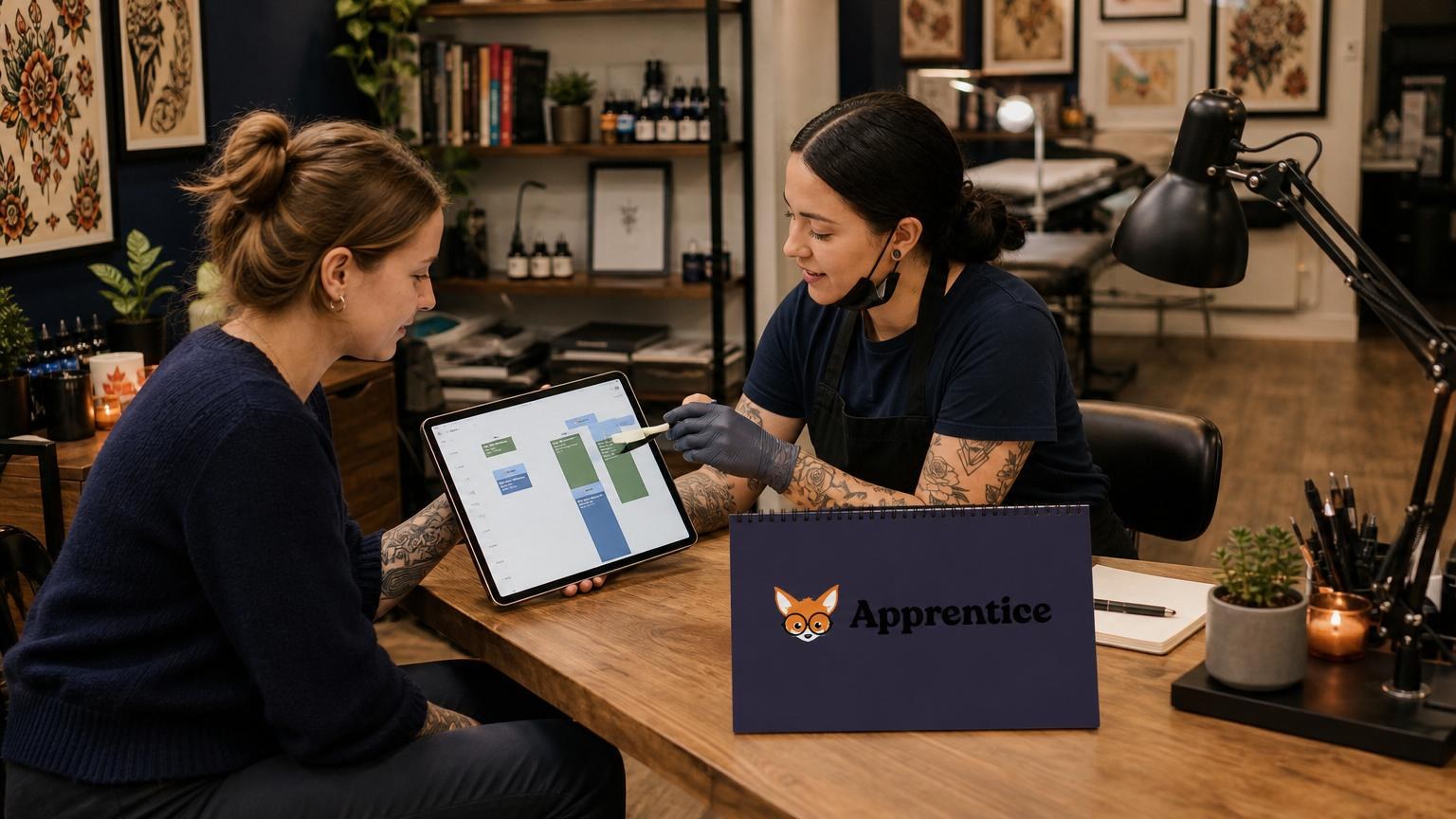
Real-time scheduling tools give shop owners a bird’s-eye view of every artist’s calendar, every open slot, and every pending booking. You can spot gaps before they happen. You can redirect walk-ins to artists with sudden openings. You can track which clients are repeat offenders and adjust your policies accordingly.
Shops that miss calls lose clients. Roughly 62% of phone calls to small businesses go unanswered, and many of those callers never try again. A real-time scheduling dashboard paired with online booking means you’re capturing clients even when nobody picks up the phone.
The best shops in 2026 aren’t just great at tattooing. They’re great at running a business. They track their no-show rates. They enforce deposit policies. They use automation for the unsexy stuff so their artists can focus on the work that matters. That’s not selling out. That’s protecting the craft.
Tattoos are permanent. They’re personal. People want them to be perfect. Your booking system should reflect that same level of care and intention. If you’re still running your schedule through DMs and hoping clients remember their appointments, you’re leaving money and sanity on the table.
The seven strategies here aren’t theory. They’re battle-tested by real shops dealing with real no-shows. Automated reminders, deposits, unified prep flows, self-service hubs, better communication, digital waitlists, and real-time scheduling tools - together, they form a system that respects your time as much as you respect the art.
If you’re ready to stop chasing clients and start filling chairs, Apprentice gives you every tool mentioned in this article. You can get started with a free 14-day trial and be booking clients within five minutes. Your art deserves a business that runs as well as you tattoo.
FAQ
How do I stop clients from no-showing their tattoo appointments?
Close the three gaps that cause most no-shows: no financial commitment, no communication, and no easy way to reschedule. Take a deposit up front, send automated reminders, and give clients a self-service way to move their appointment. Do those three things and your no-show rate drops fast.
Why do tattoo clients ghost their appointments?
Usually it isn’t malicious. People forget, get nervous about the pain, or booked on impulse and cooled off. A lot of the time the booking process is the problem. If there’s no deposit, no confirmation, and no reminder, clients have nothing holding them to the date.
When should I send tattoo appointment reminders?
Most artists use a 48-hour reminder and a same-day nudge a couple of hours before the session. The first one gives clients time to confirm or reschedule without stranding you. The second catches the people who forgot. Use text, since SMS gets opened far more than email.
Should I let clients reschedule their tattoo appointment themselves?
Give them a clear path, yes. A lot of no-shows are people who wanted to move their appointment and couldn’t figure out how, so they just didn’t turn up. Let them submit a reschedule request from their own appointment page. You still approve it and you still set the rules.
How do I fill a slot when someone cancels last minute?
Use a digital waitlist. When a client cancels, everyone on the list gets notified and the first person to claim the slot takes it. If your waitlist also shows your available flash, people already know what they want, so the rebooking happens in minutes instead of days.

Jason Howie
Founder & CEO
Jason Howie is the founder of Apprentice, passionate about empowering tattoo artists and shops with better tools to manage their business and serve their clients.