A tattoo sleeve is one of the biggest commitments you’ll ever make in a chair. It’s permanent. It’s personal. And it’s expensive. So the question of how much a tattoo sleeve costs isn’t just casual curiosity - it’s essential homework before you book your first session. Prices swing wildly based on where you live, who you hire, what you want, and how long it takes. A simple black-and-grey half sleeve and a full-color photorealistic arm piece live in completely different price universes. We’re going to break down the real numbers, the hidden variables, and the smart ways to plan your budget so you don’t get blindsided halfway through a project. Whether you’re a client doing research or an artist helping a client set expectations, this guide is built for you.
What Goes Into the Price of a Tattoo Sleeve?
Sleeve pricing isn’t random. It’s built on a stack of real costs: the artist’s time, their skill level, material expenses, shop overhead, and the sheer complexity of covering an entire limb with custom artwork. Every hour in that chair costs money because every hour represents years of training, thousands of dollars in equipment, and a shop that has to keep its lights on.
Most clients underestimate how many hours a sleeve actually takes. A full arm sleeve can run anywhere from 15 to 80+ hours depending on the design. That’s not a typo. A clean traditional sleeve with bold lines and flat color sits at the lower end. A full-color realism piece with portraits and background work? You’re looking at the upper range, easily.
The cost of supplies adds up too. Ink, needles, barriers, gloves, stencil materials - none of it is cheap, and none of it is reusable. Artists aren’t just selling their talent. They’re covering consumables every single session.
The Difference Between Full, Half, and Quarter Sleeves
A full sleeve covers your entire arm, wrist to shoulder. A half sleeve typically runs from the elbow to the shoulder or from the wrist to the elbow. A quarter sleeve covers roughly the shoulder cap down to mid-bicep.
The size difference matters because it directly dictates hours in the chair. A quarter sleeve might take 5 to 10 hours total. A half sleeve usually lands between 8 and 20 hours. A full sleeve? That’s where you’re committing to 15 hours at the absolute minimum, and often much more.
Average pricing for a full arm sleeve falls between $2,000 and $10,000 in the U.S. as of 2026. Half sleeves typically range from $1,000 to $4,000. Quarter sleeves can start around $500 and climb to $2,000. These are broad ranges because so many other factors push the number up or down. To see how sleeves stack up against other pieces, check our tattoo cost by size breakdown.
Hourly Rates vs. Flat Session Fees
Artists price their work in two main ways. Some charge by the hour. Others charge a flat rate per session, regardless of how long the session runs.
Hourly rates for experienced artists in 2026 typically range from $100 to $300 per hour, with top-tier artists in major cities charging $400 or more. If your sleeve takes 30 hours at $200/hour, you’re looking at $6,000 before tip.
Flat session fees work differently. An artist might charge $800 to $1,500 for a full-day session (usually 5 to 8 hours of tattooing). This can sometimes save you money compared to hourly, but it depends on the artist’s pace and your pain tolerance. Some clients tap out after four hours. That’s not a failure - it’s reality. But it means your “full day” session might only cover half the planned work.
Ask your artist which model they use before you commit. And get it in writing. Surprises mid-project are bad for everyone.
Average Cost Estimates by Sleeve Type
Hard numbers help. Vague ranges don’t. So here’s what real sleeve projects tend to cost in 2026, broken down by type.
Keep in mind that these estimates assume a mid-to-upper-tier artist in a reputable shop. Bargain-hunting for tattoo work is a bad strategy. You’ll wear this art for the rest of your life.
Full Arm Sleeves: Time and Money
A full arm sleeve is the flagship project. It’s the most visible, the most time-consuming, and the most expensive.
For black-and-grey work with moderate detail, expect to pay $3,000 to $6,000 total. This assumes 15 to 25 hours of work with an artist charging $150 to $250/hour. Traditional American or Japanese styles often fall in this range because the designs use bold lines and limited shading passes.
Color realism or hyper-detailed illustrative work jumps the price significantly. These sleeves often require 30 to 50+ hours. At $200 to $300/hour, you’re looking at $6,000 to $15,000 or more. Some collectors spend $20,000+ on a single sleeve from a highly sought-after artist.
The tattoo industry in the U.S. has grown to over $3.6 billion in recent years. Demand for large-scale custom work is a big part of that growth. Artists who specialize in sleeves can book months or even years in advance.
Leg Sleeves: Why Scale Matters
Leg sleeves cost more than arm sleeves. Full stop. Your thigh alone has more surface area than your entire upper arm. A full leg sleeve - ankle to hip - is a massive canvas.
Expect a full leg sleeve to run 20% to 40% more than a comparable arm sleeve. If a full-color arm sleeve costs $8,000, a similar leg sleeve might land between $9,500 and $11,000. The extra cost comes from additional hours, more ink, and the awkward body positioning that can slow an artist down.
Calf-only or thigh-only pieces function like half sleeves in terms of pricing. A detailed thigh piece might run $2,000 to $5,000 depending on coverage and complexity.
Leg sleeves also tend to hurt more in certain areas - the knee, the shin, the inner thigh. Pain tolerance affects session length. Shorter sessions mean more appointments, which can extend the timeline and sometimes the total cost if the artist charges setup fees per visit.
Factors That Can Change Your Final Bill
Two people can walk into the same shop, sit with the same artist, and walk out with wildly different bills. The design itself is only part of the equation.
Complexity, Color, and Style Choices
A sleeve built from simple geometric patterns or bold traditional flash takes far less time than a photorealistic portrait sleeve. Time is money. The more detail, the more passes. The more passes, the more hours.
Color work generally costs more than black-and-grey. Color requires more ink changes, more layering, and often more touch-up sessions. A full-color sleeve might need an extra 5 to 10 hours compared to the same design in black-and-grey.
Style matters too. Watercolor tattoos require a specific skill set. Dotwork takes extreme patience. Blackout sleeves use a lot of ink but move faster. Each style has its own time profile, and that profile drives cost.
Custom designs cost more than flash or pre-drawn pieces. If your artist is spending 10 to 20 hours drawing your sleeve before they even pick up a machine, that design time is part of your bill - either built into the session rate or charged separately.
Artist Experience and Shop Location
An apprentice with two years of experience and a veteran with fifteen years aren’t going to charge the same rate. Nor should they. Experience, portfolio quality, and demand all factor into an artist’s pricing.
Artists in major metros like New York, Los Angeles, or Miami charge significantly higher hourly rates than artists in smaller cities or rural areas. A $150/hour rate in Austin might be $300/hour in Manhattan for comparable work. Shop rent, cost of living, and local demand all push prices up.
Guest spots and convention work can also carry premium pricing. If an artist is traveling to a shop for a limited run, they’ll often charge more to cover travel expenses and the exclusivity of limited availability.
Don’t chase the cheapest rate. Chase the right artist for your style. A $150/hour artist who nails your vision is a better investment than a $100/hour artist whose portfolio doesn’t match what you want.
Managing Your Budget and Booking Your Sessions
A sleeve is a financial commitment that stretches over months or even years. Smart budgeting isn’t optional - it’s how you actually finish the project instead of walking around with a half-done arm for three years. A good starting point is our free tattoo pricing calculator, which estimates session costs based on size, complexity, and hourly rate.
Using Flash Designs to Save Time
Flash isn’t just for walk-ins. Incorporating flash elements into a sleeve can dramatically cut down design time and, by extension, cost.
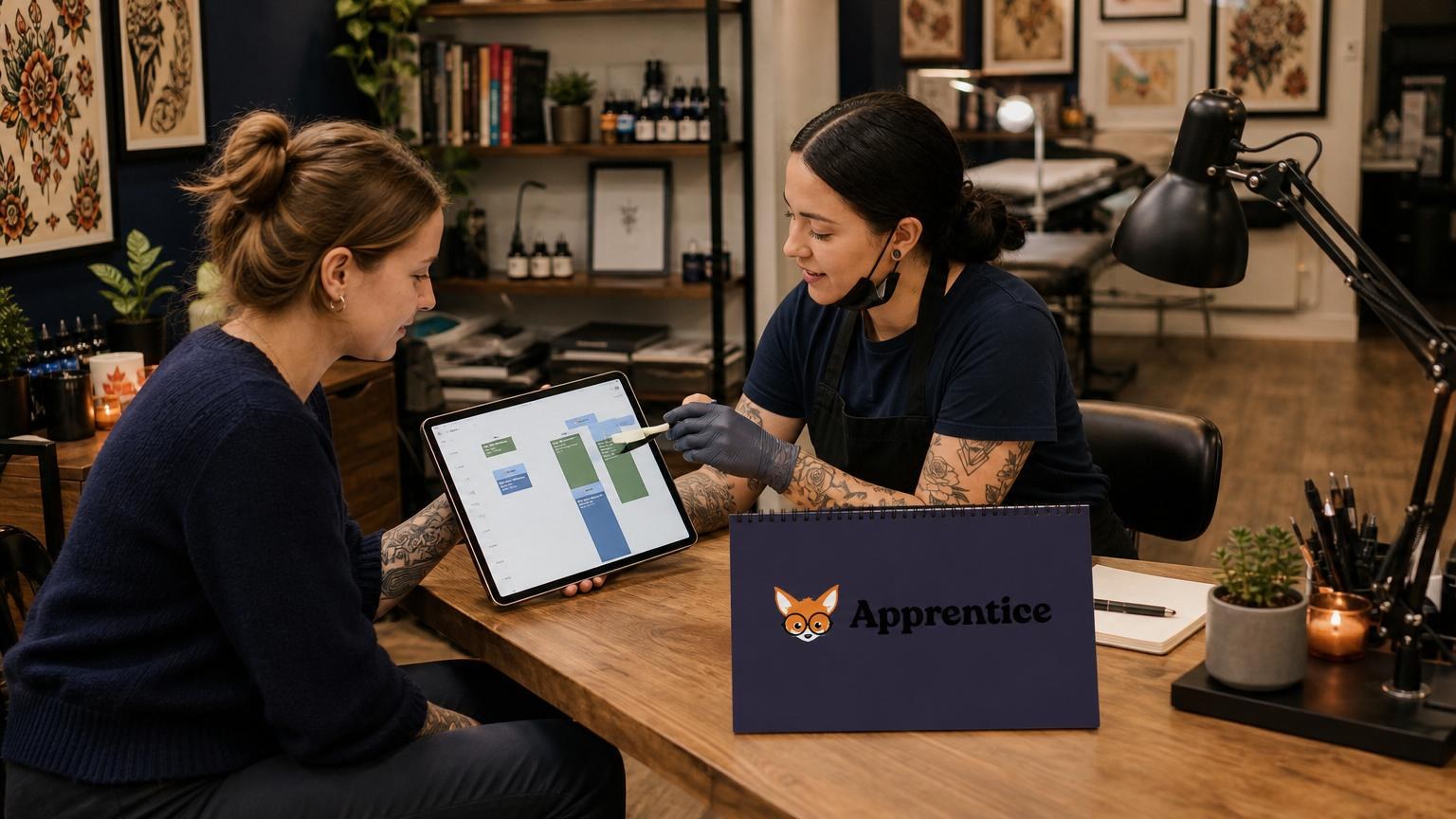
Many artists maintain flash galleries where clients can browse pre-drawn designs. Some shops use tools like Apprentice to organize and publish flash collections online, letting clients pick pieces before they even walk through the door. This speeds up the consultation process and eliminates hours of custom drawing time.
A sleeve built around flash pieces with custom connecting elements (background, filler, transitions) can cost 30% to 50% less than a fully custom sleeve. You’re still getting original art. You’re just starting from a foundation that already exists.
This approach works especially well for traditional, neo-traditional, and Japanese styles where individual motifs (roses, daggers, koi, dragons) can be arranged into a cohesive sleeve composition.
Planning Payments Across Multiple Sittings
Nobody drops $8,000 in one afternoon. Sleeves are built session by session, and most artists expect payment per session.
A typical payment structure looks like this:
- A deposit (usually $100 to $300) to book your first session
- Payment at the end of each session for the work completed that day
- A final session that includes any touch-up work, sometimes at a reduced rate
Deposits are non-negotiable. They protect the artist’s time and income. If a client no-shows on a full-day session, that’s $800 to $1,500 in lost revenue. Tools like Apprentice help artists collect deposits automatically at booking, which reduces no-shows and keeps the project on track for both sides.
Space your sessions 3 to 6 weeks apart. This gives your skin time to heal and gives your wallet time to recover. A 30-hour sleeve at one session per month takes about 6 to 10 months to complete. That’s a realistic timeline.
Build a dedicated savings line for your sleeve. Even $200 a month adds up fast. By the time your next session rolls around, you’ve got the cash ready without stress.
What to Ask Your Artist Before You Start
Walking into a sleeve consultation without questions is like signing a lease without reading it. You need information, and a good artist will respect you for asking.
Here’s what to cover:
- What’s your hourly rate, or do you charge per session?
- How many hours do you estimate for the full project?
- What’s your deposit policy, and is it applied to the first session?
- Do you charge separately for design and drawing time?
- How far out are you booked, and how do I secure my next session?
- What’s your touch-up policy after the sleeve is finished?
- Can I see healed photos of similar work you’ve done?
Healed photos are critical. Fresh tattoos look incredible under studio lighting. Healed tattoos tell the real story. If an artist can’t show you healed work, that’s a red flag.
Ask about their cancellation and rescheduling policy too. Life happens. But some shops charge fees for late cancellations, and you should know that upfront. Many artists now use booking platforms that automate these policies, sending reminders and enforcing deposit rules so there’s no awkwardness between you and your artist.
Don’t be afraid to ask about payment plans or session spacing. A good artist wants you to finish the project. They’ll work with you on timing and budget if you’re upfront about your situation.
The cost of a tattoo sleeve is real money, and it should be. You’re paying for hundreds of hours of combined experience, custom artwork designed for your body, and a piece of art that lasts a lifetime. Respect the craft, plan your budget, and pick the right artist. That’s the formula.
If you’re an artist looking to make the booking and deposit side of sleeve projects easier, get started with Apprentice free for 14 days. It handles the business side so you can focus on the art.

Jason Howie
Founder & CEO
Jason Howie is the founder of Apprentice, passionate about empowering tattoo artists and shops with better tools to manage their business and serve their clients.