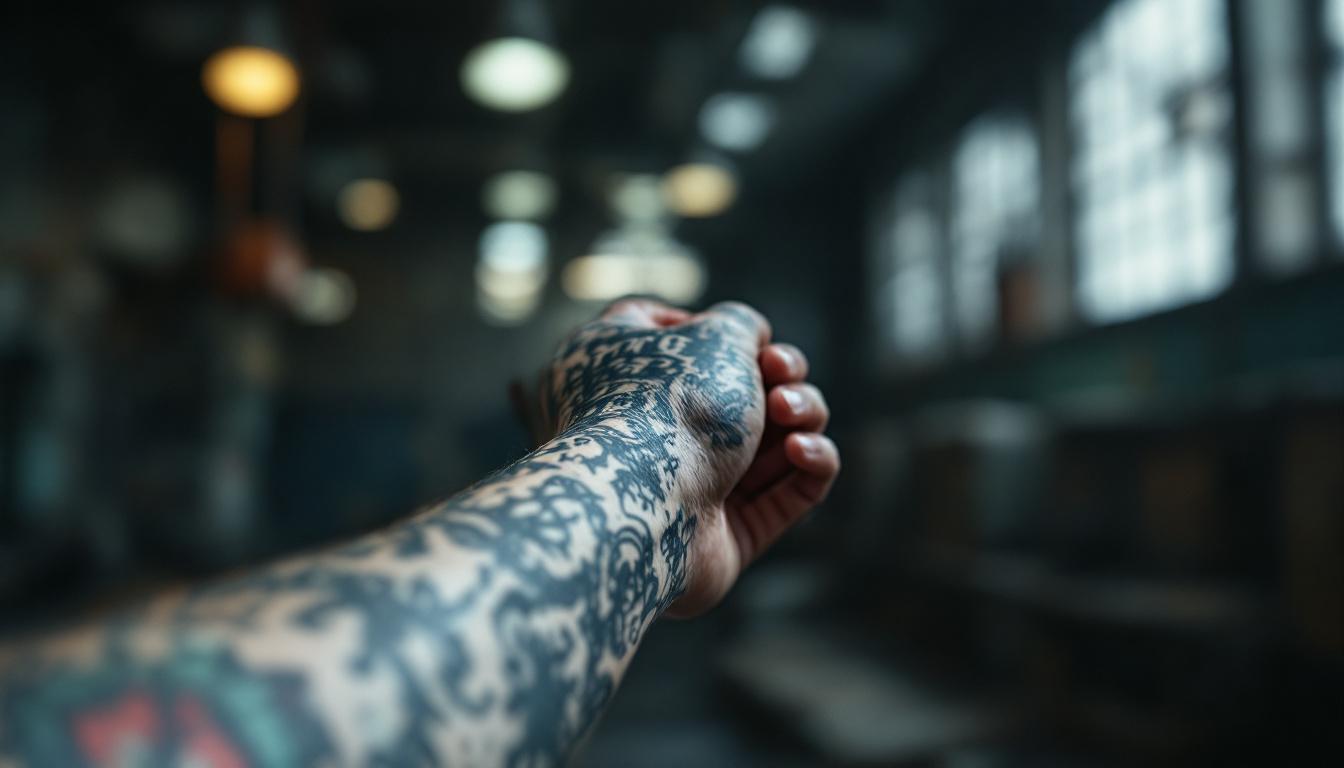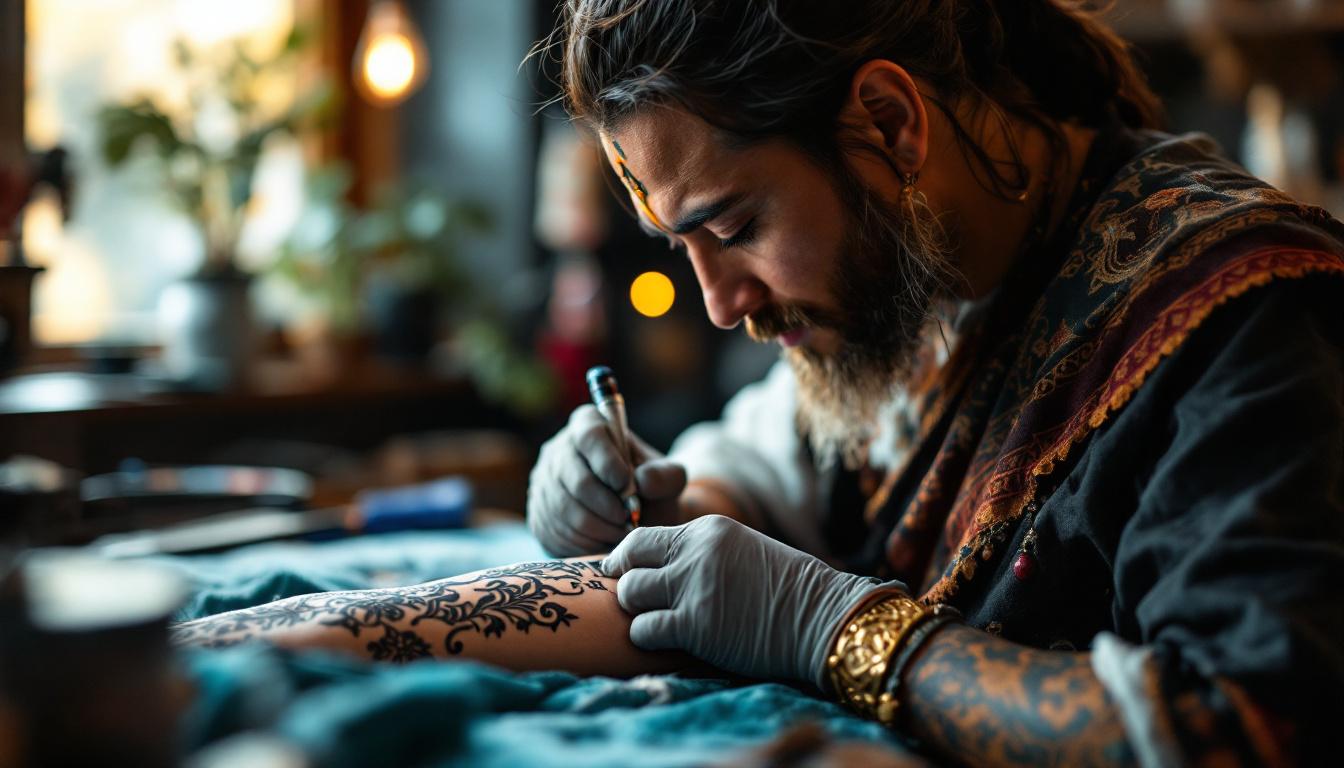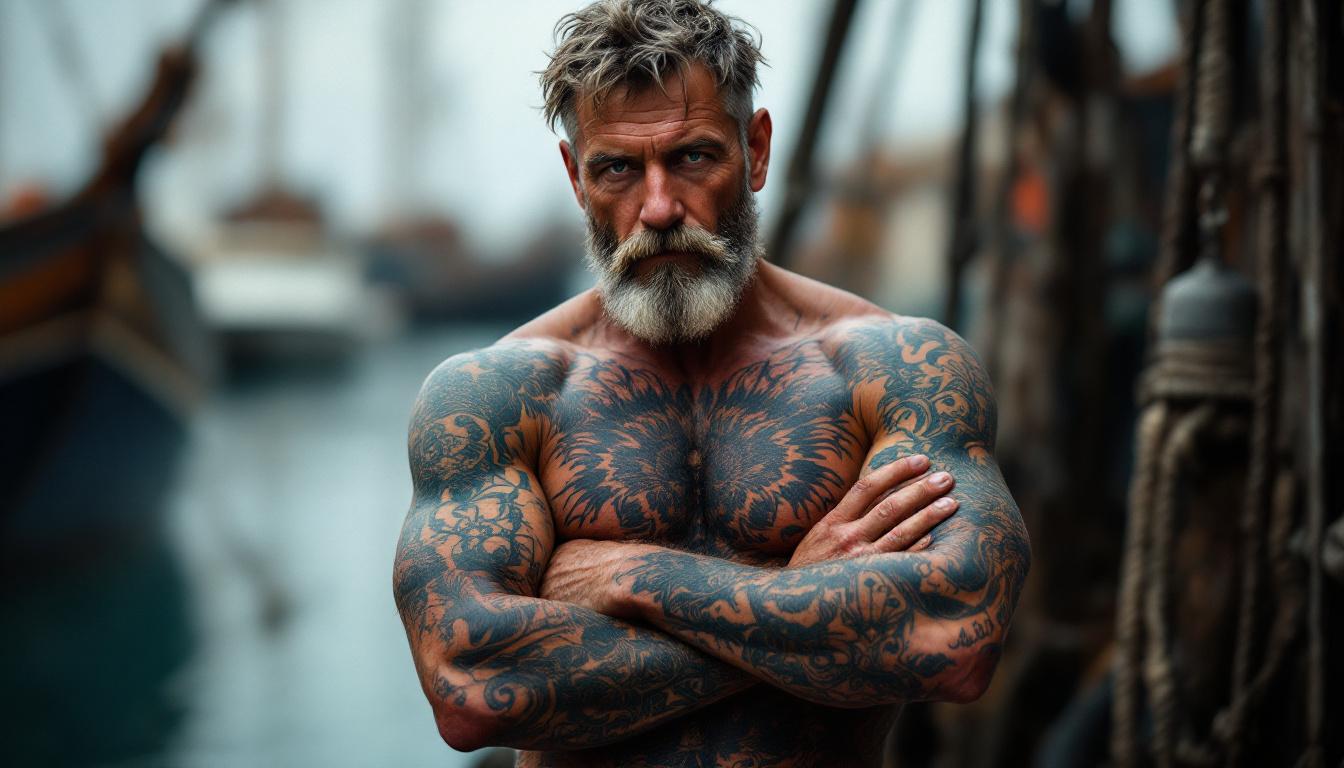
A busy port. Salt air, the clink of rigging, and a lot of inked arms coming off the gangway. For European sailors, those marks weren’t decoration. They were a record. British sailors wore naval themes, religious symbols, and personal dedications on their arms, as documented by Revista Pesquisa Fapesp. Each one carried a story the wearer could point to.
Where sailor tattoos came from
The habit of inking skin at sea is as old as long-distance exploration. Sailors carried tattoo culture with them, and the marks doubled as protective charms and souvenirs of things that mattered. A relationship. A battle. A loss.
In port cities, sailors were the ones spreading the practice. They wore anchors, fish, hearts with initials tucked inside, and religious figures, and they traded stories along with the imagery. Revista Pesquisa Fapesp makes the point that this maritime iconography worked like a shared language between crews and the towns they visited.
Long before machines, these tattoos were stuck in by hand using crude ink, often soot or gunpowder mixed up on the ship. Rough conditions, rough tools, but the work meant something.
The ink was a diary
Most old sailors with tattoos had a story behind every piece. The marks recorded voyages, hard stretches, and the crewmates you spent months below deck with. They weren’t bragging. A lot of them were practical talismans for a job where a bad day could kill you.
The same was true on land. A study drawn from convict records, published in the Journal of British Studies, looked at 75,448 written descriptions of tattoos on British convicts, covering 1791 through 1925. The designs pulled from popular culture, faith, and personal grief far more than from any criminal identity. People on the margins used ink to say who they were, same as anyone else.
For sailors specifically, the tattoos read like walking journals. Sea battles, port-town nights, stretches far from home, all logged in skin that outlasted the memory.

How the tools changed the work
Early sailor tattooing was slow and painful. Needles by hand, ink made from soot and gunpowder, and a high tolerance for sitting through it. The lines were simple because the method forced them to be.
The electric tattoo machine showed up in the 1890s and changed everything. Faster, more precise, and a much better fit for sailors who only had short windows between voyages, as noted on Wikipedia’s sailor tattoos page. Machines also made flash practical. Artists could pre-draw sets of bold-outline designs and stick them fast. If you run a shop today, the lineage is obvious. Clean black outlines and a sheet of ready-to-go designs are still how walk-in work moves.
Better tools meant more consistent lines and shading, so the imagery got sharper without losing the meaning behind it.
From convicts to royalty
Tattooing kept crossing class lines. In Britain, convicts wore everything from personal affiliations to flat-out statements of individuality, which is exactly what that 75,448-record study found.
Then it climbed. By the late 1800s, tattooing reached European aristocrats, including members of the British royal family, as Royal Museums Greenwich points out. The same symbols that marked a sailor’s arm became a sign of taste in a drawing room. The appeal wasn’t tied to rank. People at every level wanted to mark a story on their skin.
Luck, protection, and superstition
Life at sea was dangerous, so sailors leaned hard on ritual. Tattoos became survival charms. They were meant to bring luck, calm rough water, and guard against whatever the ocean might throw at you.
The choices weren’t random. An anchor wasn’t only a nod to the job. It was a hedge against bad fortune. Religious figures were thought to offer protection on a dangerous crossing. To a modern eye these read as decoration, but at the time each one was loaded with intent.
Why this still matters in the shop
Sailors carried these designs into every port they touched, and the imagery stuck. Anchors, hearts, swallows, and fish spread inland and across classes. Some scholars credit sailors with being “probably most responsible for spreading tattoo culture at port cities,” a point noted by Revista Pesquisa Fapesp.
The reach was real. In 1908, anthropologist A. T. Sinclair examined hundreds of sailors and reported that 90% of American man-of-war men and deep-water sailors were tattooed, per Wikipedia’s sailor tattoos page. That is close to universal for the trade.
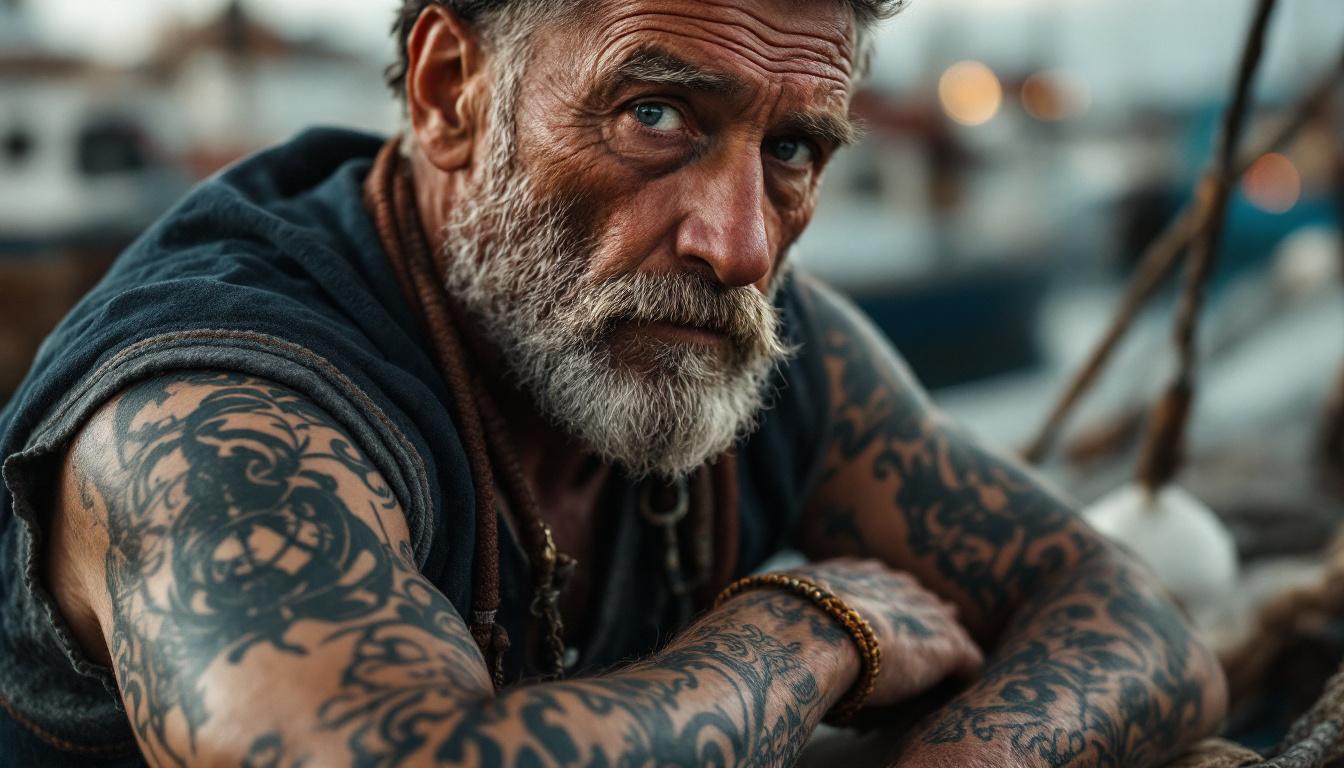
For artists, this is the source material behind half a traditional flash sheet. When a client asks for an anchor or a swallow, they’re asking for something with a few centuries behind it. Knowing the origin gives you a better answer than “it’s a classic.” You can tell them what the swallow meant to a sailor and why it landed on so many arms. That kind of context is part of the value you offer, and it’s worth keeping notes on the designs and meanings clients ask about most. A tidy client management setup makes those repeat conversations easier to pick back up.
Carry the tradition without the headaches
The history is great. Running the shop around it shouldn’t be the hard part. Apprentice handles the booking, deposits, and client records so you can spend your time on the work, the way those old port artists spent theirs. Start your free trial and keep your studio steady while you ink the next chapter.

Jason Howie
Founder & CEO
Jason Howie is the founder of Apprentice, passionate about empowering tattoo artists and shops with better tools to manage their business and serve their clients.