Few people have shaped an entire art form the way Don Ed Hardy shaped tattooing. He didn’t just push boundaries. He erased them. Before Hardy, tattoos in America were mostly flash off the wall: anchors, eagles, pin-ups. After Hardy, tattoos became personal. They became art. They became a legitimate creative pursuit worthy of gallery walls and museum exhibitions. His story is one of obsession, cross-cultural study, and a stubborn refusal to accept that skin wasn’t a real canvas. For tattoo artists running shops today, Hardy’s influence lives in every custom piece you draw, every consultation you hold, and every client who walks in with a vision instead of just pointing at the wall. Understanding where this craft came from helps you see where it’s going. And Hardy is the starting point for almost everything modern about this industry.
The Artist Who Changed How We View Tattoos
Don Ed Hardy didn’t stumble into tattooing. He chased it with the intensity of someone who knew exactly what he wanted. Born in 1945, Hardy was drawing by age five. By his teens, he was already tattooing friends. But here’s the thing that separated him from every other kid with a machine: he also pursued formal fine art training. That dual path changed everything.
Hardy saw tattooing as a legitimate art form decades before anyone else took it seriously. He wasn’t interested in being a rebel or an outlaw. He wanted tattooing to earn the same respect as painting or printmaking. That vision drove every decision he made, from his education to his apprenticeships to the way he ran his shops.
From Fine Art to the Needle
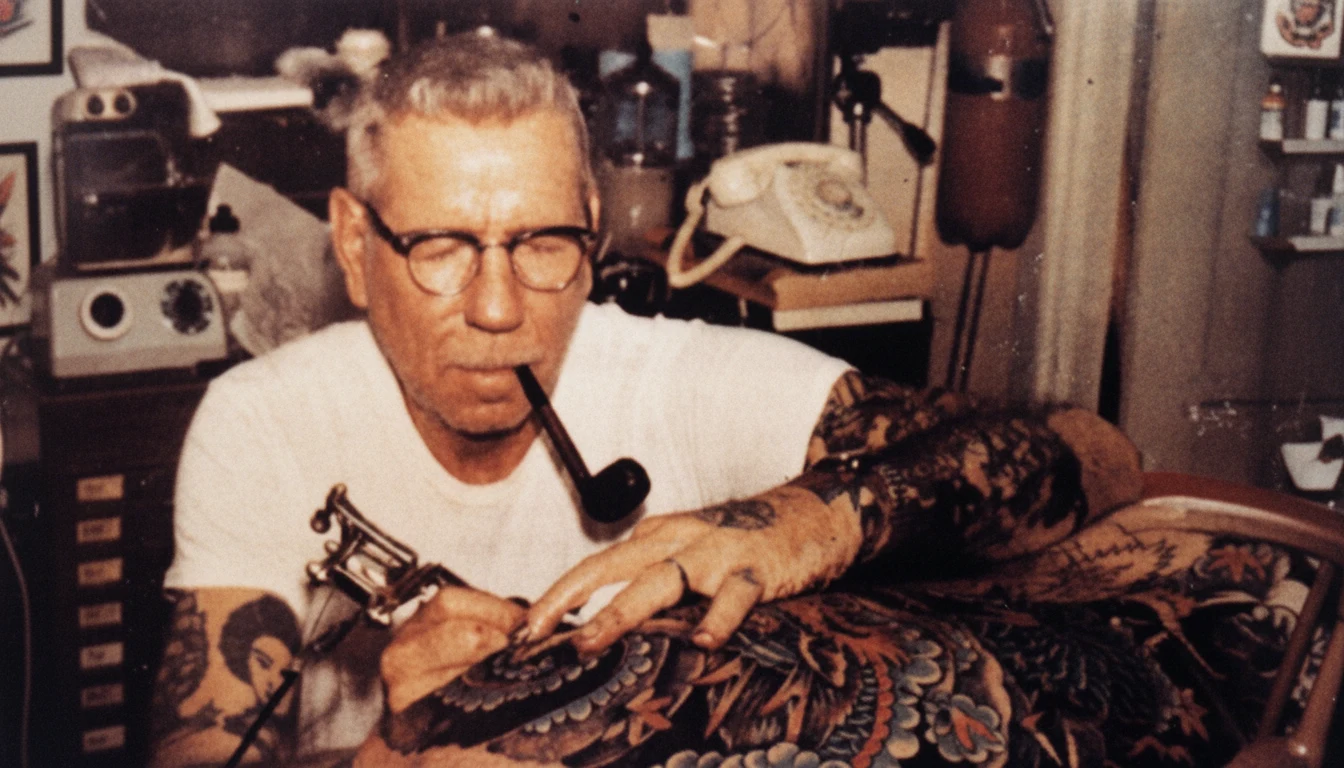
Hardy earned a BFA from the San Francisco Art Institute in 1967. Think about that. In the late ’60s, most tattooers learned by watching someone else work in a dingy shop. Hardy was studying printmaking and color theory in a college classroom. He studied under some of the most respected tattoo artists of the era, including Sailor Jerry Collins in Honolulu, who was himself a bridge between old-school American tattooing and Japanese traditions.
That fine art background gave Hardy something most tattooers didn’t have: a vocabulary for composition, color, and form. He could articulate why a design worked. He could explain the principles behind a good tattoo. And he could teach those principles to others.
Merging East and West in San Francisco
San Francisco became Hardy’s home base, and it wasn’t an accident. The city’s proximity to Asia, its countercultural energy, and its art scene made it the perfect place to build something new. Hardy opened Realistic Tattoo in San Francisco in 1974. The shop became a laboratory for blending Western tattoo traditions with Japanese aesthetics.
He wasn’t just copying Japanese designs. He was absorbing the philosophy behind them: the way Japanese tattooing treats the body as a unified canvas, the way backgrounds flow around central images, the way negative space tells its own story. That understanding transformed American tattooing from a collection of individual images stuck on skin into a cohesive art form.
Bringing Japanese Irezumi to America
Hardy’s obsession with Japanese tattooing wasn’t casual. He didn’t flip through a book and start drawing koi fish. He went to Japan. He studied under a master. He committed to learning the tradition from the inside out.
Training Under Horihide
In 1973, Hardy traveled to Japan to study under Horihide, a master of traditional Japanese tattooing. This was a big deal. Western tattooers didn’t do this. The Japanese tattoo world was insular, protective of its traditions, and skeptical of outsiders. Hardy earned his place through respect and genuine dedication to the craft.
Under Horihide, Hardy learned the principles of Japanese body suits: how to plan large-scale work that flows with the body’s natural contours, how to use wind bars and water to connect separate elements, and how to balance bold imagery with subtle background work. He brought these principles back to America and applied them to his own style.
The Shift Toward Custom Large-Scale Work
Before Hardy, most American tattoos were small. A rose on the shoulder. A name on the forearm. Hardy pushed the idea that tattoos could be large, planned, and deeply personal. He treated each client’s body as a canvas with its own unique shape and possibilities.
This shift toward custom, large-scale work changed the economics of tattooing too. Suddenly, a single client might book multiple sessions over months. The relationship between artist and client deepened. Consultations became essential. Design prep became a real part of the process, not just a quick sketch on tracing paper.
That shift is still playing out today. If you’re spending hours on design prep before a client sits down, you’re following a path Hardy helped create. And if you’re managing multi-session projects, you know how critical it is to keep notes, references, and progress photos organized in one place.
A New Era of Tattoo Shop Management
Hardy didn’t just change how tattoos looked. He changed how tattoo shops operated. His approach to running a studio was as intentional as his approach to art.
Moving from Walk-Ins to Private Studios
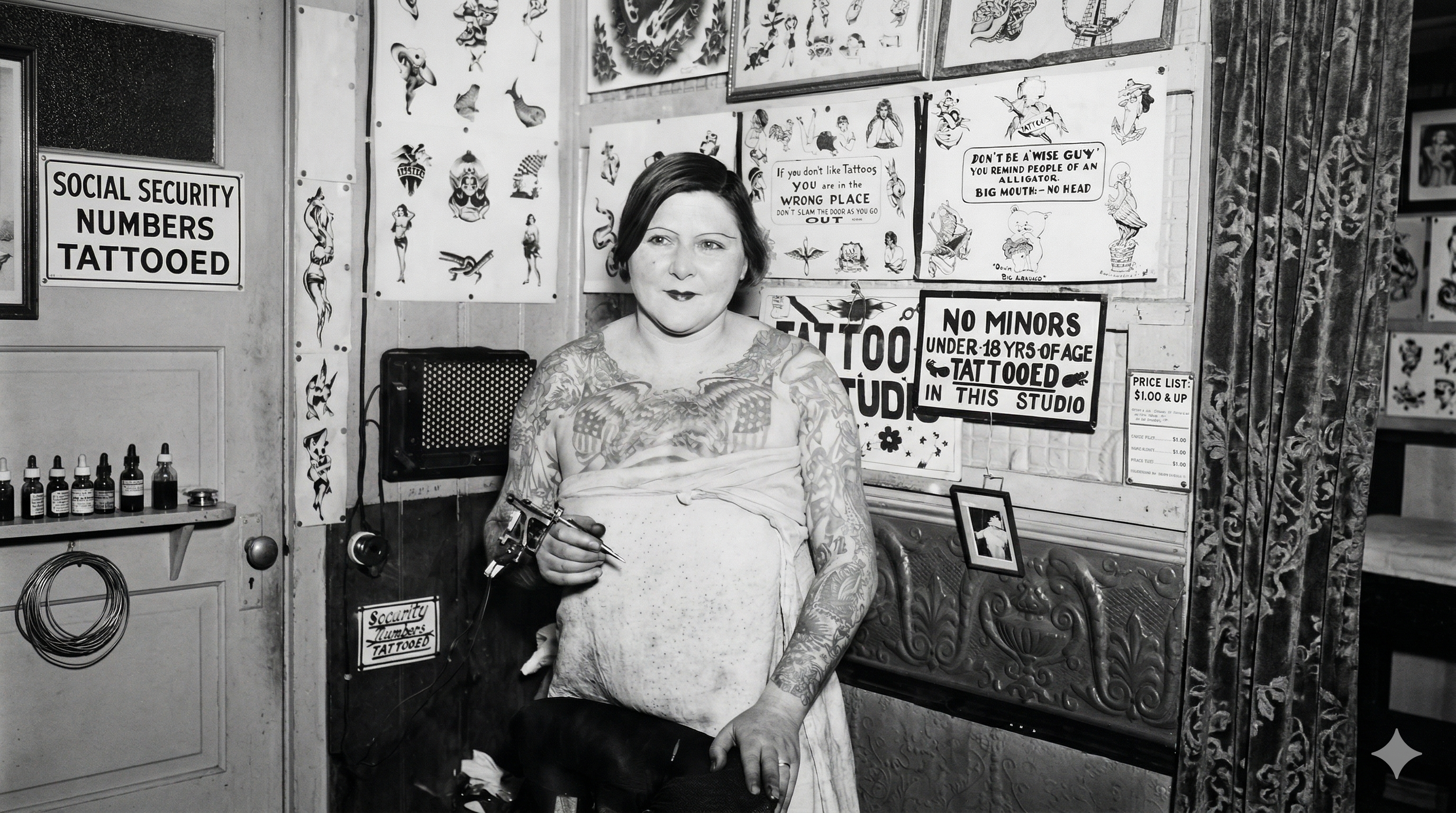
Most tattoo shops in the ’60s and ’70s were walk-in operations. You’d stroll in, pick something off the wall, and get it done. Hardy challenged that model. He moved toward appointment-based work, private consultations, and custom designs for each client.
His shop, Tattoo City, operated in San Francisco for decades and became a landmark in the city’s cultural history. The studio’s closure at the end of 2024, tied to Hardy’s declining health and his struggle with Alzheimer’s disease, marked the end of an era. But the model he built lives on in thousands of private studios around the world.
That private studio model demands better organization. You can’t run an appointment-based shop on sticky notes and memory. You need systems. You need booking tools. You need client records.
Focusing on Client History and Design Prep
Hardy kept detailed records of his clients and their tattoos. He documented progress. He planned ahead. This was unusual for the time, but it made his work better. He could reference previous sessions, track healing, and plan future pieces that complemented existing work.
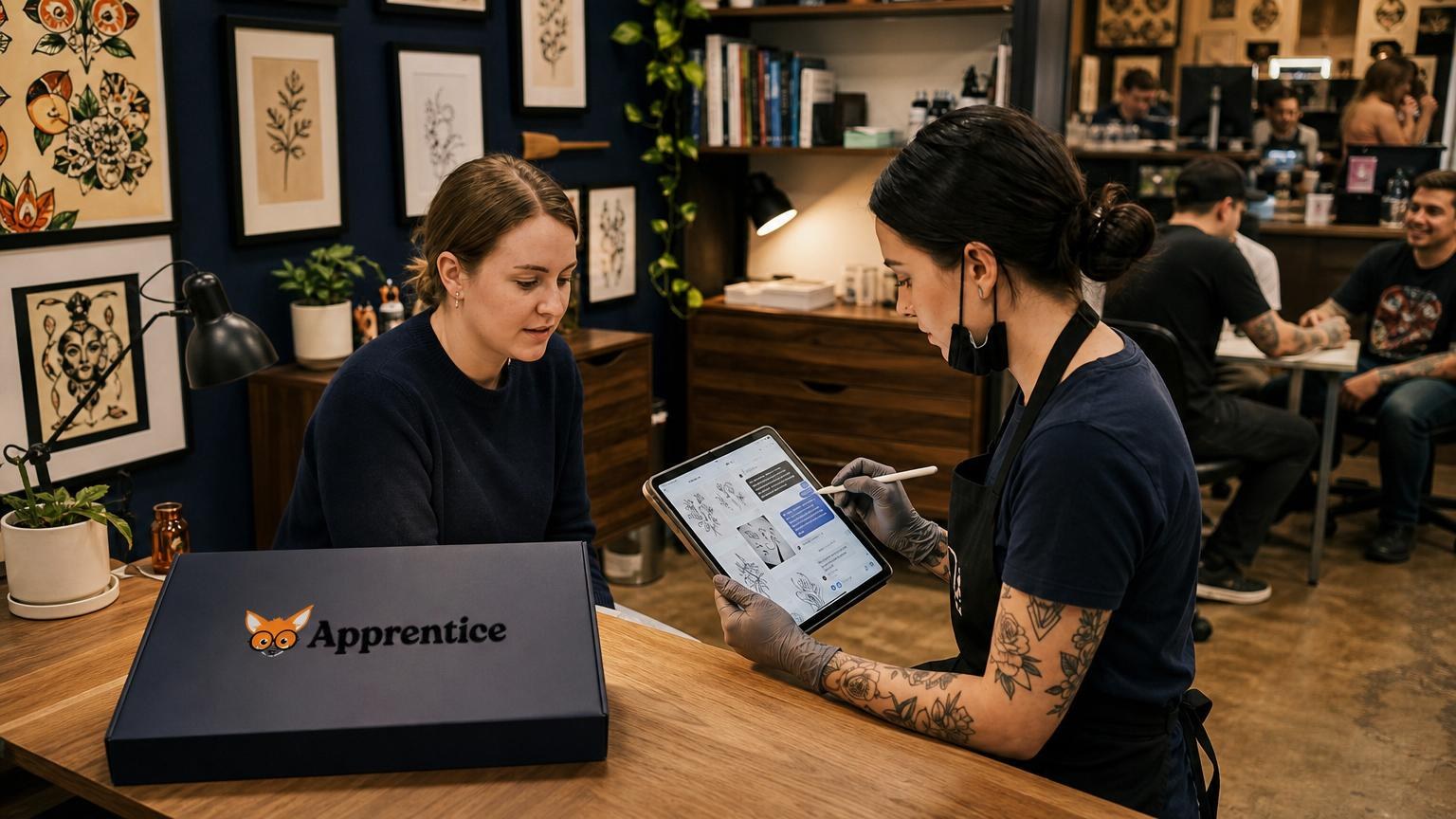
Today, this kind of client management is standard practice for serious artists. Tools like Apprentice let you keep unified client profiles with full appointment histories, notes on preferences, and stored design references. Everything stays in one place, tied to each client. No duplicates. No lost information.
It’s permanent. It’s personal. People want it to be perfect. That means your prep work matters as much as your needle work. Hardy understood this fifty years ago.
From Skin to High Fashion
Hardy’s influence didn’t stop at the shop door. His art crossed over into fashion, licensing, and pop culture in ways that no tattoo artist had achieved before.
The Christian Audigier Partnership
In 2004, French fashion designer Christian Audigier licensed Hardy’s artwork for a clothing line. The Ed Hardy brand exploded. Suddenly, Hardy’s tattoo designs were on t-shirts, hats, and jeans in malls across America. At its 2009 peak the brand pulled in more than $700 million in gross revenue, with the name licensed across roughly 70 product lines: clothing, accessories, perfume, hair tools, even lighters and condoms. It turned tattoo flash into mainstream fashion and carried the imagery about as far from skin as it could go.
The brand’s trajectory was complicated. It became associated with a specific early-2000s aesthetic that eventually fell out of favor. But recent licensing deals signal a relaunch aimed at a new generation. The Ed Hardy name still carries weight.
For Hardy himself, the fashion empire was always secondary to the art. He’s said publicly that he had mixed feelings about the commercialization. Tattoo artist Mary Joy Scott, who apprenticed under him, put it plainly: “The clothing was one little blip on his whole career, which was staggering.” But the partnership still proved something important: tattoo art has value beyond the skin it’s on. It can live on clothing, on walls, in galleries.
A Tattooer in a Museum
The clearest proof of what Hardy pulled off came in 2019, when the de Young Museum in San Francisco mounted a full career retrospective titled “Ed Hardy: Deeper than Skin.” The show spanned more than 300 objects and asked visitors to look at tattoo art the way they’d look at a painting. A major museum giving a tattooer a retrospective wasn’t normal, and Hardy knew it. “I had no idea it would get to this point,” he said of the show. The exhibition reframed his place in the art world and helped settle the argument he’d spent fifty years making: that a tattoo is a serious piece of art, made by a serious artist.
Preserving Flash Art for Future Artists
Hardy has been one of the most dedicated archivists of tattoo history. He’s collected, preserved, and published flash art from tattoo legends. His books are essential reading for any serious tattoo artist. They document techniques, styles, and traditions that might otherwise have been lost.
His original artwork now sells at auction houses alongside fine art prints, and collectors actively seek his original pieces. That’s a remarkable shift. Tattoo flash, once considered disposable, is now collectible art.
This preservation work matters for working artists too. Understanding the history of your craft makes you better at it. Knowing why certain designs work, where they came from, and how they evolved gives you a deeper foundation to build on.
How Modern Tools Honor Hardy’s Legacy
Hardy proved that tattooing deserves the same respect, planning, and professionalism as any other art form. The tools available to artists today make it easier than ever to live up to that standard.
Using Digital Flash Galleries to Connect Clients
Hardy’s flash art changed what people expected from tattoos. Today’s clients arrive with even higher expectations. They’ve seen thousands of tattoos on social media. They want something specific, personal, and well-executed.
Digital flash galleries let you showcase your work and your available designs in one organized place. Clients can browse your flash before they ever walk through your door. They can pick pieces that resonate with them and come to their consultation with a clearer vision.
Apprentice offers flash galleries where you can organize and publish your designs. Clients can browse, select, and even join a waitlist for specific pieces. That’s a direct line from Hardy’s philosophy of intentional, custom work to a modern booking flow that respects both the artist’s time and the client’s vision.
And here’s the reality check: if you’re still posting flash only on Instagram and hoping people DM you, you’re losing bookings. A dedicated gallery with built-in booking saves you hours of back-and-forth messages every week.
Saving Time with Better Booking Systems
Hardy moved away from walk-ins because custom work demands planning. But running an appointment-based studio creates its own headaches. No-shows. Double bookings. Endless text threads about scheduling. Deposit collection. Consent forms.
The unsexy stuff matters. Collecting deposits upfront reduces no-shows. Automated booking rules enforce your policies without awkward conversations. Digital consent forms mean clients arrive ready to sit, not filling out paperwork.
Apprentice handles all of this. Bookings, deposits, prep links, consent forms: it’s all in one system. You set your rules once, and the system enforces them. That’s not about being cold or corporate. It’s about protecting your time so you can do what Hardy always said mattered most: make great art.
Because here’s what Hardy proved with his entire career: operational structure doesn’t kill creativity. It protects it. The artists who burn out aren’t the ones with good systems. They’re the ones drowning in admin work at midnight.
The Lasting Impact of the Tattoo Godfather
Don Ed Hardy, the godfather of American tattoo art, built a legacy that touches every corner of this industry. He proved that tattoos are art. He showed that East and West could merge into something new. He demonstrated that running a professional studio and making great art aren’t competing goals. And he preserved the history of this craft so future generations could learn from it.
The closure of Tattoo City in San Francisco was a loss. But Hardy’s influence isn’t tied to a single building. It lives in every artist who takes design prep seriously, every shop that runs on appointments instead of chaos, and every client who understands that a great tattoo takes time, planning, and trust.
You carry that legacy forward every time you pick up your machine. Honor it by running your shop with the same intention Hardy brought to his. If you’re ready to spend less time on admin and more time on art, get started with Apprentice: it’s free for 14 days and takes about five minutes to set up. Your craft deserves it.

Jason Howie
Founder & CEO
Jason Howie is the founder of Apprentice, passionate about empowering tattoo artists and shops with better tools to manage their business and serve their clients.