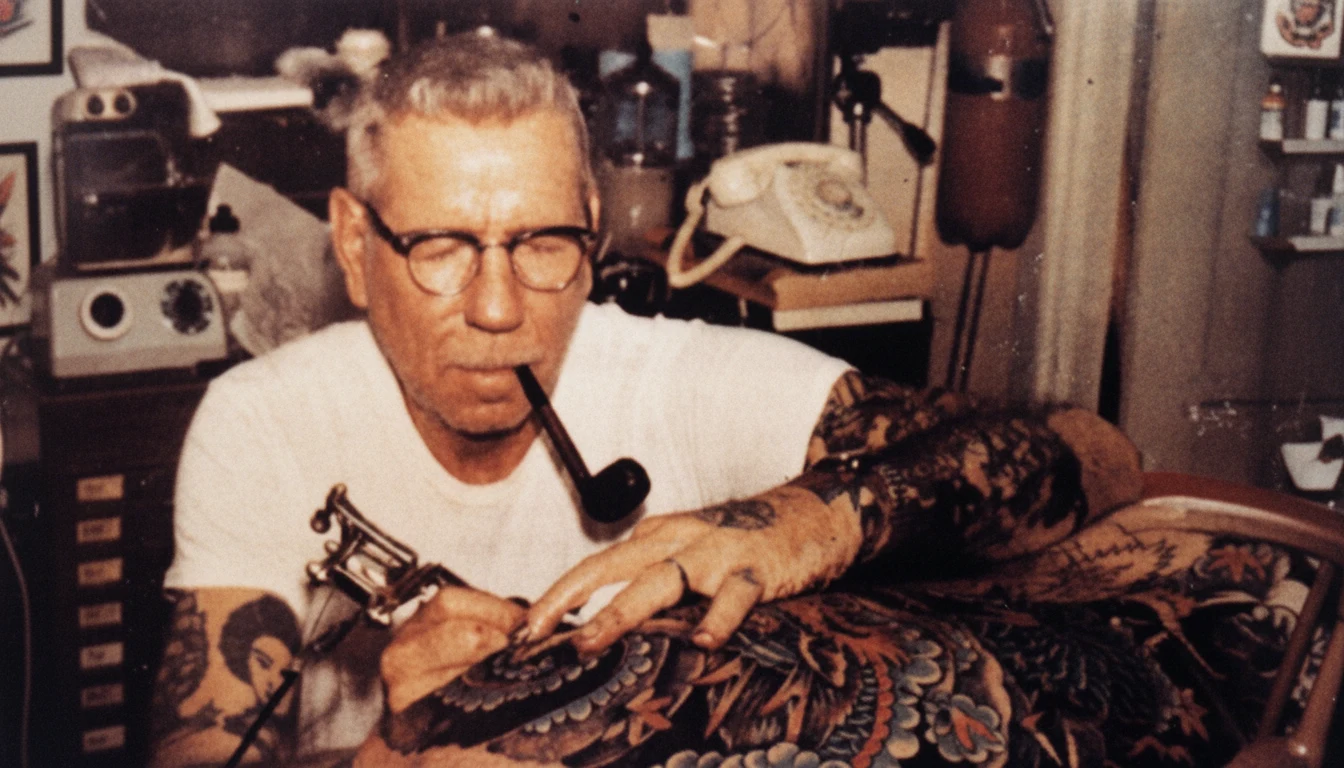
Mildred Hull: The Legacy of the Queen of the Bowery
The Bowery’s streets still murmur tales of resistance and survival, and Mildred Hull’s life story echoes through every corner of New York City. The city never forgets its original characters, and Mildred, known as the "Queen of the Bowery," carved a niche that's as raw and vibrant as the neighborhood itself. Early on, social reform and community resilience looked different, but Hull blazed a trail seen in every community initiative today. Dive into the gritty history of her time and understand how a single personality challenged norms and influenced reform in ways that still resonate.
While discussions often center on the Hull-House survey, it’s key to understand how these narratives, rooted in social reform, shaped modern community engagement. Take, for instance, the Hull-House survey that uncovered the dire financial conditions in Chicago’s Near West Side.
The Bowery in the Early 20th Century
This wasn’t some sanitized, modern-day neighborhood with trendy cafes and polished storefronts. The Bowery was, and in many ways remains, a neighborhood where survival and ingenuity go hand in hand. Mildred Hull’s presence was part of a larger tapestry-a gritty urban manuscript where residents overcame poverty, social injustice, and stigmas attached to lower-class living.
Social scenes back then were loud and unscripted. The Bowery was alive with community gatherings, street fairs, and rogue conversations in dimly lit taverns. Mildred’s charm and assertiveness directed the local vibe as she became both a guide and a guardian for many in the community. Her influence was as palpable as the aroma of fresh bread wafting out of neighborhood diners. The legacy of those times is still chronicled through various social studies, including insights from the educational role described by Jane Addams, who laid out systemic issues that couldn’t be solved by charity alone.
Community, Reform, and the Shadows of Poverty
The Hull-House Survey and Its Lasting Impact
One cannot talk about Mildred Hull and community activism without mentioning the groundbreaking Hull-House survey. The study was the first systematic look at a working-class neighborhood in America-a daring step that illuminated harsh economic realities. In Chicago’s Near West Side, families were often caught in cycles of poverty, with many earning $5 or less a week (Hull-House survey insight). That stark statistic wasn’t simply a number; it was a snapshot of the country's struggle against systemic inequality.
The survey not only shed light on material hardship but also ignited conversations about the social and political dynamics at play. This pioneering work helped to reframe how society views its most vulnerable citizens, and Mildred Hull’s action-oriented approach in the Bowery echoed that sentiment. Her presence wasn’t about charity alone; it was a call to recognize every human being with dignity, even if the bank balance didn’t reflect it.
Poverty, Reform, and a Sense of Belonging
The rough streets of the Bowery testified to both the struggle and the beauty of existence in urban environments. Mildred not only fought against the stigma of poverty but also worked tirelessly to create spaces where community members could feel at home. This wasn’t just about handing out meals or shelter-it was about creating a sense of belonging, a belief that every person deserved respect no matter their socioeconomic background.
Working amid the chaos, her efforts paralleled many of the reform initiatives pursued in broader society. The ethos and methods resonated with the Hull-House movement’s goal of addressing America's deep-seated poverty and inequality. Those efforts, synonymous with advocacy for change, connected to how later studies and reports would chronicle Hull-House’s role in advocating for comprehensive social reform.
Redefining Gender Roles and Women’s Influence
The Board and Education: Changing the Social Equation
Mildred Hull managed to influence an entire generation, and a key part of that influence lay in redefining roles for women on the local and even national stage. At a time when women were expected to maintain submissive roles, the Hull-House model reimagined their place in society. Educational programs actively reduced illiteracy rates among women (educational impact data), giving them a voice in social and political spheres.
In neighborhood board clubs and gatherings, Mildred's robust approach motivated women to take on leadership roles. With regular community meet-ups, she ensured that every conversation, regardless of its complexity, was a stepping stone into broader discussions about rights, equality, and the collective future of the urban poor.
The Hull-House model was about more than just community engagement. It was a blueprint for social revolution. Women, through educational programs and communal support, gradually began to shape their destinies and challenge what society had long dictated about gender norms.
Breaking Barriers, Inspiring Change
It wasn’t just about numbers and statistics; it was about awakening souls. Mildred Hull’s life on the Bowery stands as a testament to the struggles and triumphs of countless women who took the road less traveled. Her influence spilled over into community boards and grassroots movements, inspiring others to break out of the narrow confines of tradition.
A study from 2025 reinforces how Hull-House’s pioneering efforts helped set the groundwork for changes in women's roles in society (social reform report). Initiatives that once seemed radical became the norm as women found both their voices and platforms to push for deeper societal transformation. The legacy of these efforts underlines that significant change often starts at the neighborhood level.
Innovative Community Structures and Social Clubs
The Boarding Club: A Hub of Resilience
Amid the hustle of the Bowery, community life found unique ways to thrive, one of which was the boarding club established by Hull-House in 1891. What began as a modest venture quickly expanded, occupying six apartments with fifty members by the end of its third year (boarding club statistics). This wasn’t just about providing a roof; it was about creating a network-a lifeline for those who needed support amid chaotic urban environments.
The boarding club served as a nucleus for ideas and social interactions. Imagine cramped spaces echoing with energized conversation, debates over dreams, and plans to change local policies. In many ways, these gatherings predicted the community-building tactics seen in modern urban settings.
The club was more than a shelter. It became a place where people learned the value of collective strength. The warmth shared among boarders was a sharp rebuttal to a cold world that had long neglected its vulnerable citizens. This space was small in size but huge in spirit, encapsulating the grassroots nature of social change that Mildred Hull and her contemporaries championed.
Community Engagement and Mutual Support
Engagement in community life wasn’t solely limited to organized clubs. The informal networks on the street played as crucial a role as any formal institution. Discussions spun out organically from doorsteps and dimly lit sidewalks-issues like poverty, education, and gender roles were debated as passionately as any political manifesto.
These street-level exchanges provided an organic counterpoint to the more structured reforms happening within establishments like Hull-House. The dialogue between the grassroots and organized reformers underscored the multifaceted approach needed to tackle societal issues. Mildred Hull's legacy is embedded in these intersections of personal initiative and systematic reform, proving that real change often sprouts from the everyday life of a community.
Resonance of Hull’s Legacy in Today’s Social Fabric
A Storied Past Inspiring Modern Activism
Mildred Hull’s life and work were not mere memories of a bygone era; they form the heartbeat of current social reform movements. From educational programs that uplift disadvantaged groups to community clubs that offer more than just shelter, the spirit of resilience is a constant reminder of Hull’s contributions.
Past initiatives such as the Hull-House survey continue to influence modern policies and community strategies. The early studies into poverty and community engagement are now seen as precursors to comprehensive urban planning and social welfare programs. Even now, noticing how a simple statistic-from cases where families earned less than $5 a week (survey details)-can spark movements highlights the importance of data-driven reform in tackling systemic inequality.
The blueprint left behind by Mildred Hull subtly weaves its way through contemporary social policies. Modern-day social workers and community organizers often reference the steadfast methods of Hull and her peers, finding inspiration in her relentless quest for a fairer society. That legacy emphasizes not only the grit of her era but also the potential for future social transformation.
Cultural Impact and Lasting Influence
Even as the Bowery transforms into a blend of historic charm and modern hustle, the cultural impact of personalities like Mildred Hull remains undeniable. Her life wasn’t just a fight against poverty and inequality; it was also an emblem of a community’s undying spirit. While the urban landscape has shifted dramatically over the decades, the ethos of compassion, activism, and community solidarity has survived in countless local efforts that aim to bridge the gap between rich and poor.
In contemporary debates-whether centered around affordable housing, educational access, or grassroots political engagement-there’s a recurring reverence for those who paved the way. The robust discussions at modern community halls echo many of the core values that Hull championed decades ago. Her legacy remains a vibrant reminder of how one person’s determination can reduce illiteracy, inspire policy changes, and mobilize entire communities, all while rewriting the social script on gender and class.
The Intersection of Personal Grit and Systemic Change
Private Beneficence vs. Systemic Reform
The tale of Mildred Hull is as much about personal resolve as it is about systemic reform. Jane Addams, a contemporaneous voice from Hull-House, argued that private beneficence was simply inadequate for addressing widespread social issues (insight on systemic change). Instead, a robust system that addressed underlying inequities was necessary. Hull’s work on the Bowery was a real-world manifestation of that thought.

Hull’s approach left an indelible mark on social reform movements. Her actions revealed that small, community-based interventions could trigger broader, systemic changes. Her insistence that every person deserves a dignified life became an advocacy line that gently but firmly nudged society toward long-overdue reforms. It was about making sure that even people at the margins could feel included in shaping policies that affected them directly.
This dual focus-personal perseverance combined with a call for policy overhaul-became a recurring theme in many later social movements. Hull proved that while numbers and statistics are critical, the human story behind them is what truly drives lasting change.
Lessons for Today’s Reformers
Modern activists still echo the lessons learned from Hull’s era. The emphasis on community solidarity, the idea that grassroots initiatives can inform broader reforms, and the challenge against traditional gender norms are all as relevant now as they were back then. Neighborhood clubs, educational programs, and persistent rallies for social justice all bear the unmistakable imprint of Hull's legacy.
By focusing on collective strength and honest dialogue, contemporary reformers continue to outline new narratives for communities facing inequality. The spirit of Hull reminds us that change isn’t handed down from lofty institutions; it arises from the very streets where people live, breathe, and fight for everyday dignity.
The Everlasting Echo of Mildred Hull’s Influence
Integrating Heritage with Modernity
The legacy of Mildred Hull spans beyond the dusty recollections of history books. It's interwoven with the modern struggles and successes of urban communities. The board clubs, educational reform initiatives, and grassroots organizing of her time have evolved, yet they all trace back to the ideologies she championed on the Bowery. This blend of heritage and modern initiative creates a tangible bridge between different eras.
Today’s community projects pay homage to those early, rough-edged experiments in organizing-projects that recognized the importance of mutual aid and collective empowerment. The warm embrace found in contemporary community centers is reminiscent of those early gatherings where ideas flourished amid adversity.
With each new study, such as the comprehensive analysis published in 2025 on Hull-House’s legacy (2025 comprehensive study), society gains valuable insights into how past strategies can be retooled for today’s challenges. This continuous cycle of learning and adaptation champions the very spirit of change that Mildred Hull represented.
The Enduring Spirit of Urban Activism
There’s a rhythm to city life that hums with the pulse of revolution and renewal. Mildred Hull’s walk down the Bowery isn’t just a page in a history book; it’s a living narrative that inspires ongoing urban activism. Every community meeting, every grassroots campaign, and every effort to make urban spaces more humane resonates with the echoes of her fierce determination.
It’s a reminder that true change often begins at the grassroots level. The efforts to boost literacy, fight against poverty, and challenge gender norms reflect a broader understanding of community empowerment. Hull’s story-and by extension, the story of the Hull-House movement-is a testament to the power of resilience in the face of odds, a sentiment that remains profoundly relevant.
Reflecting on a Life that Changed the Game
The story of Mildred Hull is raw, unfiltered, and real. It tells us that change, in its most genuine form, starts with individuals who dare to stand against the status quo. Her impact on the Bowery and beyond continues to serve as a blueprint for those looking to spark social reform in urban spaces.

This narrative isn’t just confined to historical accounts-it’s lived and breathed in the community centers, local policy debates, and educational programs that aim to elevate every citizen. The influence of the Hull-House survey and subsequent studies speaks volumes about the importance of addressing socioeconomic disparities with data and heart (critical statistics).
Through the highs and lows of the early 20th century, Mildred Hull stood as a beacon of hope-a reliable, no-nonsense force that demanded respect and accountability from the powers that be. The legacy she left behind still motivates modern-day reformers ever to build more inclusive, just, and resilient communities.
The Contemporary Relevance of Mildred Hull’s Legacy
Today’s urban landscapes are riddled with challenges that echo those faced over a century ago. Be it through rising inequality, debates on affordable housing, or pressing educational needs, the groundwork laid by visionaries like Mildred Hull is more important than ever. Her legacy fuels modern conversations about community and reform, showing that the past is intrinsically linked to the present.
Revisiting her story is an invitation to scrutinize contemporary societal models and perhaps find inspiration in the intertwined narratives of the past and the present. The resilience, ingenuity, and tenacity displayed by Hull remind every city dweller that real change sprouts from common struggles and genuine human connections.
The Bowery, with all its vibrant chaos, still whispers her name as a rallying cry for those who dare to stand up against indifference and injustice. It’s a call to action that proves every generation has the potential to reshape its destiny, following the bold footsteps of those who came before.
Carrying Forward the Torch
Mildred Hull’s journey through the euphoric yet challenging streets of the Bowery is more than a historical anecdote-it’s a living monument to the power of urban activism. The fragments of her legacy, interwoven into the fabric of community organizing and educational reform, continue to empower and inspire.
The initiatives she pioneered-from effective community engagement through smaller boarding clubs to boosting literacy and changing gender dynamics-provide lessons still being applied today. Hull’s legacy is a reminder that grassroots initiatives, combined with systemic reform efforts, can permanently alter a city’s vibrancy and resilience.
As modern activists, community leaders, and concerned citizens assess the challenges of today, they would do well to remember that reform doesn’t come solely from above. Often, it starts at the very heart of a tight-knit community, much like the Bowery of Hull's time. The continual infusion of data-driven research, innovative community programs, and determined local activism sustains the spirit of change that Mildred Hull embodied.
A Lasting Tribute on the Streets of New York
The bustling sidewalks of New York, with its blend of history and modernity, still whisper stories of the trailblazers who dared to dream. Mildred Hull, the self-styled "Queen of the Bowery," remains one of those luminous figures whose contributions transcend time. Her unique blend of street smarts and relentless advocacy gave birth to a legacy that inspires lasting urban change.
The Bowery will forever be a mosaic of stories-each one embedded with struggles, triumphs, and the audacity to believe that even the smallest voice can reverberate across a city. Amid the neon lights and urban hustle, Mildred’s legacy stands tall as a symbol of community, grit, and the transformative power of social reform.
Her influence has not faded into mere nostalgia. It’s a call to action, inviting each of us to reflect on our role in building communities that are resilient, inclusive, and empowered. Just like the arching bridges that connect the boroughs of New York, her story connects past endeavors with modern aspirations, lighting the way for future change. Embracing her spirit means championing a legacy where every street corner and every community hub becomes a beacon of hope and active participation.
Embrace the Spirit of Innovation with Apprentice
In the same vein as Mildred Hull's transformative influence on the Bowery, your tattoo studio can be a part of the next wave of innovation in the industry. Apprentice invites you to carry on the legacy of pioneering change by integrating our state-of-the-art platform into your business. Streamline your operations, from appointment scheduling to design collaboration, and offer your clients an experience Mildred would have admired. Start your free trial today and join the community of artists who are shaping the future of tattooing.
Jason Howie
Founder & CEO
Jason Howie is the founder of Apprentice, passionate about empowering tattoo artists and shops with better tools to manage their business and serve their clients.