Some tattoo styles come and go. American traditional tattoos don’t. They’ve outlasted every trend, every fad, and every “next big thing” the industry has thrown at them. Bold lines. Primary colors. Icons that punch you in the eye from across the room. This style has survived for over a century because it was built on principles that actually work: readability, durability, and raw visual impact. The global tattoo market was valued at USD 2.43 billion in 2025, and a massive chunk of that revenue still flows through shops cranking out classic flash. Roughly 32% of American adults now have at least one tattoo, and the old school look remains one of the most requested styles on the planet. Whether you’re an artist building your portfolio or a collector adding to your sleeve, understanding why these classics never die isn’t just nostalgia. It’s good business.
Origins and the Golden Age of Sailor Jerry
The roots of this style run deep into American military history. You can’t talk about traditional tattooing without talking about the men who built it, the ports they worked in, and the culture that fed the whole thing.
The Influence of Norman Collins and Military Life
Norman “Sailor Jerry” Collins didn’t invent tattooing. But he damn near perfected a version of it. Working out of Honolulu from the 1930s through the early 1970s, Collins tattooed thousands of servicemen passing through the Pacific. His shop on Hotel Street became a pilgrimage site for sailors, soldiers, and Marines.
Collins was obsessive about his craft. He studied Japanese tattooing techniques and incorporated their emphasis on flow and color saturation into his American work. He developed his own pigments. He built his own machines. And he held other tattooers to impossibly high standards, often publicly.
What made his work different was precision. His lines were clean and heavy. His shading was deliberate. His designs were meant to be read at a distance, which mattered when your canvas was a forearm on a moving ship. That military context shaped everything about the style: fast application, high contrast, and imagery that meant something to the wearer.
How Portside Culture Shaped the Aesthetic
Port towns were the original tattoo hubs. Honolulu, San Francisco, Norfolk, New York. These cities had a constant flow of young men with cash, adrenaline, and a desire to mark their bodies before shipping out.
The shop environment demanded speed and efficiency. Artists worked from pre-drawn flash sheets pinned to the walls. Clients picked a design, sat down, and got tattooed. There wasn’t a six-week consultation process. There wasn’t a Pinterest board. You chose your eagle, your anchor, or your pin-up, and you wore it.
This assembly-line approach wasn’t lazy. It was refined. Each flash design had been drawn, redrawn, and tested hundreds of times. The best ones survived because they worked on skin. Bad designs got pulled off the wall. Good ones got copied, traded, and passed down through generations of tattooers.
Defining the Visual Language of ‘Old School’ Ink
Traditional American tattooing follows strict visual rules. These aren’t arbitrary. They exist because skin is a living, aging medium, and the old masters figured out what holds up over decades.
Bold Outlines and the Rule of Three
The most obvious feature of this style is the outline. Thick, black, unbroken lines define every element. There’s a reason for that: thin lines spread and blur over time. Bold lines hold their shape for decades.
The “rule of three” shows up everywhere in traditional work. Three colors in a composition. Three layers of visual depth: outline, fill, and shading. Three levels of line weight to create hierarchy. This constraint forces clarity. You can’t hide behind detail or complexity. Every element has to earn its place.
Shading is typically done in black or grey, applied in smooth gradients or whip-shaded textures. There’s no photorealistic rendering here. The goal is graphic impact, not optical illusion.
The Limited Primary Color Palette
Traditional tattoos rely on a tight color range: red, yellow, green, and black. Some artists add brown or purple, but the core palette stays small. This isn’t a limitation. It’s a feature.
These pigments were chosen because they age well in skin. Red stays punchy. Black stays dark. Yellow holds its warmth. More exotic pigments can fade unpredictably or shift color over the years. The old-timers learned this the hard way and passed that knowledge down.
A restricted palette also forces stronger design choices. You can’t rely on subtle color shifts to create depth. You need composition, contrast, and placement to do the heavy lifting. That’s why the best traditional pieces still read perfectly after 30 or 40 years on skin.
Timeless Symbolism and Common Motifs
Every traditional tattoo tells a story. The imagery isn’t random. It comes from a shared visual language that stretches back over a century.
Nautical Icons: Anchors, Clippers, and Swallows
Anchors represent stability, home, and grounding. Sailors got them as talismans against the sea. Clipper ships symbolized adventure and the journey itself. Swallows marked distance traveled: one swallow for every 5,000 nautical miles.
These symbols carried real weight. A sailor with two swallows on his chest had crossed oceans. An anchor on the wrist meant you’d served in the Atlantic fleet. The imagery was a visual resume, readable by anyone in the culture.
Today, most clients don’t have a maritime background. But the symbols still resonate. Anchors still mean stability. Ships still mean adventure. The emotional shorthand works because the designs are so clear and iconic.
Symbols of Strength: Eagles, Panthers, and Daggers
Eagles represent freedom, patriotism, and power. They’re one of the most popular traditional motifs, and they’ve been tattooed on American servicemembers since World War I. The screaming eagle with spread wings is as American as it gets.
Panthers, usually depicted mid-crawl with bared teeth, symbolize ferocity and survival. Daggers represent sacrifice, combat, or the willingness to fight. Combined with roses or hearts, they tell stories of love and loss.
These motifs work because they’re universal. Strength, love, death, freedom. Those themes don’t expire. And when they’re rendered in bold lines and primary colors, they hit with the same force they did in 1945.
The Durability Factor: Built to Last a Lifetime
Here’s the unsexy truth that every working tattooer knows: most styles don’t age well. Fine-line work blurs. Watercolor tattoos fade into muddy patches. Micro-realism loses detail within a decade. Traditional work? It holds.
The combination of bold outlines, solid color fills, and high-contrast shading creates a tattoo that maintains its readability as skin changes. Weight gain, sun exposure, and the natural aging process all degrade tattoos over time. But a well-executed traditional piece degrades gracefully. The lines may soften slightly, but the design stays legible.
This durability matters for your reputation as an artist. Your work walks around on someone’s body for the rest of their life. If it looks like a bruise in ten years, that’s your name attached to it. Traditional technique is an investment in your long-term credibility.
The North American tattoo market held a market size of USD 861.68 million in 2024, and clients are increasingly educated about what lasts. They’re doing research. They’re comparing healed work. Smart collectors know that classic technique holds up, and they’re willing to pay for it.
From Counterculture to Modern Mainstream Appeal
Traditional tattooing started on the margins. Sailors, bikers, outlaws. Now it’s everywhere. That shift didn’t happen by accident.
The Rise of Neo-Traditional Styles
Neo-traditional work takes the bones of the old style and adds modern flair. Broader color palettes, more detailed rendering, and illustrative elements expand the visual possibilities while keeping the structural foundation intact. Bold outlines still anchor the design. Color still fills defined shapes.
This evolution has introduced traditional aesthetics to a massive new audience. Millennials and Gen Z represent 59% of the tattoo clientele, and many of them discovered traditional work through neo-trad artists on Instagram. The pipeline flows both ways: neo-trad fans often circle back to appreciate pure traditional work once they understand the roots.
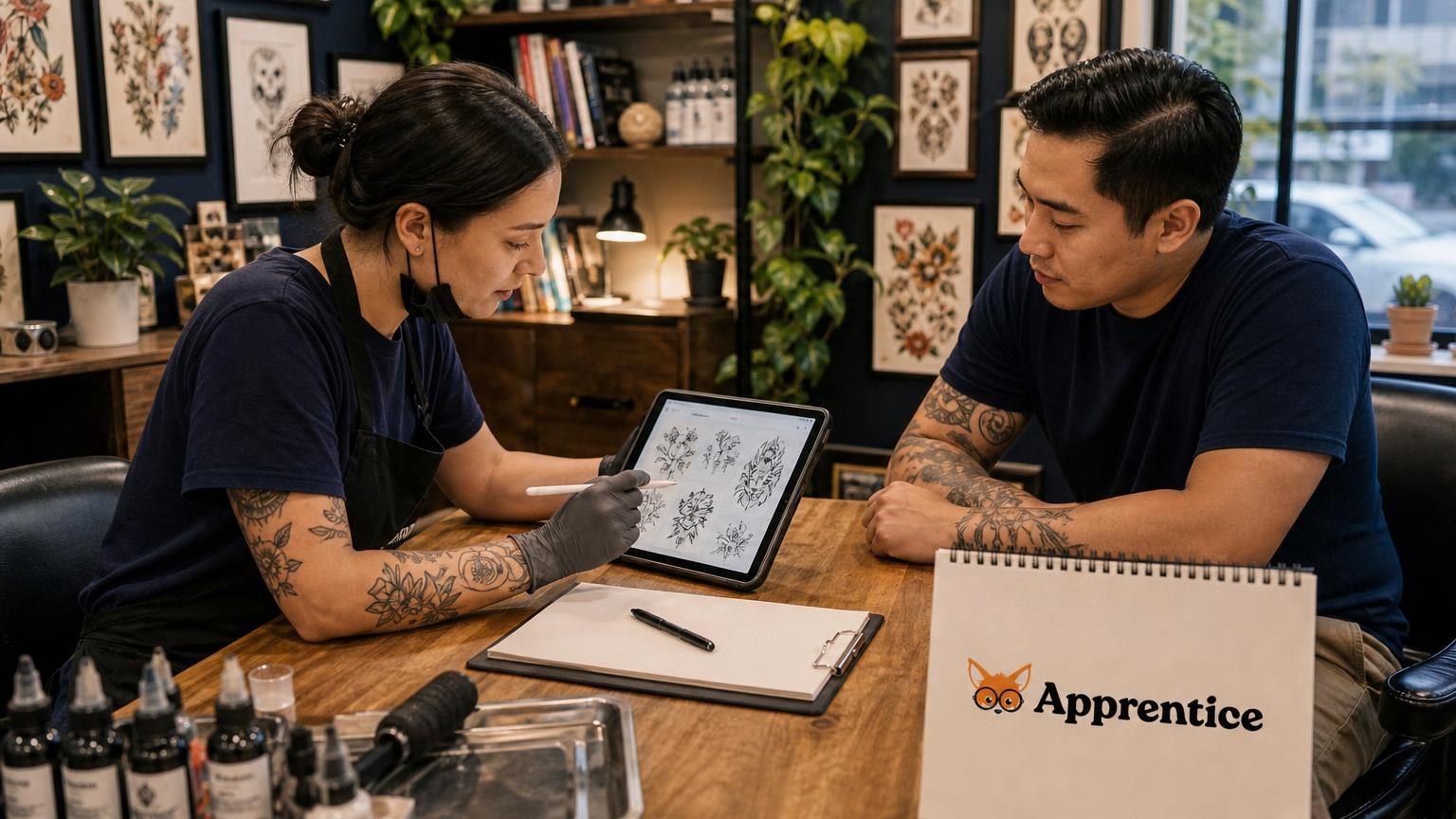
For artists, offering both traditional and neo-traditional work broadens your client base without abandoning your foundation. And tools like Apprentice can help you manage that growing demand. Its flash gallery features let you organize and publish both classic and neo-trad flash, so clients can browse your work and book directly. That saves you hours of DM conversations every week.
Why Collectors Still Prefer the Classic Flash Look
Serious collectors know the difference between a trend and a tradition. Flash collecting has experienced a genuine renaissance. Original vintage flash sheets sell for thousands. Contemporary artists who draw traditional flash build devoted followings.
The appeal is partly aesthetic and partly philosophical. Flash represents a democratic approach to tattooing. The designs belong to the culture, not just one artist. Getting a classic eagle or rose connects you to a lineage that stretches back generations.
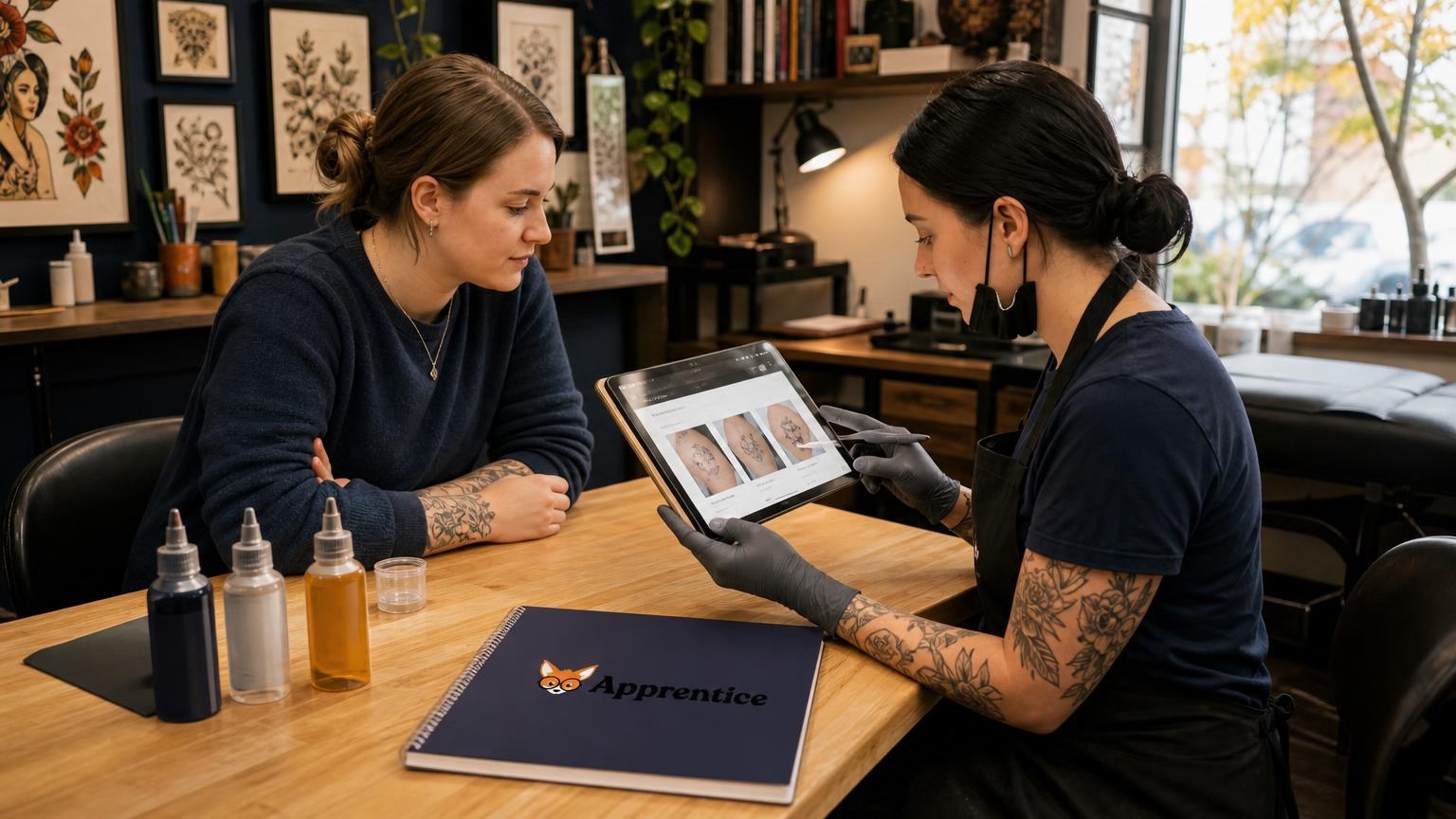
There’s also a practical element. Flash-based bookings are faster and more efficient for both artist and client. The design is done. The pricing is clear. The appointment is straightforward. If you’re running a busy shop, a solid flash wall keeps your books full and your workflow smooth. Apprentice’s booking system lets clients select flash pieces before they even walk through your door, which cuts down on indecision and speeds up your day.
The Enduring Legacy of the American Traditionalist
Traditional American tattoos survive because they were built on fundamentals that don’t change. Skin ages. Trends rotate. Attention spans shrink. But bold lines, strong color, and clear symbolism will always read. That’s not nostalgia talking. That’s physics and human psychology.
The US tattoo market is expected to reach USD 1.25 billion by 2032, and the artists who thrive in that growing market will be the ones who respect the craft’s foundations while running their businesses with intention. As one industry observer put it, “It’s no longer about doing as many tattoos as possible - it’s about creating meaningful, lasting connections with clients.”
That’s the real reason classic tattooing endures. It’s permanent. It’s personal. And people want it to be perfect. If you’re an artist who shares that philosophy, spend your energy on the work and let the admin handle itself. Get started with Apprentice free for 14 days and see how much time you get back when bookings, deposits, and client prep run on autopilot. Your flash wall deserves that kind of attention. So does your craft.

Jason Howie
Founder & CEO
Jason Howie is the founder of Apprentice, passionate about empowering tattoo artists and shops with better tools to manage their business and serve their clients.