Tattoo placement isn’t just a detail. It’s a decision that shapes how your ink ages, how it reads on the body, and how you feel about it five, ten, twenty years from now. It’s permanent. It’s personal. And people want it to be perfect. The best tattoo placements for 2026 reflect a shift in how clients think about their bodies as canvases. They’re not just picking spots off a menu anymore. They’re considering skin texture, movement, visibility, and long-term wear. Whether you’re an artist guiding a first-timer or a client doing your homework, understanding why placement matters is half the battle. The other half is choosing a spot that honors both the design and the body it lives on. This year, the conversation around placement has gotten smarter, more intentional, and way more interesting.
The Evolution of Body Art Placement in 2026
How Digital Culture and Fashion Influence Canvas Choice
Social media changed how people discover tattoos. But it also changed where they want them. Instagram reels and TikTok close-ups have made certain placements wildly popular. Clients now see tattoos in motion, not just in flat photos. That changes everything about what “looks good.”
Fashion plays a role too. Off-shoulder tops, cropped fits, and low-rise comebacks are exposing new real estate. Clients want ink that works with their wardrobe, not against it. A collarbone script, for instance, peeks out of a neckline. A forearm piece shows beneath a rolled sleeve.
Fine line tattoos are still dominating, with artists recommending placements that show off anatomy rather than hiding behind it. The design and the body work together. That’s the standard now.
The Shift Toward High-Visibility and Statement Placements
We’re past the era of “hide it for the office.” More clients want their tattoos seen. Hands, necks, and forearms are no longer reserved for heavily tattooed folks. First-timers are going visible.
This shift isn’t reckless. It’s intentional. People are choosing placements that align with identity, not just aesthetics. A tattoo on the outer forearm says something different than one tucked behind the hip. Both are valid. But the trend is clearly moving toward pieces that participate in daily life, not ones that stay hidden under a sleeve.
And placement and precision are now part of the fine line tattoo trend. Artists aren’t just designing for skin. They’re designing for specific spots on specific bodies.
Top Trending Placements for the Upcoming Year
The Outer Forearm and Micro-Sleeve Integration
The outer forearm remains king for a reason. It’s flat, it’s visible, and it ages well. For first-timers, the forearm is highly recommended due to manageable pain, firm skin, and good aging. That trifecta is hard to beat.
What’s new in 2026 is the micro-sleeve concept. Instead of committing to a full sleeve, clients are building curated collections on the forearm. Think three to five smaller pieces that flow together but weren’t necessarily planned as a set. It’s modular. It grows with the person.
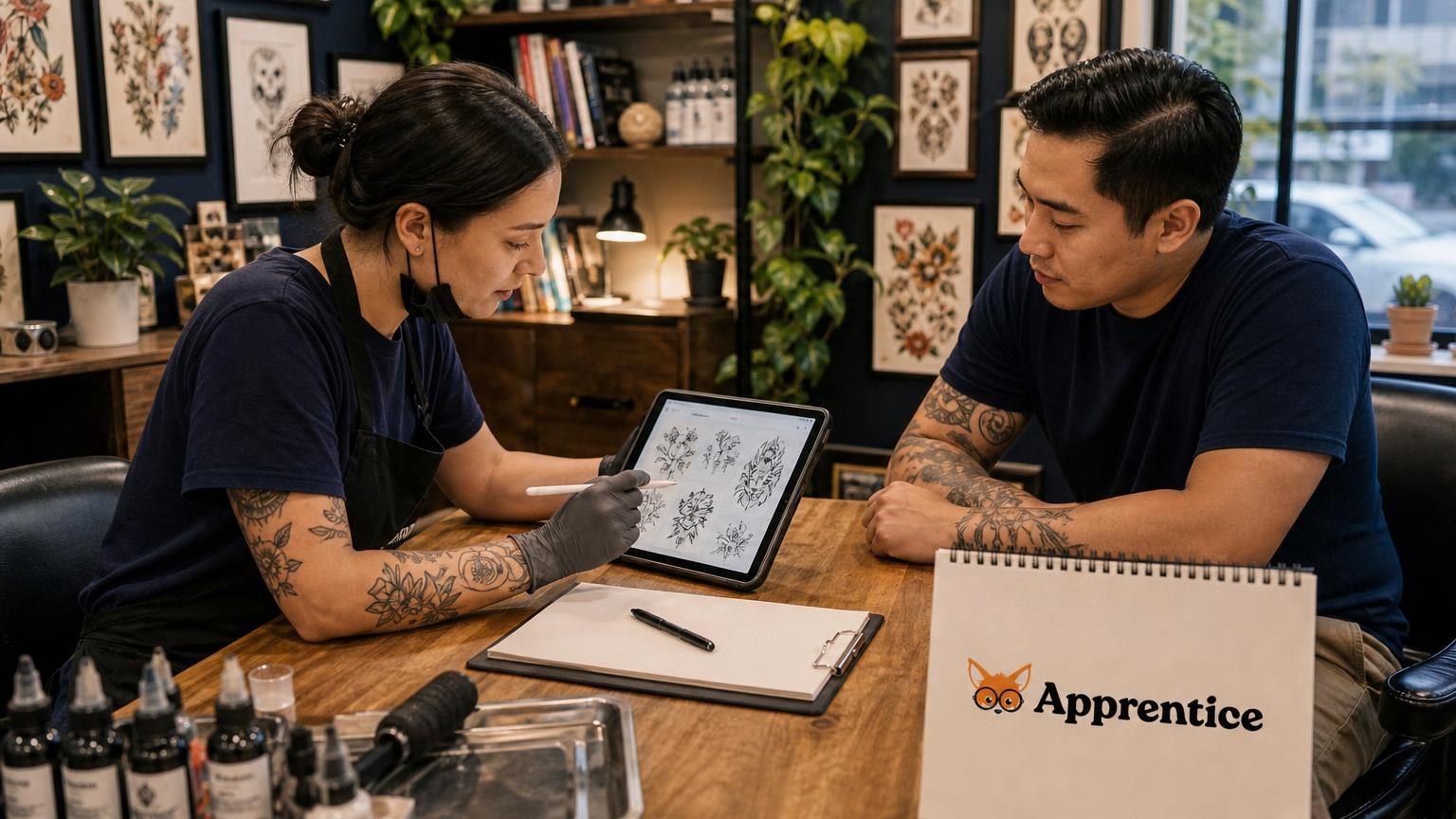
For artists, this means more consultation time upfront. You’re not just placing one tattoo. You’re planning a neighborhood. Tools like Apprentice can help here: using project management features to store references, track design iterations, and keep the conversation organized between sessions. That way, nothing gets lost when a client comes back six months later to add piece number four.
Behind-the-Ear and Nape Minimalism
Small, subtle, and strategic. Behind-the-ear tattoos have been popular for years, but the nape of the neck is having a serious moment. It’s a spot that reveals itself with a ponytail or an updo. There’s a quiet confidence to it.
These placements work best with minimal designs. Single words, tiny symbols, fine line florals. The skin here is thin, so detail holds differently than on a forearm. Artists need to be honest about what will and won’t last in these areas.
The appeal is clear: it’s intimate without being hidden. Clients love the “surprise” factor. And from a pain perspective, behind the ear is quick enough that most people handle it fine.
Sternum and Ribcage Flow Designs
Sternum pieces are bold. They demand attention and look incredible when done well. The ribcage, meanwhile, offers a long vertical canvas that follows the body’s natural curves. Both placements are trending hard for 2026.
Popular choices for the sternum include ornamental patterns, mandalas, and botanical arrangements. The ribcage lends itself to script, floral trails, and illustrative work. The collarbone, ribs, and upper arm are among the most popular spots for script tattoos right now, and that tracks with what we’re seeing in shops.
But here’s the reality check: these are painful spots. Clients need to know that going in. A good consultation sets expectations. And a deposit collected upfront protects your time if someone bails after realizing the rib session isn’t a walk in the park.
Why Placement Dictates the Longevity of Your Ink
Sun Exposure and High-Friction Zones to Avoid
Not all skin is created equal. And not all placements age the same. Sun exposure is the single biggest enemy of tattoo longevity. Hands, forearms, and shoulders catch UV daily. Without sunscreen, fine lines blur and colors fade.
Then there’s friction. Areas that move a lot or face more rubbing, like fingers, wrists, or ankles, tend to lose color faster. Finger tattoos look amazing on day one. By year two, they often need a touch-up. By year five, some are barely there.
This doesn’t mean you should avoid these spots entirely. It means you should be upfront with clients. Tell them what to expect. Show them healed examples, not just fresh ones. That honesty builds trust and saves you from awkward conversations later.
Skin Elasticity and Aging Considerations
Skin changes. Weight fluctuates. Muscles grow or shrink. Pregnancy stretches. Aging loosens. All of this affects tattoos. The inner bicep, for example, is a popular spot that can distort significantly with muscle gain or loss. The stomach is another area where dramatic changes are common.
Placements with more stable skin tend to hold up better over decades. The outer forearm, upper back, and calf are relatively stable for most body types. These are safe bets for clients who want their ink to look sharp long-term.
As an artist, you’re not just creating art. You’re advising on a decades-long investment. That’s a responsibility worth taking seriously.
Anatomy and Flow: Harmonizing Art with Body Movement
The Rule of Thirds in Body Mapping
Photographers use the rule of thirds. Tattoo artists should too. The body has natural visual divisions: upper, mid, and lower sections of each limb and the torso. Placing a design at the intersection of these zones creates balance.
A tattoo centered perfectly on the outer forearm, for instance, sits in a natural focal point. Move it too high or too low, and it feels off. The same principle applies to the thigh, the calf, and the back. Clients might not be able to articulate why something looks “right,” but they feel it.
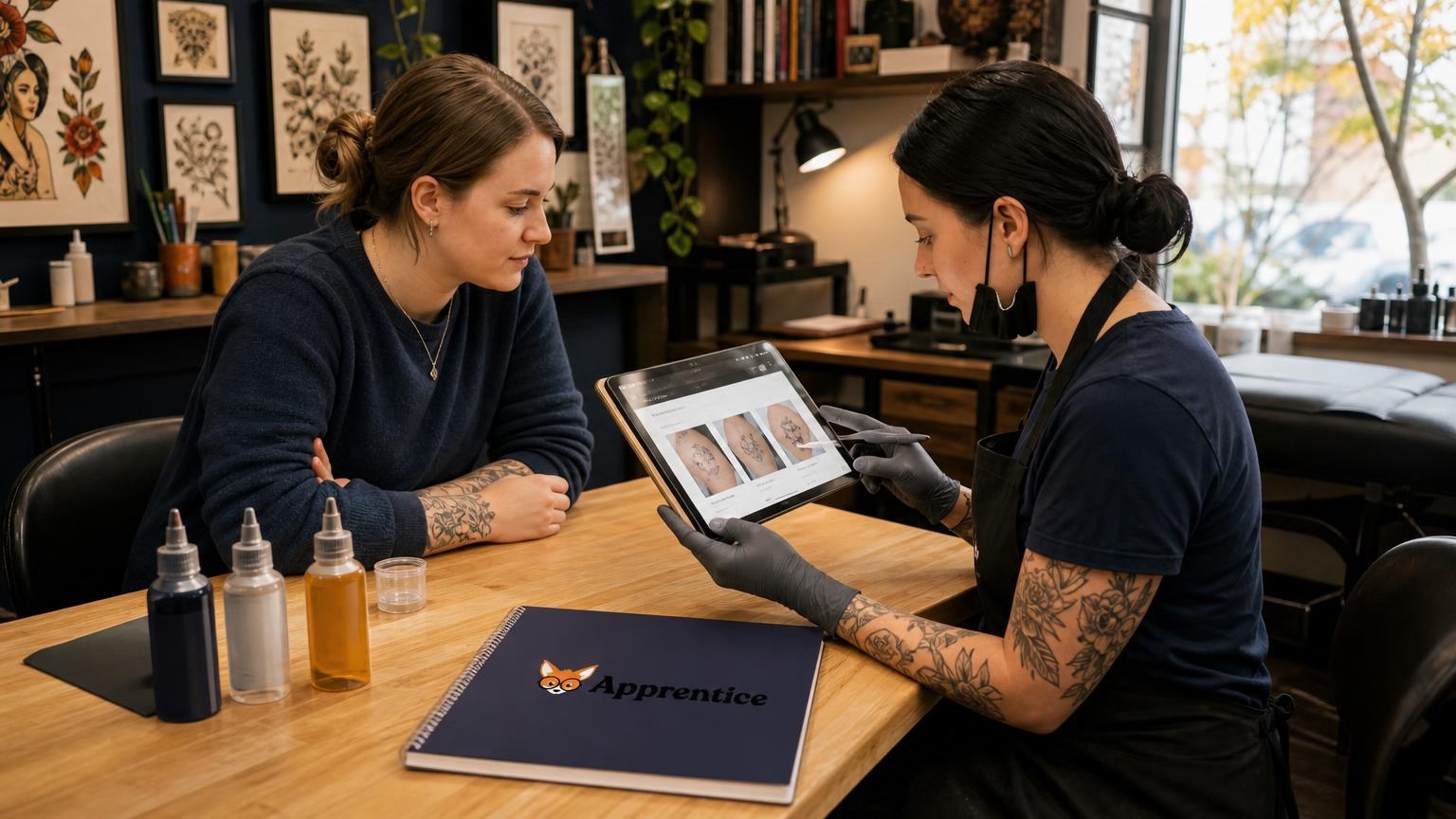
This is where digital tools earn their keep. Apprentice offers client placement previews that let you show someone how a design sits on their body before the needle touches skin. That visual confirmation eliminates second-guessing and builds confidence in the final decision.
Using Natural Muscle Lines to Enhance Symmetry
The body isn’t flat. It curves, flexes, and rotates. Great placement works with those dynamics, not against them. A design that follows the line of the deltoid muscle wraps naturally. A ribcage piece that traces the curve of the obliques looks like it belongs there.
When a tattoo ignores the body’s architecture, it fights for attention in the wrong way. Straight lines on curved surfaces look warped. Circular designs on flat planes can feel static. The best work reads like it was made for that exact body.
Spend time studying anatomy. Sketch on skin, not just paper. And watch how a design shifts when your client flexes, reaches, or twists. That five minutes of observation can save hours of regret.
The Practical Side: Pain Scales and Healing Realities
Comparing Sensitivity Across Modern Placement Hotspots
Pain is subjective. But patterns are real. The ribs, spine, neck, fingers, and feet are generally more painful areas to get tattooed. Bony spots with thin skin and lots of nerve endings will always be tougher sessions.
The trending placements for 2026 include some of these high-pain zones. Sternum, ribcage, behind the ear: they’re all on the spicier end of the scale. That doesn’t stop people from choosing them, but it should inform how you prepare your clients.
Here’s what works: be direct. Tell them it’s going to hurt. Suggest they eat before the session. Recommend comfortable clothing. And keep sessions at a reasonable length for sensitive areas. A two-hour rib session is very different from a two-hour forearm session.
Aftercare Challenges Unique to Specific Body Parts
Healing isn’t universal. A tattoo on the inner arm heals differently than one on the foot. Friction zones, clothing contact, and joint movement all complicate recovery.
Sternum tattoos, for example, sit right where a bra strap or seatbelt crosses. Ribcage pieces get compressed during sleep. Finger tattoos face constant washing and contact. Each placement has its own aftercare headaches.
Automated aftercare instructions sent right after the appointment take the guesswork out of recovery. With Apprentice, you can set up aftercare templates tailored to specific body parts. A sternum client gets different care instructions than a forearm client. That kind of detail matters, and it keeps clients from blowing up your DMs with questions at midnight.
Finalizing Your Decision: Consultation and Customization
The best placement decisions happen in consultation, not in the DMs. A real conversation, ideally in person, lets you assess skin quality, body proportions, and lifestyle factors. You can see how a client moves. You can map the design to their specific anatomy. You can talk through the realities of pain, healing, and aging.
For artists, this is where the craft lives. Anyone can tattoo a design. Placing it perfectly on a unique body is what separates good work from great work. And for clients, this is where trust gets built. A thoughtful consultation shows you care about the outcome, not just the transaction.
Tattoo placement in 2026 is more intentional than ever. Clients are informed. They’ve done their research. They deserve an artist who matches that energy with expertise and honesty. The right spot on the right body with the right design: that’s the whole point.
If you’re spending more time managing bookings and chasing deposits than actually tattooing, something’s off. Apprentice handles the admin so you can focus on the work that matters. Get started free for 14 days and see how much time you get back.

Jason Howie
Founder & CEO
Jason Howie is the founder of Apprentice, passionate about empowering tattoo artists and shops with better tools to manage their business and serve their clients.