Tattoos used to be the thing your parents warned you about. Now they’re the thing your favorite designer puts on a runway model. The relationship between ink and personal style has never been tighter, and the numbers back it up: roughly 32% of American adults have at least one tattoo, with millennials leading the charge at 46%. That’s not a fringe subculture. That’s mainstream. For tattoo artists and shop owners, understanding how ink integrates with style isn’t just cultural awareness. It’s good business. Your clients are thinking about their tattoos the same way they think about their wardrobe. They want pieces that work with their look, not against it. And that shift changes how you consult, design, and position your work. The fashion world has caught on. It’s time to make sure you’re keeping pace.
The Evolution of Tattoos from Subculture to High Fashion
Fifty years ago, tattoos belonged to sailors, bikers, and punk rockers. They were deliberate acts of rebellion. A visible tattoo was a middle finger to polite society, and that was kind of the point.
But culture moves fast. The US tattoo industry now generates approximately $1.6 billion in annual revenue. That kind of money doesn’t come from the margins. It comes from the center. Celebrities, athletes, tech founders, and fashion editors all wear ink openly. The stigma hasn’t just faded. It’s been replaced by genuine appreciation for the craft.
This shift matters for your shop. Your client base isn’t just the die-hard tattoo collector anymore. It’s the accountant who wants a fine-line piece on her forearm. It’s the startup founder who wants a sleeve that looks good under a rolled cuff. These people think about tattoos as fashion. And they’re willing to pay for quality.
Breaking the Stigma in Professional Environments
Corporate dress codes used to be the death sentence for visible ink. Not anymore. Remote work accelerated the change, but the trend was already moving. Tech companies dropped tattoo policies years ago. Finance and law are catching up.
The reality is that visible tattoos in the workplace are no longer career killers for most people. Your clients know this. That’s why they’re asking for placements that show, not hide. They want wrist pieces, hand tattoos, and neck work. They’re making intentional choices about visibility because the professional consequences have shrunk.
This is great for business. But it also raises the stakes on quality. A visible tattoo is a daily advertisement for your shop, good or bad. Every piece you put on someone’s hand or forearm is walking around in boardrooms and coffee shops. Make it count.
Ink as the Ultimate Permanent Accessory
Jewelry comes off. Clothes change. But a tattoo stays. That permanence is exactly what makes it the ultimate fashion accessory for a growing number of clients.
People are commissioning tattoos the way they’d commission a custom piece of jewelry. They’re thinking about metals and skin tones, about how a design interacts with the clothing they wear most. A delicate collarbone piece designed to peek above a neckline. A forearm half-sleeve curated to complement a watch collection. These aren’t random impulse decisions.
As an artist, this means your consultation game needs to be sharp. You’re not just discussing design preferences. You’re discussing wardrobes, lifestyles, and personal branding. The more you understand your client’s style, the better the tattoo. And the better the tattoo, the more referrals walk through your door.
Runway Influence and Designer Collaborations
Fashion houses have been flirting with tattoo culture for decades. Jean Paul Gaultier printed tattoo motifs on mesh tops in the 1990s. But the relationship has deepened significantly in recent years. Designers aren’t just borrowing tattoo imagery. They’re collaborating directly with tattoo artists.
Brands like Dior, Gucci, and Marc Jacobs have featured heavily tattooed models in campaigns. Some have hired tattoo artists to create exclusive prints. This isn’t appropriation. It’s recognition. The fashion industry sees tattooing as a legitimate art form, and they want access to the talent behind it.
For shop owners and artists, this creates opportunity. Your work exists at the intersection of art and fashion, whether you think about it that way or not.
Tattoo-Inspired Prints and Textiles
Walk through any department store and you’ll spot tattoo-inspired designs on shirts, scarves, and even shoes. Old-school roses, Japanese waves, tribal patterns: these motifs have jumped from skin to fabric.
This crossover works both ways. Clients bring in textile patterns as tattoo references. They see a printed jacket with a dragon motif and want the real thing on their back. The visual language of tattoos and fashion is merging, and artists who understand textile design have an edge in translating those ideas to skin.
Pay attention to what’s happening on fabric. It’ll show up in your consultation requests six months later.
Body Art as a Focal Point in Luxury Campaigns
Luxury brands now cast models specifically because of their tattoos. The ink isn’t hidden or airbrushed out. It’s featured. A tattooed hand holding a handbag. A chest piece visible above a couture neckline. The tattoo becomes part of the campaign’s visual story.
This is a major cultural signal. When a brand spending millions on a campaign chooses to showcase tattoos, it validates the art form at the highest level. It tells your clients that ink and luxury aren’t opposites. They’re companions.
For your portfolio, think about this. Shoot your work in context. Show how a piece looks with clothing, in natural settings. Your Instagram shouldn’t just be fresh tattoos on paper towels. Show the lifestyle. Show the fashion. That’s what sells the next booking.
Modern Aesthetic Styles Dominating the Scene
Style trends in tattooing move fast, and they’re increasingly influenced by fashion, graphic design, and digital culture. The global tattoo market is projected to reach USD 5.99 billion by 2034, and a big chunk of that growth comes from people chasing specific aesthetic trends. Knowing what’s hot helps you serve clients better and position your work.
Minimalism and Fine-Line Sophistication
Fine-line tattoos have exploded. Thin, delicate work: single-needle florals, micro-realistic portraits, tiny script. This style appeals to fashion-conscious clients who want ink that whispers rather than shouts.
The appeal is obvious. Fine-line work pairs with everything. It looks elegant under a watch, subtle alongside jewelry, and sophisticated peeking from a sleeve. It’s the tattoo equivalent of a well-tailored white shirt.
But here’s the reality check. Fine-line work is technically demanding and ages differently than bolder styles. You need to educate clients on longevity and touch-ups. Honesty about what holds up over time builds trust and saves you headaches down the road.
Neo-Traditionalism and Bold Color Palettes
On the opposite end, neo-traditional work is thriving. Think classic tattoo structure: bold lines, heavy saturation, but with expanded color palettes and more complex compositions. These pieces make a statement. They’re fashion-forward in a maximalist way.
Clients drawn to neo-traditional work often have a strong personal style already. They wear bold colors, vintage cuts, and statement accessories. The tattoo becomes another layer of that identity. Your job is to match the energy of their wardrobe with the energy of the design.
Color theory matters here. Understanding which pigments complement different skin tones is critical. A vibrant teal that pops on one client might look muddy on another. This is where craft meets fashion in the most literal sense.
Cyber-Sigilism and Y2K Revival Trends
Cyber-sigilism is one of the freshest tattoo fashion trends right now. Sharp, angular, almost alien-looking designs that draw from early 2000s digital aesthetics. Think tribal meets circuit board. These pieces are all about visual impact and futuristic energy.
The Y2K revival in fashion: low-rise jeans, butterfly clips, metallic fabrics: has a direct parallel in tattoo culture. Clients want ink that matches the vibe. Barbed wire armbands are back. So are lower back pieces, reclaimed from punchline to power move.
One expert observation captures the mood well: tattooing is shifting from bold statement pieces to subtle, wearable statements that are less about permanence and more about expression and feeling right now. That’s a fashion mindset, not a traditional tattoo mindset. And it’s reshaping what clients ask for.
Strategic Placement for Sartorial Impact
Placement has always mattered. But now clients think about it through a fashion lens. They’re not just asking “where does it fit?” They’re asking “how does it look with my clothes?”
This is where your expertise as an artist becomes invaluable. You understand anatomy, movement, and how skin stretches. Combine that knowledge with an understanding of clothing and you become a true style consultant.
Complementing Necklines and Silhouettes
A sternum tattoo designed to frame a V-neckline. A shoulder piece that follows the line of a tank top strap. A ribcage design that appears when someone raises their arm in a cropped top. These are deliberate fashion choices.
During consultations, ask your clients what they wear most. If someone lives in crew necks, a collarbone piece might never see daylight. If they love off-shoulder tops, a shoulder cap becomes prime real estate. This conversation shows clients you’re thinking beyond the stencil.
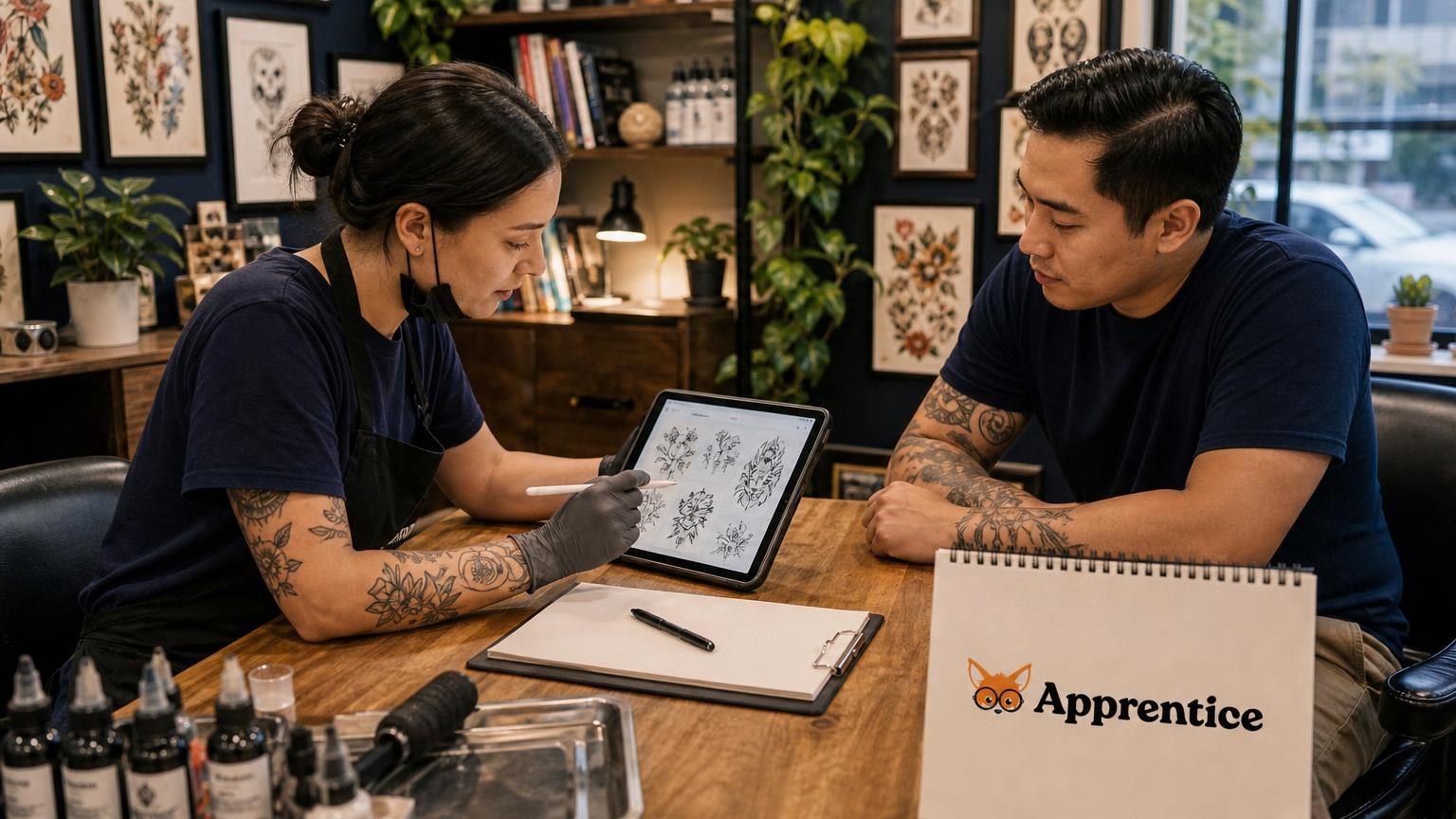
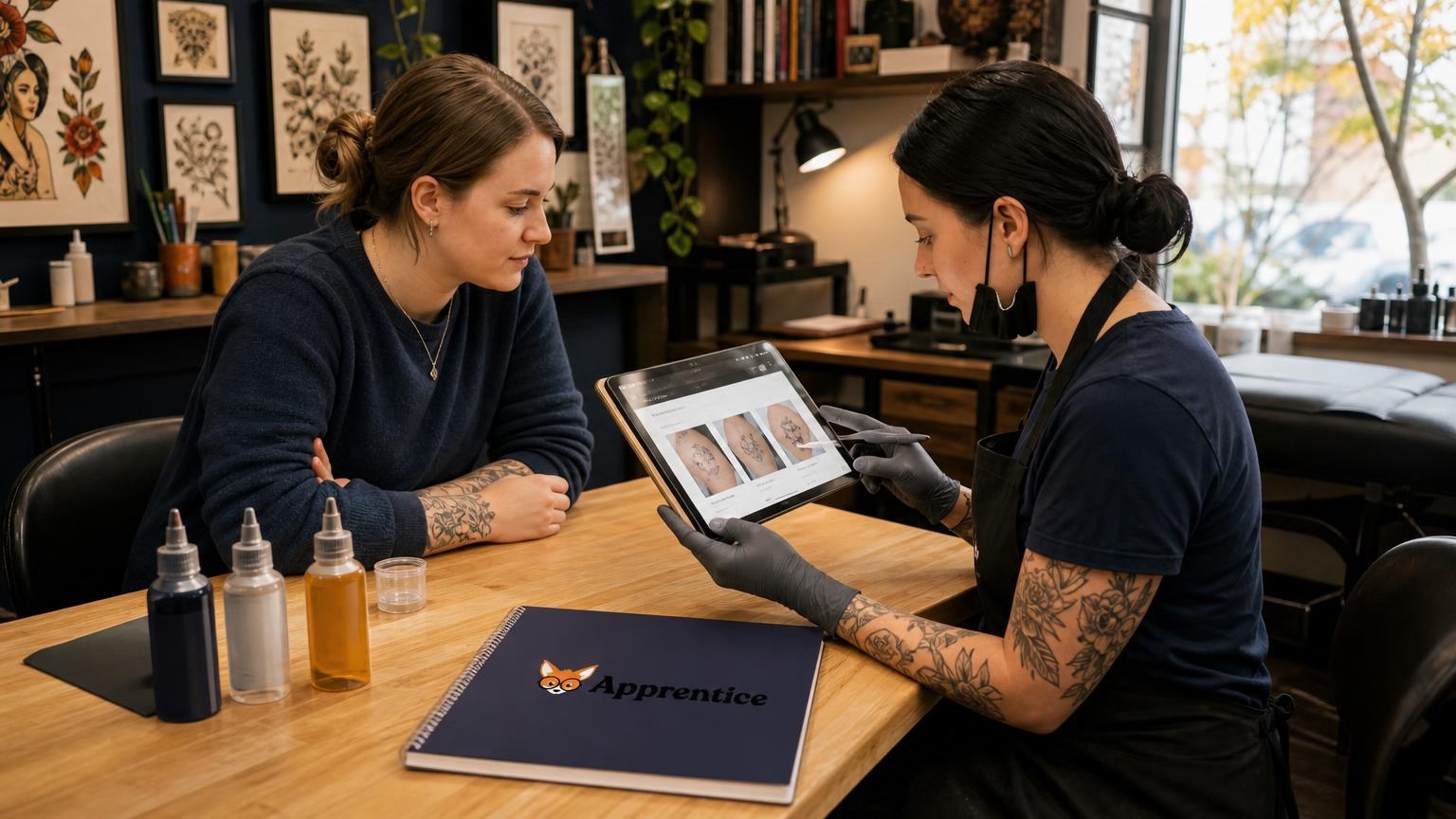
Tools like Apprentice’s design collaboration features can help here. You can share placement previews with clients before they sit in the chair, making sure the design works with their wardrobe and body. That kind of preparation reduces revisions and increases satisfaction.
Visible Ink and the Rise of ‘Statement’ Placements
Hand tattoos, finger tattoos, face tattoos, and throat pieces used to be reserved for heavily collected individuals. Not anymore. First-time clients are walking in asking for hand work. The influence of fashion, music, and social media has made these placements desirable, not just acceptable.
But this trend comes with responsibility. You know better than anyone that hand and finger tattoos fade fast and require touch-ups. Neck tattoos are still career-limiting in some fields. Having an honest conversation about these realities isn’t gatekeeping. It’s professionalism.
Set clear expectations. Discuss healing, longevity, and lifestyle impact. And document everything. Digital consent forms through a platform like Apprentice keep your records clean and protect both you and your client. That paperwork isn’t the fun part, but it’s the part that keeps you out of trouble.
The Synergy Between Streetwear and Tattoo Culture
Streetwear and tattoos share DNA. Both came from the streets. Both were dismissed by the mainstream. Both are now billion-dollar industries. The overlap is natural, deep, and profitable.
Brands like Supreme, Stüssy, and Palace have long drawn from tattoo aesthetics. Flash-style graphics, old-school lettering, and Americana imagery show up constantly in streetwear collections. And tattoo artists have become streetwear collaborators, designing capsule collections and limited-edition drops.
For shop owners, this connection is a branding opportunity. Your shop’s visual identity, your flash sheets, your merch: all of it can tap into streetwear culture. Sell printed tees with your artists’ designs. Create sticker packs. Build a brand that extends beyond the tattoo chair.
The North America tattoo market was valued at USD 861.68 million in 2024 and is expected to grow at 8.8% CAGR through 2031. That growth isn’t just from tattoos. It’s from the entire ecosystem around tattoo culture: merch, media, events, and fashion. Smart shops are diversifying their revenue streams accordingly.
Your flash galleries can do double duty here. Keep them organized and accessible, both in-shop and online. When a walk-in client can browse your flash on a screen while waiting, they’re more likely to commit. And when that flash is available as a print or a shirt, you’ve created a second revenue stream from the same artwork.
Future Outlook: Digital Ink and Tech-Integrated Art
The next frontier of tattoo fashion is digital. Augmented reality tattoos, LED-reactive ink, and UV-responsive pigments are all in development or early adoption. These technologies blur the line between body art and wearable tech.
Imagine a tattoo that changes appearance under different lighting. Or one that interacts with a smartphone app. It sounds like science fiction, but prototypes exist. And fashion brands are watching closely. The convergence of tech and tattoo art could create entirely new categories of personal expression.
For now, the practical applications are closer to earth. AI tools are already changing how artists work. Concept generation, stencil cleanup, and client placement previews are all areas where technology saves time and improves results. Apprentice offers AI-powered tools for exactly this: helping you go from rough concept to clean stencil faster, so you spend more time doing what you love.
The artists who’ll thrive in the next decade are the ones who treat tattoos as part of a larger style conversation. Your clients don’t separate their ink from their fashion. Neither should you. Stay curious about what’s happening in design, textiles, and tech. Pull inspiration from runways and street style. And keep pushing the craft forward.
Tattoo fashion isn’t a trend. It’s a permanent shift in how people think about personal style. It’s visual. It’s visceral. And it’s yours to shape.
If you’re spending more time on admin than on art, that’s a problem worth fixing. Apprentice lets you automate bookings, collect deposits, and manage your client pipeline so you can focus on the creative work that actually grows your reputation. Get started free for 14 days and see the difference it makes in your first week.

Jason Howie
Founder & CEO
Jason Howie is the founder of Apprentice, passionate about empowering tattoo artists and shops with better tools to manage their business and serve their clients.