Quick answer
How does a tattoo apprenticeship work?
A tattoo apprenticeship is one to three years of hands-on training under a licensed artist inside a working shop. You start with shop duties, observation, and drawing assignments, move to practice skin and stencil work around months four to eight, begin supervised tattoos on volunteers around month nine, and take paying clients with oversight from roughly month fifteen. Most are unpaid.
- Length: 1 – 3 years; 12 – 18 months minimum before unsupervised paying clients
- Pay: Usually none — some shops offer a small stipend or a cut of late-stage work
- Total cost: $5,000 – $10,000 including supplies, certifications, and living expenses
- Shop fee, if charged: $2,000 – $5,000 is normal; $10,000+ is a red flag
- To get in: A portfolio of 20 – 50 original pieces and a lot of persistence
- Related: Landing an apprenticeship, Artist pay, State licensing rules
Most people romanticize tattooing. They see the art, the culture, the Instagram reels. What they don’t see is the years of grunt work that come before you ever touch a machine to skin. A tattoo apprenticeship is the single most important step in becoming a professional artist, and it’s also the most misunderstood. It’s grueling. It’s humbling. And if you’re serious about this craft, it’s not optional. Here’s what you actually need to know before you commit: how the process works, what it’ll cost you, and how long you should expect to be the person scrubbing tubes and answering phones before you’re the one holding the needle.
What Is a Tattoo Apprenticeship?
A tattoo apprenticeship is a hands-on training period where you learn the craft under a licensed, experienced artist. Think of it like a trade school, but inside a real shop with real clients. You’re not sitting in a classroom. You’re watching, assisting, cleaning, drawing, and slowly earning the right to tattoo.
The structure varies wildly from shop to shop. Some mentors have a formal curriculum. Others take a “watch and learn” approach. But the core idea is the same: you trade your time and labor for knowledge that can’t be taught in a YouTube tutorial. You learn sanitation, client interaction, machine mechanics, needle groupings, ink consistency, and skin types. It’s permanent. It’s personal. People want it to be perfect.
And here’s the reality check: not everyone gets accepted. Shops get dozens of requests. The artists who take on apprentices are putting their reputation on the line. If you produce bad work, it reflects on them. So they’re picky, and they should be.
Finding the Right Shop and Building Your Portfolio
Before you walk into a shop and ask for a spot, you need a portfolio. Not a sketchbook full of doodles. A curated collection of your best original work that shows range, discipline, and an understanding of design principles. Include pencil work, ink illustrations, digital art, and paintings. Show that you can draw clean lines, shade smoothly, and compose a design that works on a curved surface.
Research shops in your area. Visit them as a client first. Get tattooed there if you can. Pay attention to how they run things: the vibe, the cleanliness, the way artists interact with clients. You want a shop that aligns with your style and values. A realism-heavy shop isn’t the best fit if you want to do traditional Japanese work.
When you approach a shop, be humble and be direct. Bring your portfolio. Explain why you want to learn from them specifically. And be ready to hear “no” a few times before you hear “yes.” We’ve written a full playbook on how to get a tattoo apprenticeship, including what shops actually look for when they size you up.
The Role of a Tattoo Apprentice in a Busy Studio
Your first months won’t feel glamorous. You’ll be the first one in and the last one out. You’ll clean stations, break down setups, answer phones, greet walk-ins, and stock supplies. This isn’t hazing. It’s how you learn the rhythm of a working shop.
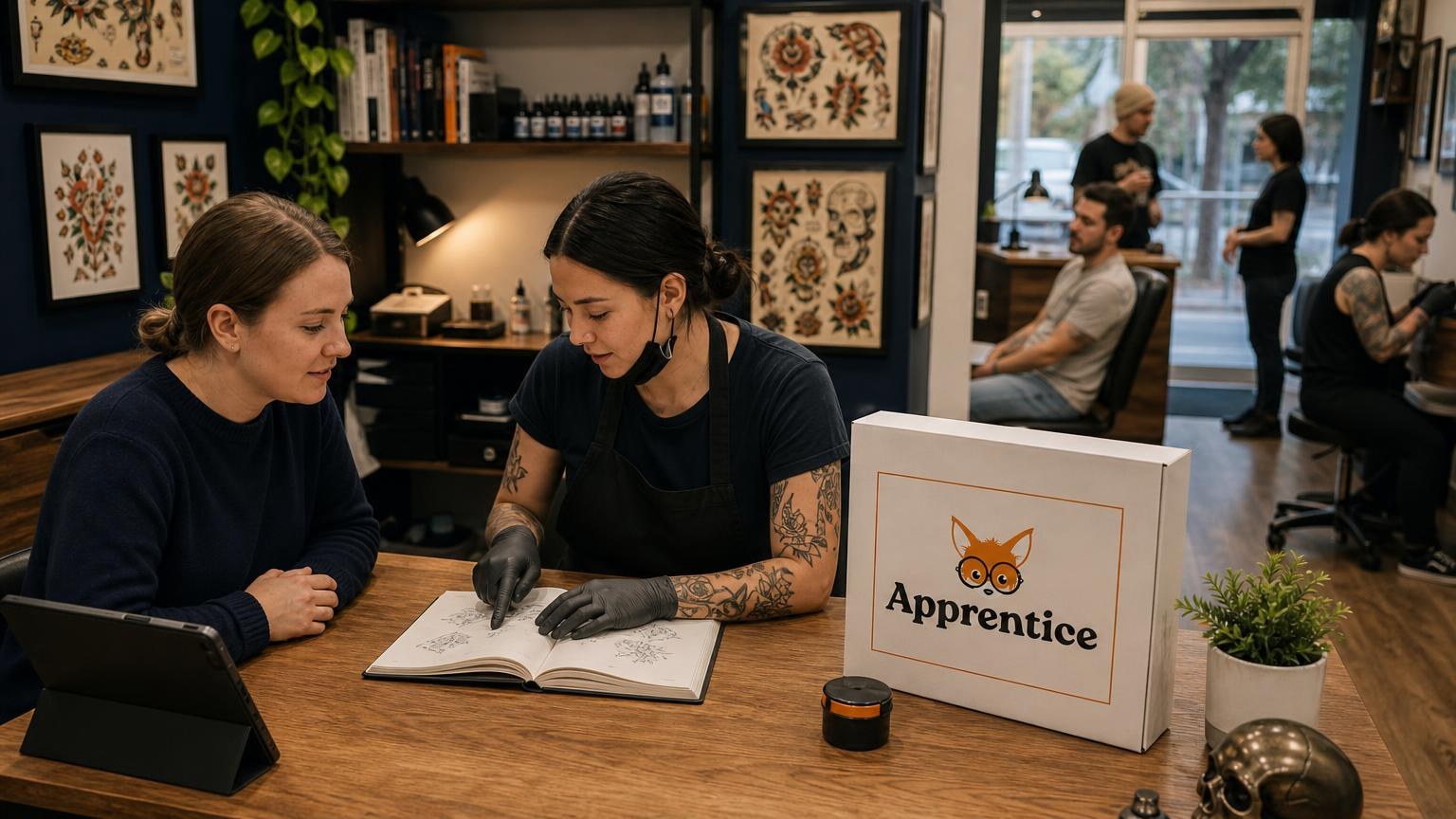
You’ll observe your mentor during sessions. You’ll study how they set up, how they position the client, how they stretch skin, and how they manage long sessions. You’ll practice drawing for hours every day, often redrawing the same design until it’s flawless. Some mentors will have you practice on synthetic skin or fruit before you ever touch a person.
The unsexy stuff matters. Learning how a shop operates, how clients flow through the space, how consent forms get handled, and how the front desk stays organized: that’s the foundation. Without it, you’re just someone who can draw. With it, you’re becoming a professional.
How It Works: The Path from Drawing to Tattooing
The progression from apprentice to working artist follows a rough arc: observation, practice, assisted tattooing, and eventually solo work. But the timeline isn’t linear. You might spend months just drawing before your mentor lets you near a machine.
Most apprenticeships start with heavy emphasis on art fundamentals. You’ll redraw flash sheets. You’ll study lettering. You’ll learn how designs translate from paper to skin, which is a completely different challenge than drawing on a flat surface. Skin stretches, bleeds, and heals differently depending on body placement.
Your mentor will gradually introduce you to machine mechanics. You’ll learn the difference between coil and rotary machines. You’ll understand voltage, needle depth, and speed. You’ll practice on practice skin until your lines are consistent and your shading is smooth. Only then will you start tattooing real people, usually friends or volunteers willing to sit for a beginner.
Learning Shop Operations and Sanitation Standards
Sanitation isn’t a side topic. It’s the backbone of everything. Tattoo licensing requirements vary significantly by state, but bloodborne pathogen training and CPR certification are standard almost everywhere. You’ll learn autoclave operation, cross-contamination prevention, and proper disposal of sharps and biohazard waste.
Your mentor will drill this into you. How to set up a sterile station. How to barrier everything the client or your gloves might touch. How to break down and sanitize after every session. One mistake in sanitation can cause a serious infection or transmit disease. There’s zero room for shortcuts.
You’ll also learn the legal side: local health department regulations, required permits, and documentation standards. Every state has different rules, and the push for more consistent national standards is growing in 2026. Knowing the rules isn’t just smart. It’s non-negotiable.
Mastering Design Tools and Project Management
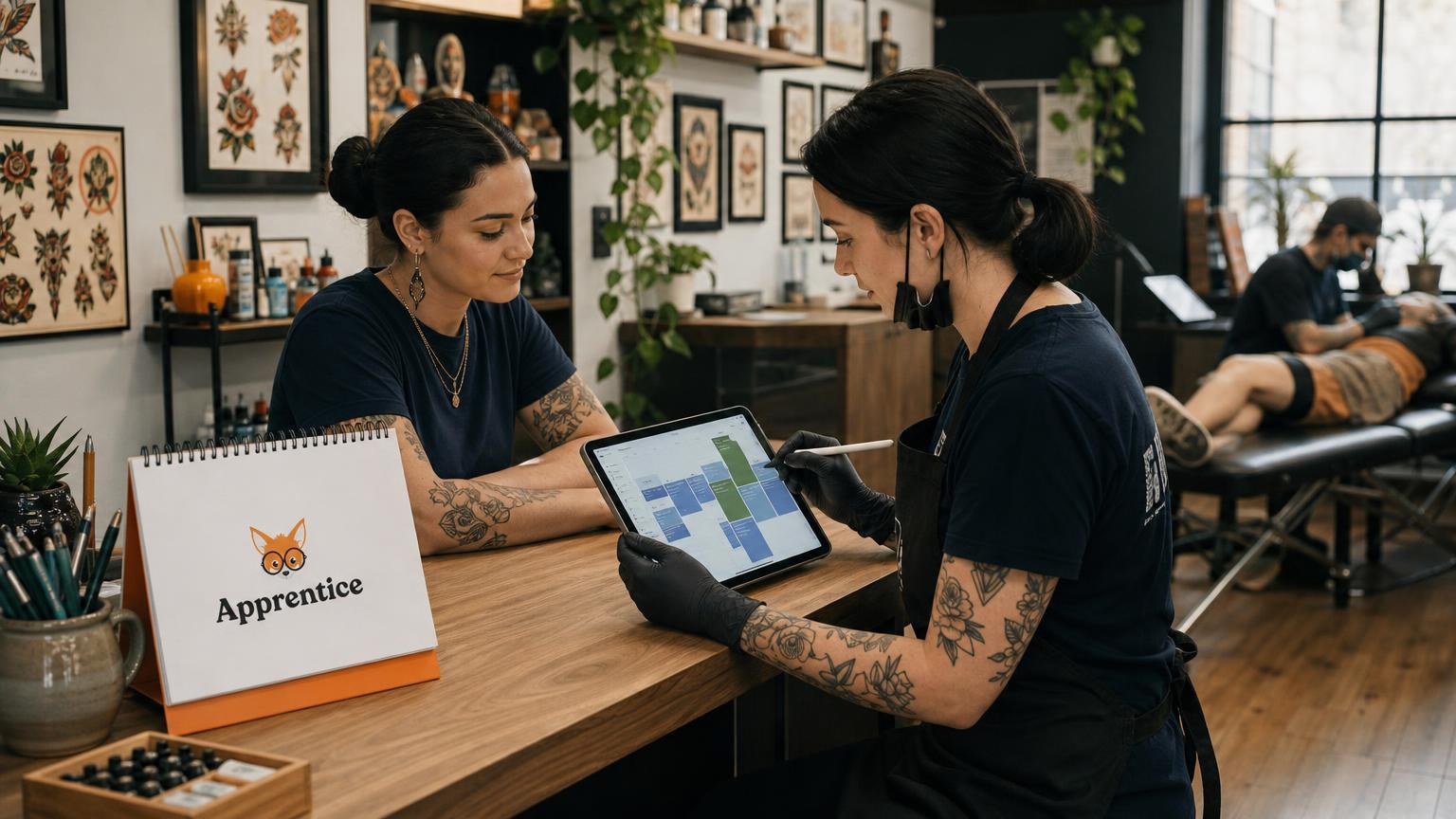
Drawing on paper is where it starts, but digital tools are now a huge part of the process. Procreate on an iPad is practically industry standard for designing tattoos. You’ll learn to create stencils digitally, adjust sizing, and mock up placement on photos of the client’s body.
Project management might sound corporate, but it’s really just keeping track of your work. Each tattoo is a project: the client’s idea, reference images, your sketches, revisions, the appointment itself, and aftercare follow-up. Losing track of details means a bad client experience. Tools like Apprentice give you a project hub for each tattoo, where you can store designs, references, and messages all in one place. That kind of organization separates the pros from the amateurs.
Because here’s the truth: talent gets you in the door. Organization keeps you in business. The best artists you’ll ever meet are also incredibly disciplined about managing their time, their clients, and their creative process.
How Long is a Tattoo Apprenticeship?
Most tattoo apprenticeships last one to three years, and you should expect at least 12 to 18 months before you’re tattooing paying clients on your own. Some run longer. Some shops have structured programs that move faster. But faster isn’t always better.
The length depends on several factors: your existing art skills, how quickly you pick up machine work, how many hours per week you’re in the shop, and your mentor’s teaching style. Some mentors are hands-on and accelerate the process. Others believe in a longer, slower build.
And even once you’re doing solo tattoos on paying clients, you’ll still be learning. Every working artist will tell you they’re still learning years into their career. The apprenticeship gives you the foundation. The rest comes from thousands of hours of practice.
Timeline Expectations: From Cleaning to Needles
Here’s a rough breakdown of what the typical apprenticeship timeline looks like:
- Months 1 to 3: Shop duties, observation, drawing assignments, sanitation training, bloodborne pathogen certification.
- Months 4 to 8: Machine introduction, practice on synthetic skin, stencil application, learning needle configurations and ink mixing.
- Months 9 to 14: Supervised tattoos on volunteers, building a small portfolio of real work, learning client consultation skills.
- Months 15 to 24+: Increasing independence, taking on paying clients with mentor oversight, developing your personal style.
These phases overlap and shift depending on your progress. Don’t rush it. The artists who skip steps or cut corners end up producing bad work that follows them forever. Your early tattoos will live on someone’s body for the rest of their life. Take that seriously.
The Real Cost of Becoming a Tattoo Artist
Money is the uncomfortable part. The financial barrier to entry for tattoo training runs from a few hundred dollars in supplies under a traditional work-for-training arrangement all the way to $20,000 for a structured tattoo school program. That’s a massive range, and the difference comes down to what kind of training you pursue.
A traditional apprenticeship where you work for free in exchange for mentorship is the cheapest route. But “free” is misleading. You’re still paying for supplies, certifications, and your own living expenses while working unpaid hours. Some shops charge a flat fee for the apprenticeship itself, typically $2,000 to $5,000. Treat anything close to five figures as a red flag.
Formal tattoo schools and academies charge more, sometimes up to $20,000. These programs offer structured curricula, but they’re controversial in the industry. Many working artists view them skeptically because they can’t replicate the real-world experience of learning inside a busy shop.
Understanding Tuition Fees and Equipment Expenses
Beyond tuition or apprenticeship fees, you’ll need equipment. A decent starter tattoo machine runs $200 to $500. You’ll need power supplies, needles, ink sets, grips, practice skin, and a portfolio case. Bloodborne pathogen training and CPR certification add another $50 to $150. And you’ll likely need to cover your own health department permits and licensing fees.
The total cost to become a working tattoo artist can easily hit $5,000 to $10,000 even in a traditional apprenticeship model. That’s before you earn a single dollar from tattooing. Budget for it. Have savings or a part-time job. Because financial stress during your training will make everything harder.
Some shops provide equipment during the apprenticeship. Ask about this upfront. It can save you thousands.
The Myth of the Paid Tattoo Apprenticeship
Let’s be blunt: paid apprenticeships in tattooing are rare. They exist, but they’re the exception, not the rule. Most apprentices work for free or even pay for the privilege of learning. The average reported salary for a tattoo apprentice is low enough that you shouldn’t count on it as income.
Is that fair? That’s debatable. The argument from shop owners is that mentoring takes time away from their paying work. They’re investing hours into teaching you, and that has real financial cost. The counterargument is that apprentices provide free labor that keeps the shop running.
Here’s the pragmatic take: if you find a paid apprenticeship, great. Take it. But don’t hold out for one. The best training often comes from the mentor who’s hardest to get into, not the one who pays the most. Focus on the quality of the education, not the paycheck. The paycheck comes later, and tattooing can be a solid career once you’re established.
Setting Up Your Future Shop Success
Your apprenticeship teaches you to tattoo. But running a career as a tattoo artist requires a whole different set of skills. Client management, scheduling, financial tracking, and marketing are all part of the job. The artists who burn out fastest are usually the ones who never learned the business side.
Start thinking about this stuff during your apprenticeship, not after. Watch how your mentor handles bookings, cancellations, and no-shows. Pay attention to how the shop manages its schedule. Ask questions about pricing, deposits, and client communication. The business knowledge you absorb during training is just as valuable as the technical skills.
Tattooing continues to grow as an industry in 2026, with demand driven by broader cultural acceptance and new styles gaining popularity. That growth means more competition. The artists who thrive are the ones who treat their craft like a business from day one.
Using Digital Tools to Save Time and Manage Clients
Once you start taking clients, even as a late-stage apprentice, you’ll quickly realize how much time gets eaten by admin work. Responding to DMs, scheduling appointments, chasing deposits, sending aftercare instructions. It adds up fast.
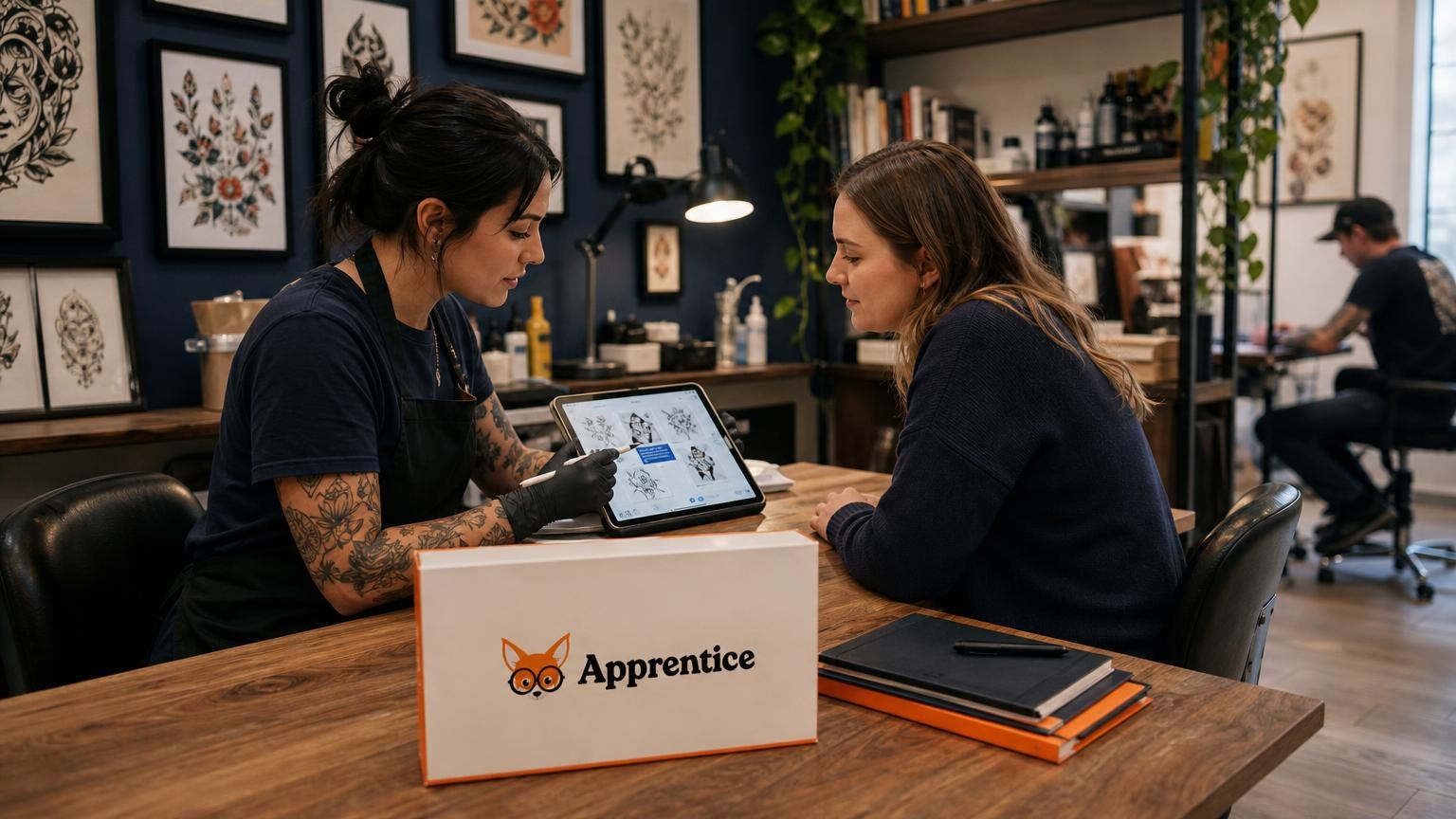
This is where tools built specifically for tattoo artists make a real difference. Apprentice, for example, lets clients request appointments that you approve on your terms. Deposits get collected before anyone walks in, which kills the no-show problem. Consent forms get handled on the client’s phone before the session. And your one inbox pulls messages from email, Instagram, WhatsApp, and Facebook into a single place, with Your Apprentice drafting replies that you approve.
The AI design tools are worth mentioning too. Stencil cleanup, placement previews, and project messaging let your clients see the idea before it’s permanent. That means fewer surprises, fewer revisions at the station, and happier clients. These aren’t gimmicks. They’re practical tools that free up your time so you can focus on the actual art.
Transitioning from Apprentice to Professional Artist
The shift from apprentice to working artist isn’t a single moment. It’s a gradual transition. You’ll start taking more clients, building your own following, and developing a style that’s distinctly yours. Your mentor will step back as your confidence and skill grow.
But the transition also means new responsibilities. You’ll need to decide whether to rent a booth, work on commission, or eventually open your own space. You’ll need to handle your own taxes, insurance, and marketing. The demographics of working tattoo artists skew younger, which means many new artists are figuring out self-employment for the first time.
Build your social media presence during your apprenticeship. Post your practice work, your approved tattoos, and your drawing process. Engage with the community. Your online presence is your storefront. By the time you’re ready to go solo, you should already have a following and a waitlist forming.
And don’t burn bridges. The tattoo world is smaller than you think. Your mentor, your shop mates, and the artists you meet during your training will be your network for years to come. Respect the craft. Respect the people who taught you. That reputation is everything.
FAQ
How long does a tattoo apprenticeship take?
Most tattoo apprenticeships last one to three years. Expect at least 12 to 18 months before you’re tattooing paying clients without supervision. The exact timeline depends on your existing art skills, how many hours you spend in the shop each week, and your mentor’s teaching style.
How much does a tattoo apprenticeship cost?
A traditional apprenticeship trades your labor for training, but supplies, certifications, and equipment still push the total cost to $5,000 to $10,000. Some shops charge a flat apprenticeship fee of $2,000 to $5,000 on top of that, and formal tattoo schools run as high as $20,000.
Do tattoo apprentices get paid?
Rarely. Most tattoo apprentices work unpaid in exchange for mentorship, and some pay for the privilege. A few shops offer a small stipend or a cut of the tattoos you do late in your training. Plan on savings or a part-time job to cover living expenses while you learn.
Can you become a tattoo artist without an apprenticeship?
Some states don’t legally require one, but skipping it is a bad bet. Several states require documented supervised training hours for a license, reputable shops rarely hire self-taught artists, and you miss the sanitation and client-safety training that keeps people from getting hurt.
The Bottom Line
A tattoo apprenticeship is hard, expensive, and long. It’s also the only real path to becoming an artist who produces work you’re proud of. There are no shortcuts worth taking. The investment you make in proper training pays off every single time a client sits in your chair and trusts you with something permanent on their body.
Do your research. Build a strong portfolio. Find a mentor who challenges you. Learn the business side alongside the art. And when you’re ready to start managing clients and running your career like a professional, tools like Apprentice are built to handle the admin so you can focus on what you actually love: making great tattoos.
This craft gave us all something. Give it the respect of learning it right.

Jason Howie
Founder & CEO
Jason Howie is the founder of Apprentice, passionate about empowering tattoo artists and shops with better tools to manage their business and serve their clients.