To start a permanent jewelry business, you need a pulse-arc welder, quality chain and jump rings, safety gear, training, insurance, and a signed waiver for every client. Add a simple booking and consent system, and you can launch from a studio corner or a pop-up table. The details below cover each step.
Permanent jewelry is a popular add-on service in tattoo and piercing studios. It’s personal. It’s permanent. And clients love it. If you’ve been thinking about how to start a permanent jewelry business, the barrier to entry is lower than you’d expect, but the details matter more than most people realize. A sloppy setup costs you clients, credibility, and potentially your insurance coverage. This guide breaks down everything you need: equipment, startup costs, the permanent jewelry waiver every client should sign, insurance, workspace layout, and the software that keeps your calendar from becoming a nightmare. Solo operators building a brand and shop owners adding a revenue stream will both walk away knowing what it takes to launch this service the right way.
Why Are Studios Adding Permanent Jewelry?
Because it’s a quick, low-commitment service that fits the clients they already have. A welded bracelet takes minutes and doesn’t require numbing or healing time. That makes it an easy “yes” for clients who aren’t ready for ink.
Permanent jewelry didn’t come out of nowhere. It grew from the same culture that drives tattoos, piercings, and permanent makeup: people want meaningful, lasting adornments. The difference is the entry point.
For tattoo and piercing studios, this is a natural fit. You already have the foot traffic, the brand trust, and the aesthetic. Adding permanent jewelry means serving the friends and partners who tag along to appointments. It also fills slow days and gaps between longer sessions.
It books well in groups, like friends getting matching bracelets or couples marking an anniversary. Pop-up events at breweries, bridal showers, and festivals can be a solid revenue channel for solo artists.
Here’s the reality check: a low barrier to entry means plenty of competition. The operators who win aren’t the ones with a welder and a chain. They’re the ones who treat this like a real business, with proper insurance, signed waivers, consistent branding, and a booking system that doesn’t rely on DM chaos.
What Do You Need to Start a Permanent Jewelry Business?
Three categories of gear: a welder and tools, chain and findings inventory, and safety supplies. Your starter kit is the foundation of your service. Cutting corners here shows up in every weld, every chain break, and every disappointed client review.
Safety supplies are easy to overlook but aren’t optional. You’re working with an electric arc inches from someone’s wrist. OSHA’s welding standard requires eye protection for all arc welding operations and fire extinguishing equipment kept ready for instant use. That rule is written for workplaces, but the principle applies at your table. You’ll need leather or heat-resistant welding pads to shield skin, eye protection with a filter shade appropriate to your welder, tweezers, flush cutters, a fire-resistant work surface, and a small fire extinguisher within reach.
Selecting Welders and Precision Tools
The welder is your most important purchase. You need a pulse-arc welder, sometimes called a micro welder or permanent jewelry welder, designed for fine metalwork. Welder makers describe pulse-arc welding as a micro TIG process: a brief arc from a tungsten electrode creates a tiny weld with very low energy input, which is why it can fuse a jump ring without burning the skin next to it. Don’t try to use a soldering iron or a standard jeweler’s torch. They’re too imprecise for this application.
Look for a welder with adjustable pulse settings so you can dial in the energy for different chain gauges and metals. Tungsten electrodes are standard. You’ll also want precision pliers, jump ring openers, and a good magnifying lamp.
Sourcing Quality Chains and Findings
Your chain is what the client wears for years, so quality isn’t negotiable. Most artists stock 14k gold-filled, sterling silver, and 14k solid gold. Gold-filled is the workhorse. Under the Federal Trade Commission’s jewelry guides, a product can only be called “gold filled” if its gold alloy layer is at least 1/20th of the metal weight and bonded mechanically. That’s a far thicker gold layer than plated jewelry, which is why it holds up to daily wear. Solid gold is your premium upsell. Sterling silver is popular but can tarnish, so clients need to know how to care for it.
Metal allergies matter here too. Nickel is the most common metal allergy, and the American Academy of Dermatology estimates more than 18 percent of people in North America are allergic to it. Ask suppliers what’s in their alloys, and ask every client about metal reactions before you weld.
Buy chain by the foot from reputable wholesale suppliers. You’ll also need jump rings that match each chain’s metal and gauge, plus clasps for clients who want a convertible option. Start with four to six chain styles and expand based on what sells. Track which styles move and which sit, then adjust your inventory monthly.
How Much Does It Cost to Start a Permanent Jewelry Business?
It depends on your welder, your chain inventory, training, insurance, and whether you already have a studio. Costs vary widely, so build your budget from real quotes rather than someone else’s numbers.
Your welder is usually the biggest single purchase, and prices vary a lot by model and features. Chain inventory scales with how many metals and styles you stock, and solid gold costs far more than gold-filled or sterling silver. Training ranges from free videos (risky) to paid in-person workshops with hands-on practice. Insurance and licensing fees depend on your state and coverage level. Get current quotes from suppliers, trainers, and insurers, and build your budget from those real numbers.
If you’re already in a studio, your workspace costs are minimal. If you’re mobile or pop-up only, factor in a portable setup: a carrying case, a folding table, signage, and a battery backup or extension cord situation that doesn’t look janky.
Your total depends mostly on whether you start with solid gold inventory and professional training. Price your services so the setup pays for itself, and track bookings from day one so you know when it does.
What Insurance Do You Need for Permanent Jewelry?
General liability and professional liability, at minimum. Insurance isn’t optional. You’re applying heat near someone’s skin. You’re attaching metal to their body. One burn, one allergic reaction, one litigious client, and you’re in trouble without coverage.
The U.S. Small Business Administration describes the two types this way. General liability insurance protects against financial loss from bodily injury, property damage, medical expenses, and the cost of defending lawsuits. Professional liability, sometimes called errors and omissions, covers claims of malpractice, errors, and negligence in the service itself. In plain terms: general liability covers a client tripping over your cord, and professional liability covers a claim that your weld burned them.
Understanding Permanent Jewelry Business Insurance
Not every insurer understands what you do. Look for policies that specifically cover body adornment services. Some insurers who cover tattoo and piercing studios will quote permanent jewelry, so if you’re already in a studio, start with your current carrier.
Premiums depend on your coverage limits, location, and whether you do mobile or pop-up events. If you rent a booth at events, the venue may require proof of insurance before they let you set up. Get your certificate of insurance (COI) ready to send at a moment’s notice.
Don’t skip this. One claim without coverage can end your business before it really starts.
Why Does Every Client Need a Permanent Jewelry Waiver?
Because it documents informed consent to a service that uses heat and metal on their body. Every single client should sign a permanent jewelry waiver before you touch a welder. No exceptions. Not for friends, not for repeat clients, not for “quick ones.”
A waiver confirms that the client understands the risks: burns, allergic reactions, skin irritation, and the permanent nature of the service. It documents their consent to the procedure, their acknowledgment of aftercare instructions, and any known metal allergies. If a claim ever comes up, a signed waiver is the first thing your insurer will ask for.
Your waiver should cover the basics: a description of the service, known risks, aftercare responsibilities, a photo/video release if you use client images for marketing, and a liability release. You can grab the free permanent jewelry waiver template to get started.
Paper waivers work, but they’re a hassle. They get lost and they’re hard to search. Digital consent forms are easier to store and find later. With Apprentice, clients sign consent on their phone before the appointment, and every form is stored with a digital audit trail, including the timestamp of the signature.
Setting Up Your Workspace for Safety and Efficiency
Your workspace doesn’t need to be fancy, but it does need to be functional and safe. You’re working with electricity, heat, and metal near bare skin. A cluttered or poorly lit setup leads to bad welds and potential injuries.
Start with a clean, well-lit table at a comfortable height. A magnifying lamp with an LED ring is essential for seeing fine chain links clearly. Your welding pad should sit directly under the client’s wrist, ankle, or neck, wherever you’re welding. Keep your welder, pliers, cutters, and jump rings within arm’s reach so you’re not fumbling mid-service.
Ventilation matters. OSHA’s welding standard calls for mechanical ventilation when welding in small or enclosed spaces. Your welds are tiny, but you still want airflow, especially during back-to-back appointments. A small fan or open window is a reasonable start.
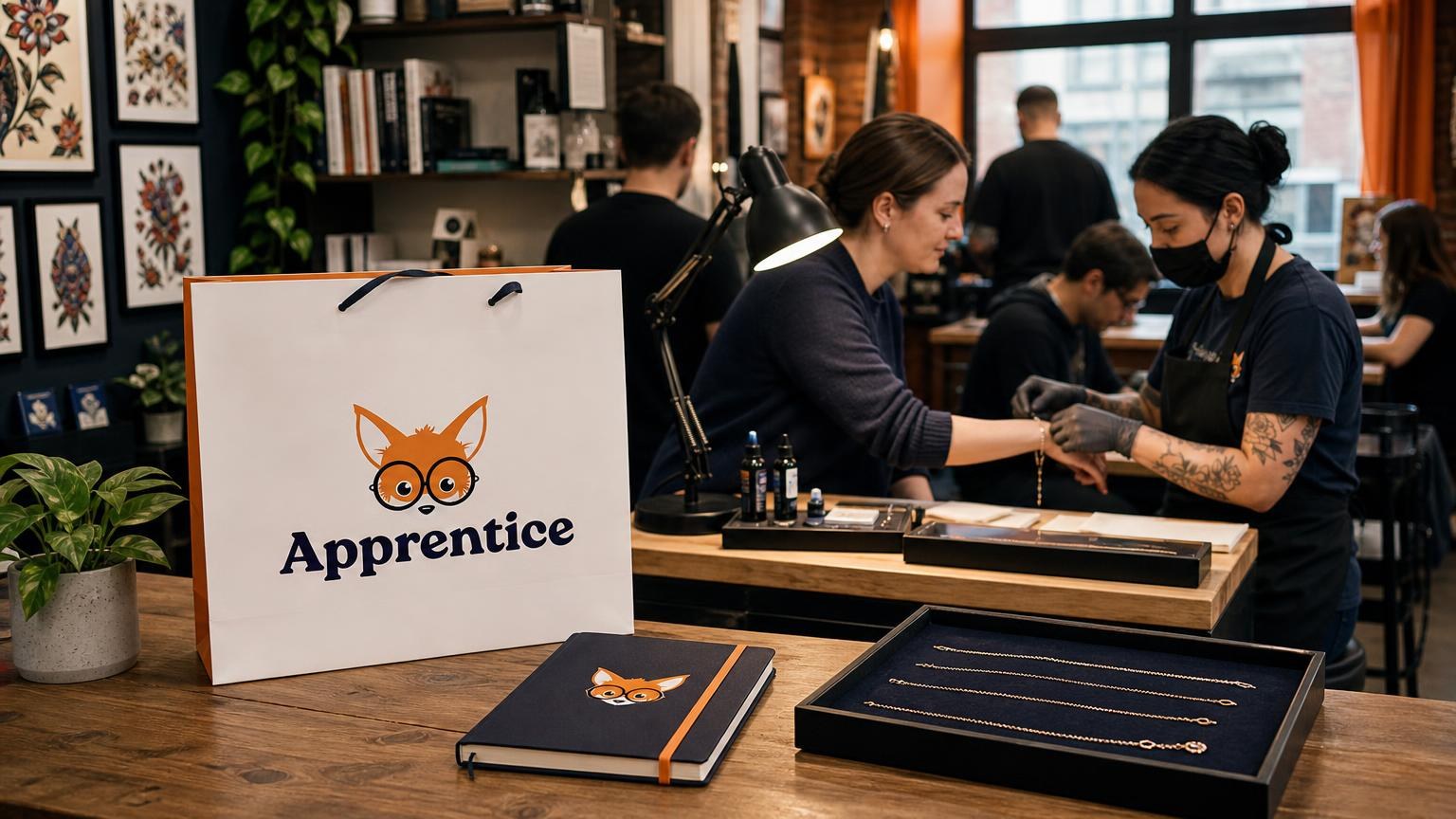
If you’re mobile, invest in a professional-looking portable setup. A hard-shell case for your welder, a rolled leather tool organizer, and a clean tablecloth go a long way. Clients judge the experience before you even turn on the welder. A messy table signals amateur. A clean, organized station signals trust.
Keep your chain inventory organized by metal type and style. Small compartment boxes or hanging displays work well. Clients want to see and touch the chains before choosing, so make the selection part of the experience.
Managing Appointments and Client History With Apprentice
Here’s where most new permanent jewelry businesses fall apart: the unsexy stuff. Booking, client records, consent forms, follow-ups. You can be the best welder in your city, but if your scheduling is a mess of DMs and text threads, you’ll burn out fast and lose clients to someone more organized.
Apprentice was built for exactly this kind of work. Clients request appointment times, and you approve them, so you stay in control of your calendar. Deposits get collected before anyone walks in, which kills no-shows dead. And every client gets one profile with their appointment history, signed forms, and notes in one place. No duplicates, no digging through old messages.
Automating Consent and Aftercare Delivery
Remember that waiver we talked about? With Apprentice, the client signs the waiver and pays the deposit on their phone before the appointment. They show up ready. You don’t waste the first ten minutes of every appointment on paperwork.
Aftercare is just as important. After the visit, Apprentice automatically sends your aftercare instructions to the client. You set it up once, and it runs every time. Make sure your instructions cover how to cut the chain at the jump ring in an emergency.
Using Waitlists to Handle Walk-ins and Pop-ups
Pop-up events and walk-ins are a huge revenue source for permanent jewelry artists. But managing a crowd of people who all want bracelets right now is chaotic without a system.
Apprentice’s real-time waitlist lets you track walk-ins digitally. Clients get a text when it’s their turn, so they can browse the market or grab a drink instead of hovering over your table. When you’re ready, the waitlist converts directly into a booking. No lost clients, no shouting names across a crowded venue.
Marketing Your New Service to Attract Repeat Clients
Your first clients will come from your existing network: Instagram followers, studio regulars, friends of friends. Building a lasting permanent jewelry business means creating systems that bring people back and bring new people in.
Start with how people book. If someone has to DM you and wait for a reply, you’ve already lost a percentage of interested clients. Give them a clear way to request an appointment that you can approve from your phone.
Instagram and TikTok are your best organic channels. Short videos of the welding process perform well. The spark, the reveal, and the client’s reaction are all easy to share. Post consistently and tag your location. Encourage clients to tag you in their posts.
Pop-up events deserve their own marketing plan. Partner with breweries, boutiques, bridal shops, and local markets. These events build your email list and introduce you to audiences outside your usual circle. Offer a small discount for clients who book a future appointment at the event.
Repeat business comes from the experience as much as the product. A client who felt welcomed, informed, and cared for will come back for another piece and bring friends. Track your repeat client rate and treat it as your most important metric.
Growing From Solo Artist to Multiple Shops
Once you’re booked out consistently, you have a decision to make. Stay solo and raise prices, or grow.
Growing means hiring. And hiring in permanent jewelry is tricky because licensing rules for the service vary by state and are still unclear in many places. Check your state and local requirements before you bring anyone on. You’re responsible for training your team to your standard. Build a training protocol that covers welding technique, chain knowledge, client communication, safety procedures, and your waiver process. Document everything.
If you’re a shop owner adding permanent jewelry artists, treat them like any other service provider. Set clear commission splits or booth rental terms. Make sure every artist is covered under your insurance policy. And use a system where each artist has their own calendar, client profiles, and consent records, but you can see everything from one dashboard.
Multi-location growth follows the same logic. Apprentice supports multi-shop access from one account, so owners can switch between locations without juggling separate logins. Each shop gets its own dashboard, settings, and artist roster.
But don’t grow before you’re ready. A packed calendar, a proven system, and a waitlist of eager clients are your green lights. Growing a broken process just multiplies the problems.
The Bottom Line
Starting a permanent jewelry business is straightforward, but doing it right takes intention. Get proper training. Buy quality equipment and chain. Carry insurance. Use a waiver for every single client. And set up a booking system that handles the admin so you can focus on the craft.
The artists who thrive in this space treat it like a real business from day one. They track their numbers, protect themselves legally, and create an experience that clients can’t wait to share. The ones who struggle usually skipped the boring stuff and went straight to posting spark videos.
You already have the hands and the eye for detail. Now build the structure around it. If you want a head start on the operational side, check out Apprentice to handle your booking, consent forms, deposits, and client records in one place. Your future self, the one who isn’t drowning in DMs at midnight, will thank you.
Frequently Asked Questions
What do I need to start my own permanent jewelry business?
A pulse-arc welder, tungsten electrodes, chain and matching jump rings in at least two metals, pliers and flush cutters, a magnifying lamp, eye protection and a welding pad, a fire extinguisher, training, general and professional liability insurance, a client waiver, and a way to take bookings and deposits. Start small and add inventory as you learn what sells.
How much money do you need to start a jewelry business?
It depends on your welder, how much chain you stock, your training, and your insurance. Solid gold inventory and in-person training raise the cost sharply. Prices change often, so get current quotes from a welder maker, a chain supplier, a trainer, and an insurer, then build your budget from those real numbers.
Do I need a license to sell jewelry?
Requirements vary by state and city. Most areas require a general business license, a sales tax permit, and sometimes a home occupation or vendor permit for pop-ups. Rules for welding jewelry on a person are unclear in many places. Check with your state and local licensing office before you open, and keep copies of every permit on hand.
Is it worth it to start a jewelry business?
It can be, if you treat it as a real business. Permanent jewelry has low material costs per piece, quick appointments, and strong word-of-mouth. The risk is competition and underpricing. Artists who carry insurance, use waivers, build a clean booking process, and track repeat clients tend to turn it into steady income. Hobbyists often don’t.

Jason Howie
Founder & CEO
Jason Howie is the founder of Apprentice, passionate about empowering tattoo artists and shops with better tools to manage their business and serve their clients.