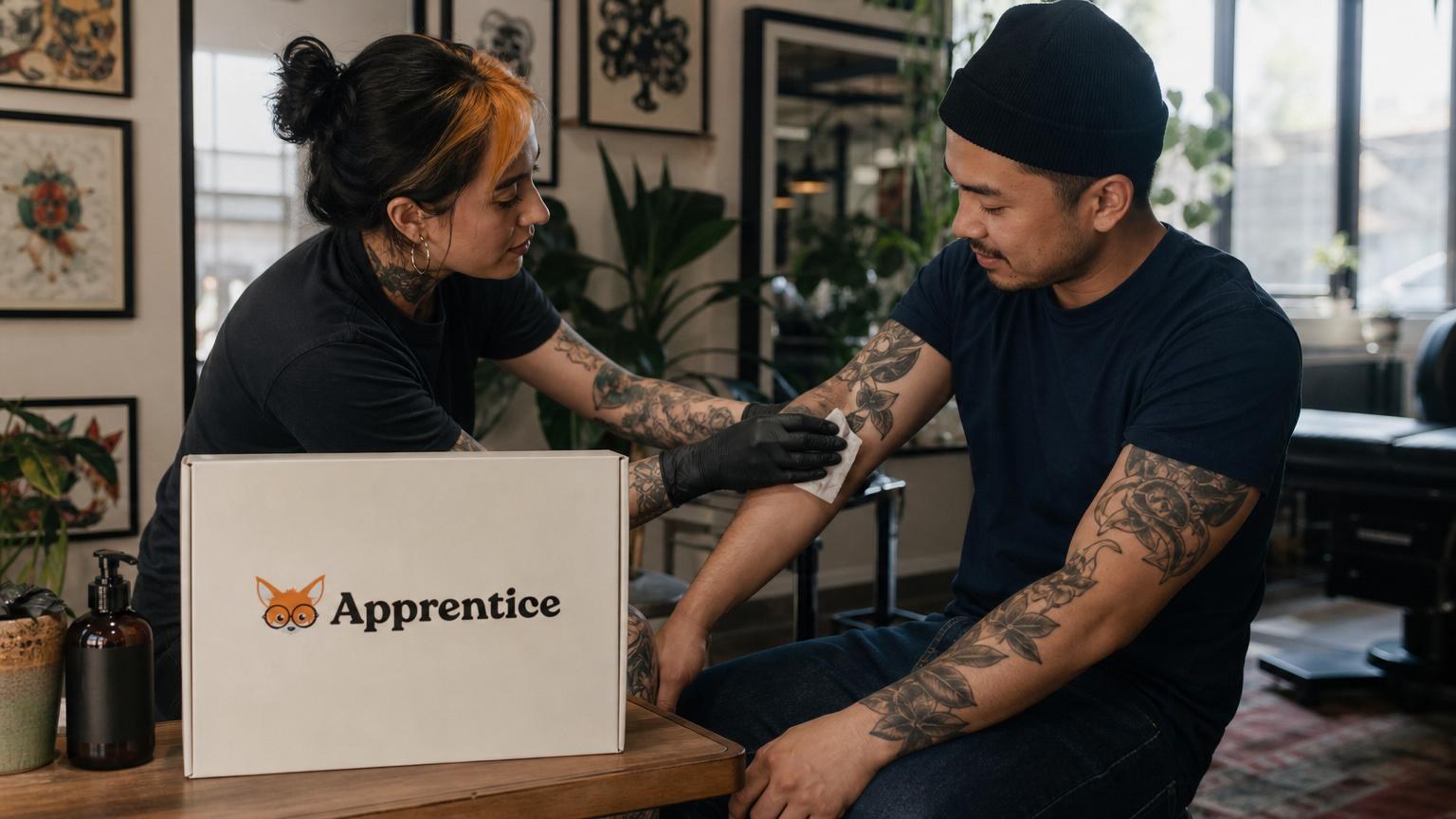
A fresh tattoo is an open wound. It’s personal. It’s permanent. And the work you do in the first month determines whether that piece stays sharp or fades into a muddy mess. Proper tattoo aftercare and healing protocols aren’t optional extras: they’re the difference between a portfolio-worthy piece and a client who never comes back. Whether you’re an artist handing out instructions or a client sitting in the chair, the next few weeks matter more than you think.
Immediate Post-Procedure Care
The Role of Protective Bandages and Wraps
Your artist will cover the fresh tattoo with either plastic wrap or a medical-grade adhesive film. Plastic wrap is the old-school method: cheap, effective, but it needs to come off within two to four hours. Adhesive film bandages can stay on for up to 48 hours. They let the skin breathe while keeping bacteria out. Don’t peel the bandage early just because you’re excited to show it off. That barrier is doing real work.
The First Cleaning: Timing and Technique
Once the bandage comes off, wash your hands first. Then gently clean the tattoo with lukewarm water and a fragrance-free liquid soap. Use your fingertips, not a washcloth. Pat dry with a clean paper towel: never a shared bath towel. This first wash removes plasma, excess ink, and blood. Do it right and you’re setting the stage for clean healing.
The Stages of the Healing Process
Days 1-6: Inflammation and Oozing
Redness, swelling, and oozing are completely normal. Your body is treating this like any other wound. You’ll notice ink and plasma weeping from the skin, especially at night. Wash the tattoo two to three times daily. Apply a thin layer of unscented moisturizer after each wash. Keep it simple.
Days 7-14: Itching and Peeling
This is where willpower gets tested. The skin starts flaking and itching like a sunburn. Don’t scratch it. Don’t pick at it. Pulling off flakes can rip out pigment and leave gaps in the design. A light moisturizer helps with the itch. Slap it gently if you need relief, but keep your nails away.
Day 15 to Month 1: Deep Tissue Recovery
The surface looks healed, but the deeper layers of skin are still repairing. Your tattoo might look cloudy or dull during this phase. That’s normal. The final color and sharpness won’t show until the skin fully regenerates, which takes about four to six weeks. Keep moisturizing and stay patient.
Essential Cleaning and Moisturizing Protocols
Selecting Fragrance-Free Soaps and Ointments
Fragrance is the enemy of fresh ink. Scented products contain chemicals that irritate healing skin and can cause reactions. Stick to gentle, fragrance-free liquid soap and a simple moisturizer. The global tattoo aftercare market is growing rapidly, which means more products are available than ever: but more options also means more junk to avoid. Read labels carefully.
Application Frequency and Avoiding Over-Moisturizing
Wash two to three times a day. Moisturize after each wash. But here’s the catch: too much ointment suffocates the skin and traps bacteria. A thin, barely-there layer is all you need. If the tattoo looks shiny or greasy, you’ve used too much. Blot the excess with a clean paper towel.
Activities to Avoid During Recovery
Sun Exposure and UV Protection
UV rays are the single biggest threat to tattoo longevity. Direct sun on a healing tattoo can cause blistering, fading, and scarring. Stay out of the sun for at least three weeks. After healing, use SPF 30 or higher every time the tattoo sees daylight. The shift toward sustainable and ethical aftercare products in 2026 includes reef-safe sunscreens designed specifically for tattooed skin.
Submerging in Water and Gym Environments
No pools, hot tubs, baths, or ocean swims for at least three weeks. Submerging a healing tattoo invites bacteria straight into the wound. Gyms are risky too: shared benches and equipment are breeding grounds. Sweat itself can irritate fresh ink. Stick to light activity and quick showers during recovery.
Identifying and Managing Potential Complications
Distinguishing Normal Irritation from Infection
Some redness and tenderness is expected. But if you see spreading redness, hot skin, pus with a foul smell, or develop a fever: that’s a potential infection. Don’t wait it out. See a doctor. The FDA’s updated MOCRA regulations and EU REACH compliance standards are pushing the industry toward safer inks and products, but infections still happen when aftercare protocols get ignored.
Allergic Reactions to Specific Ink Pigments
Red and yellow pigments are the most common culprits for allergic reactions. Symptoms include persistent itching, raised bumps, or rashes that don’t fade after the healing window. Some reactions show up weeks or even months later. If you suspect an allergy, consult a dermatologist. Transparency in tattoo skincare ingredients is improving, but knowing your body’s triggers is still your best defense.
Long-Term Maintenance for Ink Longevity
Great aftercare doesn’t stop at week four. Tattoos fade over years from sun exposure, friction, and dry skin. Daily moisturizing and consistent sunscreen use keep lines crisp and colors vibrant for decades. Touch-ups are normal: even the best work needs maintenance eventually.
And here’s where the artist’s role extends beyond the chair. Sending clients home with clear healing instructions makes a real difference in outcomes and rebooking rates. Tools like Apprentice let you attach aftercare info directly to each client’s project, so nothing gets lost in a stack of DMs. Automated prep links handle consent forms, deposits, and aftercare guidance in one flow: meaning your clients show up ready and leave informed.
Your art deserves to heal right. Your clients deserve clear guidance. If you want to spend less time chasing follow-ups and more time tattooing, get started with a free 14-day trial and see the difference for yourself.

Jason Howie
Founder & CEO
Jason Howie is the founder of Apprentice, passionate about empowering tattoo artists and shops with better tools to manage their business and serve their clients.