Quick answer
What do you need to open a tattoo studio in New Hampshire?
To open a tattoo studio in New Hampshire, you need a Body Art Facility License and a Body Art Practitioner License for each artist from the Office of Professional Licensure and Certification (OPLC), current bloodborne pathogen training, CPR/First Aid certification, a spore-tested autoclave, and a passing inspection. Expect $1,500–$3,500 in startup compliance and a 4–8 week timeline.
- Regulated by: New Hampshire Office of Professional Licensure and Certification (OPLC), Advisory Board of Body Art Practitioners, under RSA 314-A and Plc 600
- Studio permit: Body Art Facility License (~$250, annual)
- Per artist: Body Art Practitioner License (~$110) + bloodborne pathogen training and CPR/First Aid certification
- Startup permit cost: ~$250 facility + ~$110 per artist (first-year compliance roughly $1,500–$3,500)
- Time to open: 4–8 weeks from application
- Minimum client age: 18, with no parental-consent exception
- Renewals: Facility license annual; practitioner license every 2 years
- Official source: NH OPLC Advisory Board of Body Art Practitioners
Opening a tattoo studio in New Hampshire isn’t just about finding a space and hanging a sign. The state has specific rules around licensing, sanitation, and facility standards that you need to nail down before your first client sits in the chair. Get it wrong, and you’re looking at fines, shutdowns, or worse. Get it right, and you’ve got a solid foundation for a shop that runs clean and legal from day one.
New Hampshire’s regulatory framework for body art has evolved over the years. The state treats tattooing as a public health matter, which means oversight falls under health authorities rather than a generic business licensing board. That distinction matters because it shapes everything from your inspection requirements to your renewal process. Whether you’re a solo artist opening your first studio or a shop owner expanding into the Granite State, this guide covers what you actually need to know for 2026: the fees, the paperwork, the timelines, and the stuff nobody tells you until it’s too late.
New Hampshire Tattoo Studio Requirements at a Glance
Here’s the quick version. Save this section for reference.
- Who regulates you: New Hampshire Office of Professional Licensure and Certification (OPLC), through its Advisory Board of Body Art Practitioners.
- What you need: A Body Art Facility License for the studio, plus individual Body Art Practitioner Licenses for every artist working there.
- Bloodborne pathogen training: Required for all practitioners. Must be current.
- CPR/First Aid certification: Required before licensure.
- Facility inspection: Your studio must pass a health inspection before opening.
- Application timeline: Plan for 4 to 8 weeks from application to approval, depending on inspection scheduling.
- Facility license fee: Approximately $250 annually.
- Practitioner license fee: Approximately $110 per artist, renewed every two years.
- Minimum age to get tattooed: 18 years old. No exceptions, no parental consent workaround.
- Insurance: General liability and professional liability are strongly recommended. Some landlords require it.
That’s the snapshot. But the details below are where you’ll avoid costly mistakes.
New Hampshire Tattoo Studio Licensing Requirements
New Hampshire requires two separate licenses to operate legally. The first is the Body Art Facility License, which covers your physical studio. The second is the Body Art Practitioner License, which covers each individual artist.
Facility License
Your studio needs to meet specific physical standards before the state will issue a facility license. These include dedicated workstations with non-porous surfaces, a separate sterilization area, proper ventilation, and handwashing stations accessible from each tattoo station. The state inspects your space before granting the license, and they’re looking at everything from your autoclave setup to how you store inks and needles.
You’ll submit your application to OPLC along with floor plans, equipment lists, and proof that your space meets local zoning requirements. Don’t skip the zoning step. Some New Hampshire municipalities have specific zoning restrictions on body art establishments, and your state license won’t override a local zoning denial.
Practitioner License
Every artist in your shop needs their own practitioner license. The application requires proof of bloodborne pathogen training from an OSHA-accepted provider, a current CPR/First Aid certification, and documentation of training or apprenticeship experience. New Hampshire doesn’t mandate a specific number of apprenticeship hours by statute, but you’ll need to demonstrate competency.
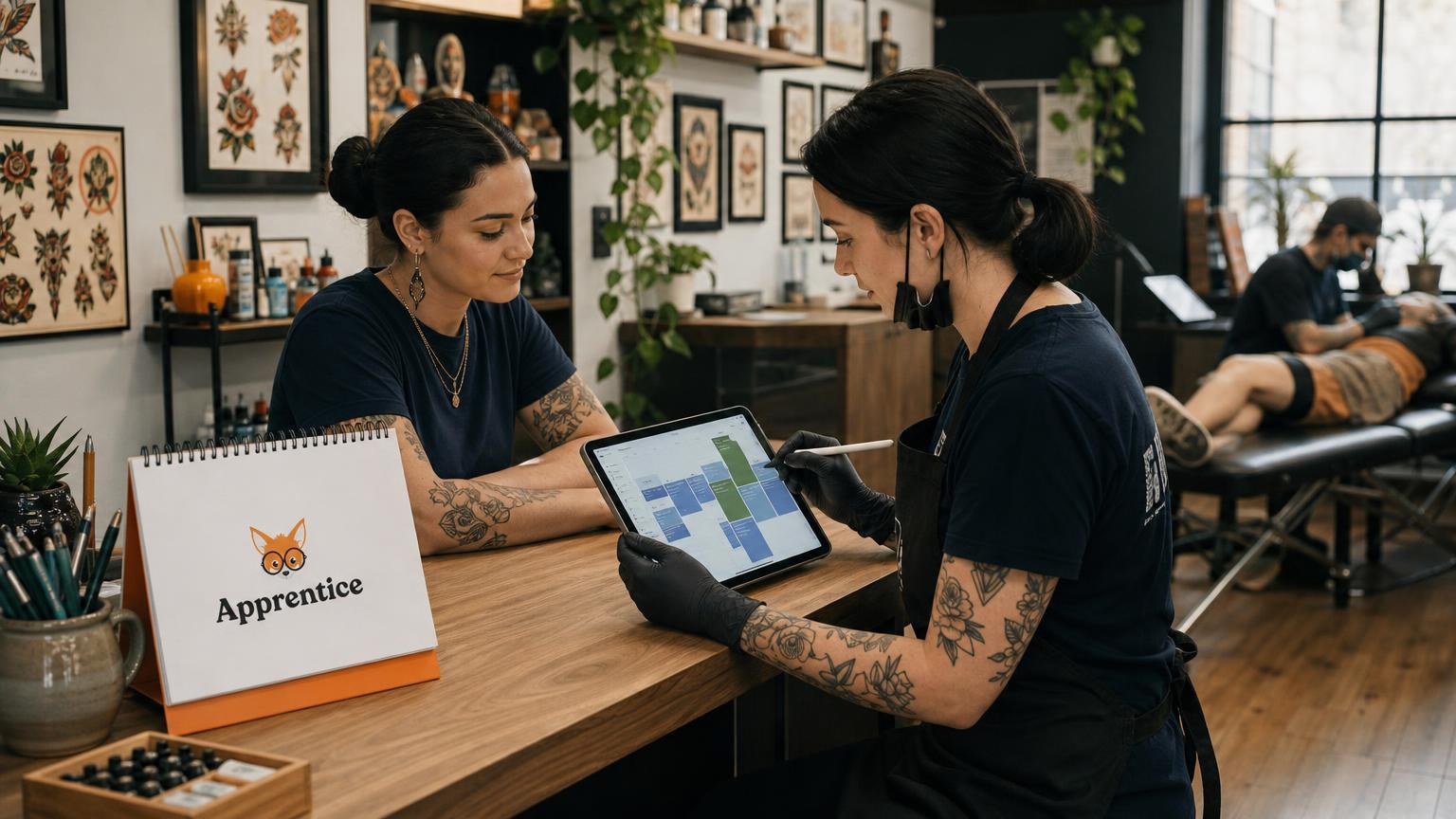
Renewal happens every two years. You’ll need to show that your bloodborne pathogen training is still current at renewal time. Lapsed licenses mean you can’t legally tattoo, period. And if you’re managing a multi-artist shop, tracking everyone’s credentials can get messy fast. Tools like Apprentice let you keep client records, consent forms, and appointment histories organized digitally, which takes some of the administrative headache off your plate when you’re juggling compliance for multiple artists.
New Hampshire-Specific Regulations and Laws
New Hampshire governs body art under RSA 314-A and the associated administrative rules (Plc 600), enforced by the OPLC Advisory Board of Body Art Practitioners. These aren’t suggestions. They’re enforceable laws with real consequences.
Age Restrictions
New Hampshire is strict here. No one under 18 can receive a tattoo. Period. There’s no parental consent exception for tattooing — review New Hampshire’s rules on tattooing minors to understand exactly where the line is. This is different from some neighboring states, so if you’re relocating from a state that allows minors with parental consent, adjust your intake process accordingly.
Sanitation and Sterilization
The state requires autoclaving of all reusable instruments. You’ll need spore testing of your autoclave at regular intervals, and you must keep those test results on file. Single-use items must be disposed of in approved sharps containers and biohazard waste bags. Your studio must have a written exposure control plan that covers what happens if an artist or client is exposed to blood or bodily fluids.
Record Keeping
You’re required to maintain client records for at least seven years. Each record must include the client’s name, date of birth, ID verification, a description of the procedure, the artist who performed it, and a signed consent form — make sure yours covers what a tattoo consent form must include under New Hampshire law. This is a legal requirement, not just good practice. If OPLC shows up for an inspection and your records are incomplete, you’re looking at violations.
Going paperless makes this much easier. Digital consent forms with timestamps, signatures, and IP tracking give you a clean audit trail. Apprentice stores all of this automatically, tied directly to each client’s appointment, so you’re not digging through filing cabinets during an inspection.
Penalties for Non-Compliance
Operating without a license can result in fines and a cease-and-desist order. Repeated violations can lead to permanent license revocation. The state can also refer cases to law enforcement if unlicensed tattooing is discovered. It’s not worth the risk. Beyond state enforcement, understand the lawsuits a noncompliant shop can face from clients who suffer harm due to improper practices.
Tattoo Studio Fees and Costs in New Hampshire
Opening a studio involves more than just license fees. Here’s what you’re actually paying.
| Cost Category | Amount | Frequency |
|---|---|---|
| Facility License Application | ~$250 | Annual |
| Practitioner License | ~$110 per artist | Every 2 years |
| Bloodborne Pathogen Training | $25-$75 per person | Annual or biennial |
| CPR/First Aid Certification | $50-$100 per person | Every 2 years |
| Autoclave Spore Testing | $30-$60 per test | Monthly recommended |
| General Liability Insurance | $500-$2,000/year | Annual |
| Professional Liability Insurance | $300-$800/year | Annual |
| Business Registration (Secretary of State) | $100-$102 | Annual |
| Local Business Permits | Varies by municipality | Varies |
These numbers add up. For a solo artist, you’re looking at roughly $1,500 to $3,500 in startup compliance costs before you’ve bought a single needle. A multi-artist shop will scale higher based on headcount.
Insurance isn’t technically mandated by the state for tattoo studios, but operating without it is reckless. One infection claim or slip-and-fall injury could wipe you out. Most commercial landlords require proof of general liability anyway. Budget $800 to $2,800 annually for a reasonable insurance package. Read up on the insurance coverage your New Hampshire studio actually needs so you don’t find out you were underinsured after something goes wrong.
And don’t forget the unsexy stuff: biohazard waste disposal contracts, annual fire inspections, and potential ADA compliance costs for your physical space. These aren’t optional line items.
How to Get Licensed for Tattoo Studio in New Hampshire
Here’s the step-by-step process. Follow it in order.
-
Register your business with the New Hampshire Secretary of State. Choose your entity type (LLC, sole proprietorship, etc.) and file the appropriate paperwork. This costs around $100 and can be done online at sos.nh.gov.
-
Check local zoning laws. Contact your city or town’s planning department before signing a lease. Confirm that body art establishments are permitted in your chosen location. Some municipalities require a conditional use permit or a public hearing.
-
Secure your space and build it to code. Your studio must have non-porous work surfaces, dedicated sterilization areas, proper lighting, hot and cold running water at handwashing stations, and separate clean and contaminated zones. Review the Plc 600 rules before you start construction or renovation.
-
Complete bloodborne pathogen training. Every artist needs training from an OSHA-accepted provider. Keep your certificates. You’ll need them for the application.
-
Get CPR and First Aid certified. Take a course from the American Red Cross, American Heart Association, or an equivalent provider. Certification must be current at the time of application.
-
Purchase and test your autoclave. Run initial spore tests and document the results. You’ll need to show that your sterilization equipment is functional during inspection.
-
Write your exposure control plan. This document outlines your procedures for handling bloodborne pathogen exposure. It needs to be specific to your studio, not a generic template.
-
Submit your Body Art Facility License application to OPLC. Include your floor plans, equipment list, proof of business registration, and all required documentation. Pay the application fee.
-
Schedule and pass your facility inspection. An OPLC inspector will visit your studio. They’ll check everything: autoclave logs, sharps disposal, handwashing access, surface materials, ventilation, and your written policies. Fix any deficiencies immediately if flagged. Knowing what to expect during a health inspection will help you prepare so you pass the first time.
-
Submit individual Practitioner License applications for each artist. Include training certificates, CPR/First Aid cards, and any apprenticeship documentation.
-
Receive your licenses and open for business. Display your facility license in a visible location. Keep practitioner licenses accessible for inspection.
The whole process typically takes 4 to 8 weeks, assuming your space is ready and your paperwork is complete. Delays usually come from zoning issues or inspection failures. Don’t rush the build-out. Getting it right the first time saves you weeks of back-and-forth.
New Hampshire Tattoo Studio Resources and Contacts
Keep these bookmarked. You’ll reference them more than once.
New Hampshire Office of Professional Licensure and Certification (OPLC)
- Website: oplc.nh.gov/find-board/body-art-practitioners
- Body Art Program: Advisory Board of Body Art Practitioners
- Mailing Address: 7 Eagle Square, Concord, NH 03301
New Hampshire Secretary of State (Business Registration)
- Phone: (603) 271-3242
- Website: sos.nh.gov
- Online filing portal available for business formation documents
OSHA Bloodborne Pathogen Training
- OSHA’s official page: osha.gov/bloodborne-pathogens
- Multiple online providers offer accepted training courses ranging from $25 to $75
American Red Cross (CPR/First Aid)
- Website: redcross.org
- Search for classes by zip code on their training portal
New Hampshire Municipal Zoning
- Contact your specific city or town’s planning and zoning department directly
- No statewide directory exists; start with your town clerk’s office
Alliance of Professional Tattooists (APT)
- Website: safe-tattoos.com
- Offers infection control seminars and industry resources
National Environmental Health Association (NEHA)
- Website: neha.org
- Body art resources and best practices
If you’re running a multi-artist shop, consider using Apprentice to handle bookings, deposit collection, and client communication. It keeps your front desk organized and reduces no-shows by collecting deposits upfront. That’s less admin work and more time actually tattooing.
Sources & Official References
These primary sources govern body art licensing in New Hampshire. Verify the current rules and fees against them before you apply.
- NH OPLC — Advisory Board of Body Art Practitioners
- New Hampshire RSA 314-A (Practice of Body Art)
- New Hampshire Administrative Rules Plc 600 (Body Art Practitioners)
New Hampshire Tattoo Studio FAQ
Do I need a license to tattoo from a private studio or home in New Hampshire? Yes. Any location where tattooing occurs must hold a Body Art Facility License. Home studios are subject to the same inspection and sanitation requirements as commercial spaces. You’ll also need to comply with local zoning, which often prohibits home-based body art businesses in residential zones.
Does New Hampshire offer license reciprocity with other states? No formal reciprocity agreements exist. If you’re licensed in another state, you still need to apply for a New Hampshire practitioner license and meet all state requirements. Your out-of-state training and experience may satisfy competency requirements, but you’ll still need current bloodborne pathogen training and CPR/First Aid certification.
How often do I need to renew my licenses? Facility licenses renew annually. Practitioner licenses renew every two years. Mark your renewal dates and submit paperwork early. Operating on an expired license is treated the same as operating without one.
Can I tattoo minors with parental consent? No. New Hampshire law prohibits tattooing anyone under 18 regardless of parental consent. This is non-negotiable and strictly enforced.
What happens if I fail my facility inspection? You’ll receive a list of deficiencies. Fix them and schedule a re-inspection. Minor issues might be resolved quickly. Major structural or sanitation problems could delay your opening by weeks. Build your space to code from the start.
Do I need an apprenticeship to get licensed in New Hampshire? The state doesn’t specify a mandatory apprenticeship duration by statute. But you do need to demonstrate competency in tattooing techniques, sanitation, and safety. Documented training or apprenticeship experience strengthens your application significantly.
Is guest artist work allowed? Guest artists must hold their own valid New Hampshire practitioner license to work in your studio. They can’t operate under your license. Plan ahead if you’re hosting guest spots.
What records do I need to keep, and for how long? Client records must be maintained for a minimum of seven years. Each record needs the client’s name, date of birth, ID verification, procedure description, artist name, and signed consent form.
The Bottom Line
Running a tattoo studio in New Hampshire means respecting the process. The licensing, the inspections, the record keeping: it’s all there to protect your clients and your business. None of it is glamorous. But it’s the foundation that lets you focus on the actual craft.
The artists who build sustainable careers are the ones who treat compliance as a baseline, not a burden. Get your paperwork tight. Keep your space clean. Stay current on your certifications. And set up systems that handle the admin so you can spend your energy where it matters: making great tattoos.
If you’re ready to stop wrestling with scheduling spreadsheets and start running your shop like a real business, give Apprentice a shot. It’s free for 14 days, and you can get started in about five minutes. Your art deserves a shop that runs as well as you tattoo.

Jason Howie
Founder & CEO
Jason Howie is the founder of Apprentice, passionate about empowering tattoo artists and shops with better tools to manage their business and serve their clients.