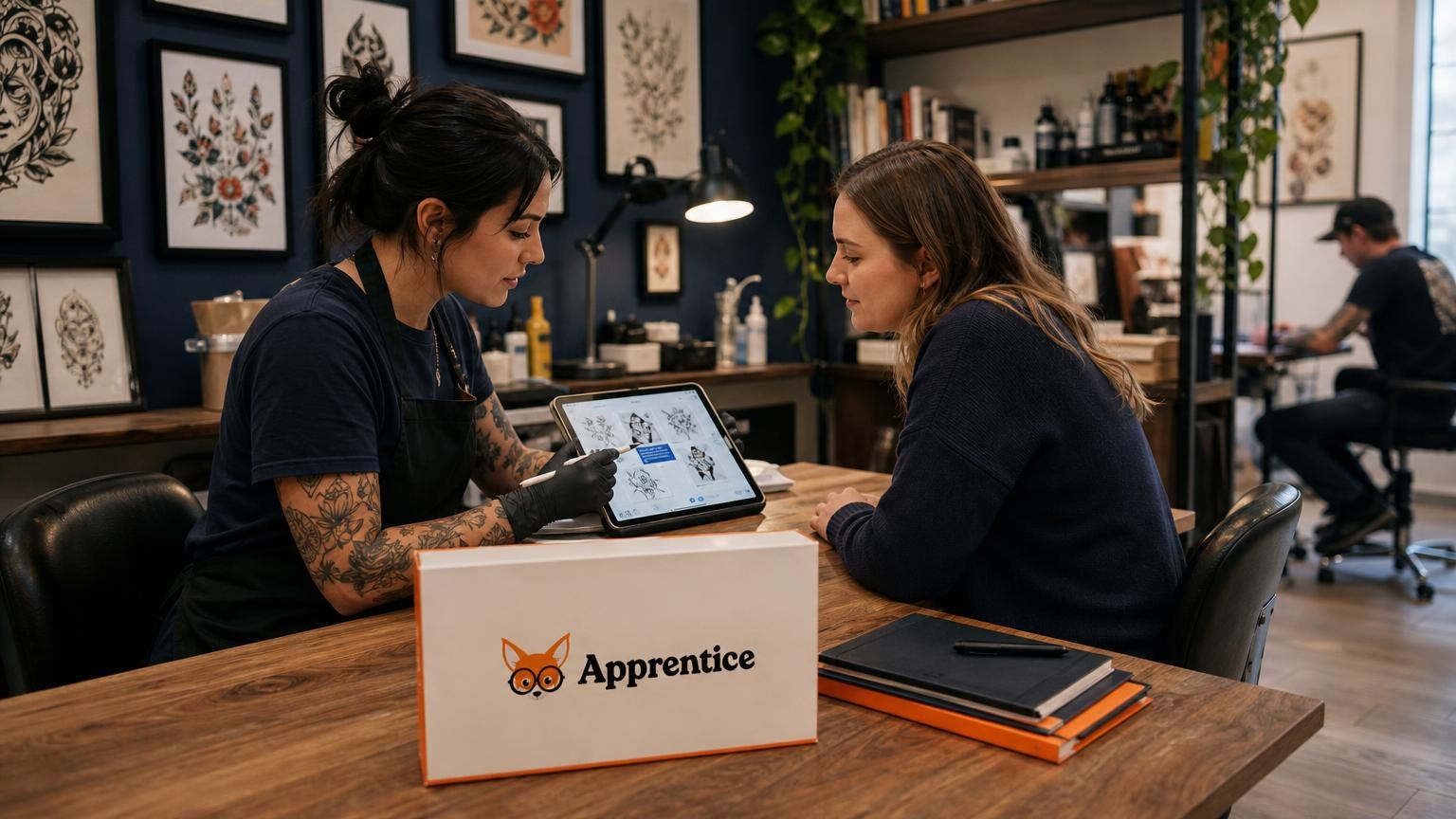

A teenager walks in with a parent. They want matching tattoos. The parent’s all smiles, the kid’s bouncing. Looks easy.
It isn’t. Whether you can legally pick up the machine depends entirely on which state you’re standing in, and the rules are all over the map. Some states ban it flat out. Some let you do it with a signed form. A few barely address it at all. Guess wrong and you’re looking at a fine, a suspended license, or a lawsuit from the same parent who signed the form.
The law changes the second you cross a state line
There’s no national rule here. Each state writes its own, and they don’t agree.
A handful ban tattooing anyone under 18, no matter what the parent wants. New York and New Jersey are the usual examples. A parent can stand there begging and the answer is still no.
Plenty of other states allow it if a parent or legal guardian gives written consent. Florida, Texas, and Oregon all run this way, and most of them want the parent physically in the room while you work, not just a signature dropped off that morning.
Some draw an age line. A 16 or 17-year-old with consent is fine, but younger than that is off the table.
And a few states have no specific tattoo statute at all. That doesn’t mean it’s a free-for-all. It usually means your local health department or city ordinance is calling the shots, so you’ve still got rules to follow, just not state ones.
Penalties scale with how badly you stepped in it. A first slip might be a misdemeanor and a few thousand dollars. Repeat it and license revocation is on the table. Some states tack on civil liability too, which means a parent can sue you later even though they consented at the time.
Here’s the part artists get burned on. Knowing the law in one state tells you nothing about the next one. Move your chair, open a second location, or even just travel for a guest spot, and you start over. Laws also get rewritten. What was legal five years ago might be illegal now. Call your state health department and, if you’re unsure, a local attorney. It’s a cheap phone call compared to a hearing.
A signature is the start, not the finish
Even where consent is legal, the paperwork has teeth. Most states want it written, not a verbal “yeah, go ahead.” A lot of them want it notarized so somebody confirmed the parent is actually the parent. Many require the parent in the room for the whole session. Most want government photo ID from both the kid and the adult. Some add a waiting period between the consult and the needle.
The reasoning is simple. Lawmakers want to stop coercion, confirm the parent really signed off, and leave a paper trail. For you, that trail is the thing that saves your license if anyone ever asks questions.
And exceptions exist even in strict states. Medical tattooing for reconstruction, like areola restoration after a mastectomy, often sits under a separate set of rules. A handful of states carve out narrow religious or cultural exceptions, though those are rare and watched closely.
But follow every rule on the books and you can still hit a wall the statute never mentions. The parent shows up drunk. The kid looks like they’re about to cry. The parents are divorced and only one of them is standing there. No law writes out what to do in those moments. That’s your call, and the safe call is the same every time. When something’s off, you don’t tattoo. One appointment is never worth your career.
Consent on paper isn’t the same as understanding
A signature proves somebody agreed at a specific minute. It doesn’t prove they got it.
The law treats minors as not fully able to consent, which is why we age-gate voting, drinking, and contracts. Permanent body modification lands in that same protective bucket. The assumption is that a parent makes better long-term calls for a kid than the kid makes for themselves.
That assumption has limits. A parent can’t consent to something that harms their child, and courts have stepped in when parents made dangerous medical choices. Tattooing done right isn’t harmful, but the principle still applies to you. You’re not a vending machine for parental wishes. You’re a professional exercising judgment.
So when a parent signs, you’re still the one deciding. Watch for the kid who hesitates while the parent does all the talking. Watch for content that’s wrong for a minor, sexually explicit or gang-related work a parent somehow okayed. An impaired parent can’t give valid consent. One parent’s signature may not hold up in a custody split if the other parent objects. And teens forge signatures, which is exactly why in-person verification matters.
That’s why a lot of seasoned artists run policies tougher than the law. No clients under 16, period. Limits on placement or size. A second consult before anything happens. Those policies come from getting it wrong once and never wanting to again.
Digital consent helps you hold the line. A system that stores the signed forms, logs your consultations, and keeps the client’s history means you can pull up exactly what was said and agreed if it’s ever disputed. It’s worth knowing precisely what consent forms you actually need when a parent approves a minor’s tattoo, because the bar is higher than it is for an adult walking in alone.
Young bodies heal differently, and teens are harder clients
Set the law and ethics aside for a second. There’s a physical case too.
Tattooing pushes ink into the dermis, and the body fights back. A younger immune system can shrug off infection well and still overreact to the pigment, which makes healing less predictable than it’d be on a 30-year-old. Growth complicates it further. Put a piece on a 15-year-old and it stretches and warps as they keep growing. Perfect placement today can look pulled and crooked in three years.
Teens are also rougher on a fresh tattoo. They skip aftercare. They pick at it. They drag it through a locker room or a sweaty pad of sports gear. Watch for the usual fallout:
- Bacterial infection. Staph and strep get in through a tattoo that wasn’t cared for.
- Allergic reactions. Red and yellow inks set some people off, and a younger client has a shorter history of knowing how their skin reacts.
- Keloid scarring. Some people, more often those with darker skin tones, raise scars, and they might not find out until after their first piece.
- Bloodborne pathogens. Rare with proper sterilization, but hepatitis is still the reason your procedures exist.
- Contact dermatitis. A reaction to the aftercare product itself can stall healing.
Your hygiene should already clear the minimum for everyone. With a minor, go further. Written aftercare, a follow-up check-in, plain talk about what a warning sign looks like. It protects the kid and it protects you, and an aftercare system that fires off reminders during healing does both at once, especially for a teen who’d otherwise forget every word you said the moment they left.
The regret is real, and it lands harder when they’re young
Tastes change. Relationships end. The design that felt like a whole identity at 16 feels like a stranger at 26. People tattooed as teenagers regret it more often than people tattooed as adults, and the reasons aren’t mysterious.
Adolescence is identity under construction. A tattoo that screams “this is me” right now can read “this is who I used to be” in a hurry. Peer pressure drives a chunk of teen requests, and when the friend group changes, the ink stays. Tattoos grabbed during an emotional high or low are prime regret candidates. And a visible piece still carries weight a 16-year-old hasn’t lived long enough to feel yet, in a college interview, a job, a tense conversation at home.
You’re not their parent. But you’ve watched this play out, and saying so is part of doing the job honestly. Your state might let you tattoo a 16-year-old’s hand with a parent’s signature. That doesn’t mean you should. Sometimes professional judgment is turning down a legal request because it’s a bad one, and that’s the real reason a lot of shops won’t touch visible placements on a minor no matter what the statute allows.
Where the line actually falls
Ethics in this work go past “is it legal.” The question is what you should do.
You’re marking another person’s body for good. That weight goes up when the person is young and may not feel the permanence yet. So be honest about healing, complications, and how rough removal really is. Respect the kid’s own preferences inside reasonable limits, not just the parent’s. Hold a standard that makes the whole trade look better. And match the size and visibility of the piece to the maturity you’re actually seeing in front of you.
The business math agrees with the ethics. One bad outcome with a minor does more damage than a year of happy adult clients undoes. That’s why plenty of shops keep a blanket no-minors policy and sleep fine. Your license is reason enough on its own, and it’s worth reading up on the insurance gaps that leave studios exposed before you assume a claim involving a minor would even be covered.
When something feels off in a consult, it usually is. Trust that.
Apprentice keeps your consent forms, IDs, and consultation notes together so the paper trail exists before you ever need it. Start free and set your shop up to say yes safely, or say no on the record.

Jason Howie
Founder & CEO
Jason Howie is the founder of Apprentice, passionate about empowering tattoo artists and shops with better tools to manage their business and serve their clients.