Quick answer
What do you need to open a tattoo studio in Montana?
To open a tattoo studio in Montana, you need an establishment (facility) license and an individual practitioner license for each artist, an OSHA-compliant bloodborne pathogen course, current First Aid and CPR certification, a spore-tested autoclave, and a passing health inspection. Expect $200–$500 in initial licensing fees and a 4–8 week timeline.
- Regulated by: Montana DPHHS licenses body-art establishments statewide (ARM Title 37, Chapter 112), except Gallatin and Yellowstone counties, which administer their own programs
- Studio permit: Establishment license ($100–$200, annual)
- Per artist: Individual practitioner license + bloodborne pathogen training and First Aid/CPR certification
- Startup permit cost: $200–$500 for initial licensing and inspection (first-year compliance roughly $500–$3,500 with insurance)
- Time to open: 4–8 weeks from application
- Minimum client age: 18, or a minor with written parental consent and the parent physically present
- Renewals: Annual for both practitioner and establishment licenses
- Official source: Montana DPHHS
Opening a tattoo studio in Montana isn’t just about finding the right space and hanging your flash. It’s about permits, inspections, bloodborne pathogen training, and a stack of paperwork that nobody warns you about. Montana’s regulatory framework for body art establishments has specific teeth, and ignoring it can cost you your livelihood. Whether you’re a solo artist ready to go independent or a shop owner expanding into Big Sky Country, understanding Montana tattoo studio requirements before you sign a lease will save you months of headaches. The state treats tattooing as a public health matter first and a business second. That means your autoclave matters more than your Instagram following. And your compliance paperwork matters more than your portfolio - at least to the county health department. This guide breaks down every fee, form, and regulation you’ll face in 2026 so you can focus on what actually matters: making great art and running a profitable shop.
Montana Tattoo Studio Requirements at a Glance
Here’s the quick version for those who need answers fast.
- Licensing: Montana requires both an individual practitioner license and a separate facility (establishment) license. You need both before you tattoo anyone.
- Bloodborne Pathogen Training: Mandatory. You must complete an OSHA-compliant bloodborne pathogen course before applying.
- First Aid/CPR: Current certification required for all practicing artists in the studio.
- Facility Inspection: Your studio must pass a health department inspection before receiving an establishment license. Expect scrutiny on sterilization equipment, surface materials, and waste disposal.
- Timeline: Plan for 4 to 8 weeks from application to approval, depending on your county’s inspection backlog.
- Costs: Budget roughly $200 to $500 for initial licensing and inspection fees. Insurance adds another $500 to $2,000 annually.
- Renewal: Licenses renew annually. Don’t let them lapse - operating without a current license carries fines.
- Age Requirement: You must be at least 18 to get licensed. Minors can receive tattoos only with written parental consent and the parent physically present.
This is the unsexy stuff that keeps your doors open. Every item on this list is non-negotiable. Miss one, and you’re looking at delays, fines, or worse. DPHHS handles licensing and inspections in most of the state, while Gallatin and Yellowstone counties run their own programs, so requirements can vary slightly by jurisdiction. Always confirm with the office that licenses your area.
Montana Tattoo Studio Licensing Requirements
The Montana Department of Public Health and Human Services (DPHHS) licenses body art establishments statewide under the Administrative Rules of Montana. The major exceptions are Gallatin and Yellowstone counties, which run their own body art programs and handle licensing and inspections locally. Everywhere else, DPHHS sets the rules and issues the licenses.
Individual Practitioner License
Every artist who picks up a machine needs their own license. You can’t tattoo under someone else’s credentials. The application process typically requires proof of bloodborne pathogen training, current CPR/First Aid certification, and a completed application form submitted to DPHHS — or, if you’re in Gallatin or Yellowstone county, to your county health department.
Some counties also require proof of an apprenticeship or documented training hours. Montana doesn’t mandate a specific apprenticeship length at the state level, but individual counties can set their own standards. Missoula and Yellowstone counties, for example, tend to have stricter documentation expectations than rural counties.
Establishment License
Your physical studio needs its own license, separate from your practitioner credentials. The establishment license confirms your space meets health and safety standards. You’ll need to show proof of proper sterilization equipment (a functioning autoclave is non-negotiable), appropriate flooring and surface materials that can be sanitized, a dedicated handwashing station, and proper sharps disposal containers.
The county health inspector will visit your studio before issuing this license. They’re checking for real compliance, not just paperwork. Cracked tile, porous countertops, or an autoclave without current spore test logs will fail you.
Continuing Education
Montana doesn’t currently mandate formal continuing education credits for tattoo artists at the state level. But you must keep your bloodborne pathogen training current. That training typically needs renewal every one to two years depending on the certifying body. Your CPR/First Aid certification also has its own renewal cycle, usually every two years through the American Red Cross or equivalent provider.
Keep copies of everything. When renewal time comes, you’ll need to show current certifications. And if a health inspector shows up unannounced - which they can - you want those documents accessible in the shop, not buried in your email.
Montana-Specific Regulations and Laws
Montana’s body art regulations live primarily in the Administrative Rules of Montana (ARM), Title 37, Chapter 112. These rules cover everything from practitioner conduct to facility standards. They’re not suggestions. They carry legal weight.
Sanitation and Sterilization Standards
Montana requires autoclaving of all reusable instruments. Spore testing must be performed regularly, and logs must be maintained on-site. Single-use items like needles, tubes, and ink caps must be disposed of in approved sharps containers. Ink must never be used from the same container on multiple clients. Cross-contamination prevention isn’t just best practice here - it’s law.
Your studio must have non-porous, easily cleanable surfaces in all tattooing areas. Carpet is not allowed in workstations. Walls and floors need to be smooth and washable. Separate clean and contaminated zones must be clearly defined in your workspace layout.
Client Consent and Disclosure
Every client must sign a written consent form before any procedure. That form must include risks of tattooing, aftercare instructions, and disclosure of any medical conditions that could affect healing. Knowing what a tattoo consent form must include helps you build one that holds up to scrutiny. For minors, a parent or legal guardian must provide written consent and be physically present during the procedure — Montana’s rules on tattooing minors spell out exactly what’s required. No exceptions.
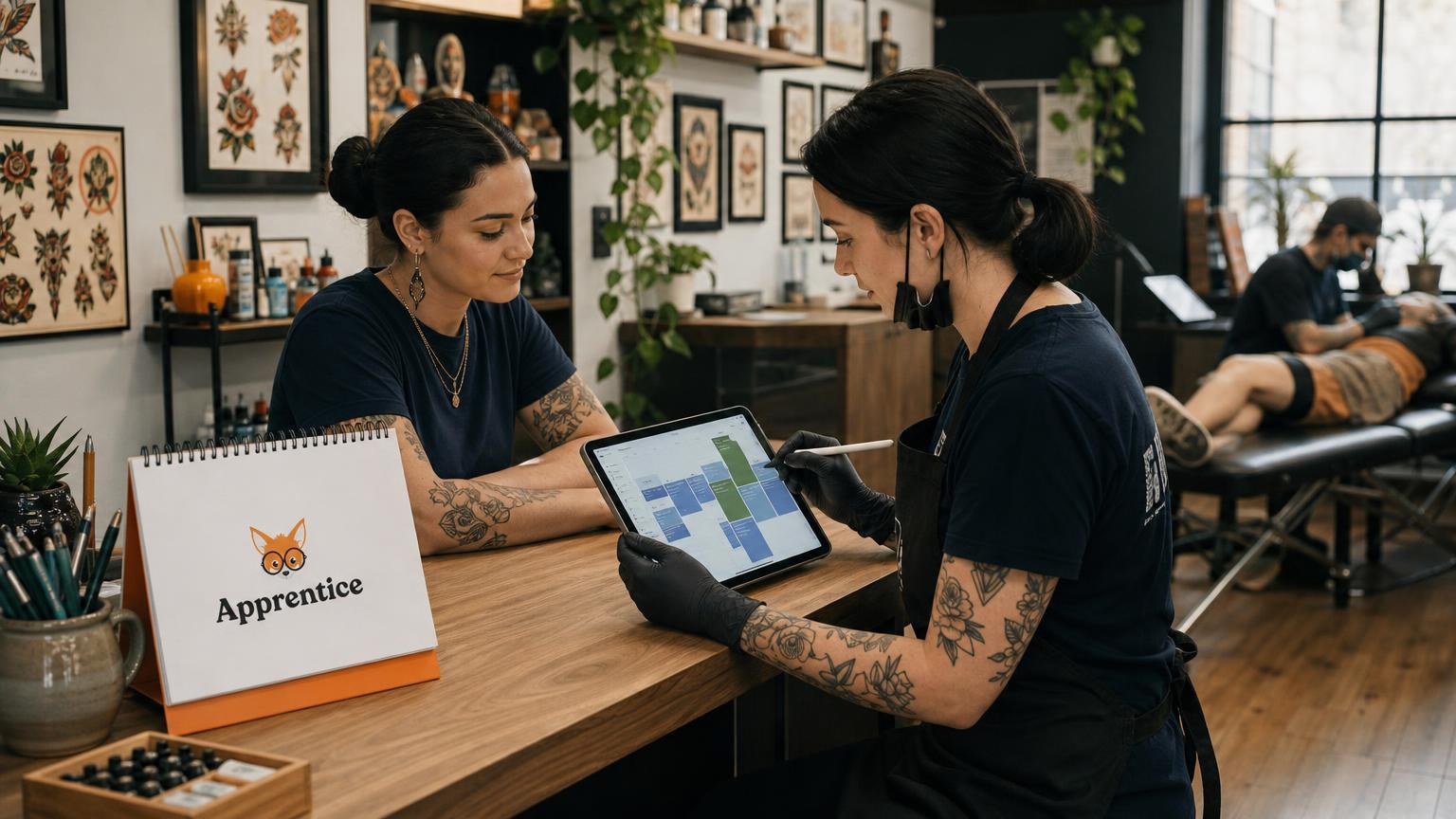
Montana also requires artists to maintain client records for a minimum period. These records should include the consent form, a description of the procedure, the date, and the artist’s name. Keeping this organized digitally makes life easier. Tools like Apprentice store consent forms, client notes, and appointment history in one place, so you’re not digging through filing cabinets when the health department asks for records.
Penalties for Non-Compliance
Operating without a license can result in fines, forced closure, and potential misdemeanor charges depending on the county. Repeat violations escalate quickly, and the lawsuits a noncompliant shop can face can be far more damaging than any fine. A failed inspection usually gives you a correction window, but serious violations like reusing needles or operating without proper sterilization can trigger immediate shutdown.
The reality check here: most shops that get in trouble aren’t cutting corners on purpose. They just let certifications lapse or forgot to log their spore tests. Build compliance into your routine. Treat it like cleaning your station - something you do every single time without thinking.
Tattoo Studio Fees and Costs in Montana
Money talk. Here’s what you’ll actually spend to get legal and stay legal in Montana.
| Fee Type | Estimated Cost | Frequency |
|---|---|---|
| Individual Practitioner License | $50 - $100 | Annual |
| Establishment License | $100 - $200 | Annual |
| Inspection Fee | $50 - $150 | Annual or as required |
| Bloodborne Pathogen Training | $25 - $75 | Every 1-2 years |
| CPR/First Aid Certification | $50 - $80 | Every 2 years |
| General Liability Insurance | $500 - $2,000 | Annual |
| Professional Liability Insurance | $300 - $1,200 | Annual |
| Business License (city/county) | $25 - $100 | Annual |
| Autoclave Spore Testing | $100 - $300 | Annual (monthly tests) |
These numbers vary by county. Gallatin County fees differ from Flathead County fees. Always check with your local health department for exact amounts. And these are just the compliance costs - they don’t include rent, equipment, supplies, or marketing.
Insurance Isn’t Optional
Montana doesn’t technically mandate tattoo-specific insurance at the state level. But operating without it is reckless. General liability insurance protects you if a client slips in your shop. Professional liability (sometimes called malpractice) covers you if a client claims a procedure caused harm. Most landlords require proof of insurance before they’ll sign a lease anyway. The insurance coverage your Montana studio actually needs breaks down exactly what to carry and where most shops fall short.
Budget $800 to $3,200 annually for both policies combined. It sounds like a lot until you consider that one lawsuit without coverage could bankrupt a small studio. Some industry associations offer group rates for members, so shop around.
Hidden Costs Nobody Mentions
Spore testing your autoclave monthly runs about $15 to $25 per test. Sharps disposal service costs $200 to $500 per year depending on volume. Replacing worn-out flooring or countertops to maintain compliance standards adds up. And if you fail an inspection and need to make corrections, those costs come out of your pocket with no revenue while you’re shut down.
How to Get Licensed for Tattoo Studio in Montana
Here’s your step-by-step path from zero to legally tattooing in Montana. Follow this order.
-
Complete bloodborne pathogen training. Take an OSHA-compliant course. Online options exist, but verify your county accepts online certificates. Some require in-person training. Keep your certificate - you’ll need it for every renewal.
-
Get CPR and First Aid certified. American Red Cross, American Heart Association, or an equivalent provider. This takes about half a day. Do it before you start your application.
-
Secure your studio space. Before you can get an establishment license, you need a physical location. Make sure the space meets zoning requirements for body art establishments. Check with your city or county planning department before signing a lease.
-
Set up your studio to code. Install non-porous flooring and countertops. Set up a dedicated handwashing station with hot and cold running water. Place your autoclave in a designated sterilization area. Install sharps containers. Create clear separation between clean and contaminated zones.
-
Purchase and test your autoclave. Buy a commercial-grade autoclave and begin spore testing immediately. You’ll need to show test logs during inspection. Don’t wait until the inspector is at your door.
-
Apply for your individual practitioner license. Contact DPHHS for the application form — or your county health department if you’re in Gallatin or Yellowstone county. Submit it with your bloodborne pathogen certificate, CPR/First Aid certificate, and any required apprenticeship documentation. Pay the application fee.
-
Apply for your establishment license. This is a separate application. Submit your facility details, proof of insurance (if required by your county), and pay the establishment fee.
-
Schedule and pass your inspection. DPHHS — or your county health department in Gallatin or Yellowstone county — will schedule an on-site inspection of your studio. Read up on what to expect during a health inspection before they arrive. They’ll check sterilization equipment, surface materials, waste disposal, record-keeping systems, and general cleanliness. Fix any issues they flag and schedule a re-inspection if needed.
-
Obtain your general business license. File with your city or county clerk’s office. This is separate from your health department licenses.
-
Post your licenses visibly. Montana requires your licenses to be displayed where clients can see them. Put them near your front desk or waiting area.
The whole process takes 4 to 8 weeks if you’re organized. Delays usually happen because of incomplete applications or failed inspections. Get your paperwork right the first time.
Once you’re licensed and ready to take clients, having a booking system that collects deposits and sends automated reminders makes a real difference. Apprentice lets you set up booking links, collect deposits upfront, and send prep info to clients before their appointment - all without chasing people through DMs. That kind of structure reduces no-shows and keeps your cash flow predictable from day one.
Montana Tattoo Studio Resources and Contacts
Keep these bookmarked. You’ll reference them more than you think.
- Montana DPHHS (Department of Public Health and Human Services): The state-level authority for body art regulations. Website: dphhs.mt.gov. Phone: (406) 444-2544.
- Montana Administrative Rules, Title 37, Chapter 112: The actual legal text governing body art establishments. Available through the Montana Secretary of State’s website at rules.mt.gov.
- County Health Departments (Gallatin and Yellowstone): If your studio is in Gallatin or Yellowstone county, your county health department — not DPHHS — is your point of contact for licensing, inspections, and renewals. Find your county’s department through the DPHHS local health directory.
- Missoula City-County Health Department: (406) 258-4755. One of the more active departments for body art regulation.
- Yellowstone County Health Department (Billings): (406) 256-2770.
- Gallatin City-County Health Department (Bozeman): (406) 582-3100.
- Montana Secretary of State - Business Services: For general business registration. sos.mt.gov. Phone: (406) 444-3665.
- Alliance of Professional Tattooists (APT): A national organization that provides health and safety resources. Website: safe-tattoos.com.
- OSHA Bloodborne Pathogen Standards: osha.gov/bloodborne-pathogens. Reference this for training compliance.
Call DPHHS — or your county health department if you’re in Gallatin or Yellowstone county — before you do anything else. They’ll tell you exactly what forms they need and what their current inspection timeline looks like. A five-minute phone call can save you weeks of guesswork.
Sources & Official References
These are the primary sources behind the rules in this guide. Confirm details against them before you apply, since fees and inspection timelines can change.
- Montana DPHHS — state authority licensing body art establishments and practitioners
- Administrative Rules of Montana, Title 37, Chapter 112 — body art establishment standards (Montana Secretary of State)
- Montana Secretary of State — Business Services — business registration
Montana Tattoo Studio FAQ
Do I need a license to tattoo in Montana? Yes. Every tattoo artist needs an individual practitioner license. And every studio needs a separate establishment license. Both are required before you can legally tattoo anyone.
How much does it cost to open a tattoo studio in Montana? Licensing and compliance costs alone run $500 to $3,500 in your first year, including insurance. Total startup costs including equipment, rent, and supplies typically range from $10,000 to $50,000 depending on your location and setup.
Can I tattoo out of my home in Montana? This depends entirely on your county’s zoning laws. Most residential zones don’t allow commercial body art operations. Even if zoning permits it, your home studio must meet the same health and safety standards as any commercial establishment. Check with your local planning department first.
Does Montana have reciprocity with other states? Montana doesn’t have formal reciprocity agreements for tattoo licenses. If you’re licensed in another state, you’ll still need to apply for a Montana practitioner license. Your existing training certificates (bloodborne pathogens, CPR) will likely transfer, but you’ll need to go through the full application and inspection process.
How often do I need to renew my license? Both practitioner and establishment licenses renew annually. Don’t let them lapse. Operating with an expired license carries the same penalties as operating without one.
What happens if I fail my inspection? You’ll receive a list of violations and a correction period. Minor issues like missing signage might give you a few days to fix. Major violations involving sterilization or safety can mean immediate closure until corrections are verified through re-inspection.
Can I tattoo minors in Montana? Yes, but only with written parental consent and the parent or legal guardian physically present during the procedure. The consent must be documented and kept on file. No phone calls, no signed notes sent with the kid. Parent in the room, period.
The Bottom Line: Compliance Protects Your Craft
Running a legit studio in Montana means respecting the process. It’s permanent work. It’s personal work. People trust you with their bodies. The licensing requirements, inspections, and regulations exist because this craft carries real risk when done wrong.
Get your training done. Set up your space right. Keep your records clean. And build systems that handle the admin so you can focus on the art. The shops that thrive in Montana aren’t just talented - they’re organized, compliant, and professional.
If you’re ready to stop juggling DMs, paper consent forms, and missed deposits, Apprentice gives you a booking system built specifically for tattoo artists. Set up your studio, start collecting deposits, and book clients in under five minutes. Try it free for 14 days and see how much time you get back for actual tattooing.
Montana’s a great place to build a tattoo business. The client base is loyal, the communities are tight, and the overhead is lower than coastal cities. Do the compliance work now, and you’ll have a foundation that lasts for years.

Jason Howie
Founder & CEO
Jason Howie is the founder of Apprentice, passionate about empowering tattoo artists and shops with better tools to manage their business and serve their clients.