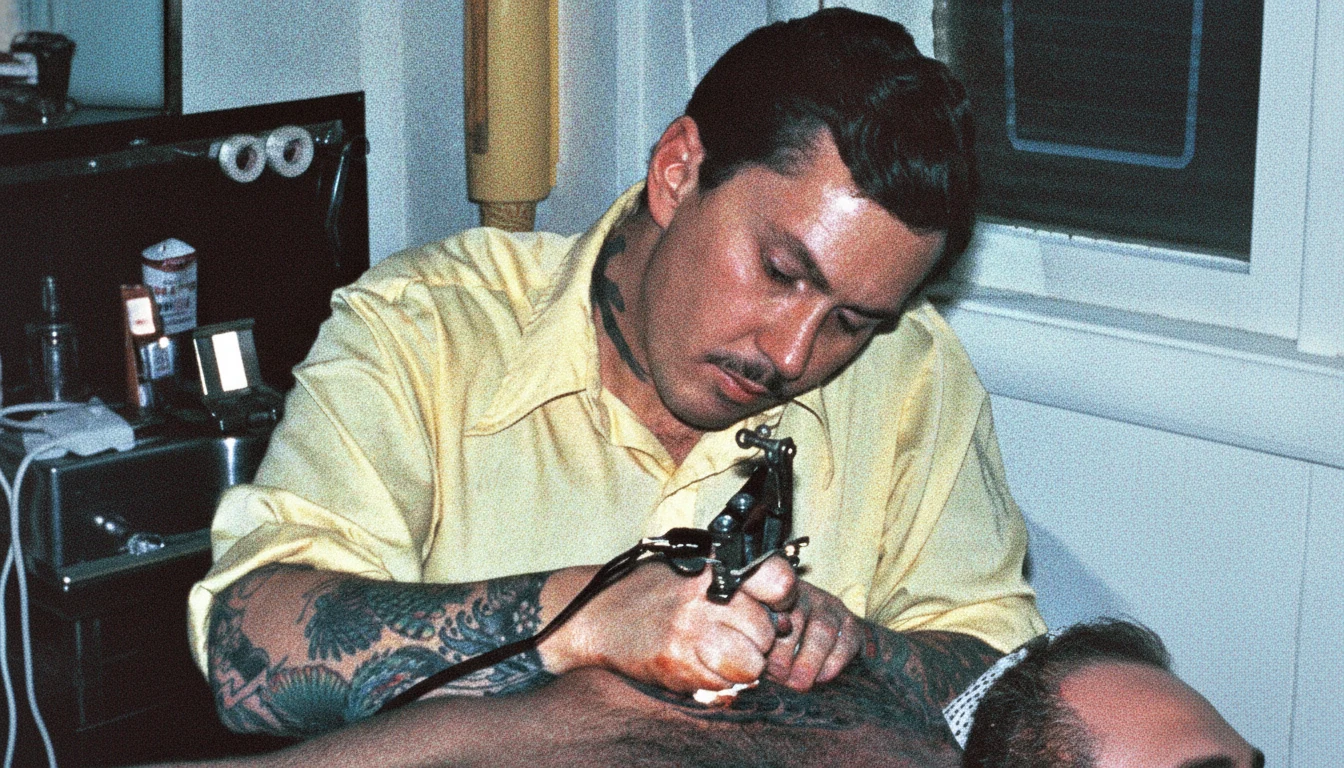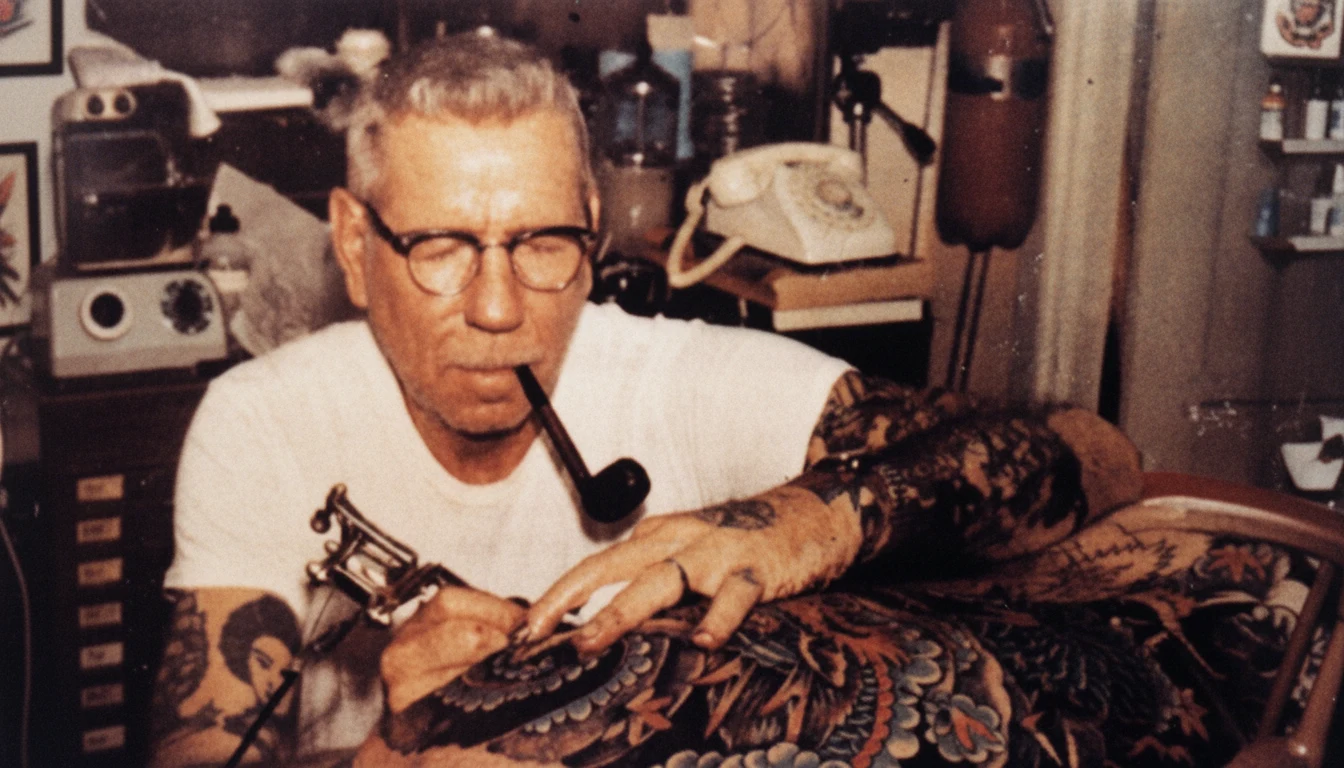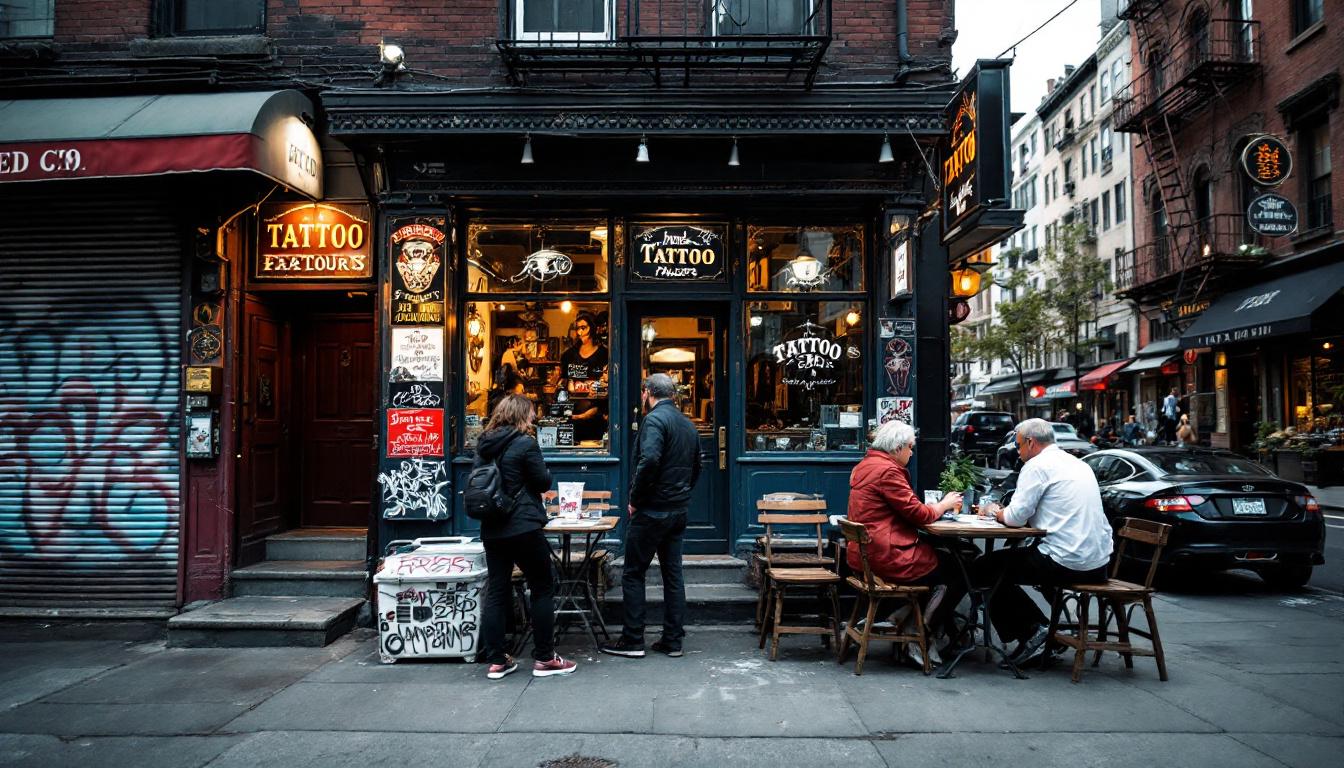
One street in lower Manhattan did more to shape American tattooing than any other. The Bowery. Cheap rent, sailors with money to spend, and a crowd that didn’t ask many questions. That’s where the trade put down roots, and the marks it left are still all over the craft today.
The spark came in 1891. Samuel O’Reilly patented the first electric tattoo machine from a shop in New York City. Before that, tattooing was slow, hand-poked work. O’Reilly’s machine made it fast. A design that took hours could be done in a fraction of the time, which meant an artist could see more clients, charge less per piece, and turn a back-alley trade into a real business. That changed everything about how tattoo shops worked.
The shop as a fixture
O’Reilly set up on the Bowery, and other artists followed. The street became a cluster, the way trades did back then. If you wanted ink in New York, you knew where to go.
Those shops were small and walk-in by nature. Sailors, soldiers, working people. The flash on the wall sold the work, you pointed at what you wanted, and you walked out wearing it. That model, pick a design off the wall and sit down, is still how a lot of street shops run. It started on streets like this one.
The women who ran the shops
The Bowery is usually told as a story about men, and that’s a problem, because some of the sharpest operators on the street were women. They ran their own shops, set their own prices, and built reputations in a trade that was supposed to belong to outlaws and sailors.
The clearest example is Mildred Hull, the Queen of the Bowery. She tattooed on the Bowery in the 1920s and 30s and ran her own shop at a time when almost no woman did. She wasn’t a footnote. She was a working professional who made a living from her own hand, and she proved tattooing could be a career, not just a sideshow act.
The ban
In 1961, New York City banned tattooing outright. The official reason was a hepatitis scare tied to dirty needles. The ban held for 36 years, until the city finally lifted it in 1997, as CBS News has laid out.
For most of that stretch, getting tattooed in the five boroughs meant going underground. Artists worked out of apartments and back rooms, by word of mouth, no sign on the door. That didn’t kill the craft. It just pushed it out of sight and gave it an outlaw reputation that stuck around long after the ban ended.
When the law came off in 1997, the shops came back into the open. A trade that had survived in living rooms for almost four decades got to put its name on the window again.
What the work looks like now
The Bowery shaped American traditional, big bold lines, solid color, designs you can read from across a room. Bold will hold, and that style was built to last on skin that took a beating. It still does.
But the demand has shifted. A lot of clients now want the opposite of bold: small, fine, detailed pieces. Joel Pennington of the Austin studio Blackdot put it plainly to Axios: “For the cool kids, there’s a less-is-more mentality now… What they want is smaller tattoos that are highly detailed.”
That’s a real change in what artists get asked for. Micro-realism, fine-line script, tiny single-needle work. It takes a different hand than a traditional eagle, and the same shops that built their name on bold flash now keep someone on the bench who can do hair-thin lines. Both kinds of work share a wall, and that mix is what the street has always done well.
Why the history still matters to your shop
The Bowery story isn’t a museum piece. The way a modern shop runs traces straight back to it. Walk-ins, flash on the wall, an artist building a name on their own work. Those are Bowery habits.
What’s changed is the back office. O’Reilly competed on speed because the machine let him take more clients in a day. The bottleneck now isn’t the needle, it’s everything around the chair: booking, deposits, chasing no-shows, keeping designs and client notes straight. That’s the part Apprentice is built for. It handles the scheduling, deposits, and client records so you can spend your time on the work instead of the admin. Start a free trial and see if it fits how your shop runs.
For more on the street itself, the Bowery Historic District report covers its history in detail. The point for any artist is simpler: one street set the template for how American tattoo shops work, and most of us are still working off it.

Jason Howie
Founder & CEO
Jason Howie is the founder of Apprentice, passionate about empowering tattoo artists and shops with better tools to manage their business and serve their clients.