Tattoos used to be about breaking rules. Now they’re about telling stories. The generation that grew up on Nickelodeon and AOL Instant Messenger has fundamentally reshaped what ink means, why people get it, and how it looks on skin. Roughly 46% of millennials have tattoos, making them the most tattooed generation in history. That’s not a fad. That’s a cultural shift. And it’s pulling the entire industry forward, from the flash on your wall to the way you run your books. Millennial tattoo trends span a wild spectrum: nostalgic callbacks to childhood cartoons, whisper-thin fine-line work, curated patchwork sleeves, and a growing demand for ethical practices. Whether you’re an artist trying to keep your portfolio relevant or a shop owner watching client requests evolve, understanding these patterns isn’t optional. It’s how you stay booked.
The Evolution of Millennial Ink Culture
Millennials didn’t just adopt tattooing. They rewrote the rules around it. The old gatekeeping culture of “earn your ink” has given way to something more personal and more democratic. The US tattoo industry alone generates roughly $1.6 billion annually, and millennials are a massive driver of that revenue. This generation treats their body like a journal, not a billboard. Every piece has a reason, a memory, a feeling. To understand where their taste came from, it helps to look at the 80s-to-2010s retrospective covering the eras millennials grew up in.
And here’s the thing: millennial parents are leading the charge, with 62% of them having body art. The stereotype of the rebellious loner with a skull tattoo is dead. Today’s tattooed client is a teacher, a project manager, a parent at school pickup. That shift changes everything about how you consult, design, and communicate.
Shifting Away from Rebellion toward Self-Expression
For decades, tattoos were a signal. They said “I don’t follow your rules.” Bikers, sailors, punk kids: ink was a badge of outsider identity. Millennials flipped that script. They don’t get tattooed to push people away. They get tattooed to pull meaning closer.
Think about the most common requests you see from this age group. Coordinates of a hometown. A deceased grandmother’s handwriting. A semicolon for mental health awareness. These aren’t rebellion. They’re vulnerability stamped into skin. It’s permanent. It’s personal. People want it to be perfect.
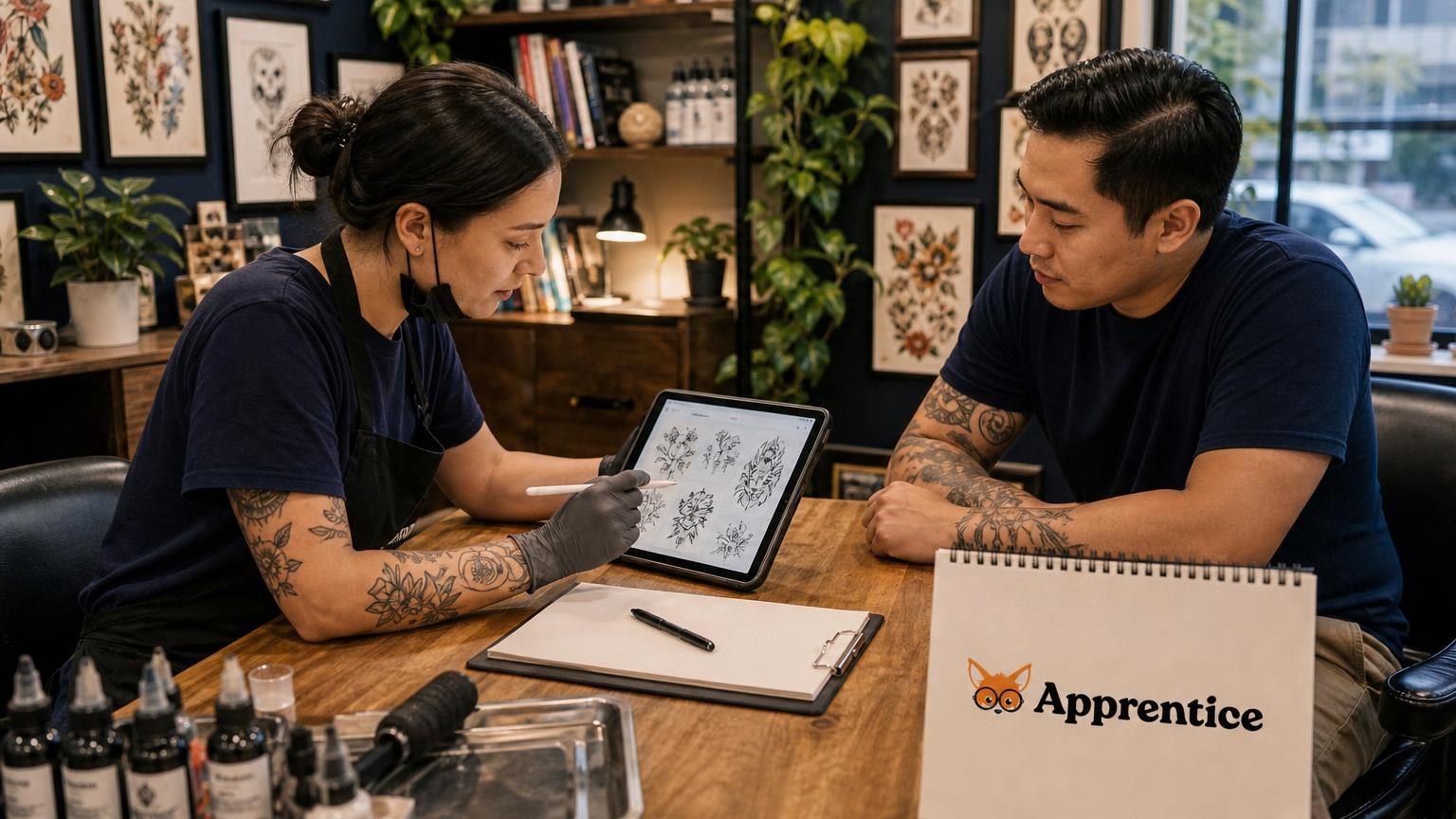
This shift has real implications for your shop. Consultations take longer because the emotional stakes are higher. Clients want to collaborate on design, not just pick from a wall. They want to feel heard. If your intake process doesn’t make room for that conversation, you’re leaving money and trust on the table.
The Role of Social Media in Shaping Aesthetic Standards
Instagram changed tattooing more than any single invention since the rotary machine. Before social media, your reputation was local. Word of mouth, maybe a magazine feature. Now a single Reel can put your work in front of millions overnight. And millennials, who came of age with these platforms, are deeply influenced by what they scroll past.
The result? Clients walk in with hyper-specific references. They’ve saved 47 images to a Pinterest board. They know exactly what “fine-line botanical with negative space” means because they’ve been studying it for months. That’s both a gift and a challenge. You get informed clients, but you also get unrealistic expectations pulled from heavily filtered photos.
For artists, this means your online portfolio is your storefront. And for shop owners, making sure your booking flow matches the polish of your Instagram grid matters. Tools like Apprentice let you connect that social media momentum directly to a booking page, so a client who discovers you at 11 p.m. can lock in a consultation before they forget your name by morning.
The Rise of Minimalism and Fine-Line Artistry
Big, bold, saturated work isn’t going anywhere. But the fastest-growing segment of millennial tattoo requests leans small, delicate, and precise. Minimalism in tattooing mirrors a broader cultural pull toward simplicity. Marie Kondo energy, but for your forearm.
This trend isn’t just aesthetic. It’s practical. Small tattoos are quicker sessions, lower price points for first-timers, and easier to place in professional-friendly spots. They also photograph beautifully for social media, which feeds the cycle all over again.
Micro-Tattoos and Delicate Geometry
Micro-tattoos are everywhere. Tiny moons behind the ear. A single wildflower on the inner wrist. A geometric triangle no bigger than a dime. These pieces require serious technical skill despite their size. You’re working in a space where one wobbly line is obvious.
Geometric work, in particular, has surged. Clean shapes, dotwork mandalas, sacred geometry patterns: these appeal to millennials who want something visually striking without a narrative explanation. Not every tattoo needs a backstory. Sometimes a perfect hexagon is just satisfying to look at.
For artists building a book in this niche, consistency is everything. And because these sessions are shorter, volume matters. You might do six micro-tattoos in the time one large back piece takes. Managing that kind of schedule by hand is a headache. Having a system that handles deposits, prep forms, and appointment slots automatically frees you up to focus on the actual art.
Single-Needle Technique and the ‘Less is More’ Philosophy
Single-needle tattooing has become the signature technique of the minimalist movement. One needle. Thin lines. Almost no shading. The result looks like a pen sketch drawn directly onto skin. It’s gorgeous when done well and a disaster when done poorly.
The reality check here: single-needle work doesn’t age the same as traditional. Those whisper-thin lines can spread, blur, or fade faster than a bold American traditional piece. Honest artists have that conversation upfront. They explain touch-up timelines. They manage expectations. Because a client who understands the trade-offs becomes a loyal repeat customer, not a one-star review.
This “less is more” philosophy also extends to placement. Millennials tend to choose spots that feel intimate rather than showy. Inner bicep. Ribcage. Behind the ankle. The tattoo is for them first, the audience second. That’s a meaningful distinction from previous generations who often prioritized visibility.
Nostalgia-Driven Ink: Reclaiming the 90s and 2000s
Nostalgia is a powerful drug, and millennials are fully hooked. The generation that grew up taping songs off the radio and trading Pokemon cards is now old enough to feel genuinely sentimental about their childhood. And they’re putting that sentiment on their skin.
This isn’t ironic. Well, sometimes it’s a little ironic. But mostly, nostalgia tattoos are a sincere attempt to hold onto something that felt simpler. The global tattoo market was valued at $2.43 billion in 2025 and is projected to hit $5.99 billion by 2034. Nostalgia-driven work is a real slice of that growth.
Cartoon Characters and Pop Culture Icons
Rugrats. Sailor Moon. The Powerpuff Girls. SpongeBob. These aren’t just tattoos. They’re emotional anchors to a specific time and feeling. A millennial getting a Courage the Cowardly Dog tattoo isn’t being childish. They’re honoring something that shaped them.
Pop culture tattoos also include movie quotes, album art, and video game sprites. A Zelda Triforce. A line from The Office. Harry Potter symbols remain wildly popular despite being over two decades old. These pieces spark instant connection. Two strangers with matching Deathly Hallows tattoos are basically best friends.
For artists, this niche requires reference accuracy and a willingness to work with copyrighted imagery in a respectful way. Your client will notice if Pikachu’s ears are wrong. Trust me.
Modern Takes on Tribal and Butterfly Motifs
Here’s where things get interesting. Tribal tattoos and butterfly tramp stamps were the punchline of early 2000s tattoo culture. Millennials are reclaiming them. But not by copying the originals. They’re reinterpreting them.
Modern tribal work often draws from actual cultural traditions with proper respect and research. Polynesian-inspired patterns, Maori ta moko references done by artists with cultural knowledge: these carry weight and meaning beyond aesthetics. The lazy, generic armband tribal of 1998 is gone. What’s replacing it has depth.
Butterflies, meanwhile, have been reborn through fine-line and watercolor techniques. A butterfly on the collarbone done in single-needle with soft color blending looks nothing like its early-2000s ancestor. Same subject, completely different execution. That evolution is a perfect example of how millennial nostalgia works: take something familiar and make it yours.
The ‘Sticker Sleeve’ and Curated Body Art
The traditional sleeve, one cohesive theme flowing from shoulder to wrist, is no longer the default. Millennials popularized what the industry calls the “sticker sleeve” or patchwork approach. Individual tattoos scattered across an arm like stickers on a laptop. Each one stands alone. Together, they tell a bigger story.
Moving from Large Scale Pieces to Patchwork Collections
This trend makes sense when you think about how millennials get tattooed. They don’t plan an entire sleeve at 22 and execute it over three years. They get a piece here, a piece there, from different artists, in different cities, at different life stages. The arm fills up organically.
For shop owners, this means your average millennial client isn’t booking a six-session commitment. They’re booking one session at a time. That changes your revenue model. You need volume. You need efficient booking. You need a way to keep those clients coming back for the next piece instead of wandering to another shop.
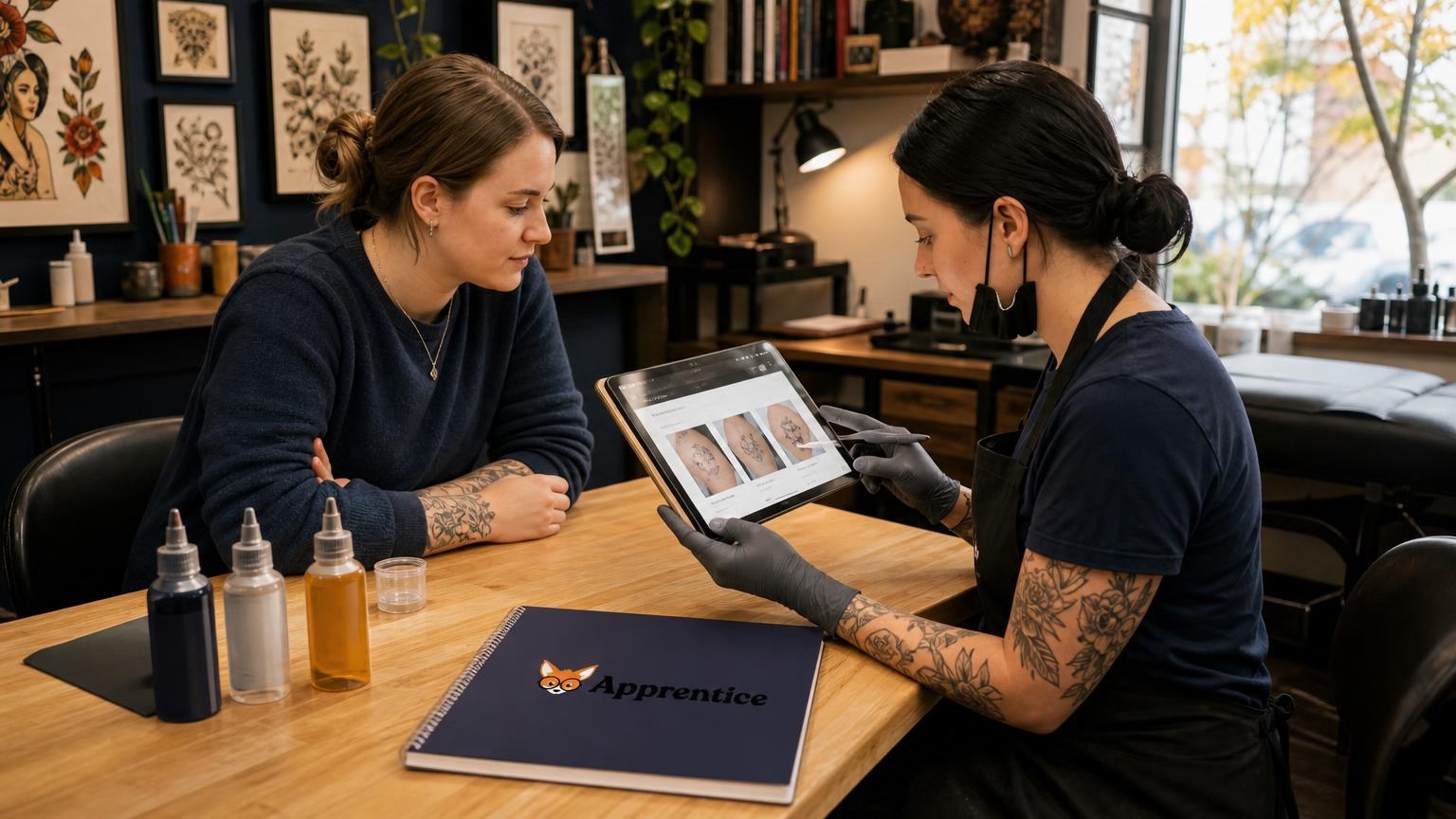
Apprentice helps here by keeping full client histories in one place. Notes, past designs, preferences, consent forms: everything’s there when they come back eighteen months later for the next addition. No digging through paper files. No awkward “remind me what we talked about” conversations.
The Aesthetic of Asymmetry and Individual Storytelling
Patchwork sleeves break the rules of traditional composition on purpose. Negative space between pieces isn’t a flaw. It’s a feature. The gaps are part of the design, leaving room for future additions and creating a visual rhythm that feels casual and intentional at the same time.
Each tattoo in a patchwork collection often comes from a different moment. A trip to Tokyo. A breakup. A new baby. The arm becomes a timeline. And because no two people have the same collection of experiences, no two patchwork sleeves look alike.
This trend rewards artists who can think about placement strategically. Where does this small piece go so it leaves room for future work? How does it relate to what’s already there without clashing? That spatial awareness is a skill worth developing if you want to attract this clientele.
Sustainability and Ethics in Modern Tattooing
Millennials care about where their money goes. They read ingredient lists. They ask about sourcing. And yes, they bring that energy into the tattoo chair. The demand for ethical tattooing practices is real and growing.
The Demand for Vegan Inks and Eco-Friendly Studios
Traditional tattoo inks sometimes contain animal-derived ingredients like bone char, gelatin, or shellac. Vegan inks eliminate those components. And a growing number of clients specifically ask for them. Some shops have switched entirely. Others offer it as an option.
Beyond ink, eco-conscious millennials look at the whole studio. Single-use plastics, disposable supplies, energy consumption: these things matter to a generation raised on climate anxiety. Shops that adopt greener practices and communicate them clearly earn loyalty from this crowd.
Here’s the honest part. Going fully eco-friendly in a tattoo studio is hard. Hygiene standards require single-use items. Autoclaves use energy. There’s tension between sustainability and safety, and safety always wins. But small steps count. Biodegradable grip tape. Recycled packaging for aftercare products. LED lighting. These aren’t massive investments, and they signal that you care about more than just the bottom line.
The share of women getting tattooed now outpaces men, with 38% of women inked compared to 27% of men. Many of these clients are millennials who actively seek out studios with inclusive, ethical, and transparent practices. If your shop checks those boxes, make sure your website and booking page say so.
Future Outlook: How Millennial Trends Influence Gen Z
Millennials set the table. Gen Z is sitting down and rearranging the silverware. The trends millennials pioneered, fine-line work, nostalgia ink, patchwork sleeves, ethical sourcing, are all being adopted and remixed by the generation behind them. Gen Z takes minimalism even further with single-dot tattoos and UV-reactive ink. They push nostalgia into the 2010s with Minecraft and Vine references. They expect digital-first booking experiences because they’ve never known anything else.
For artists and shop owners, the lesson is clear. The aesthetic preferences will keep evolving, but the infrastructure that supports them stays the same. You need efficient scheduling. You need deposit collection that actually prevents no-shows. You need a way to manage design collaboration digitally, because nobody under 30 wants to describe their tattoo idea over a phone call.
Millennial trends toward minimalism and nostalgia aren’t fading. They’re becoming the foundation that future styles build on. North America holds about 42% of the global tattoo market, and that share is growing as younger generations continue normalizing body art. The shops that thrive will be the ones that respect the craft, understand the client, and run a tight operation behind the scenes.
The art matters most. It always will. But the business side is what keeps the lights on and the machines humming. If you’re spending more time chasing deposits and managing DMs than actually tattooing, something needs to change. Apprentice was built for exactly that situation. You can get started with a free 14-day trial and be booking clients within five minutes. Spend your energy on the work that matters: the ink, the craft, the people in your chair.

Jason Howie
Founder & CEO
Jason Howie is the founder of Apprentice, passionate about empowering tattoo artists and shops with better tools to manage their business and serve their clients.