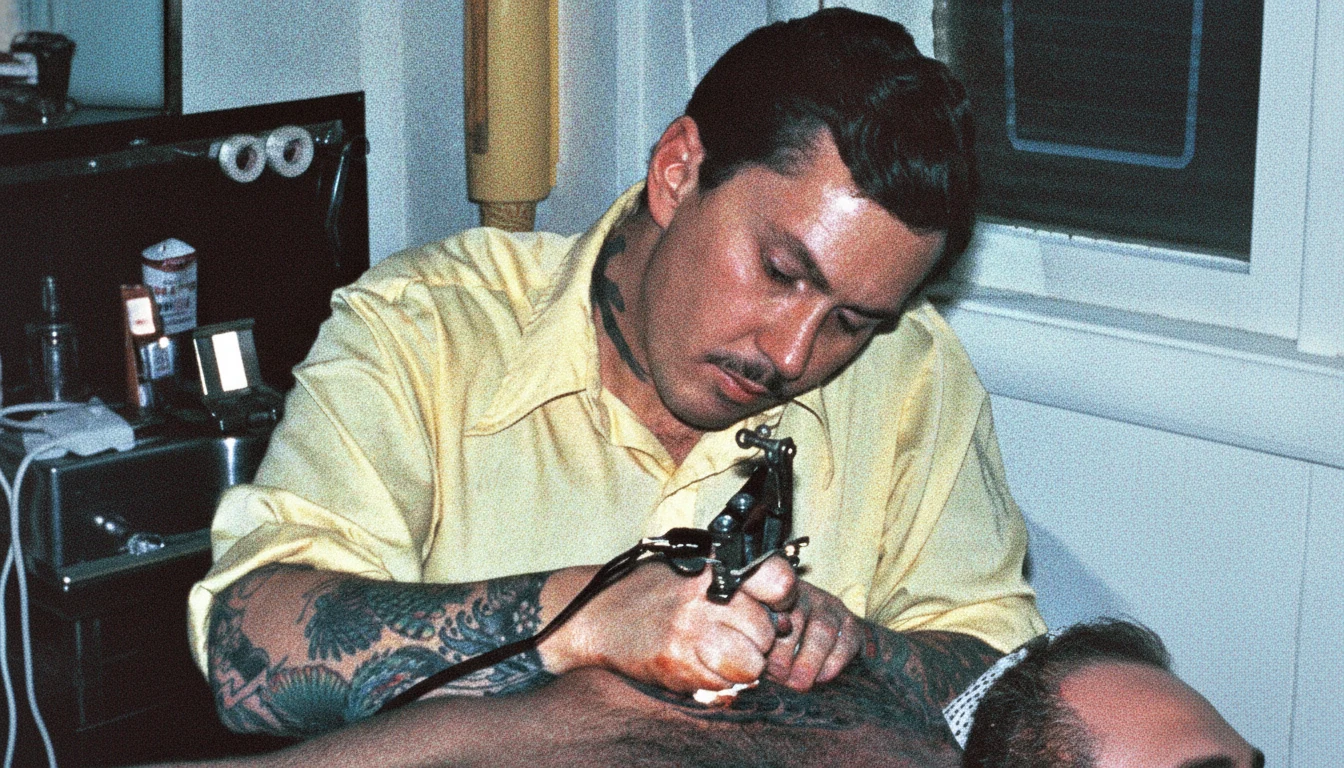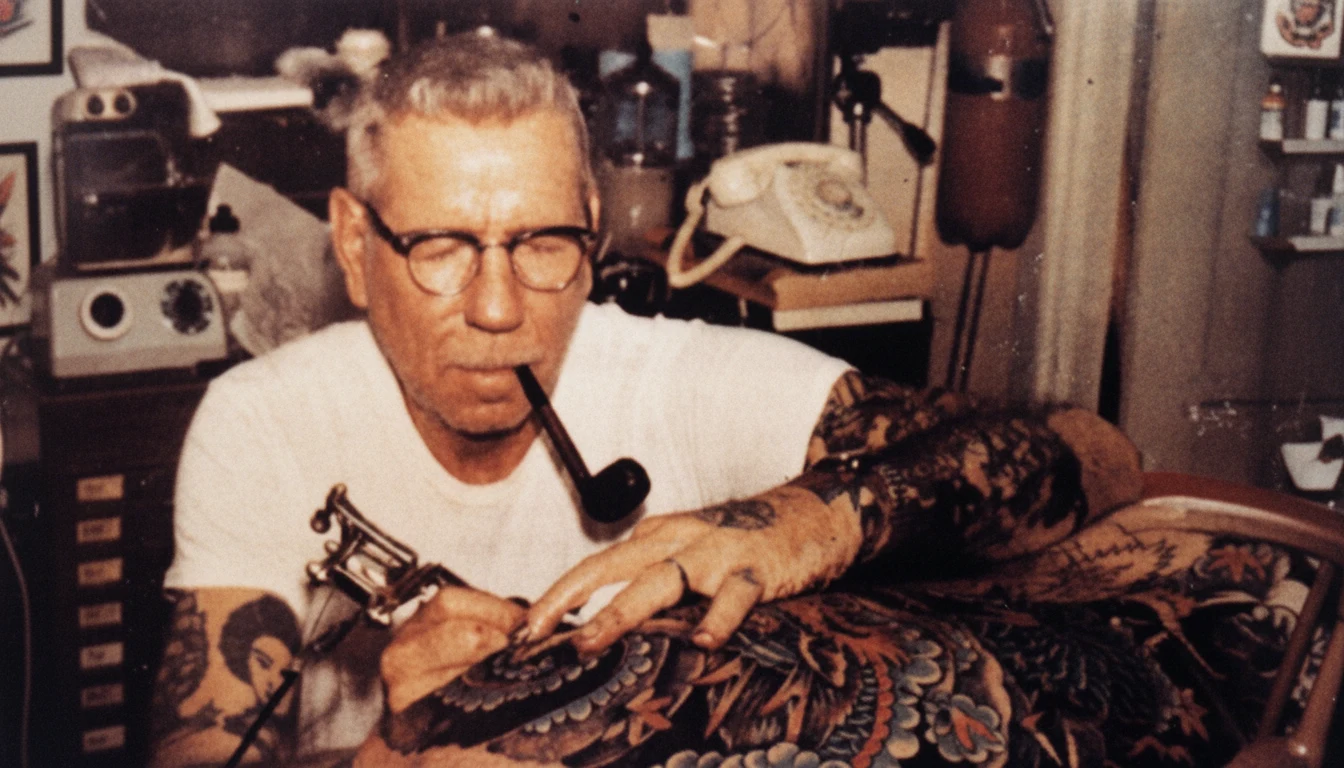
Before the electric machine, tattooing was slow. An artist poked pigment into skin one stick at a time, by hand, for hours. It hurt more, it took longer, and the line quality depended entirely on a steady wrist. Then a machine showed up that did the poking for you, hundreds of times a minute, and the whole craft changed.
That machine is the reason your shop sounds the way it does.
Where the buzz came from
Samuel O’Reilly patented an electric tattoo machine in 1891. He adapted Thomas Edison’s electric pen, a device meant to perforate paper for copying documents, and turned it into a tool that drove needles into skin at speed. Suddenly an artist could lay down a clean line in seconds instead of minutes.
The speed mattered, but so did the consistency. A hand-poked line wanders. A machine line holds its depth and spacing because the needle moves the same way every time. That repeatability is what opened the door to fine detail, smoother shading, and tighter color work.
A study published in Wittenberg University’s history journal describes the machine as a real breakthrough for color subtlety and edging. It let artists do work that simply wasn’t practical by hand.
Wagner sharpened the design
O’Reilly started it. Charlie Wagner refined it. In 1904 Wagner patented a machine with interchangeable needles and an adjustable tension screw, and those two changes did more than they sound like.
Interchangeable needles meant an artist could swap configurations for different jobs. A tight liner for outlines, a wider grouping for fill. The tension screw let you tune how hard the machine hit, which is the difference between a clean line and a blowout. Most coil machines artists ran for the next century descend directly from what Wagner built.
If you’ve ever set up a coil rig and tuned the contact screw before a session, you’re doing a version of what Wagner made possible. The vocabulary changed. The principle didn’t.
What actually changed for the artist
It’s easy to frame this as a story about technology. It’s really a story about what artists were suddenly allowed to attempt.
When the tool stops fighting you, you take bigger swings. Portraits, fine script, dense color packing, large pieces that would take an unbearable number of hours by hand. None of that becomes worth offering until the machine makes the linework reliable and the session survivable for the person under the needle. The machine didn’t just speed up old work. It made new work possible.
That tradeoff still shapes how shops run. A faster, cleaner tool means more pieces, more clients, and more time spent on the parts of the job a machine can’t touch: the consult, the design, the read on what someone actually wants to wear for the rest of their life.
The tool got better. The work behind it didn’t change.
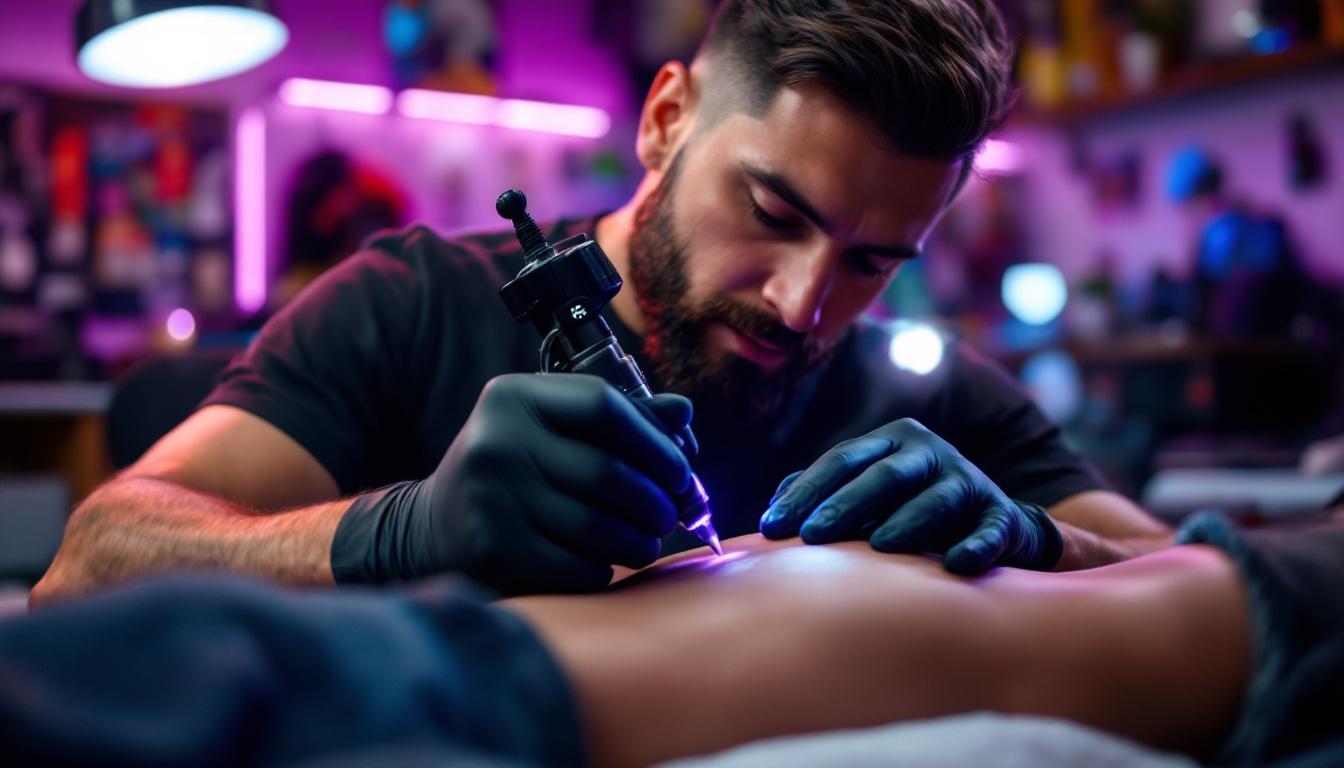
Modern machines have moved well past coils. Rotary machines run quieter and lighter. Pen-style machines feel like holding a marker and have pulled a lot of artists away from the old frames. Wireless setups cut the cord clip entirely. Cartridge needles let you change groupings in seconds instead of soldering and tuning between every step.
All of that is real progress, and all of it serves the same goal O’Reilly was chasing in 1891: put pigment in skin cleanly, consistently, and without torturing the client.
Here’s the part that doesn’t get easier with better gear. The machine handles the line. You still handle everything else. Where the design sits on the body, how it’ll age, whether the client will still love it in twenty years. No rotary on the market makes that call for you. That judgment is the actual craft, and it’s the same judgment artists were exercising long before there was a motor in the grip.
Running the shop around the work
A sharper tool changes the pace of a studio. When sessions move faster and cleaner, the bottleneck shifts off the tattooing itself and onto everything around it. Booking. Deposits. Keeping reference and consult notes straight. Following up after a session about healing.
That’s the part the buzz of a machine doesn’t help with, and it’s where a lot of artists lose hours they’d rather spend tattooing. Keeping your calendar, client history, and reference in one place is the modern version of clearing the bench so you can actually work. That’s what we built Apprentice to handle, so the admin doesn’t eat the time the better tools just gave back to you.
A line from O’Reilly to your bench
The electric tattoo machine is one of those inventions that’s so embedded in the craft you forget it was ever invented. It’s just how tattooing works now. But there was a real before and after, a moment when hand-poking gave way to a motor, and the kind of art you could realistically put on skin expanded overnight.
Every machine on the market traces back to that shift. O’Reilly proved a machine could do it. Wagner made it tunable and practical. Everyone since has been refining the same idea: get the line right, keep it consistent, spare the client where you can.
The tools keep getting better. What they’re in service of, a person making something permanent and personal for another person, hasn’t moved an inch.
Spend less time on admin, more on the work
The machine took the slow part out of tattooing. The booking, deposits, and client follow-up shouldn’t put it back. Start a free trial of Apprentice and keep your shop running while you stay on the needle.

Jason Howie
Founder & CEO
Jason Howie is the founder of Apprentice, passionate about empowering tattoo artists and shops with better tools to manage their business and serve their clients.