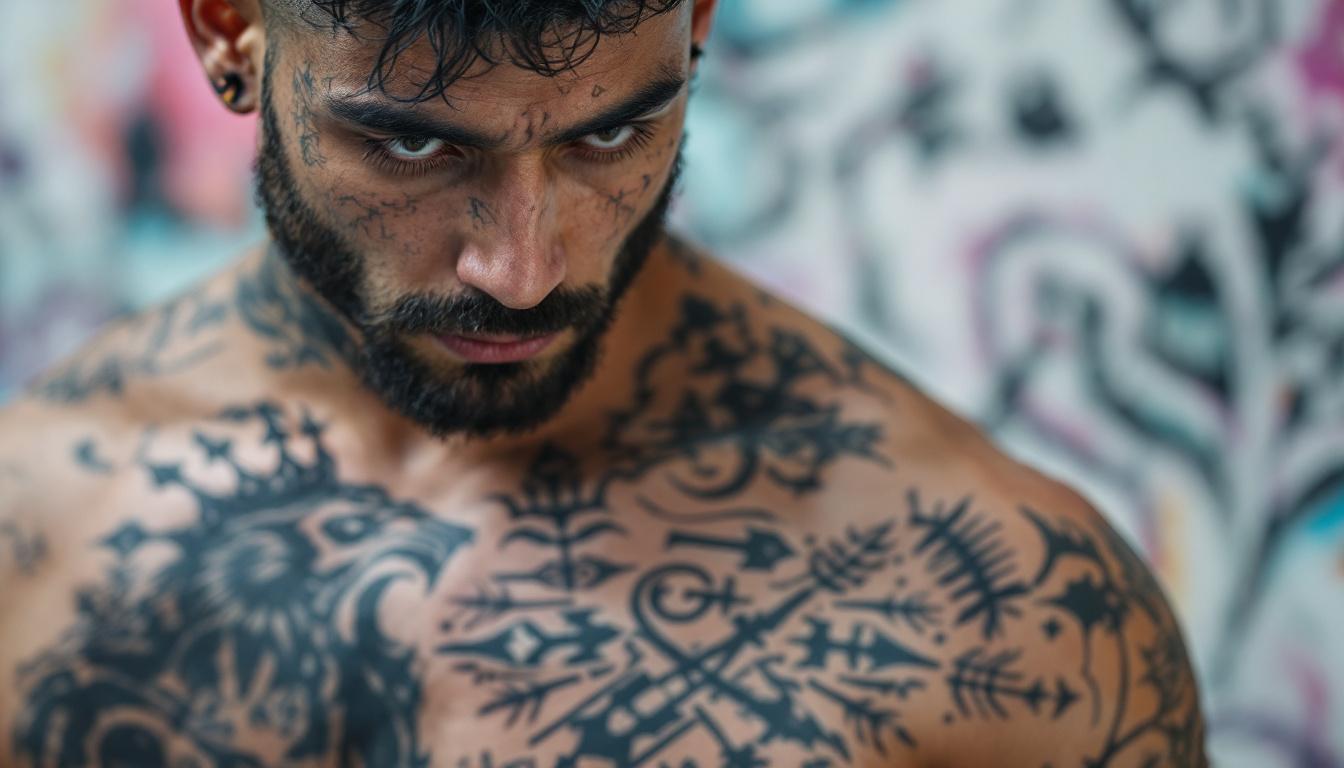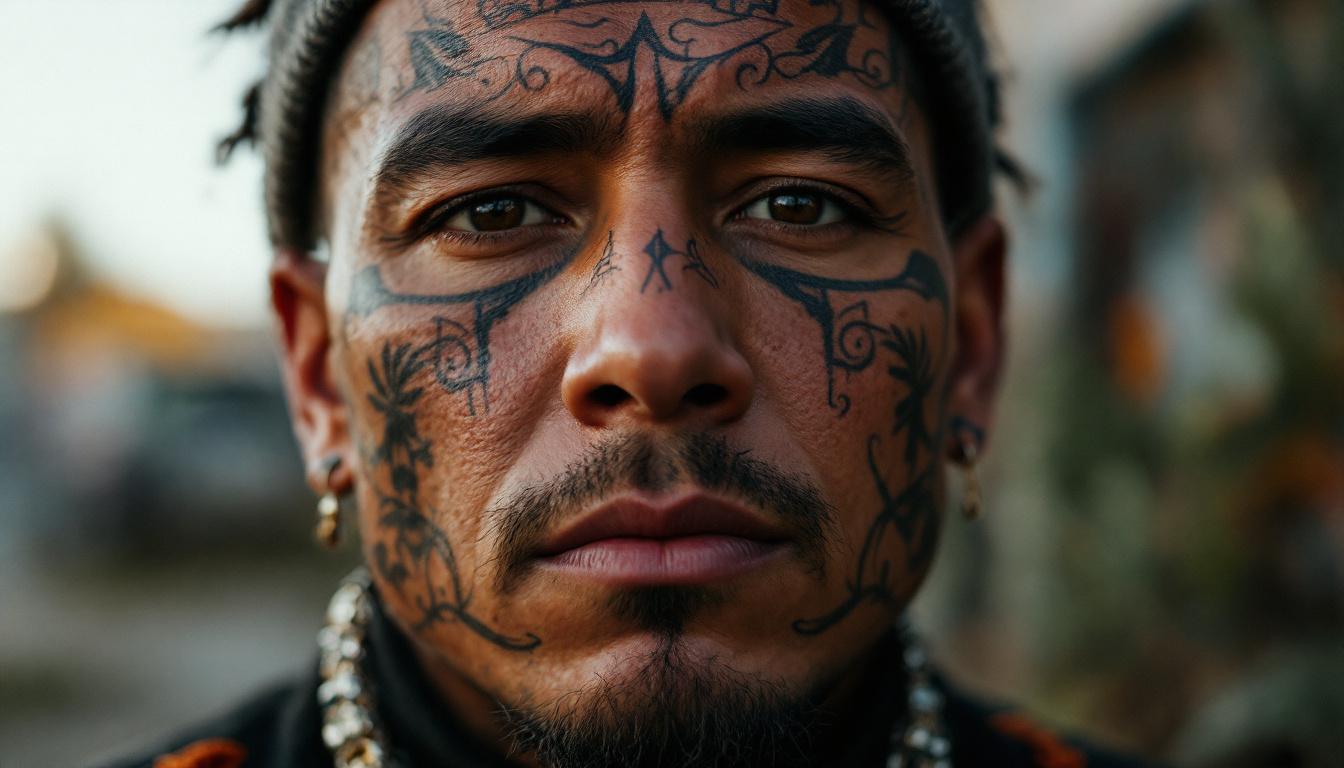
A face tattoo says something the wearer can never take back without surgery. For decades, MS-13 used that fact on purpose. The ink on a member’s face wasn’t decoration. It was a record. Loyalty, survival, time served, lives taken. You read someone’s history off their skin before they said a word.
That visual code is shifting now, and the story of how is more interesting than the usual gang-tattoo writeup. The scale alone is hard to picture. Britannica’s overview of MS-13 membership and history lays out how far the group spread, including into the United States.
What the marks actually meant
Tattoos have always been a way for people on the edge to claim belonging, and MS-13 leaned into that hard. The face markings came out of broken neighborhoods and the day-to-day work of staying alive. Some were meant to scare. Others were quiet badges earned over years. Either way, every line carried information. If you want the symbol-by-symbol breakdown, read our piece on MS-13 tattoo symbolism and what each mark means.
A lot of the imagery is brutal on purpose. Machetes, bones, devils, satanic iconography. Nassau County District Attorney Madeline Singas once described the gang’s violence in plain terms, the kind where limbs get hacked off. That isn’t metaphor for MS-13. It’s a history some members literally carved into their skin. The Wikipedia overview of MS-13 covers more of that record, and The Independent wrote years ago about how death imagery runs through the gang’s whole culture.
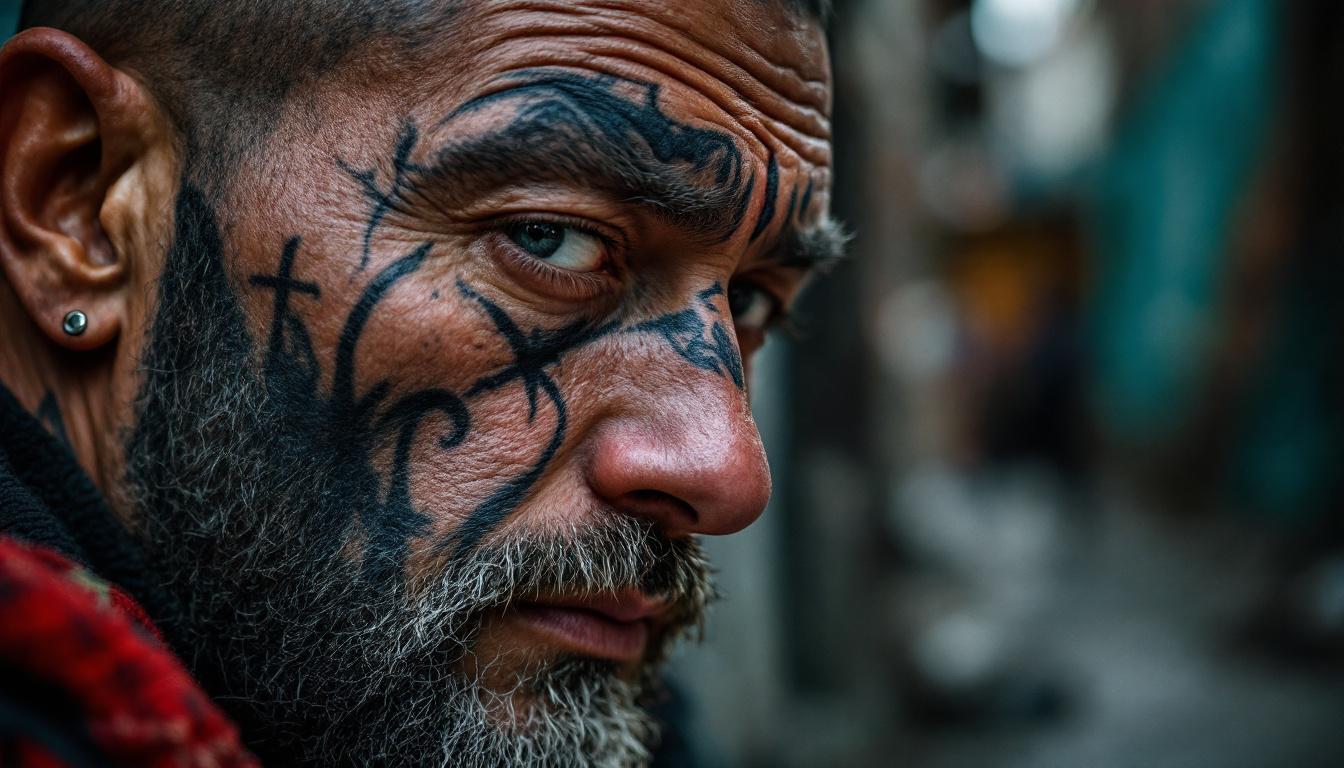
None of it was random. A mark was a message aimed at whoever was looking. Confidence for allies, dread for enemies. The face became a running conversation with the street, and new experiences kept adding to it.
Why the marks pull people in
Rough streets isolate people, and isolation pushes them toward anything that promises family. Where home structures had already fallen apart, the Maras handed kids a rulebook and a crew. Loyalty and survival got bolted together. Former members have described it as a twisted stand-in for family, the thing they never got at home.
So the choice to wear these tattoos was tangled up with wanting to belong. The marks weren’t only a threat to outsiders. They told the wearer they were part of something. In a world where trust runs thin, that meant a lot, even when the cost was permanent and the group itself dealt in fear.
The technology problem
Heavy face tattoos do something their wearers probably never planned for. They break facial recognition.
A 2021 paper titled “Impact of Facial Tattoos and Paintings on Face Recognition Systems,” published on arXiv, tested this directly. The researchers found that facial tattoos and paintings degraded every part of the recognition pipeline they checked, in both open-source and commercial systems, and that the damage was worst when a large area of the face was covered. So ink applied to signal loyalty also happens to scramble the tools police use to put a name to a face.
That raises real questions. Law enforcement leans more on automated matching every year, and a heavily tattooed face muddies the data. Bad matches slow identification down. They can also produce false ones. Somewhere in there sits a harder issue about profiling people off physical markers that carry deeply personal histories, and whether a system trained to read faces should get the final word on who someone is.
El Salvador and the move toward removal
Here’s the part that surprised me. In El Salvador, a lot of this ink is going the other direction.
CNN reported in 2025 on how tattoos there are moving away from open gang symbols toward designs people treat as personal art. Former members are removing or reworking what they once wore as a badge. That’s a bigger deal than a style change. Erasing a mark that tied you to a notorious group is a quiet way of saying you’re someone else now.
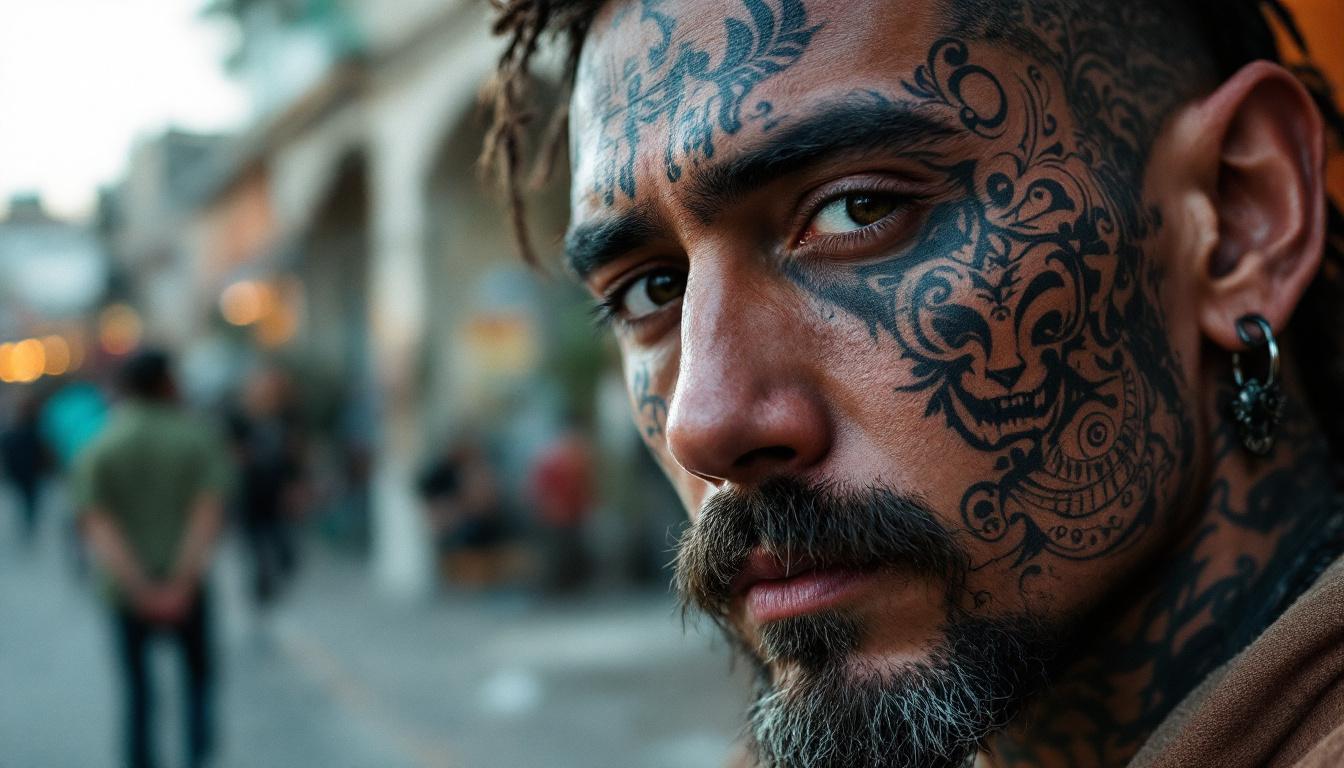
Removal here works as a turning point. The act of pulling off what once defined you as part of the collective is itself a small rebellion against a life that ran on warfare. Some people don’t erase the ink so much as redraw it, turning decades-old intimidation marks into something that documents recovery instead. A painful memory becomes a visible timeline of change. That takes nerve, and it’s not a straight line.
What this asks of everyone else
The cultural weight on these tattoos is heavy. They hold a record of violence and survival, and they often point straight at the economic neglect and weak state support in the places that produced them. They show up in second-generation immigrants too, kids who inherited the visual code without ever touching the violence behind it.
For police, reading affiliation off a face was always rough, and the technology made it rougher, not cleaner. For everyone else, the harder ask is to look past the surface. Judging a person entirely by ink they may be actively trying to leave behind misses the whole point of why it’s coming off.
My thesis is simple. These marks were never permanent in the way they looked. People change, and the ink follows. A tattoo that once broadcast fear can be erased, reworked, or reinterpreted, and the fact that this is happening at scale says something hopeful about identity that no gang ever wanted to admit. No history is locked in. Not even one written on a face.
That’s worth sitting with, whether you’re a working artist, someone studying tattoo culture, or just trying to understand what you’re seeing when a face tells a story.
Run your studio with Apprentice
If you do tattoo work, you already know the trade is full of stories like this one, ink that carries weight and people who change underneath it. Apprentice handles the business side so you can stay focused on the work and the people in your chair. Booking, client records, payments, your portfolio, all in one place. Start your free trial and see how it fits your shop.

Jason Howie
Founder & CEO
Jason Howie is the founder of Apprentice, passionate about empowering tattoo artists and shops with better tools to manage their business and serve their clients.