Quick answer
What do you need to open a tattoo studio in Rhode Island?
To open a tattoo studio in Rhode Island, you need a Body Art Establishment Permit for the shop, a Body Art Practitioner License for each artist, current bloodborne pathogen plus CPR/first aid training, a monthly spore-tested autoclave, and liability insurance. Expect roughly $100 to $235 in initial state fees and a 4 to 8 week timeline before opening.
- Regulated by: Rhode Island Department of Health (RIDOH) Body Art Program
- Studio permit: Body Art Establishment Permit (annual)
- Per artist: Body Art Practitioner License + annual bloodborne pathogen and CPR/first aid certification
- Startup permit cost: Practitioner license $100 + establishment permit $235
- Time to open: 4 to 8 weeks from application
- Minimum client age: 18; under 18 prohibited (narrow medical exception only)
- Renewals: Annual for practitioner license and establishment permit
- Official source: Rhode Island Department of Health Body Art Program
Opening a tattoo studio in Rhode Island isn’t just about finding a good spot and plugging in your machines. The state has real rules, real inspections, and real consequences for ignoring them. Rhode Island’s tattoo studio requirements have teeth, and the regulations heading into 2026 are specific enough to trip up even experienced shop owners who’ve operated in other states. This guide breaks down every license, fee, regulation, and step you’ll need to handle before you ink your first client legally. Whether you’re a solo artist opening your first private studio or an established owner expanding into the Ocean State, this is the stuff that protects your business, your clients, and your reputation. It’s permanent. It’s personal. And the state wants to make sure you’re doing it right.
Rhode Island Tattoo Studio Requirements at a Glance
Here’s the quick-hit version for anyone who just needs the essentials.
- You need a Body Art Practitioner License from the Rhode Island Department of Health (RIDOH).
- Your studio needs a separate Body Art Establishment Permit.
- Bloodborne pathogen training is mandatory for every artist.
- You must pass a facility inspection before opening.
- Minimum age to get tattooed in RI is 18. No one under 18 may be tattooed (a narrow medical exception aside).
- License renewal happens annually.
- Initial application fees run roughly $100-$235 depending on license type.
- Expect the full process to take 4 to 8 weeks from application to approval.
- You’ll need liability insurance before operating.
- Autoclave spore testing must be done regularly, with logs available for inspection.
That’s the snapshot. But the details matter. A missed step can delay your opening by weeks or land you a fine. Keep reading for the full breakdown.
Rhode Island Tattoo Studio Licensing Requirements
Rhode Island treats tattoo licensing as a public health matter. RIDOH oversees the entire process through its Body Art Program. You’ll deal with two separate licenses: one for you as an artist and one for the physical studio.
Individual Practitioner License
Every tattoo artist working in Rhode Island needs an individual Body Art Practitioner License. You can’t just work under someone else’s permit. The state requires proof of bloodborne pathogen training that meets OSHA standards. You’ll also need to show completion of a course on infection control, cross-contamination prevention, and proper sterilization techniques.
Your training certificates can’t be ancient history. RIDOH expects current certifications, and bloodborne pathogen training must be renewed annually. First aid and CPR certification are also required. These aren’t suggestions. They’re non-negotiable boxes you must check.
Establishment Permit
Your studio itself needs a Body Art Establishment Permit. This covers the physical space where tattooing happens. RIDOH will inspect your shop before issuing this permit. Inspectors look at everything: flooring materials, ventilation, lighting, handwashing stations, sterilization equipment, and waste disposal systems.
The inspection checklist is detailed. Your workstation surfaces need to be non-porous and easy to sanitize. You need a separate area for cleaning and sterilizing equipment. Sharps containers must meet OSHA specs. And your autoclave needs to be spore-tested at least monthly, with documentation on-site.
Continuing Education
Rhode Island doesn’t currently mandate a set number of continuing education hours beyond annual bloodborne pathogen recertification. But that doesn’t mean you should coast. Staying current on sterilization technology and infection prevention keeps you compliant and keeps your clients safe. RIDOH can update requirements, so check their site yearly.
Rhode Island-Specific Regulations and Laws
Rhode Island has its own body art regulations codified under RIDOH rules (216-RICR-40-10-15). These rules go beyond basic licensing and cover how you operate day-to-day.
Age and Consent Laws
Rhode Island law sets 18 as the minimum age to get a tattoo, and there’s no parental-consent path around it. Under R.I. Gen. Laws 11-9-15, tattooing anyone under 18 is prohibited — even with a parent or guardian present and signing off. The only exception is a narrow medical one, which requires a physician’s involvement plus notarized parental consent — see Rhode Island’s rules on tattooing minors for a full breakdown. For everyone else, you must verify age with a government-issued photo ID. No exceptions.
Keep copies of all consent forms and ID verifications on file, and make sure you know what a tattoo consent form must include to hold up legally. RIDOH inspectors will ask for them. A platform like Apprentice can help you store digital consent forms and client records in one place, so you’re not scrambling through paper files when an inspector walks in.
Sanitation and Safety Standards
Rhode Island’s sanitation rules are specific. Single-use items like needles, ink caps, and gloves must be disposed of properly after each client. Reusable equipment must be autoclaved. Your autoclave must undergo biological spore testing at least monthly, and you need to keep those test results for a minimum of three years.
Ink must come from manufacturers and be stored in sealed, labeled containers. No mixing ink in open containers before the client sits down. Each client gets fresh ink poured into individual cups. Cross-contamination is the fastest way to lose your license.
Penalties for Non-Compliance
Operating without a license carries fines and potential criminal charges. RIDOH can issue cease-and-desist orders, revoke permits, and refer cases for prosecution. Fines vary but can reach several hundred dollars per violation. Repeat offenders face steeper penalties and permanent license revocation — and noncompliance opens the door to the lawsuits a noncompliant shop can face beyond just regulatory action.
The ugly truth? Enforcement isn’t always consistent. But when RIDOH does show up, they’re thorough. Don’t gamble your livelihood on hoping nobody checks.
Tattoo Studio Fees and Costs in Rhode Island
Money talk. Here’s what you’ll actually spend to get legal and stay legal in Rhode Island. These figures reflect 2025-2026 rates, but always confirm with RIDOH since fees can change.
Fee Breakdown Table
| Fee Type | Cost |
|---|---|
| Body Art Practitioner License (Initial) | $100 |
| Body Art Establishment Permit (Initial) | $235 |
| Practitioner License Renewal (Annual) | $100 |
| Establishment Permit Renewal (Annual) | $235 |
| Late Renewal Penalty | Varies (up to double the fee) |
| Reinspection Fee | $50-$100 |
| Bloodborne Pathogen Training Course | $25-$75 (third-party) |
| CPR/First Aid Certification | $50-$80 (third-party) |
| Autoclave Spore Testing (Monthly) | $15-$30 per test |
| General Liability Insurance (Annual) | $500-$2,000+ |
Insurance Costs
Liability insurance isn’t optional. Most landlords require it, and it’s standard practice even if RIDOH doesn’t mandate a specific policy amount. Review the insurance coverage your Rhode Island studio actually needs before you shop for a policy — general liability coverage typically runs $500 to $2,000 annually depending on your coverage limits, location, and number of artists.
Professional liability insurance, sometimes called malpractice coverage, is a smart add-on. It covers claims related to allergic reactions, infections, or dissatisfaction. Budget $300-$800 annually for this.
Hidden Costs
Don’t forget the unsexy stuff. You’ll spend money on proper waste disposal services, sharps container pickups, autoclave maintenance, and ongoing supply costs for single-use items. These operational costs add $200-$500 monthly depending on your client volume.
How to Get Licensed for Tattoo Studio in Rhode Island
Here’s your step-by-step path from “I want to open a shop” to “I’m legally tattooing clients.”
-
Complete bloodborne pathogen training through an OSHA-compliant provider. Keep your certificate. You’ll need it for every renewal.
-
Get CPR and first aid certified through the American Red Cross, American Heart Association, or an equivalent provider.
-
Secure your studio space and build it out to meet RIDOH specifications. Non-porous surfaces, proper ventilation, dedicated sterilization area, handwashing stations with hot and cold running water, and adequate lighting are all required.
-
Purchase and install an autoclave. Run your first spore test and document the results before applying.
-
Set up a waste disposal contract with a licensed biomedical waste hauler. RIDOH will ask about this during inspection.
-
Submit your Body Art Practitioner License application to RIDOH with all required documentation: training certificates, ID, and the application fee.
-
Submit your Body Art Establishment Permit application separately. Include your floor plan, equipment list, and proof of insurance.
-
Schedule your facility inspection with RIDOH. An inspector will visit your studio to verify compliance with all physical requirements — read up on what to expect during a health inspection so nothing catches you off guard.
-
Address any deficiencies noted during inspection. If you fail, you’ll pay a reinspection fee and schedule a follow-up visit.
-
Receive your permits and display them prominently in your studio. Rhode Island requires both licenses to be visible to clients.
The whole process typically takes 4 to 8 weeks. But that timeline assumes you have your space ready and your paperwork complete. Delays usually happen because of incomplete applications or studios that aren’t built out properly before the inspection request.
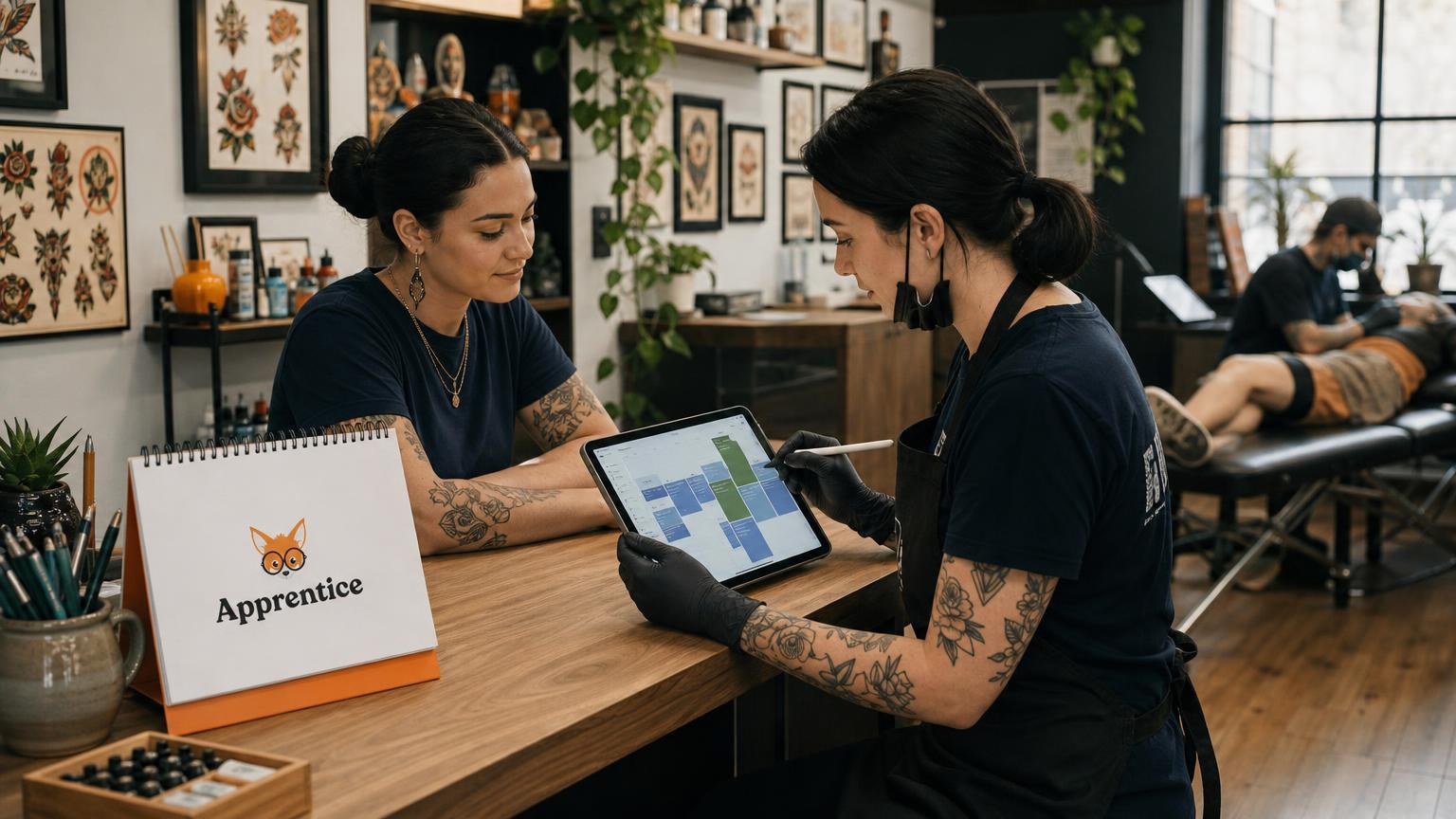
Once you’re licensed and open, managing the daily operations is its own challenge. Tools like Apprentice can handle your booking, deposits, and client communication automatically. That means less time chasing DMs and more time tattooing. The platform also stores consent forms and client history digitally, which keeps you organized for inspections.
Rhode Island Tattoo Studio Resources and Contacts
You’ll reference these contacts throughout the licensing process. Bookmark them.
-
Rhode Island Department of Health (RIDOH) - Body Art Program
- Phone: (401) 222-5960
- Website: Rhode Island Department of Health
- Address: 3 Capitol Hill, Providence, RI 02908
-
RIDOH Regulations (216-RICR-40-10-15)
- Full text available at: Rhode Island Rules and Regulations
-
Rhode Island Secretary of State - Business Registration
- Phone: (401) 222-3040
- Website: Rhode Island Secretary of State
- You’ll register your business entity here before applying for your body art permits.
-
OSHA Bloodborne Pathogen Training Providers
- Red Cross: American Red Cross
- Various online providers offer OSHA-compliant courses. Verify they meet RIDOH standards before enrolling.
-
Rhode Island Small Business Development Center
- Phone: (401) 874-7232
- Website: Rhode Island Small Business Development Center
- Free business planning help for new studio owners.
-
Alliance of Professional Tattooists (APT)
- Website: Alliance of Professional Tattooists
- Industry organization focused on safety standards and artist education.
Call RIDOH directly if you have questions about your specific situation. Their Body Art Program staff can clarify requirements and help you avoid common application mistakes.
Sources & Official References
These primary sources back up the licensing, age, and sanitation rules above. Always confirm the current details with RIDOH before you apply.
- R.I. Gen. Laws § 11-9-15 (tattooing minors)
- 216-RICR-40-10-15 (RIDOH body art rules)
- Rhode Island Department of Health
Rhode Island Tattoo Studio FAQ
Do I need a license for each location if I work at multiple studios? Your individual practitioner license is valid statewide. But each studio location needs its own establishment permit. If you guest spot at a permitted shop, you’re covered under their establishment permit as long as you hold your own practitioner license.
Can I tattoo out of my home in Rhode Island? Technically, a home studio can qualify for an establishment permit if it meets all RIDOH facility requirements. But zoning laws in most Rhode Island municipalities prohibit commercial activity in residential zones. Check with your local zoning board before investing in a home setup.
Does Rhode Island offer reciprocity with other states? Rhode Island doesn’t have formal reciprocity agreements for body art licenses. You’ll need to apply and meet all RI requirements regardless of where you’re currently licensed. Your training certifications from other states will likely transfer, though.
What happens if I let my license expire? Operating with an expired license is the same as operating without one. You’ll face fines and a cease-and-desist order. Renewing a lapsed license may require paying late fees, sometimes double the standard renewal cost. If it lapses long enough, you may need to reapply entirely.
How often does RIDOH inspect studios? Initial inspections happen before you open. After that, RIDOH conducts routine inspections, typically annually, but they can show up unannounced based on complaints. Keep your shop inspection-ready at all times. Not just before scheduled visits.
Do I need a separate business license on top of the body art permits? Yes. You’ll need to register your business with the Rhode Island Secretary of State and obtain any local business licenses your city or town requires. The body art permits from RIDOH don’t replace general business registration.
Can I pierce and tattoo under the same license? Body piercing requires its own practitioner license in Rhode Island. If you want to offer both services, you’ll need separate practitioner licenses for each. Your establishment permit can cover both activities as long as the facility meets requirements for each.
The Bottom Line
Rhode Island’s requirements for opening a tattoo studio aren’t complicated, but they are thorough. The state cares about public health, and the regulations reflect that. Every rule exists because someone, somewhere, cut a corner and a client paid the price.
Get your training done. Build your space right. Submit clean applications. Pass your inspection the first time. And once you’re open, stay organized. The artists who thrive aren’t just talented with a machine. They run tight operations.
If you’re tired of juggling bookings through Instagram DMs and tracking deposits on sticky notes, Apprentice gives you a free 14-day trial to see how automated booking, deposit collection, and client management actually work. Get started here and spend your time on the craft, not the chaos.
Because this industry rewards people who respect both the art and the business. Do both well, and Rhode Island will be good to you.

Jason Howie
Founder & CEO
Jason Howie is the founder of Apprentice, passionate about empowering tattoo artists and shops with better tools to manage their business and serve their clients.