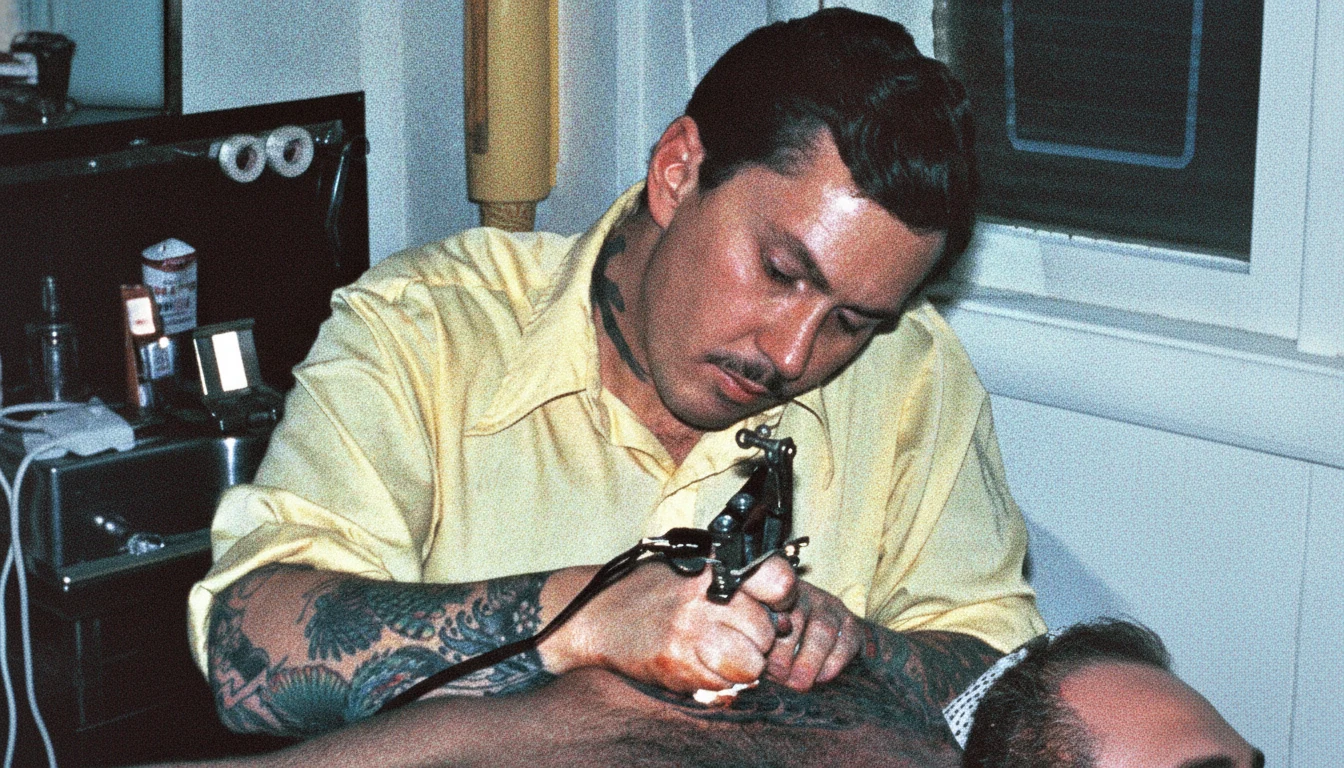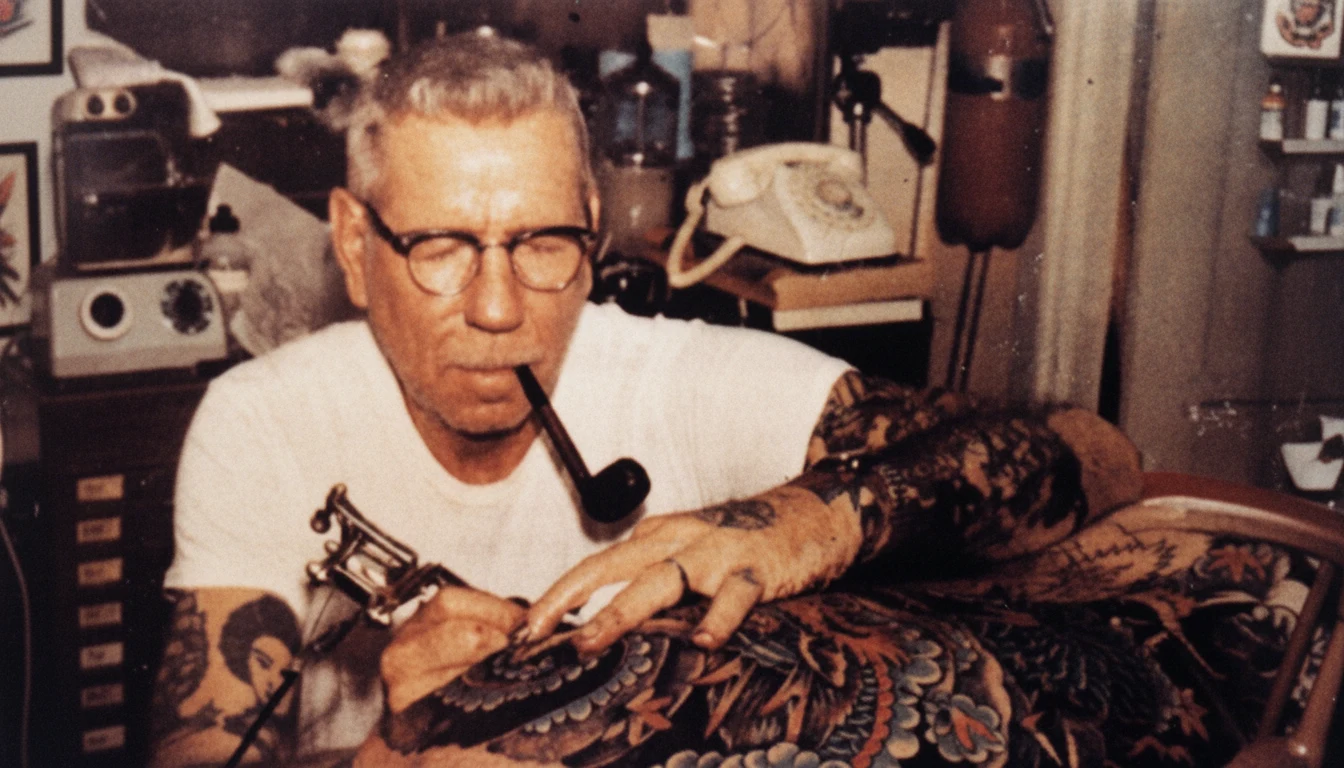
There’s a pub in Bristol called the White Horse. In 1953 it became the meeting spot for the Bristol Tattoo Club, and that club is a big reason British tattooing looks the way it does today. The man behind it was Les Skuse.
If you’ve never heard the name, that’s fair. Most artists know the work without knowing who started it. Skuse ran one of the first tattoo conventions anywhere, helped drag English tattooing out of a rut, and built a studio that’s still inking people three generations later. You can read a fuller account on the Bristol Tattoo Club history at Lucky Supply.
He opened a studio when nobody respected the trade
Skuse opened his own studio in Bristol in the 1920s. Tattoos back then weren’t art. They were sailor marks, sideshow stuff, something respectable people pretended not to notice. He worked anyway, and he kept getting better at it.
He said as much himself: “I have always been ready and willing to learn, never thinking I knew it all and continually searching for ways in which to improve my work and equipment.” That’s the whole approach in one sentence. He didn’t think he’d arrived. He thought there was always a better way to do the next piece.
The Bristol Tattoo Club
In 1953 Skuse turned that personal habit into something bigger. The Bristol Tattoo Club met at the White Horse and pulled in tattoo people from all over. It hosted what’s often called the world’s first tattoo convention, a gathering of artists and fans at a time when there was almost nothing else like it.
The point was to give a scattered, half-hidden trade a place to gather, not just a venue to show off ink. Artists could compare notes. Beginners could watch people who actually knew what they were doing. If you want to see what that scene looked like, the Bristol Tattoo Club exhibition writeup covers those early years well.
He pushed English work past the single needle
Here’s the technical part, and it matters. At the time, English tattooists were mostly working with a single needle. Skuse thought the results looked weak next to American work, and he said so plainly.
“English tattooists were using a single needle,” he noted. “This caused a lot of bleeding and pain. This finished design looked very thin and scratchy when compared with the strong, well-shaded designs done in the United States.”
So he changed how he worked. He chased the bolder, better-shaded look the Americans were getting, and he kept tuning his equipment to get there. That shift toward grouped needles and solid shading is the difference between a scratchy outline and a tattoo that holds up. It’s the same logic behind every “bold will hold” conversation in a modern shop. In 1955 he was voted Champion Tattoo Artist of All England, which tells you the trade noticed.
A family that kept it going
The story didn’t stop with Les. The Skuse name became a fixture in British tattooing across generations. His grandson Jimmie Skuse still runs the line that traces back to that original studio, now at 40 Temple Street, Keynsham. You can find the current shop listed as Les Skuse Tattoos.
There’s one more chapter worth knowing. Janet “Rusty” Skuse, who married into the family, held the Guinness World Records title as Britain’s most tattooed woman. She kept that entry for over twenty years and later worked as a tattooist herself. The Skuse name ran deep on both sides of the needle.
Why he still matters to working artists
It’s easy to read this as old history and move on. I’d push back on that. The thing Skuse got right is the thing that still separates good shops from forgettable ones, and it isn’t a secret technique. It’s the refusal to settle.
He looked at the standard English method, decided it wasn’t good enough, and went looking for something better even though it meant relearning his own craft. He built a place for artists to gather and trade knowledge instead of guarding it. He treated tattooing like a serious discipline before the rest of the country was willing to.
Every convention you’ve worked, every guest spot, every time you watched a more experienced artist to steal a better way of shading, that’s the Bristol Tattoo Club idea still running. Skuse didn’t invent tattooing. He helped turn it from a back-alley trade into a craft people teach, judge, and take pride in. For more on the early shops that built this trade, the oldest tattoo shops in the world is a good rabbit hole.
The part that carries forward
Skuse spent his career on two things: doing better work and building a community around it. That second part is the one people forget. A club at a pub doesn’t sound like much, but it gave artists a reason to share instead of compete in isolation, and the whole trade got better for it.
Running a shop today, you’re doing the same job he was, just with different tools. You’re trying to make good work, keep clients happy, and not drown in the admin that comes with it. Apprentice handles the booking, the deposits, and the client records so you can spend your time on the part Skuse cared about, which is the work on the skin. If that sounds useful, you can start a free trial and see for yourself.

Jason Howie
Founder & CEO
Jason Howie is the founder of Apprentice, passionate about empowering tattoo artists and shops with better tools to manage their business and serve their clients.