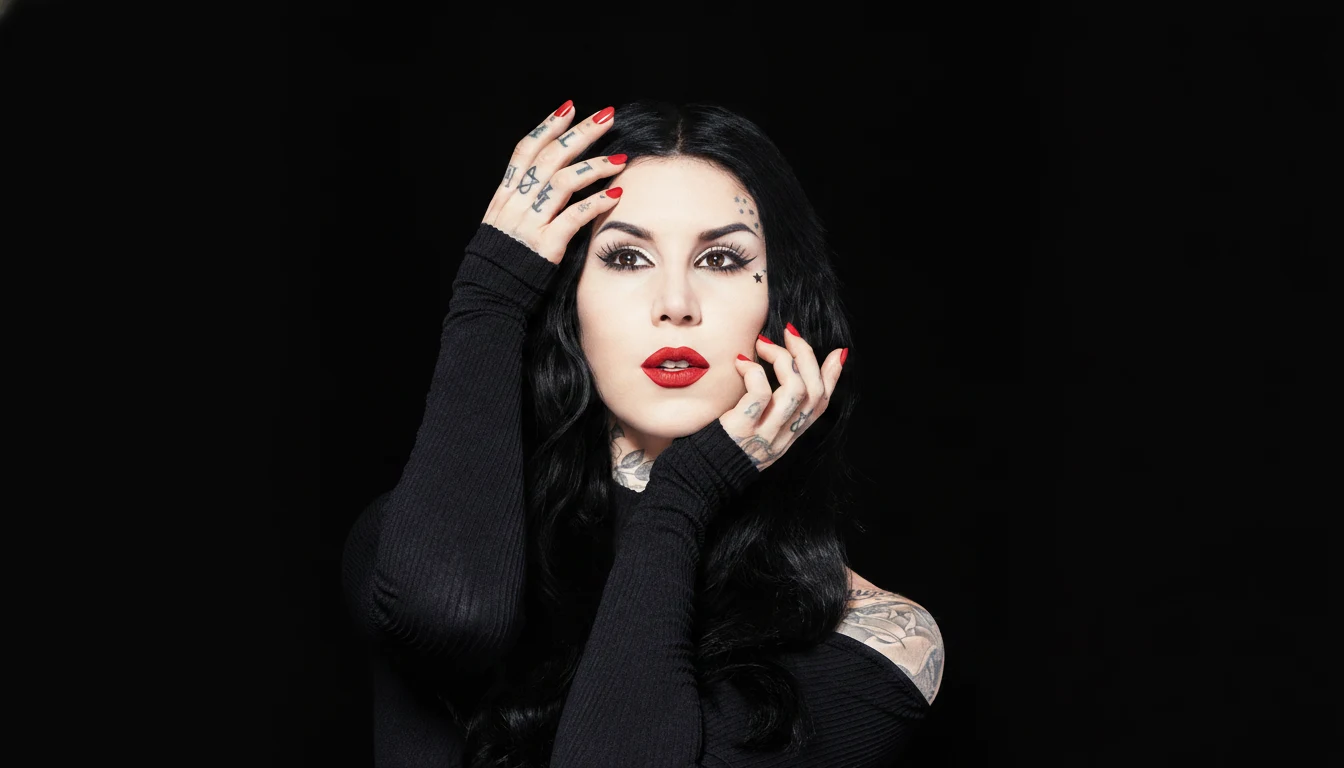
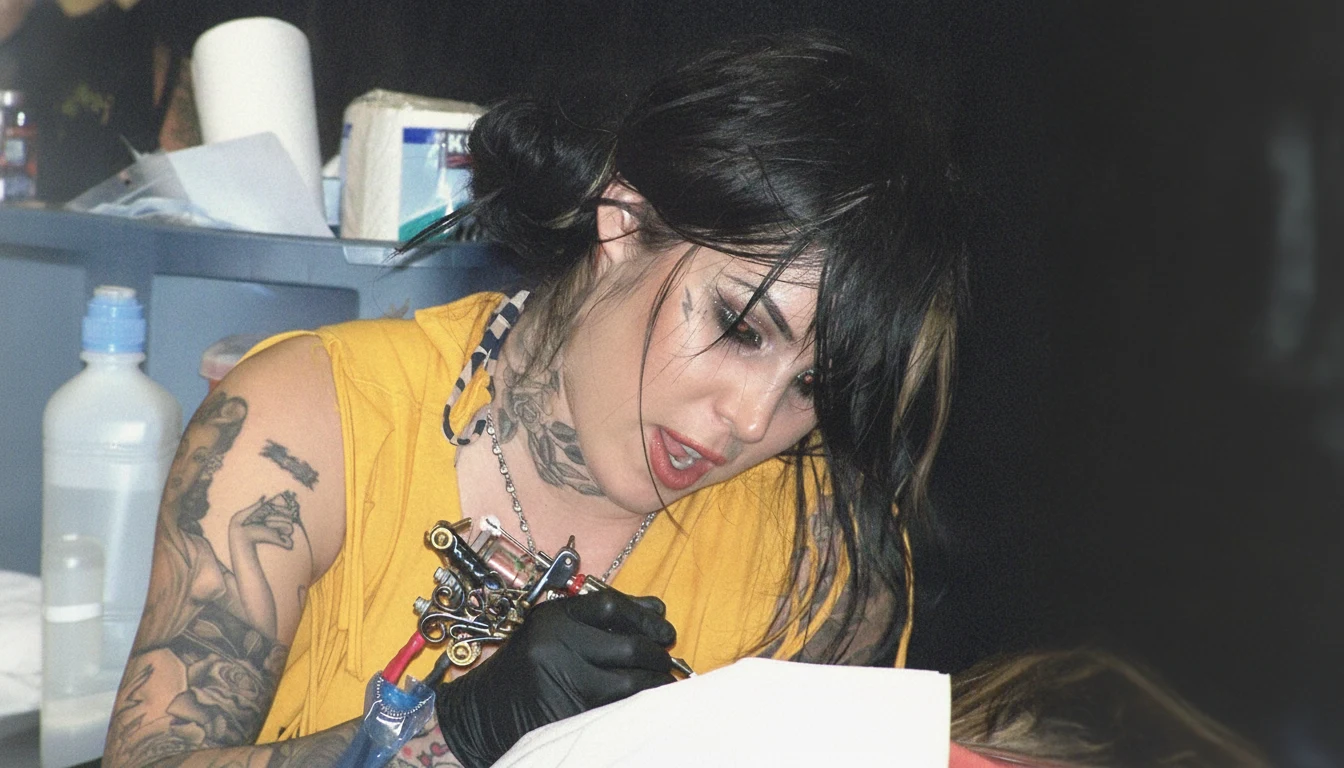
Few names carry as much weight in the tattoo world as Kat Von D. She went from inking clients in a small LA shop to becoming one of the most recognized tattoo artists on the planet. Her path from reality TV star on LA Ink to a global tattoo icon reshaped how millions of people think about tattoos, tattooing, and the artists behind the needle. She proved that a tattoo artist could build an empire without ever abandoning the craft. And along the way, she forced the mainstream to take tattoo culture seriously. For working artists and shop owners today, her story isn’t just inspiring. It’s a blueprint for turning raw talent into something bigger.
The Rise of Kat Von D and the LA Ink Era
Katherine Von Drachenberg didn’t stumble into tattooing. She chose it. She dropped out of school at 14 and started apprenticing at 16. By the time she was in her early twenties, she’d already built a reputation in the LA tattoo scene for her technical skill and relentless work ethic. That hustle eventually landed her a spot on Miami Ink, and then her own show, LA Ink, which premiered in 2007 and ran until 2011.
The show was centered around her shop, High Voltage Tattoo, on La Brea Avenue in Hollywood. It gave viewers a raw, unfiltered look at what happens inside a real tattoo studio. The drama was real. The art was real. And the business pressures were real, too. That authenticity is what set the show apart from typical reality TV.
Breaking Ground at High Voltage Tattoo
High Voltage wasn’t just a set for a TV show. It was a working tattoo shop with a packed schedule and a growing waitlist. Kat Von D built a team of talented artists around her and created an environment where the work spoke for itself. The shop became a destination. People flew in from around the world to get tattooed there.
What made High Voltage stand out was its commitment to artistry. Kat pushed her team to treat every tattoo like a piece of fine art. She set a standard that influenced how other shops thought about quality, client experience, and studio culture. That standard still echoes through the industry in 2026.
How Reality TV Brought Tattoo Culture to the Mainstream
Before LA Ink, most people’s exposure to tattooing was limited. Tattoos were still associated with bikers, sailors, and rebellion. The show changed that. It showed the emotional stories behind the tattoos. It showed the consultation process, the design work, and the hours of focus required to create something permanent on skin.
LA Ink pulled back the curtain on the tattoo industry for millions of viewers. It humanized tattoo artists. It showed that running a tattoo shop was a real business with real challenges: scheduling, client management, creative differences, and the constant pressure to deliver flawless work. That visibility helped normalize tattooing and opened doors for a new generation of artists who saw it as a legitimate career path.
Mastering the Craft: Signature Style and Technique
Kat Von D didn’t just get famous. She got famous because she was genuinely skilled. Her technical ability, especially in black and grey realism, set her apart from the pack. She could render a portrait on skin with the same fidelity as a photograph. That’s not easy. That’s years of obsessive practice and thousands of hours in the chair.
Her approach to tattooing was methodical. She studied anatomy, light, and shadow the way a classical painter would. She treated skin as a canvas with its own rules and limitations. And she respected those limitations instead of fighting them.
The Fine Line of Black and Grey Portraiture
Black and grey portraiture is one of the hardest styles in tattooing. There’s no color to hide behind. Every value shift, every gradient, every detail has to be precise. Kat Von D became known for her ability to capture likeness and emotion in her portrait work. Her shading was smooth. Her linework was confident. And her compositions were thoughtful.
This style demands patience. A single portrait can take six to eight hours or more. The artist has to manage needle depth, ink saturation, and skin texture across the entire piece. One mistake in a face, especially around the eyes, can ruin the whole tattoo. Kat’s consistency in this style earned her respect from artists who understood just how difficult it is.
Using Reference Material and Design Prep for Precision
Great tattoos don’t happen by accident. They start with great preparation. Kat Von D was known for spending significant time on design prep before ever touching a machine. She’d gather reference photos, sketch multiple concepts, and refine her stencils until they were exactly right.
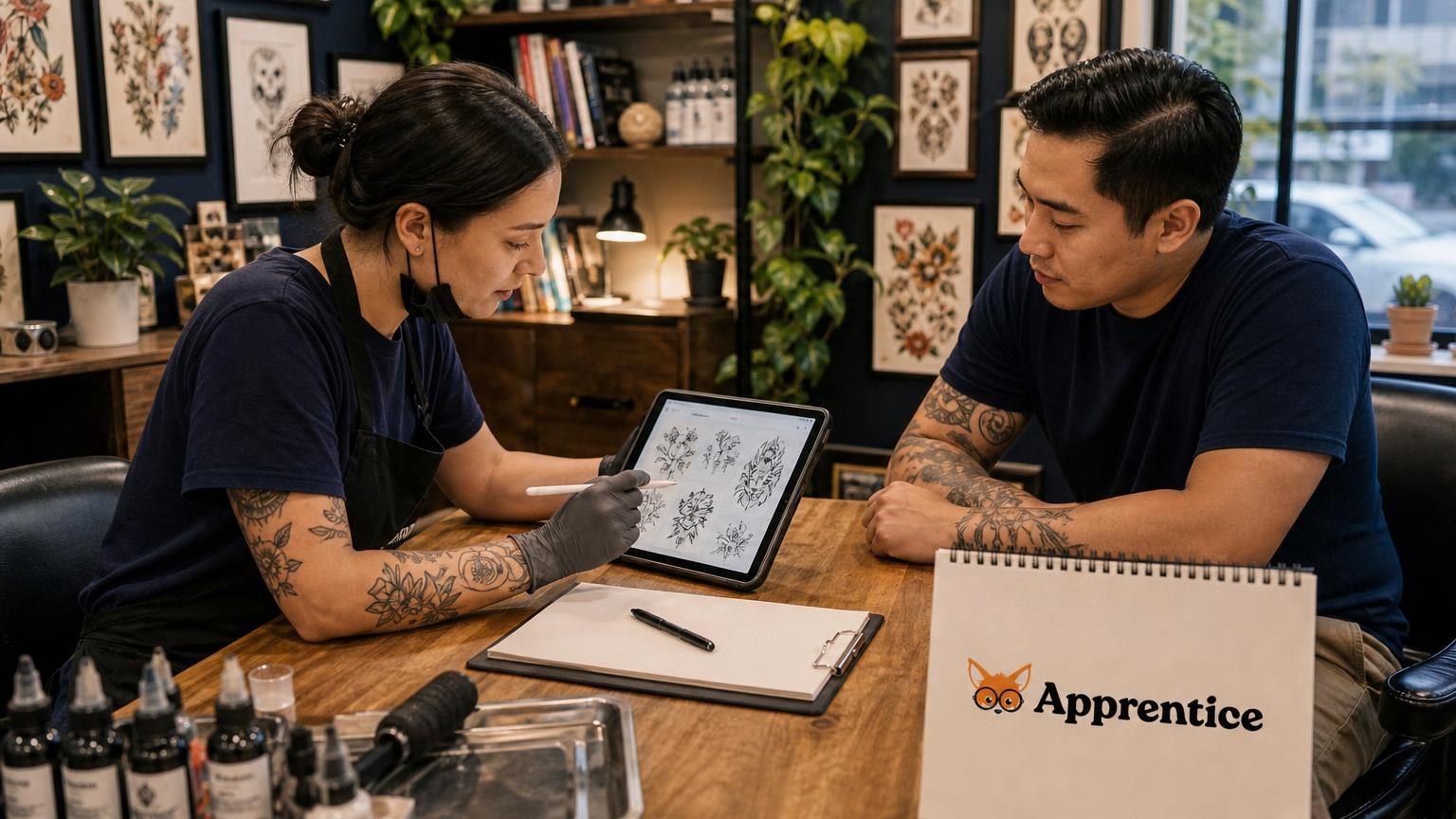
That level of preparation is something every working artist can learn from. Storing reference images, client inspiration, and design drafts in one place makes a huge difference. Tools like Apprentice let you keep all your project details, references, and client communication tied to a single tattoo project, so nothing gets lost between the consultation and the appointment. When your design prep is organized, your time in the chair is more productive. And your client walks away happier.
The Sedlik v. Von Drachenberg copyright case brought this topic into sharp focus. A photographer sued Kat Von D, claiming her tattoo of Miles Davis copied his photograph. The case raised real questions about how tattoo artists use reference material and where the line falls between inspiration and infringement. The Ninth Circuit affirmed Kat Von D’s position, but the legal conversation isn’t over. The en banc Ninth Circuit is now set to reconsider the “total concept and feel” test used in copyright cases like this one.
For artists, this is a reminder. Document your design process. Save your sketches, your reference boards, and your client conversations. If you ever need to show that your work involved original creative interpretation, that documentation is your best defense.
Building a Global Brand Beyond the Needle
Kat Von D understood something that most tattoo artists in the 2000s didn’t: your name is a brand. And a brand can extend far beyond the tattoo chair. She took her reputation, her aesthetic, and her personal values and turned them into a business empire that included cosmetics, fashion, music, and advocacy work.
That transition wasn’t without criticism. Some in the tattoo community felt she was selling out. But the reality is, she never stopped tattooing. She just added more revenue streams. And she did it in a way that stayed true to her identity as an artist. That’s the part worth paying attention to.
Translating Artistry into the Beauty Industry
In 2008, Kat Von D launched her cosmetics line with Sephora. The brand became a massive success, known for its bold aesthetic and high-performance products. Her Tattoo Liner became one of the best-selling eyeliners in the world. The brand’s visual identity was unmistakably hers: dark, dramatic, and unapologetically artistic.
She eventually sold the brand in 2020, but the impact was lasting. She proved that a tattoo artist’s eye for detail, color theory, and design could translate directly into other creative industries. For today’s artists, the lesson is clear. Your skills have value beyond the shop. Whether it’s merchandise, prints, digital art, or product collaborations, there are ways to build income streams that complement your tattoo work.
Kat Von D has also been candid about her personal evolution. She shared her blackout tattoo journey on Instagram, covering much of her earlier work as part of a spiritual and personal transformation. That kind of openness resonates with fans and fellow artists alike. It’s a reminder that even icons evolve.
Advocating for Animal Rights and Vegan Products
Kat Von D has been a vocal advocate for animal rights throughout her career. She’s vegan, and she made sure her cosmetics line was 100% vegan and cruelty-free. That wasn’t just a marketing angle. It was a core value that shaped every product decision.
Her advocacy extended into the tattoo world, too. She pushed for vegan tattoo inks and supplies, helping to normalize the conversation around cruelty-free tattooing. In 2026, more ink manufacturers offer vegan options than ever before, and Kat’s influence played a real part in that shift.
For shop owners, this is worth thinking about. Your values can become part of your brand. Whether it’s sustainability, inclusivity, or community involvement, the things you care about can attract clients who share those values. That’s not soft marketing. That’s smart business.
Managing the Modern Tattoo Shop Workflow
Here’s the unglamorous truth about running a tattoo shop: the art is only half the job. The other half is admin. Scheduling, deposits, client records, consent forms, follow-ups. It’s the unsexy stuff that keeps the lights on. And if you don’t have a system for it, you’re losing time, money, and clients.
Kat Von D ran High Voltage during an era when most shops still used paper appointment books and sticky notes. The industry has come a long way since then. But plenty of artists and shop owners are still drowning in DMs, chasing deposits, and scrambling to keep track of client details. That’s a problem with a solution.
Organizing Client History and Appointment Timelines
Think about a client who comes back for a second session on a sleeve. You need to know what was done in the first session, what references were discussed, what ink was used, and what the healing looked like. If that information is scattered across text messages, Instagram DMs, and a notebook somewhere, you’re starting from scratch every time.
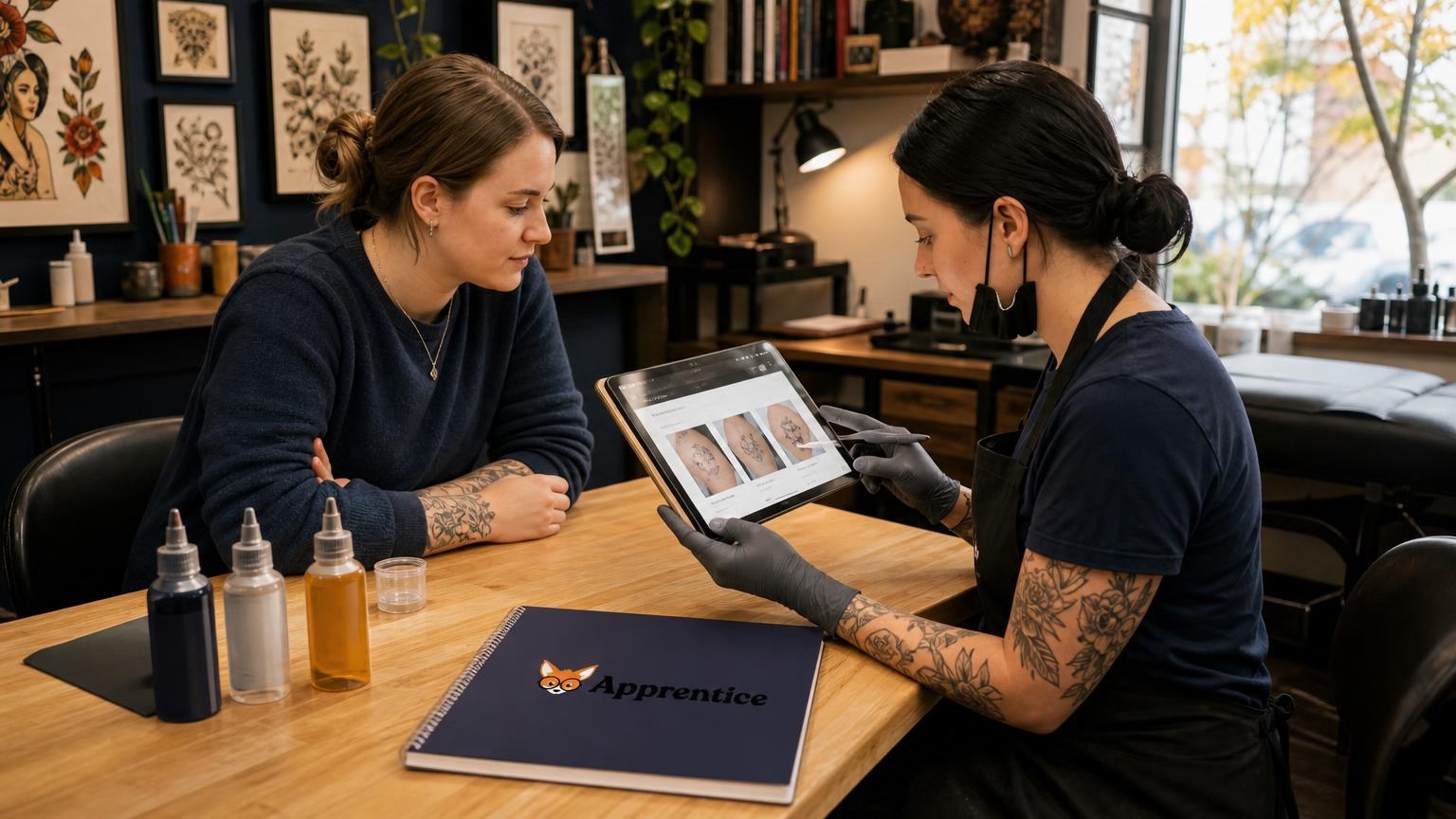
A unified client profile changes everything. One record per client. Full appointment history. Notes on preferences, allergies, and past work. Consent forms and reference images stored in one place. Apprentice gives you exactly that: a full client history tied to each project, so you walk into every session with context instead of confusion.
This isn’t just about convenience. It’s about delivering a better tattoo. When you know your client’s history, you make better decisions about placement, style, and technique. You build trust. And trust turns one-time clients into repeat clients with real lifetime value.
Improving the Client Experience with Digital Tools
The client experience doesn’t start when they sit in your chair. It starts the moment they reach out to book. If that process is clunky, slow, or confusing, you’ve already lost ground. People expect a smooth booking experience in 2026. They want to pick a time, pay a deposit, and get clear instructions, all without sending five DMs back and forth.
Digital tools make this possible. Automated booking links, upfront deposit collection, and pre-appointment prep flows mean your client shows up ready. Consent forms are signed. References are uploaded. Deposits are collected. You’re not chasing anyone down.
Kat Von D’s direct response to the photographer who sued her showed how important documentation and clear records are, even outside the courtroom. In a shop context, having digital records of every client interaction, every design approval, and every signed consent form protects you. It’s not paranoia. It’s professionalism.
Walk-in management matters too. A real-time digital waitlist with SMS notifications keeps your lobby organized on busy days. Clients can browse your flash galleries while they wait. And when a spot opens up, the system handles the notification so your front desk isn’t babysitting a clipboard.
The Lasting Influence on Today’s Tattoo Artists
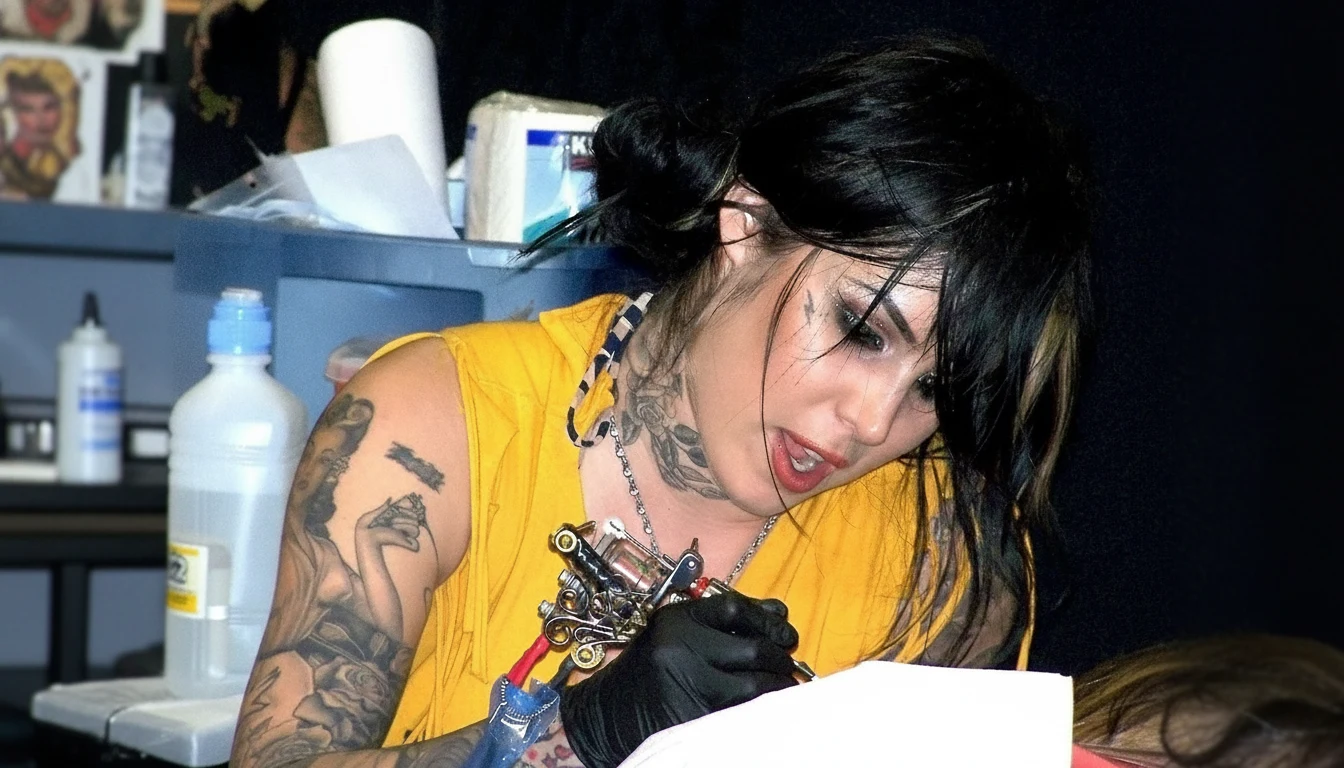
Kat Von D’s journey from LA Ink to global icon did more than make one artist famous. It changed the trajectory of the entire industry. She showed that tattooing could be a respected art form, a viable career, and a platform for something bigger. She made it okay to be ambitious as a tattoo artist. She made it okay to think about branding, business, and legacy without feeling like you were betraying the craft.
Her influence shows up everywhere in 2026. You see it in the quality of work coming out of shops worldwide. You see it in the way artists market themselves on social media. You see it in the growing number of artists who treat their shops like real businesses, with systems, standards, and structure.
But here’s the reality check. Fame didn’t protect Kat Von D from the hard parts of this industry. She dealt with public criticism, legal battles, creative burnout, and the pressure of running a business under a spotlight. The copyright case alone, which the Southern California IP Institute featured in its programming, shows how complex the legal landscape around tattooing has become. Artists today need to be aware of these issues. Ignorance isn’t a defense.
The best thing you can take from Kat Von D’s story isn’t the fame. It’s the discipline. The preparation. The willingness to treat tattooing as both an art and a business. It’s permanent. It’s personal. People want it to be perfect. And your job is to set up systems that let you deliver on that promise, every single time.
If you’re ready to spend less time on admin and more time doing what you love, Apprentice can help you get there. Get started with a free 14-day trial and see how much easier your shop can run.

Jason Howie
Founder & CEO
Jason Howie is the founder of Apprentice, passionate about empowering tattoo artists and shops with better tools to manage their business and serve their clients.