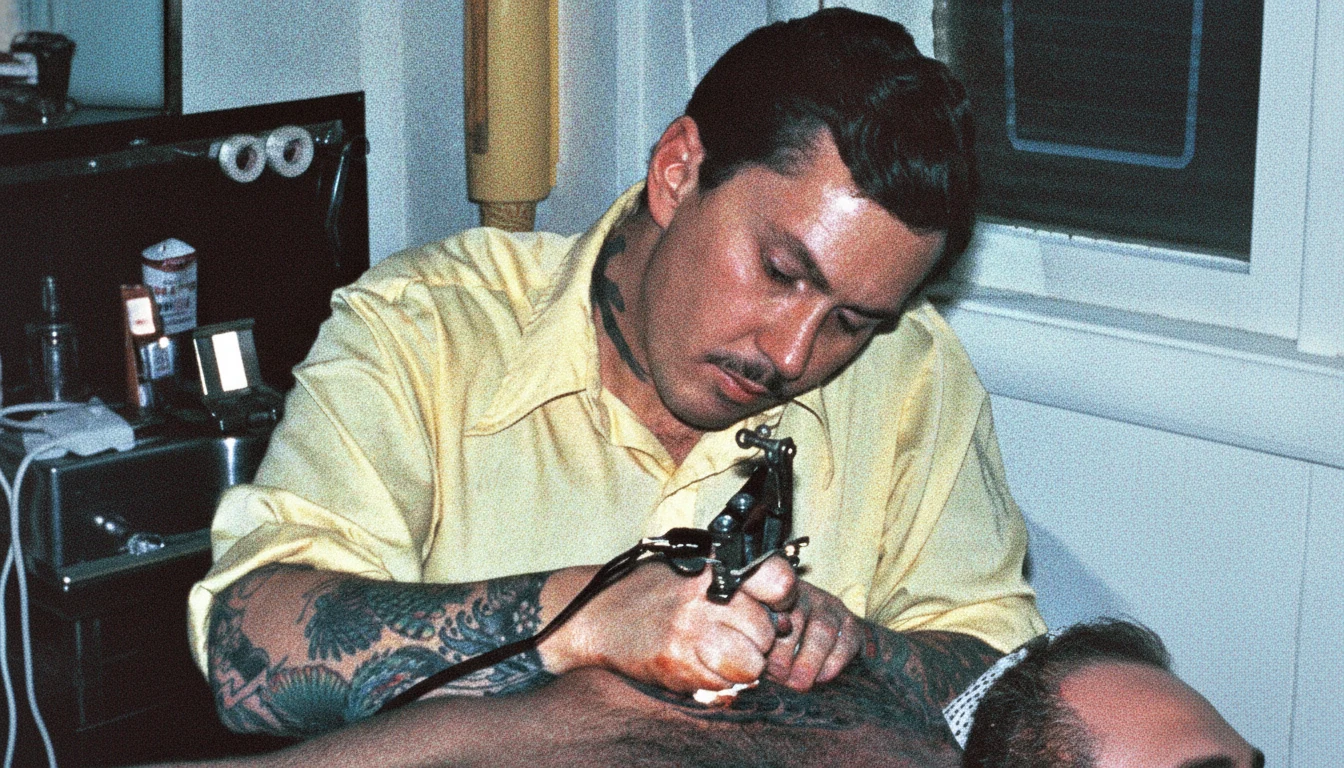
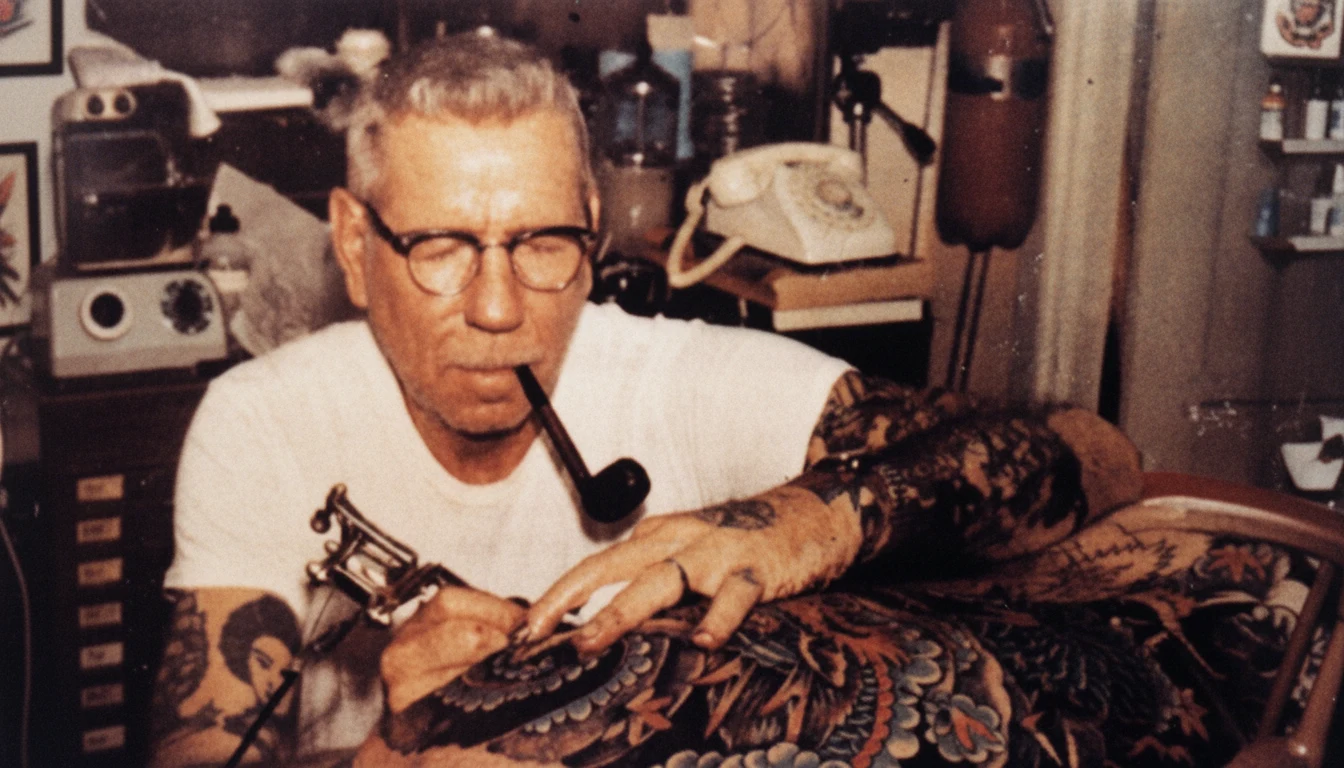
A quick note before we start. The “Horiyoshi” name passed down through a lineage of masters. The artist most people picture when they think of traditional Japanese full-body work is Horiyoshi III, the third holder of the name and the one who became famous outside Japan. That’s who this post is about, so that’s where we’ll spend our time.
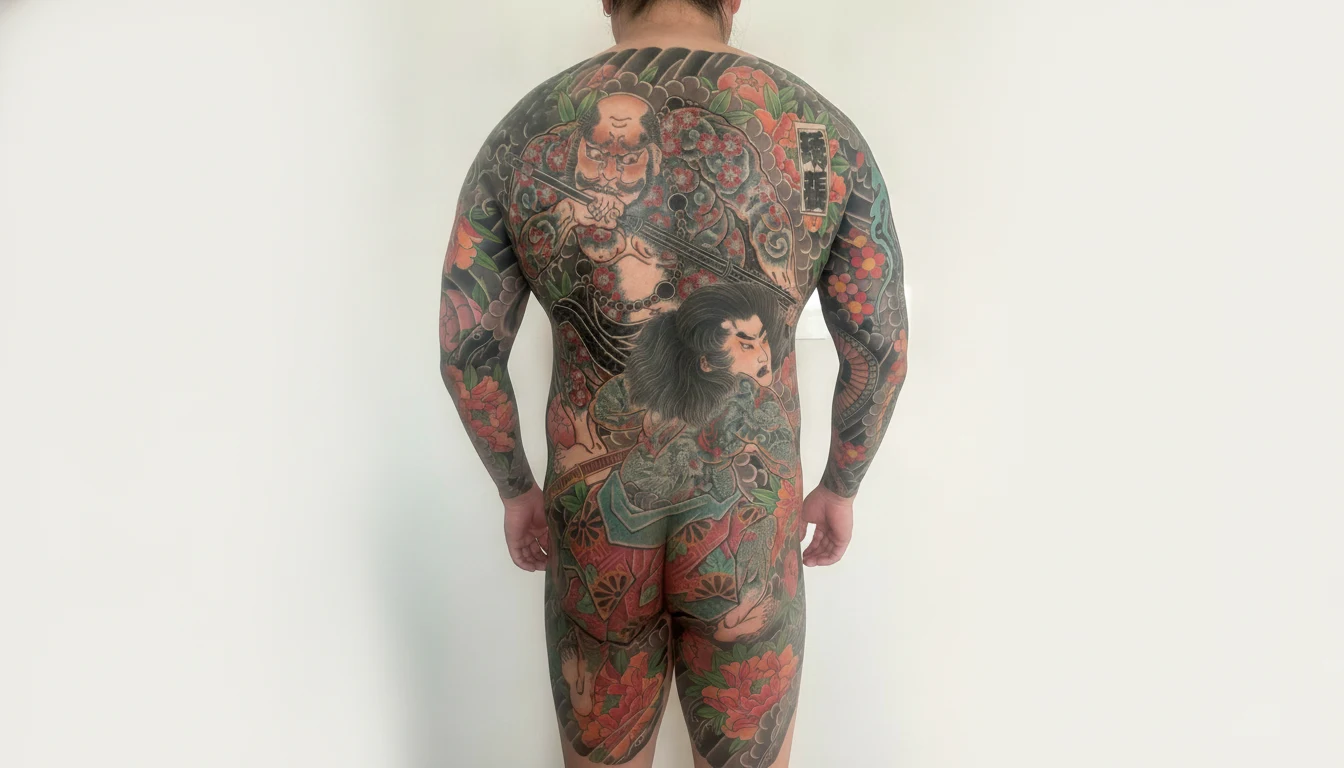
He was born Yoshihito Nakano in 1946. He’s spent his life on one thing: full-body tattooing, what the Japanese call horimono. Not flash off the wall. Not a quick session. Suits that cover the arms, back, chest, and upper legs as a single composition. Wikipedia has the basic biography if you want it.
What a full suit actually costs the client
Here’s the number that stops people. A typical full body suit takes up to five years of weekly visits and costs more than £15,000, according to Oxford’s Pitt Rivers Museum. Five years. Weekly. That’s not a project you finish. That’s a relationship you commit to.
Most of that work is done by hand. Horiyoshi III uses tebori, the traditional method where ink is pushed in with a hand-held tool instead of a machine. It’s slower. It hurts differently. And it’s the whole point.
That pace changes how you think about a client. You’re not booking a session, you’re booking a person for years. If you do any large-scale work, the lesson holds even at a fraction of that scale: the booking is the easy part, the long-haul relationship is the work.
From punishment to status
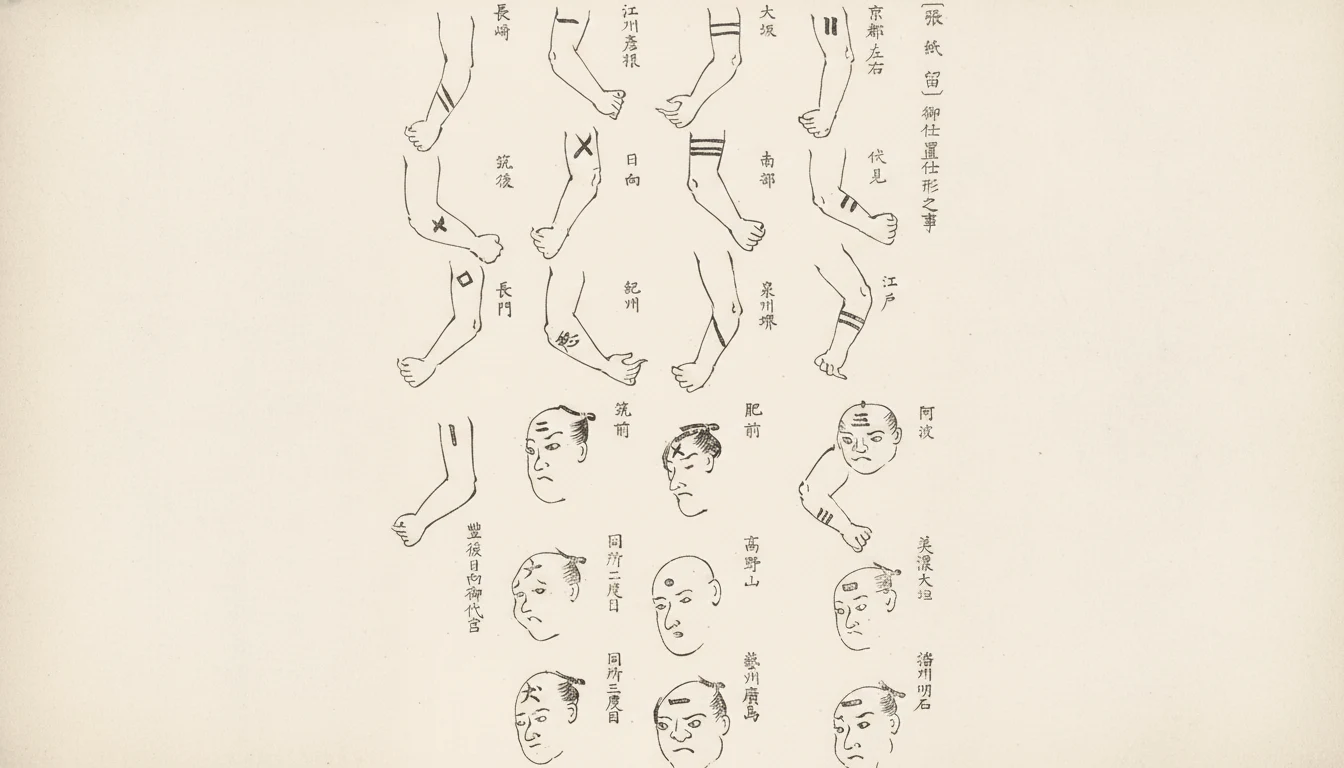
Irezumi didn’t start as art. In Japan it was once used to mark criminals, a literal punishment burned into the skin. The Pitt Rivers material notes the practice is believed to date back several thousand years, and over that span it flipped from a mark of shame to a mark of pride. Same ink, opposite meaning.
That history is why the work carries weight. A Japanese backpiece isn’t decoration borrowed from a flash sheet. It sits on top of centuries of the thing being banned, hidden, tied to the yakuza, and then slowly reclaimed. When a client asks for traditional Japanese work, that’s the baggage and the honor they’re signing up for.
”The creatures only come alive on skin”
Horiyoshi III put it plainly: “The creatures I draw only come alive on somebody’s skin. This is why I never show my designs as so-called art.” That’s from the Craft Contemporary Shop edition of his designs.
Read it twice. He’s saying the drawing isn’t the work. The body is. A dragon on paper is a sketch. The same dragon wrapping a shoulder, moving when the arm moves, is the actual piece. For him the canvas was never the question.
The museum
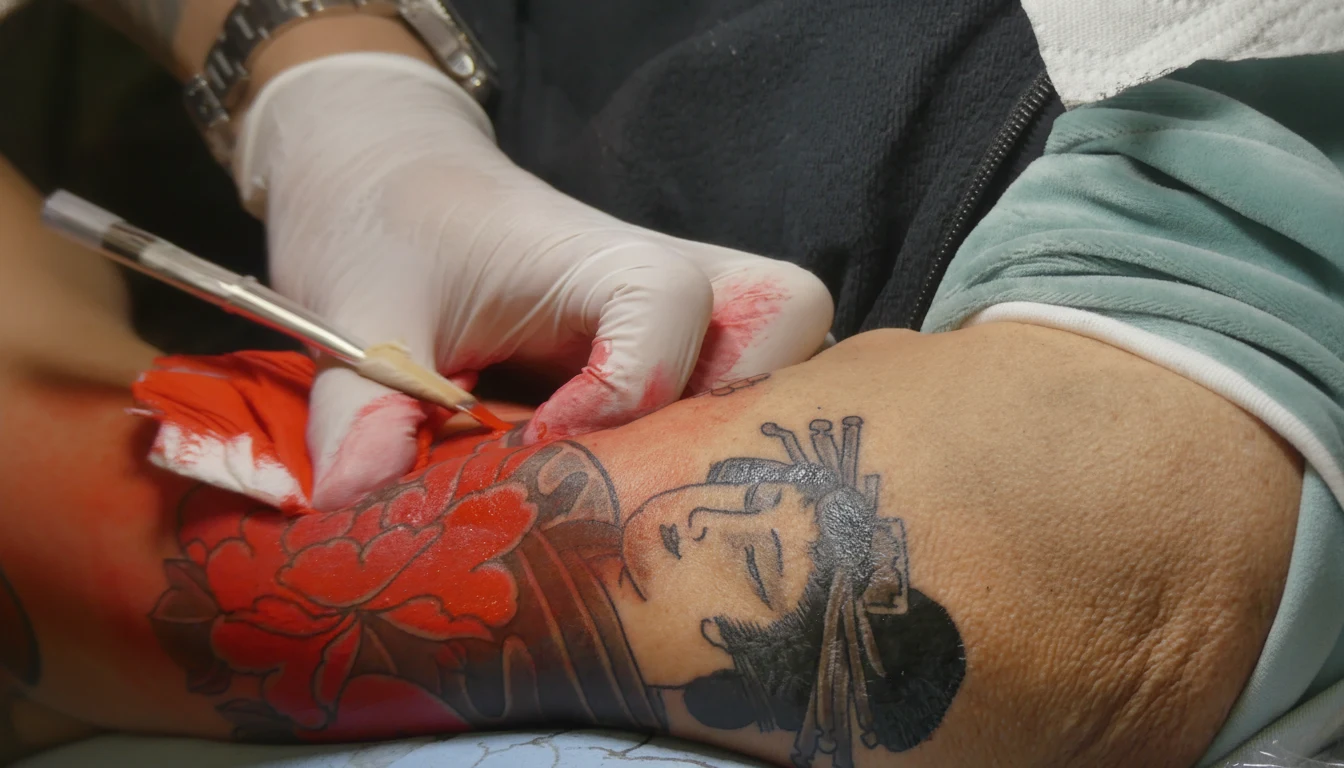
In 2000, Horiyoshi III and his wife opened a tattoo museum in Yokohama. Two floors of Meiji-era photos, ukiyo-e prints that fed early irezumi, old anti-tattoo ordinances, and even sheets of classic American flash and antique US machines. It’s a record of where the craft came from, kept by someone who lived a chunk of it.
The apprentice question
His reach went past his own needle. One of his apprentices, the German Alexander Reinke, tattooed under the name Horikitsune and published several of Horiyoshi III’s books between 2009 and 2015. Reinke once said he was drawn to Japanese tattoos “because of their singularity,” quoted in the Taipei Times.
Worth being honest here: the master-apprentice bond in this tradition isn’t always tidy. Wikipedia notes Horiyoshi III later distanced himself from former apprentices, advising they’re no longer part of his family. Apprenticeship in Japanese tattooing is real and demanding, and it doesn’t always end in warmth. That’s part of the picture too.
Why he still matters
A 2012 Taipei Times piece framed him as a living bridge between old-school practice and the modern scene, and a YouTube documentary called “73-Year-Old Tattoo Artist Is A Legend In Japan” makes the same case. The motifs he kept alive, koi, dragons, the wind and water backgrounds that tie a suit together, show up in studios from Philadelphia to Tokyo, reinterpreted by artists who never touched a hand-poke tool in their life.
You don’t have to do five-year tebori suits to take something from this. The idea that the body is the canvas, that the design serves the person wearing it, that big work is a long relationship and not a transaction, that holds at any scale.
If you build Japanese-style work, your client management has to match the timeline. Apprentice keeps multi-session projects, deposits, and reference designs in one place so a piece that spans years doesn’t live in your text messages. Our flash and design tools and booking are built for exactly that kind of long-running work. You can try it free and see how it fits the way you actually tattoo.

Jason Howie
Founder & CEO
Jason Howie is the founder of Apprentice, passionate about empowering tattoo artists and shops with better tools to manage their business and serve their clients.