Fine line tattoos have quietly become one of the most requested styles in modern shops. They’re elegant, personal, and increasingly popular with first-timers and collectors alike. The demand for this style has grown by over 35% between 2023 and 2026, and it’s not slowing down. But fine line work isn’t just “easier” because the lines are thinner. It’s actually one of the most technically demanding styles out there. The margin for error is razor thin - literally. Before you book that appointment, there’s real information you need. Not hype. Not Pinterest boards. Actual knowledge about what makes these tattoos hold up, what to look for in an artist, and how to take care of something this delicate. Whether you’re a client doing your homework or an artist fielding more of these requests every week, this guide covers the stuff that matters. It’s permanent. It’s personal. And people want it to be perfect.
Understanding the Fine Line Tattoo Aesthetic
Fine line tattooing is defined by its restraint. Where traditional tattoos use bold outlines and heavy saturation, fine line work relies on precision, negative space, and subtlety. The result is something that looks almost hand-drawn, like a sketch pulled straight from a notebook onto skin.
This style has found a massive audience. Fine line tattoos appeal strongly to first-time clients, professionals, and wellness-focused communities who want something meaningful without the visual weight of traditional work. And with the global tattoo market expected to reach USD 9.25 billion by 2034, the appetite for this aesthetic isn’t a passing phase.
The Difference Between Fine Line and Traditional Style
Traditional tattoos use thick outlines, limited color palettes, and heavy shading. They’re designed to be read from across a room. Fine line work is the opposite. It’s intimate. It’s meant to be seen up close.
The needle configurations are different. Traditional artists typically use larger groupings of needles to pack in color. Fine line artists work with single needles or tight round liner configurations, sometimes as small as a 1RL or 3RL. That means every hand movement shows. There’s no hiding a wobble behind a thick outline.
The ink deposit is also shallower. Fine line artists work in the upper dermis, which requires a lighter touch and a deep understanding of skin tension. Push too deep and you get blowouts. Stay too shallow and the ink won’t hold. It’s a balancing act that takes years to master.
Common Motifs: Florals, Script, and Minimalism
The most popular fine line tattoo ideas for 2025 include mini florals, tiny script tattoos, and celestial symbols. Botanical designs - single stems, wildflower bundles, delicate leaves - are consistently the top requests. Script work, especially single words or short phrases in cursive, runs a close second.
Geometric patterns, constellations, and small animal portraits round out the list. But here’s the reality check: not every design works at every size. A detailed mandala that looks stunning at six inches might turn into an illegible blob at two inches. Good artists will tell you this upfront. Great artists will redesign the concept to fit the scale.
For men specifically, designs scaled to a minimum of 4-6 inches are recommended to maintain clean proportions and visual impact. Size matters with this style, and bigger isn’t always bolder - it’s often just more legible.
Technical Considerations and Longevity
Here’s where the honest conversation starts. Fine line tattoos don’t age the same way traditional tattoos do. That’s not a reason to avoid them. But it is a reason to go in with realistic expectations.
How Fine Line Tattoos Age Over Time
All tattoos age. Period. Your immune system treats ink particles as foreign bodies and slowly breaks them down. With traditional tattoos, the thick lines and heavy saturation give the design a lot of room to soften before it looks faded. Fine line work doesn’t have that buffer.
Thin lines can spread slightly over years, a process called migration. Two lines that were distinct at the time of tattooing may eventually merge. Small text can blur. Tiny details can lose definition. This isn’t a flaw in the artist’s work - it’s biology.
The good news? Proper placement, quality ink, and consistent aftercare slow this process dramatically. A well-executed fine line tattoo on the right body part can look sharp for a decade or more. But a poorly placed one on thin, sun-exposed skin? You’ll notice changes within a few years.
The Importance of Sun Protection and Ink Quality
UV exposure is the single biggest enemy of fine line tattoos. Sun breaks down ink molecules faster than almost anything else. If your fine line piece is on your forearm, wrist, or ankle - areas that see daily sun - you need SPF 50 or higher on it. Every day. Not just at the beach.
Ink quality matters too. Professional-grade inks with consistent pigment dispersion hold better long-term. Cheap ink fades unevenly, leaving patchy results that are harder to touch up. Ask your artist what brand they use. If they can’t tell you, that’s a red flag.
Black ink holds the longest. Grey wash (diluted black) fades faster because there’s less pigment per square millimeter. If your design relies heavily on light grey shading, expect to need touch-ups sooner than an all-black piece.
Choosing the Right Artist and Placement
Not every tattoo artist does fine line work well. And not every talented artist specializes in it. This is a style where specialization genuinely matters.
Evaluating Portfolios for Technical Precision
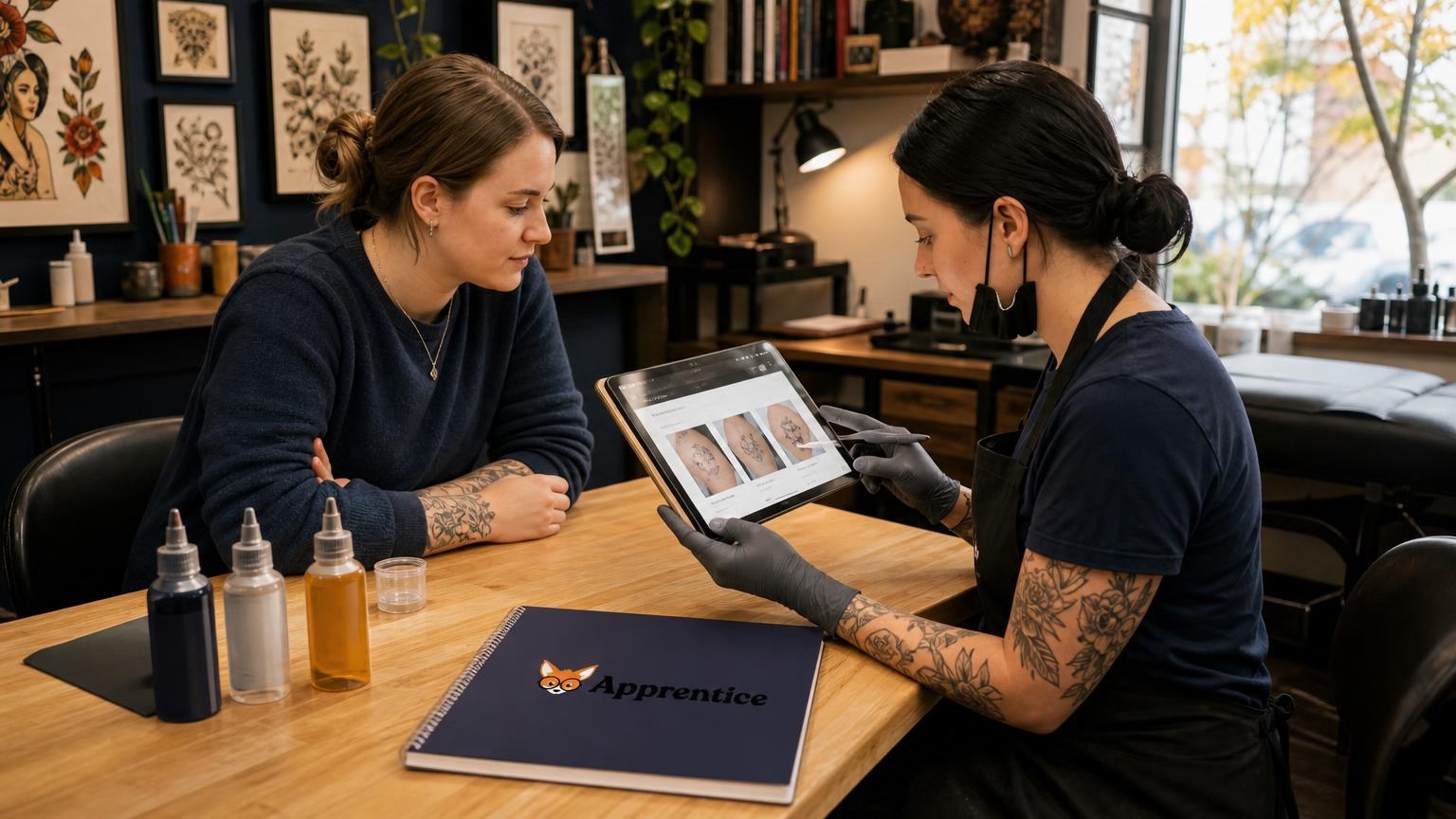
Look at healed photos, not just fresh ones. Every tattoo looks crisp the day it’s done. The real test is how it looks six months later. Artists who are confident in their fine line work will have healed examples in their portfolio. If they don’t, ask for them.
Here’s what to look for in a portfolio:
- Consistent line weight throughout the piece, with no thick spots or wobbles
- Clean, sharp endpoints where lines taper off naturally
- Smooth grey wash gradients without patchy areas
- Proper spacing between parallel lines that doesn’t look crowded
And here’s the ugly truth about the industry: some artists post heavily filtered or edited photos. Zoom in. Look for skin texture in the image. If the photo looks airbrushed smooth, the artist might be hiding imperfections. Trust portfolios that show real skin, real healing, and real results.
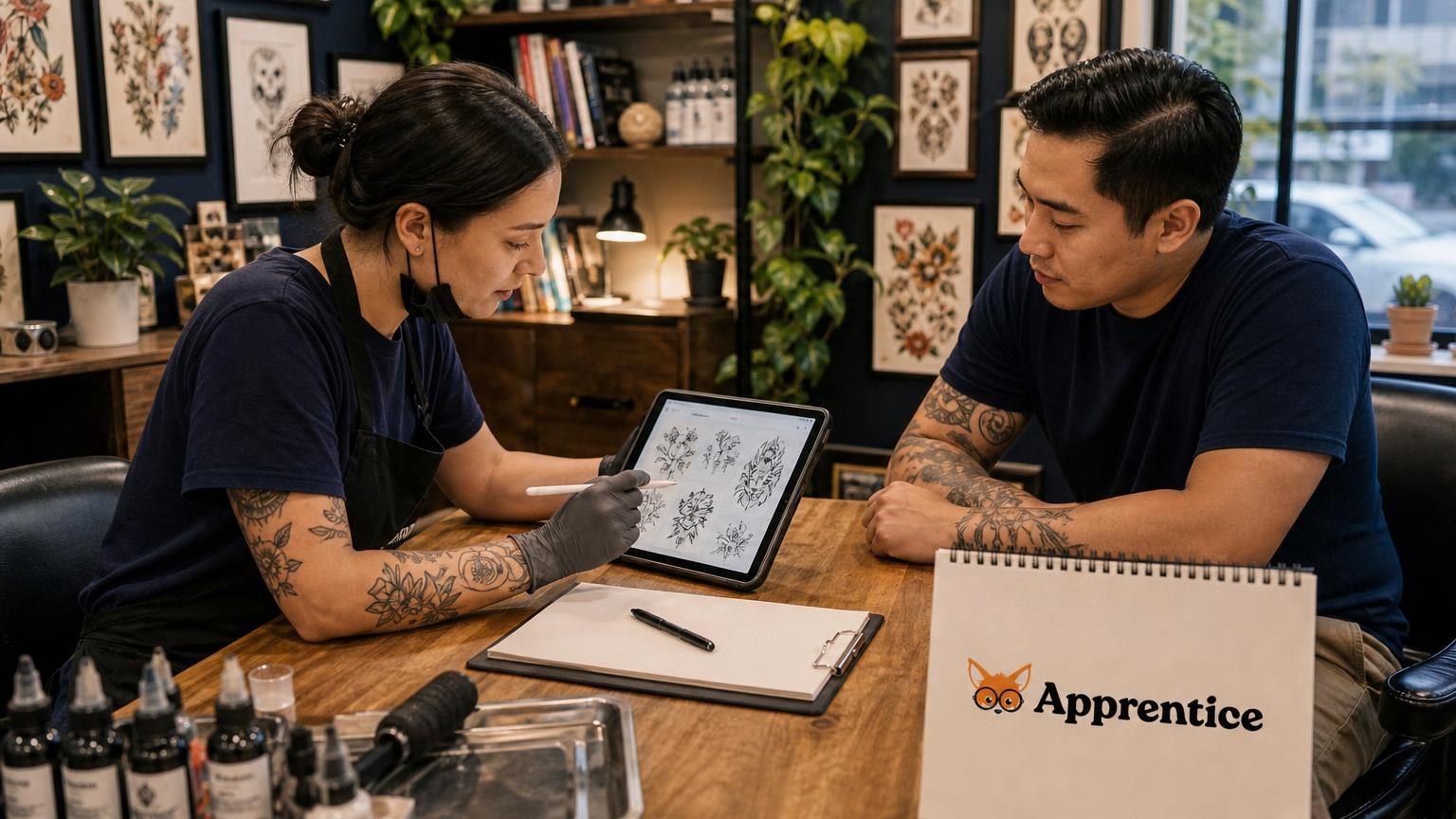
If you’re an artist building your fine line portfolio, tools like Apprentice can help you manage the client journey from consultation to healed photo collection. The platform’s project management features let you store references, drafts, and appointment timelines in one place - so nothing gets lost between sessions.
Optimal Body Placements for Fine Detail
Placement can make or break a fine line tattoo. Skin thickness, movement, and sun exposure all affect how the tattoo heals and ages. Some spots are forgiving. Others are brutal.
Best placements for fine line longevity: the inner forearm, upper arm, upper back, and ribcage. These areas have relatively stable skin that doesn’t stretch or rub excessively. The inner forearm is probably the most popular spot for fine line work, and for good reason - it heals well and stays protected under sleeves.
Tougher placements: fingers, feet, inner wrists, and behind the ear. These areas experience constant friction, frequent washing, or thin skin that doesn’t hold ink as reliably. Fine line work in these spots will almost certainly need touch-ups. Some artists won’t even take these placements for fine line because the results are unpredictable.
Be honest with your artist about your lifestyle. If you work with your hands all day, a finger tattoo isn’t the move. A good artist will redirect you, not just take your money.
The Tattooing Process: What to Expect
Knowing what happens during the session helps you prepare mentally and physically. Fine line sessions feel different from traditional ones.
Pain Levels and Needle Configurations
Fine line tattoos use smaller needle groupings. A single needle or a tight 3-round liner creates less surface trauma than a 14-magnum shader. Most clients report that fine line work feels like a sharp scratch rather than the deep, grinding sensation of heavy traditional work.
But pain is subjective. Placement matters more than needle size. A single needle on the ribcage will still make you grip the table. A 3RL on the outer shoulder? Most people barely flinch.
The sensation also changes throughout the session. The first few minutes are usually the worst as your body adjusts. After that, endorphins kick in and the discomfort dulls. Shorter sessions - which fine line work often involves - mean less time for fatigue to set in.
Session Duration and Precision Work
A small fine line piece typically costs $150 to $400, and most small-to-medium designs take between one and three hours. The cost reflects the precision required, not just the time spent.
Fine line artists work slower than traditional artists. They have to. Each line requires steady hands, controlled speed, and constant attention to depth. Rushing creates inconsistencies that can’t be fixed later.
For clients, this means staying still for extended periods. Eat a solid meal before your session. Stay hydrated. Bring headphones if music helps you relax. And don’t schedule a fine line appointment after a night of heavy drinking - alcohol thins your blood and makes you bleed more, which pushes ink out of the skin.
For artists managing multiple fine line bookings per week, automated scheduling saves real time. Apprentice handles booking links, deposit collection, and appointment reminders automatically - so you’re not chasing clients through DMs while trying to prep for your next session.
Specialized Aftercare for Delicate Ink
Aftercare for fine line tattoos isn’t dramatically different from other styles. But the margin for error is smaller. A blown line on a traditional piece might not be noticeable. On a fine line piece, it’s the first thing you see.
The First 48 Hours: Cleaning and Protection
The first two days are critical. Here’s the protocol:
- Leave the initial wrap on for the time your artist specifies (usually 2-4 hours, or longer with second-skin bandages)
- Wash gently with lukewarm water and fragrance-free soap
- Pat dry with a clean paper towel - never rub, never use a cloth towel
- Apply a thin layer of unscented moisturizer or the aftercare product your artist recommends
- Repeat washing and moisturizing 2-3 times daily
Don’t submerge the tattoo in water for at least two weeks. No pools, no baths, no hot tubs. Showers are fine - just don’t let the stream hit the tattoo directly. And don’t pick at the peeling skin. Every flake you pull off takes ink with it.
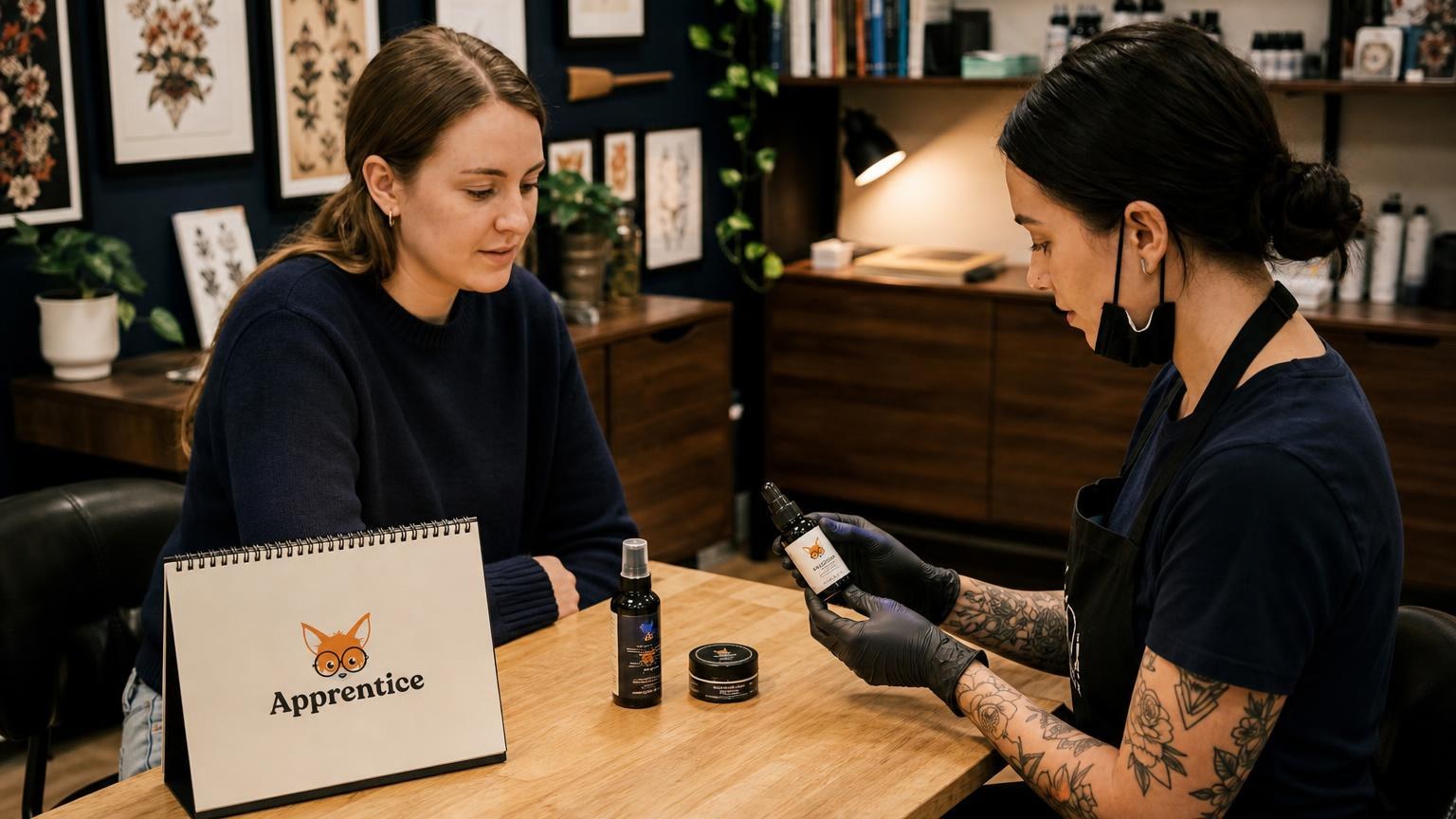
Shops that use Apprentice can send automated aftercare instructions to clients right after their appointment. That means the info lands in their inbox before they even leave the parking lot - no forgotten verbal instructions, no confused texts at midnight.
Scheduling Your First Touch-Up Appointment
Most fine line artists recommend a touch-up four to eight weeks after the initial session. This isn’t a sign of bad work. It’s standard practice for this style.
During healing, some areas may lose small amounts of ink. Tight curves, line intersections, and areas over bone are the usual suspects. A touch-up lets your artist go back in and reinforce anything that didn’t hold perfectly the first time.
Many artists include one free touch-up in their initial price. Ask about this before you book. If it’s not included, budget an extra $50-$150 for the follow-up. Don’t skip it. A quick touch-up at six weeks is the difference between a tattoo that looks good and one that looks flawless.
Schedule your touch-up before you leave your first session. Life gets busy. People forget. And by the time they remember, they’re six months out and the window for easy correction has passed.
The Bottom Line
Fine line tattoos reward patience, research, and honesty. Be honest about your expectations. Be patient finding the right artist. And do the research on placement and aftercare before you sit in that chair.
This style isn’t more fragile than traditional work - it’s just less forgiving of shortcuts. The right artist, the right placement, and the right aftercare routine will give you a piece that holds up beautifully for years.
If you’re an artist looking to spend less time managing bookings and more time perfecting those single-needle lines, Apprentice can help. Get started with a free 14-day trial and see how much time you get back when the admin runs itself.

Jason Howie
Founder & CEO
Jason Howie is the founder of Apprentice, passionate about empowering tattoo artists and shops with better tools to manage their business and serve their clients.