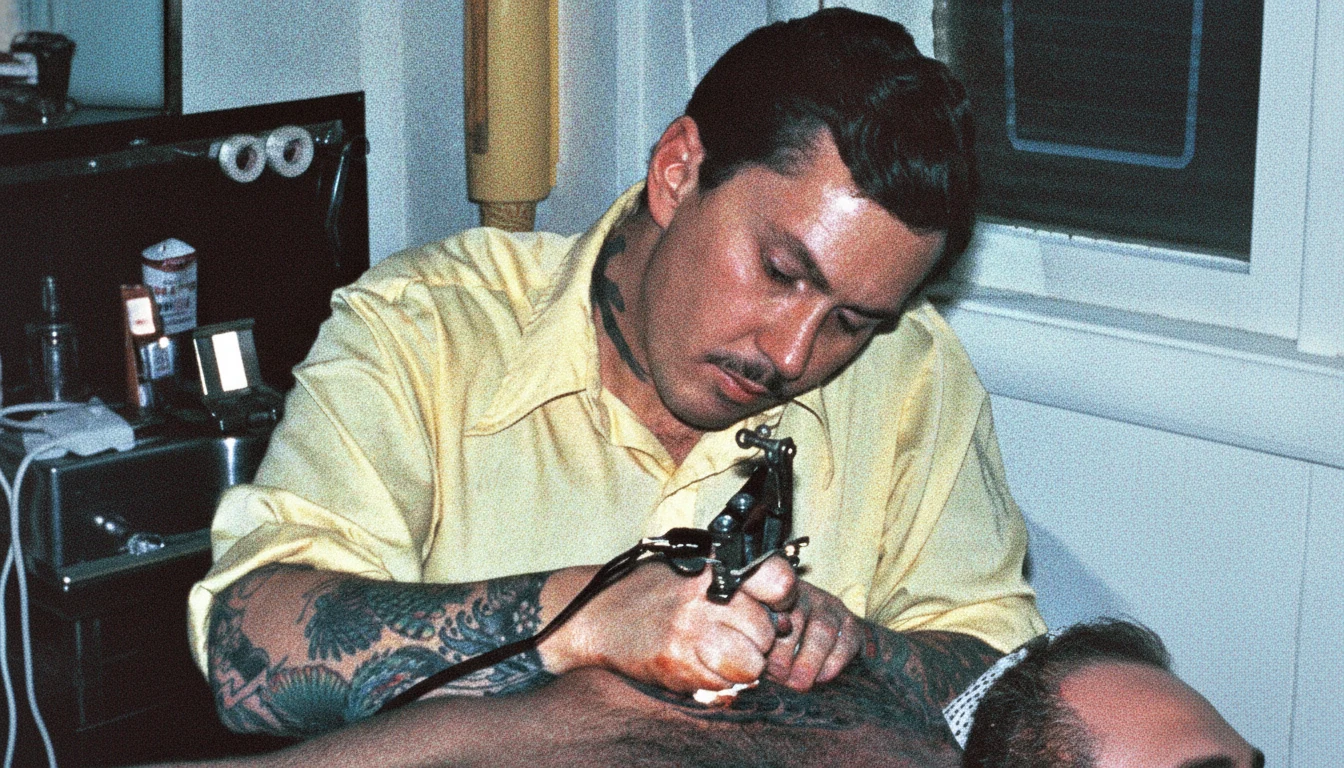
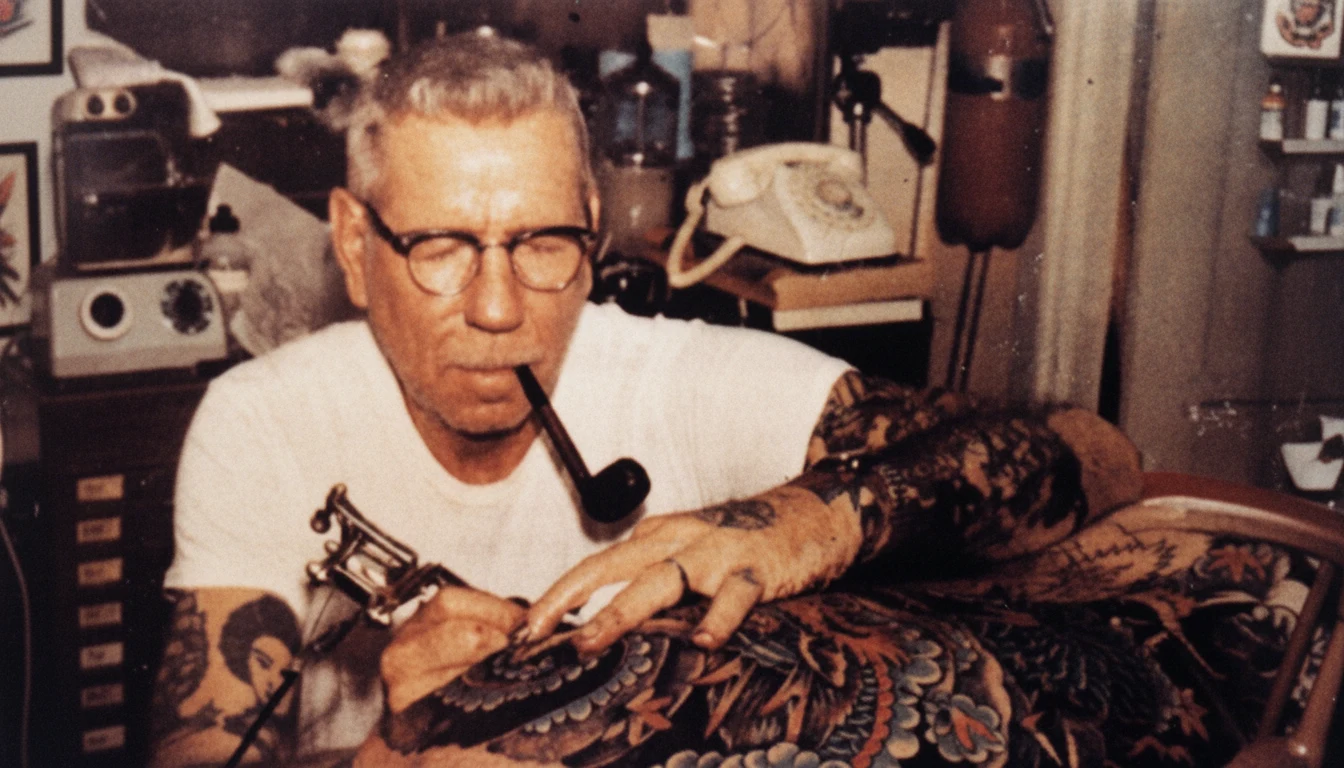
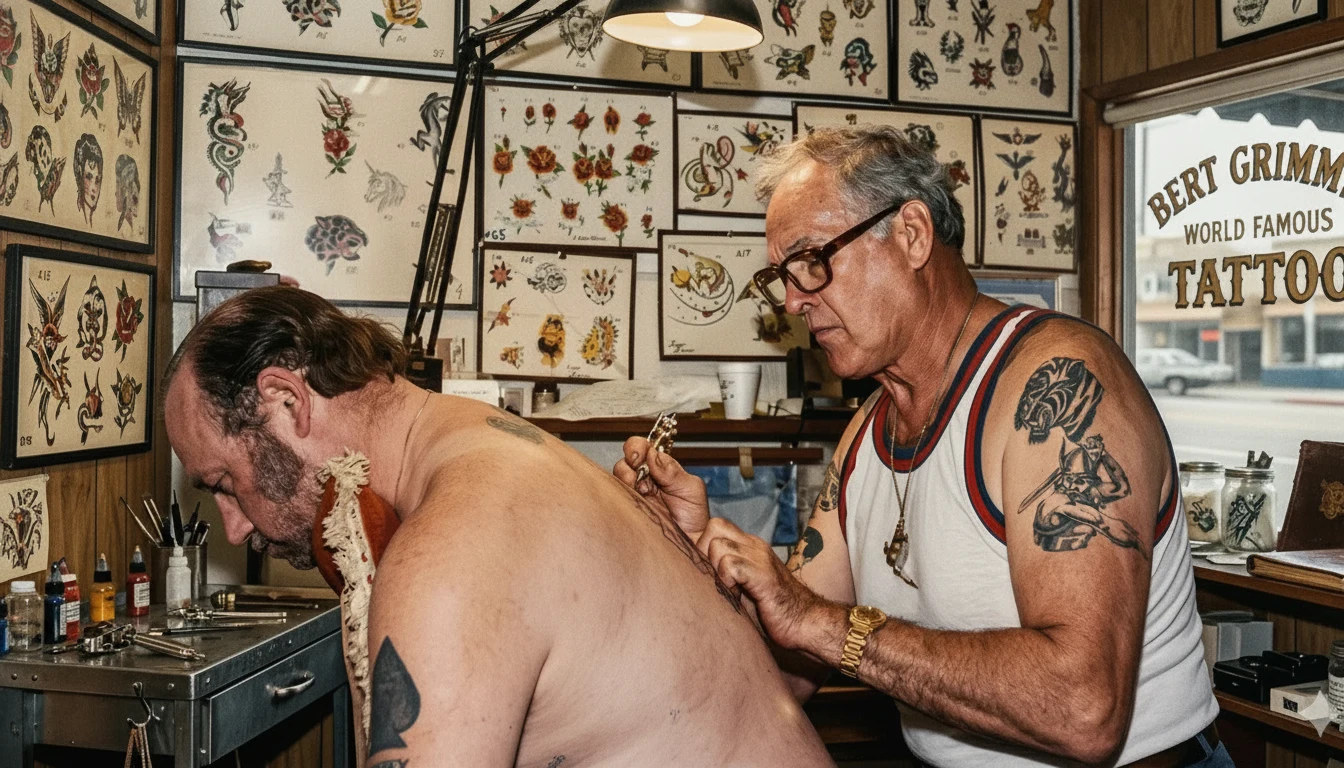
You’ve probably stood in a shop that traces its lineage back to Bert Grimm without knowing it. Most American traditional work does, one way or another. He tattooed for roughly sixty years, and the through-line of bold outlines, solid color, and flash that still reads clean across a room runs straight through him.
In 1947, the St. Louis Post-Dispatch called Grimm one of the six best tattoo artists in the world. By the time he was done, the same source estimates he’d put ink on about 75,000 arms, legs, and torsos. Sixty years of full days in the chair. That’s the number, and it’s most of the argument. He outworked almost everyone.
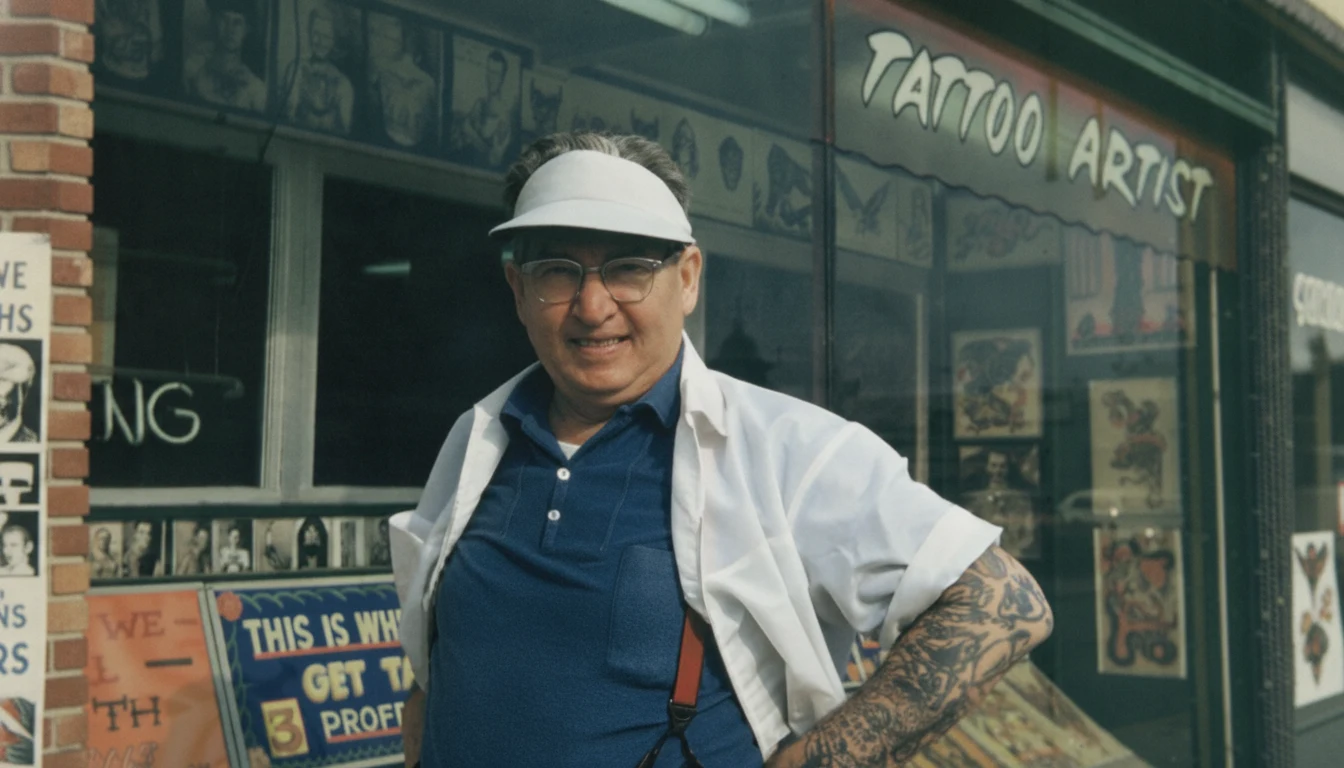
The shop at 22 Chestnut Place
Grimm’s name is welded to a single address. 22 Chestnut Place in Long Beach is the oldest continuously operating tattoo shop in the United States, open since 1927. Lyle Tuttle, who built the Tattoo Art Museum in San Francisco, pointed to that storefront as a landmark of the trade. The Los Angeles Times wrote it up the same way.
The shop sat on a stretch of Long Beach known as the Pike, a few blocks of sailors, drifters, and people who wanted a mark to prove they’d been somewhere. That’s the clientele that built Grimm’s reputation. Walk-ins, all day, fast and clean.
The ten-minute speech
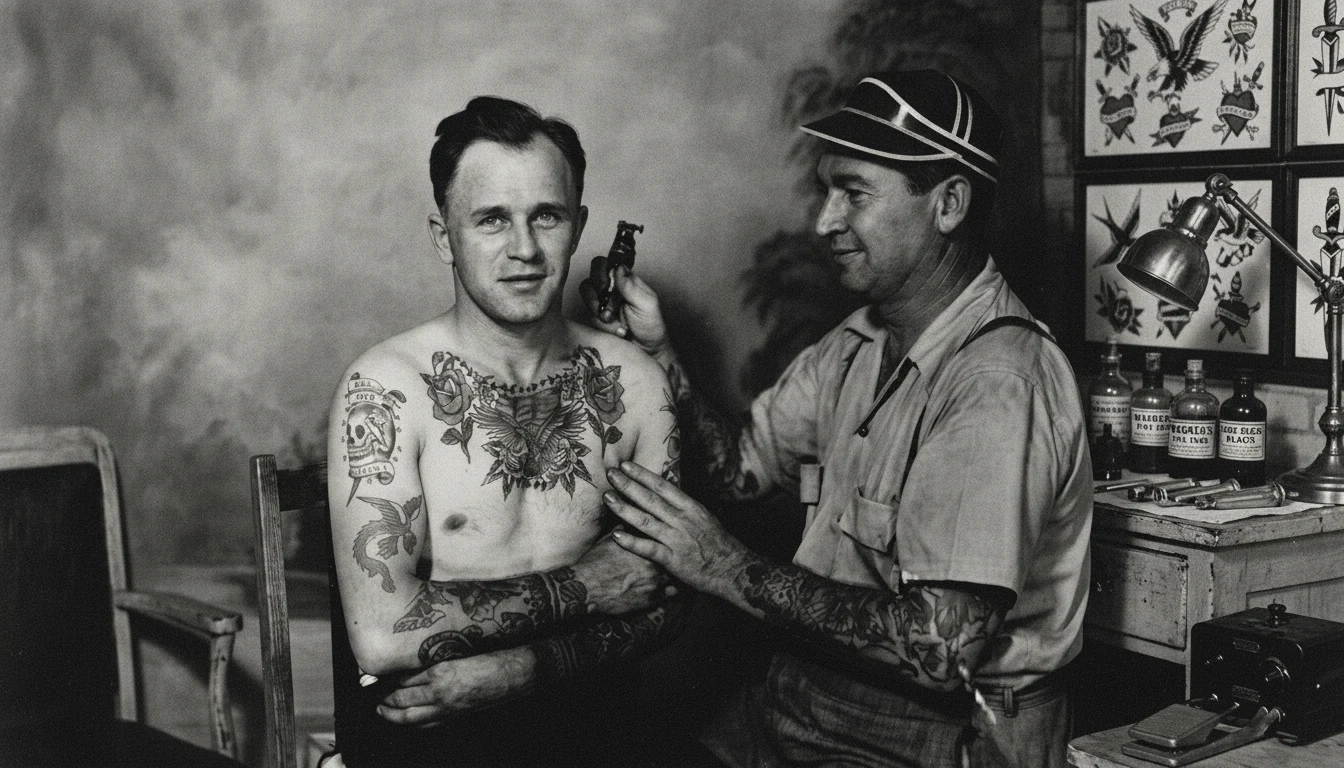
Grimm was a performer behind the machine. Tattooer Don Deaton remembered him stopping mid-session, parking a toothpick in his mouth, tugging his suspenders, and announcing “his famous ten-minute speech.” Then he’d run through the history of the trade while he worked.
It sounds like a gimmick. It wasn’t. He was telling the customer that the thing going on their skin had a past worth respecting, and that they were now part of it. Plenty of artists today do a version of this without realizing where it came from. You talk a client through why a design will hold up, and you’re doing what Grimm did from the chair.
One of his regulars showed up every time he saw a new burlesque dancer perform and had her name added to his forearm. The arm kept growing. That’s the kind of running, lifelong piece most artists now would call a sleeve in progress. Grimm was building them decades before the word meant anything.
Why it still matters at the bench
Bold will hold. Grimm’s whole catalog is proof of it. Heavy outlines, simple shapes, color that doesn’t get muddy. Those weren’t aesthetic choices, they were durability choices. He was tattooing dockworkers and sailors who weren’t coming back for touch-ups, so the work had to survive twenty years of sun and abuse on its own. That constraint shaped American traditional, and it’s still the reason flash from that era reads cleaner than a lot of fussy modern work.
If you want to see how those design rules carry into what artists sell off the wall today, our breakdown of flash tattoos gets into it. The logic Grimm worked under is the same logic that keeps a walk-in piece looking sharp years later.
A four-generation name
The Grimm name didn’t stop with Bert. He taught his grandson Gene, and in 1980 he tattooed a grim reaper on his great-grandson Wes when he came to Kansas City to help open a shop. Wes opened Grimm Tattoo in Kansas City in 2011, named straight at his great-grandfather, per the AOL profile of the shop.
Back in Long Beach, 22 Chestnut Place passed to Kari Barba in 2002, who kept it running, as Total Tattoo covered. Almost a century in, the doors are still open.
Run your shop like it’s meant to last
Grimm built a name on showing up and doing clean, durable work for decades. The art was his job. The booking, the deposits, the no-shows, that part is yours now, and it eats the hours you’d rather spend tattooing. Apprentice keeps the calendar and client records in one place so the front-desk work stops living on your phone. Start free and get those hours back.

Jason Howie
Founder & CEO
Jason Howie is the founder of Apprentice, passionate about empowering tattoo artists and shops with better tools to manage their business and serve their clients.