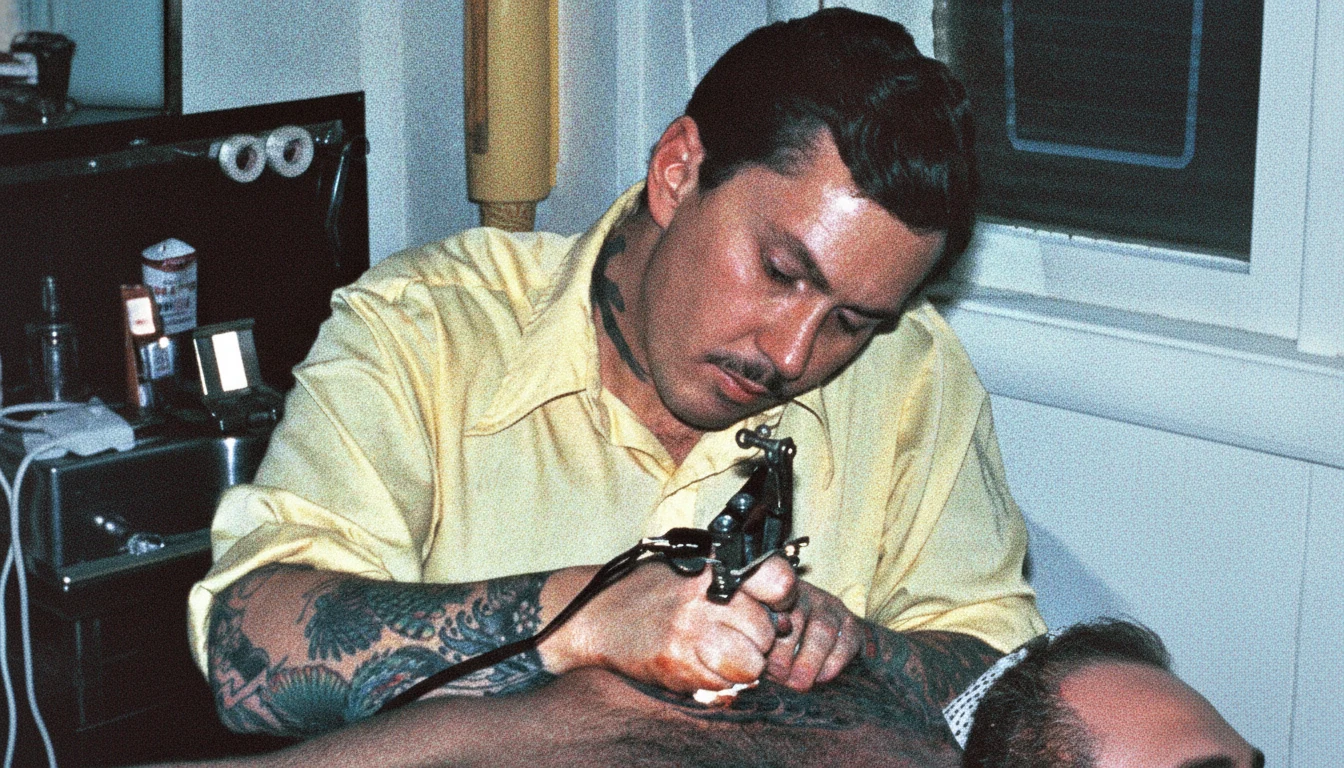
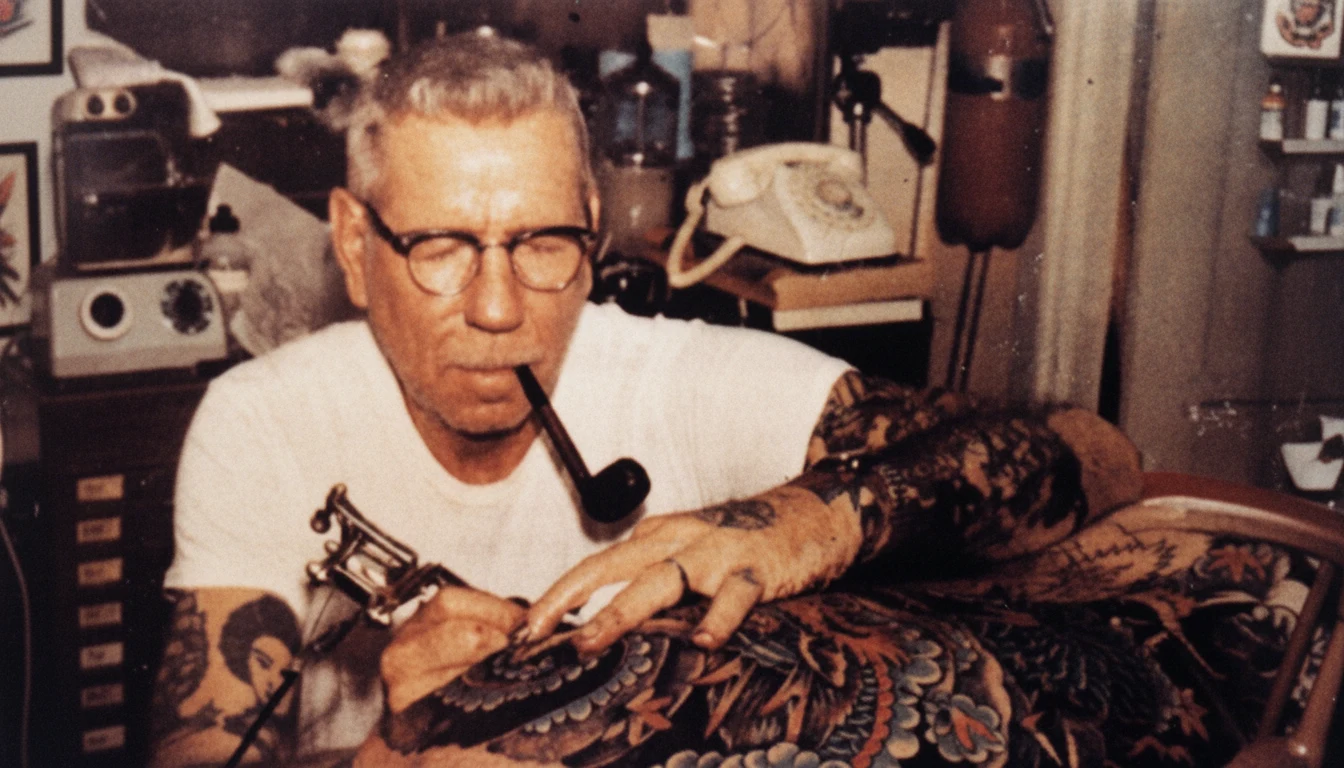
The machine buzzes, the needle hits skin, and somewhere in that sound is a man most artists have never heard of but copy every day. His name was Amund Dietzel, and he tattooed Milwaukee for close to fifty years. If you’ve ever pulled a heavy black outline on a traditional eagle or anchor, you’re working in a tradition he helped build. His full profile is on Wikipedia if you want the dates and the shop addresses.
Dietzel worked from 1913 until he retired in the late 1960s. That’s a working career most artists never come close to. He started in an era when tattooing sat on the wrong side of respectable, and he kept at it long enough to watch the whole thing change around him.
A Norwegian sailor who never planned to stay
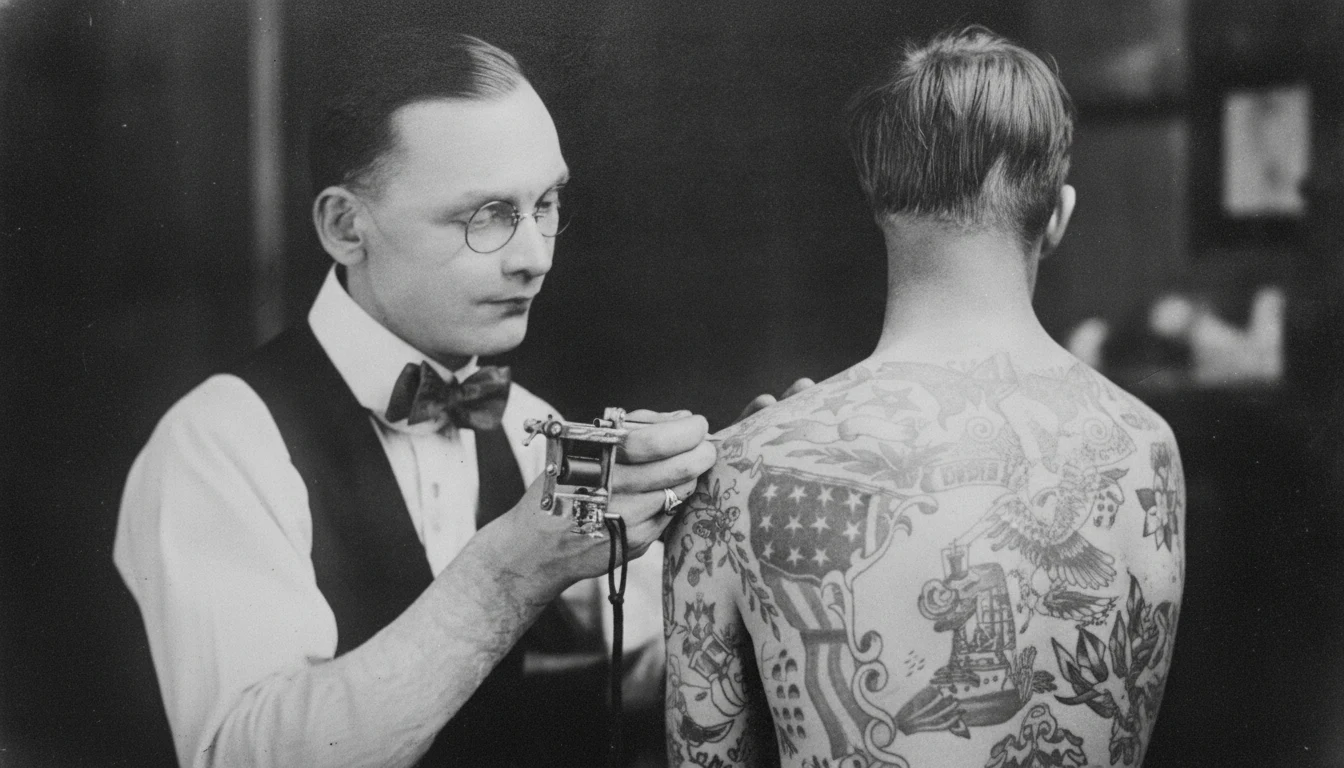
Dietzel didn’t set out to be a tattoo artist. He was a young Norwegian sailor who survived a shipwreck off the coast of Quebec around 1907 and ended up working his way across North America. He picked up tattooing the way a lot of artists did back then, by doing it on shipmates and carnival circuits before settling into a real shop.
By the time he planted himself in Milwaukee, tattooing wasn’t a career path. It was a risk. A working-class city full of factory hands and dock workers turned out to be the right audience. These were people who didn’t need permission to mark themselves, and Dietzel gave them work that held up.
That early period is documented in detail by Milwaukee tattoo artist and historian Jon Reiter, who spent years piecing together Dietzel’s life. His reporting is worth reading if you want the human version of the story, not the myth. Start with Reiter’s account at OnMilwaukee.
Why his flash still looks right
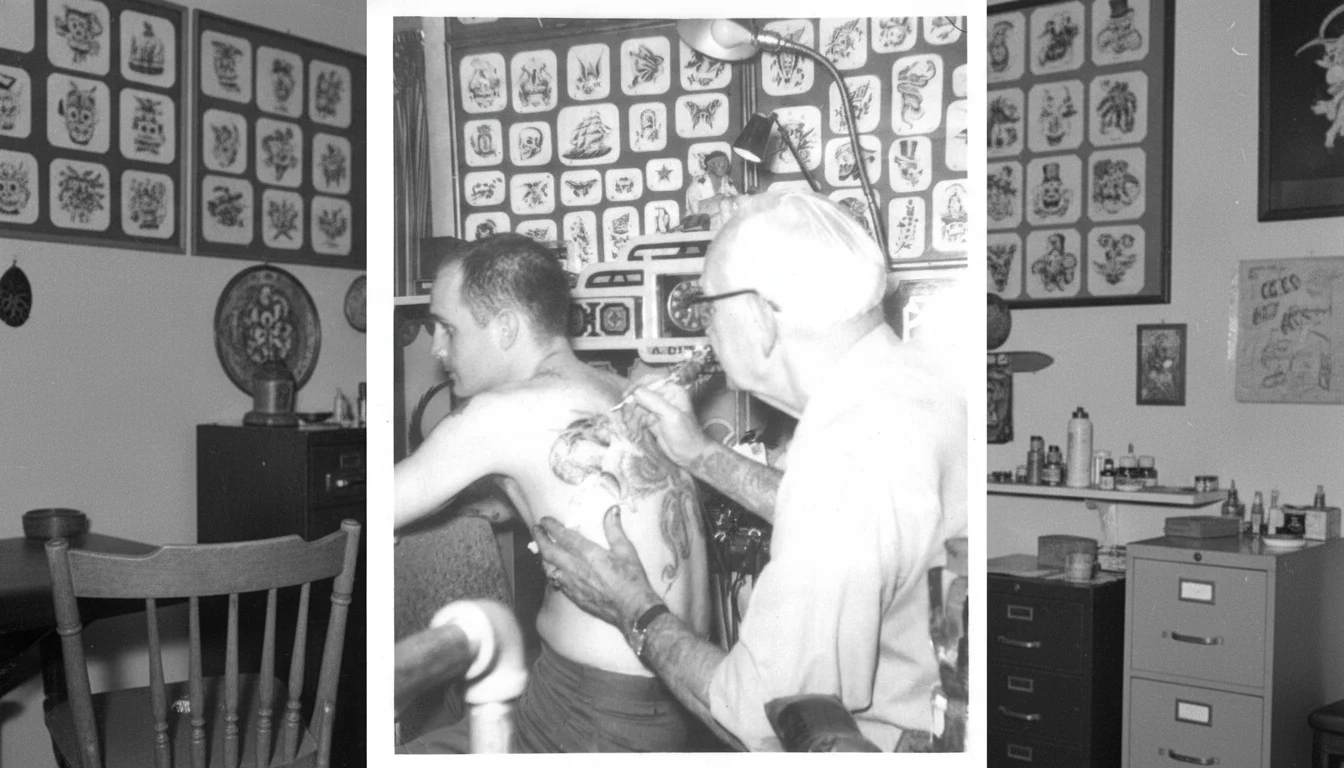
Here’s what made Dietzel matter to artists. He drew clean. Heavy black outlines, simple bold color, designs built to read from across a room and to still read decades after the session. That’s the whole logic of traditional flash, and he was doing it well before the style had a name.
Walk into most traditional-leaning shops today and you’re looking at his grandchildren, design-wise. The eagles, the daggers, the hearts with banners, the swallows. None of that started with him alone, but he refined it and put a huge volume of it out into the world over a long career. The reason that style survived is the reason it survives now. Bold holds. Simple ages well.
If you draw flash for your own shop, this is the lesson worth stealing. The designs that last aren’t the busiest ones. They’re the ones built to read clean as they age and blur. A good way to keep your own sheets organized and bookable is a digital flash library clients can browse and request from.
When a tattoo shop’s work hung in an art museum
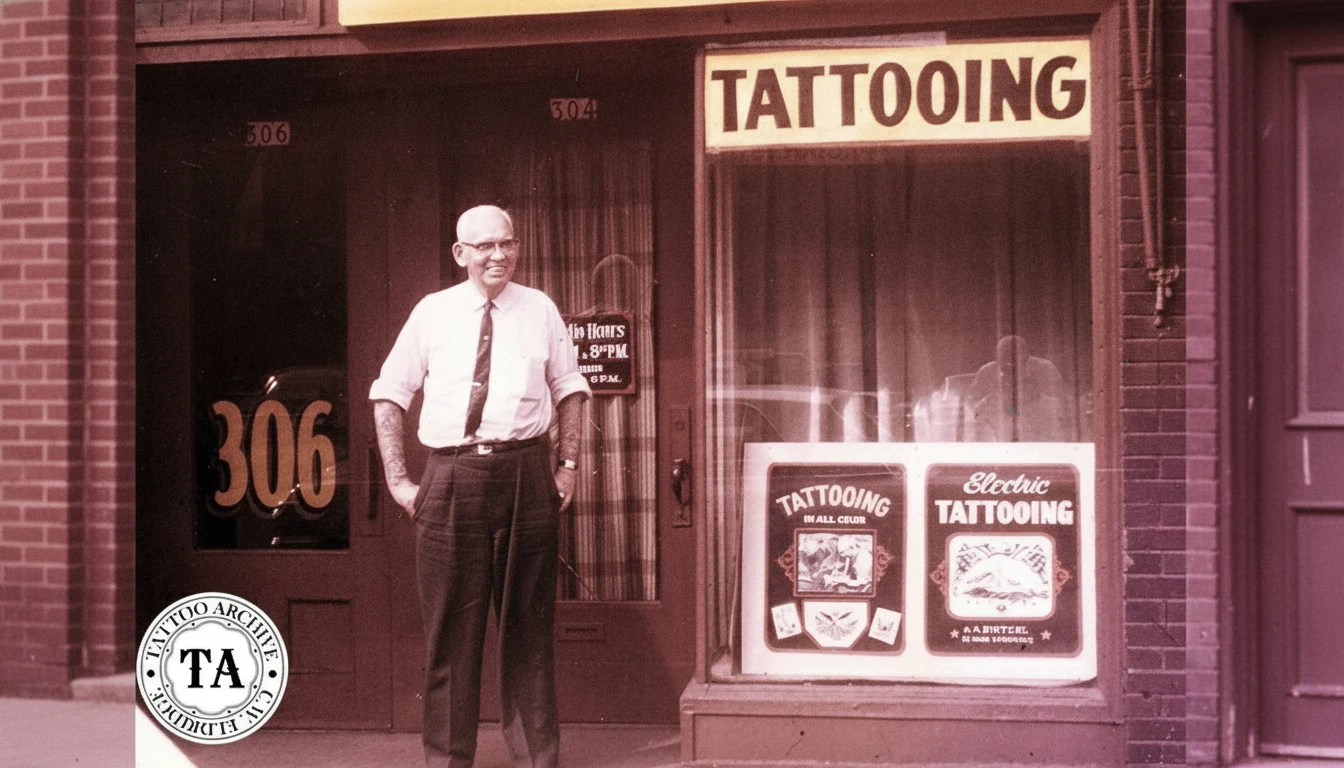
In 2013 the Milwaukee Art Museum opened a show built entirely around his work, “Tattoo: Flash Art of Amund Dietzel.” Think about that for a second. A municipal art museum, the kind of place that hangs paintings, devoted an exhibition to the flash of a man who spent his life in storefront tattoo shops.
That’s a real shift, and it didn’t happen by accident. It happened because the work was good enough to stand on a gallery wall without an apology. The show pulled his hand-painted flash sheets out of the back room and treated them as what they always were, which is design. You can read about the exhibition through the Milwaukee Art Museum.
For anyone who’s ever felt like the broader art world looks down on tattooing, this is your receipt. The line between “craft” and “art” is thinner than people pretend, and Dietzel’s flash crossed it years after he was gone.
The book that keeps his name alive
Most of what we know in detail comes from Jon Reiter’s two-volume study, “These Old Blue Arms: The Life and Work of Amund Dietzel.” Reiter tracked down photographs, shop records, and surviving flash to reconstruct a career that could easily have been forgotten. That’s the thing about old-school tattooers. Plenty of them were brilliant and left almost nothing behind, because nobody was archiving a trade that polite society wanted to ignore.
Reiter’s work is the reason Dietzel isn’t just a name on a few flash sheets. If you care about where the traditional style came from, those books are the primary source.
What artists can take from him today
Dietzel’s story works as more than a history lesson. It’s a working argument about how to build a career that outlasts you.
He showed up for decades in the same city and built trust one client at a time. He drew work that aged well instead of work that looked clever for a season. And he treated flash as a real craft, worth painting carefully and worth keeping. Those three habits are as useful now as they were a hundred years ago.
The tools have changed. You’re probably managing bookings on a phone instead of a wall calendar, and your flash lives in an app instead of tacked above the station. But the underlying job is the same one Dietzel did. Make good work, keep it organized, and make it easy for the right client to find the right piece. If you want to put your own designs in front of clients and keep your books full, you can start a free Apprentice account and run your shop the way he ran his, minus the paperwork.
His tradition has been studied beyond Milwaukee too. The American Swedish Historical Museum has explored Scandinavian tattoo heritage and identity, the same cultural thread Dietzel carried with him off that ship.
A century later, every artist pulling a clean bold line is part of the same conversation he was. That’s a good lineage to belong to. Stay bold, and draw work that’ll still look right in twenty years.

Jason Howie
Founder & CEO
Jason Howie is the founder of Apprentice, passionate about empowering tattoo artists and shops with better tools to manage their business and serve their clients.