Summer 2026 is shaping up to be one of the most interesting seasons for tattoo artists in years. Client requests are shifting fast. The styles walking through your door look nothing like they did even 18 months ago. The tattoo industry has been growing by nearly 10% every year for over a decade, and that growth is fueling real creative evolution. Millennials still lead adoption at 46%, but Gen Z is right behind them at 32%, and they’re bringing wildly different aesthetic expectations. What artists are seeing this summer isn’t just a handful of Pinterest-driven fads. It’s a genuine shift in how people think about ink: more intentional, more personal, more technically demanding. This season’s tattoo trends reflect a collision of technology, sustainability, and cultural revival that’s rewriting what a “summer tattoo” even means. If you’re booking sessions for the warm months ahead, here’s what you need to know.
The Evolution of Summer Ink: Aesthetic Shifts for 2026
The broad strokes of summer 2026 ink come down to two words: precision and restraint. Clients aren’t asking for bigger. They’re asking for smarter. The designs filling up consultation queues right now favor intentional linework, subtle detail, and compositions that work with the body rather than just sitting on it. This isn’t about minimalism for minimalism’s sake. It’s about artists pushing technical boundaries while keeping visual noise low.
The Rise of Neo-Cybernetic Minimalism
Think circuit-board geometry meets single-needle finesse. Neo-cybernetic minimalism pulls from tech aesthetics: clean angles, micro-dotwork, and patterns that echo digital interfaces. But the execution is deeply analog. These pieces demand a steady hand and serious patience. Clients are requesting small-scale designs on wrists, behind ears, and along finger lines that look like fragments of code or motherboard traces.
The appeal is obvious. It’s modern without being loud. It reads as personal without needing a backstory. And for artists, it’s a chance to flex precision skills that separate pros from hobbyists. If you’re not already practicing tight geometric work at small scale, this summer will push you to start.
Hyper-Realistic Botanical Micro-Realism
Florals aren’t new. But the level of realism clients want in 2026 is genuinely next-level. We’re talking about single blooms with visible pollen, translucent petals, and shadow work that makes the piece look three-dimensional at thumbnail size. Micro-realism has been building for years, and botanical subjects are its perfect match this summer. If you want the full picture on why microrealism tattoos are everywhere in 2026, it’s worth a read.
These tattoos tend to sit on forearms, collarbones, and ribs. Clients bring reference photos from macro photography, not tattoo flash. That means your consultation process matters more than ever. You need to set expectations about what translates to skin and what doesn’t. Pieces this detailed also require pristine aftercare, so automating your aftercare instructions through a tool like Apprentice saves you from repeating yourself fifty times a week.
Vibrant Color Palettes Dominating the Season
Black and grey isn’t going anywhere. But summer 2026 is a color season. Clients are craving vibrancy, and ink manufacturers are delivering pigments that hold up better in sun-exposed skin than anything we had five years ago.
Electric Pastels and High-Saturation Accents
Soft lavenders, muted corals, and dusty blues are showing up everywhere. But they’re not alone. Artists are pairing these pastels with punchy, high-saturation accents: a neon orange stamen inside a pastel flower, or a bright teal outline on an otherwise muted piece. The contrast creates visual depth that photographs incredibly well, which matters to clients who live on social media.
This palette works best on lighter skin tones, and artists need to be upfront about that during consultations. Color theory isn’t optional here. If you’re not already having honest conversations about how pigments heal across different skin tones, you’re setting yourself up for unhappy clients and touch-up headaches.
The Return of UV-Reactive and Glow Inks
UV-reactive inks had a moment years ago, then faded (pun intended). They’re back, and the formulations are better. New biocompatible UV inks offer more consistent glow under blacklight without the skin irritation issues that plagued earlier versions. Festival culture and nightlife aesthetics are driving demand hard.
Artists are using UV ink as an accent layer: invisible in daylight, alive under blacklight. Think constellation maps that only appear at night, or hidden messages woven into otherwise traditional pieces. It’s a cool trick, but be honest with clients about longevity and fading. These inks still don’t last as long as traditional pigments.
Strategic Placement and Body Mapping Trends
Where people get tattooed is changing as much as what they get. Summer 2026 placements are more intentional, with clients thinking about how pieces interact with their body’s movement and structure.
Ear and Cartilage Ornamentation
Ear tattoos are having a serious moment. Small designs along the helix, behind the lobe, and inside the concha are replacing some traditional piercing setups. These micro-tattoos often feature fine-line botanicals, tiny celestial symbols, or abstract dots and dashes.
The challenge is real. Ear skin behaves differently than arm or leg skin. Ink spreads more unpredictably, healing is finicky, and the margin for error is razor-thin. But clients love the subtlety. These placements feel secret and personal. If you’re booking ear work, keep your sessions short and your needle groupings tight.
Spinal Flow and Kinetic Linework
Full spinal pieces aren’t new, but the approach in 2026 is different. Artists are designing linework that follows the spine’s natural curve and appears to shift with the client’s movement. Bending forward reveals one composition. Standing straight shows another. It’s kinetic design: tattoos built to move with the body.
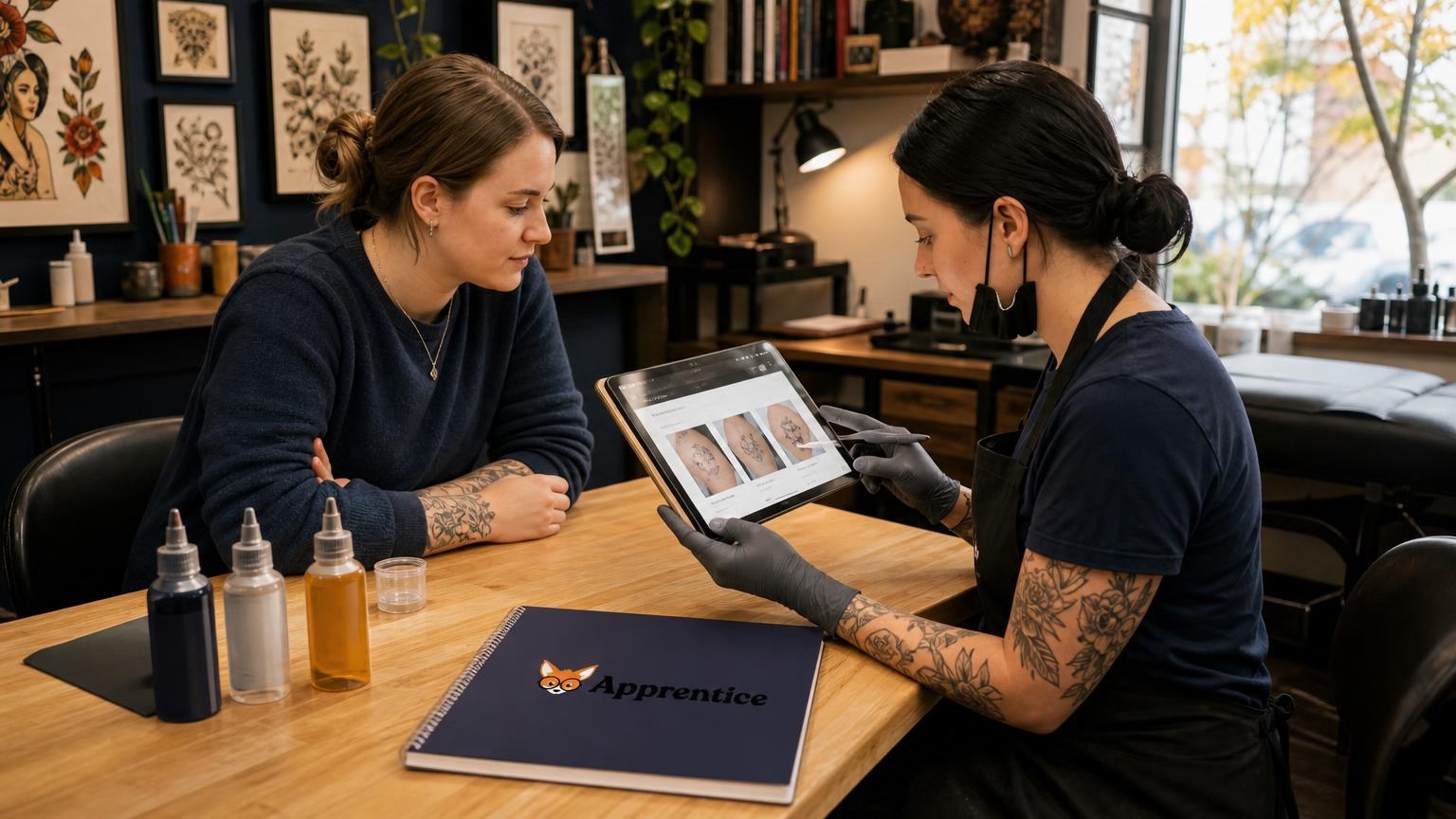
This requires serious body mapping during the stencil phase. You can’t design these pieces flat on an iPad and expect them to translate. Working with the client in person, marking landmarks, and testing stencil placement from multiple angles is non-negotiable. Tools that let you preview placement on the client’s body before needles touch skin are becoming essential, not optional.
Technological Influence on Modern Tattoo Artistry
Tech is reshaping how tattoos get designed, applied, and healed. The global tattoo market is projected to reach USD 5.99 billion by 2034, and a big chunk of that growth is technology-driven.
AI-Assisted Custom Stencil Design
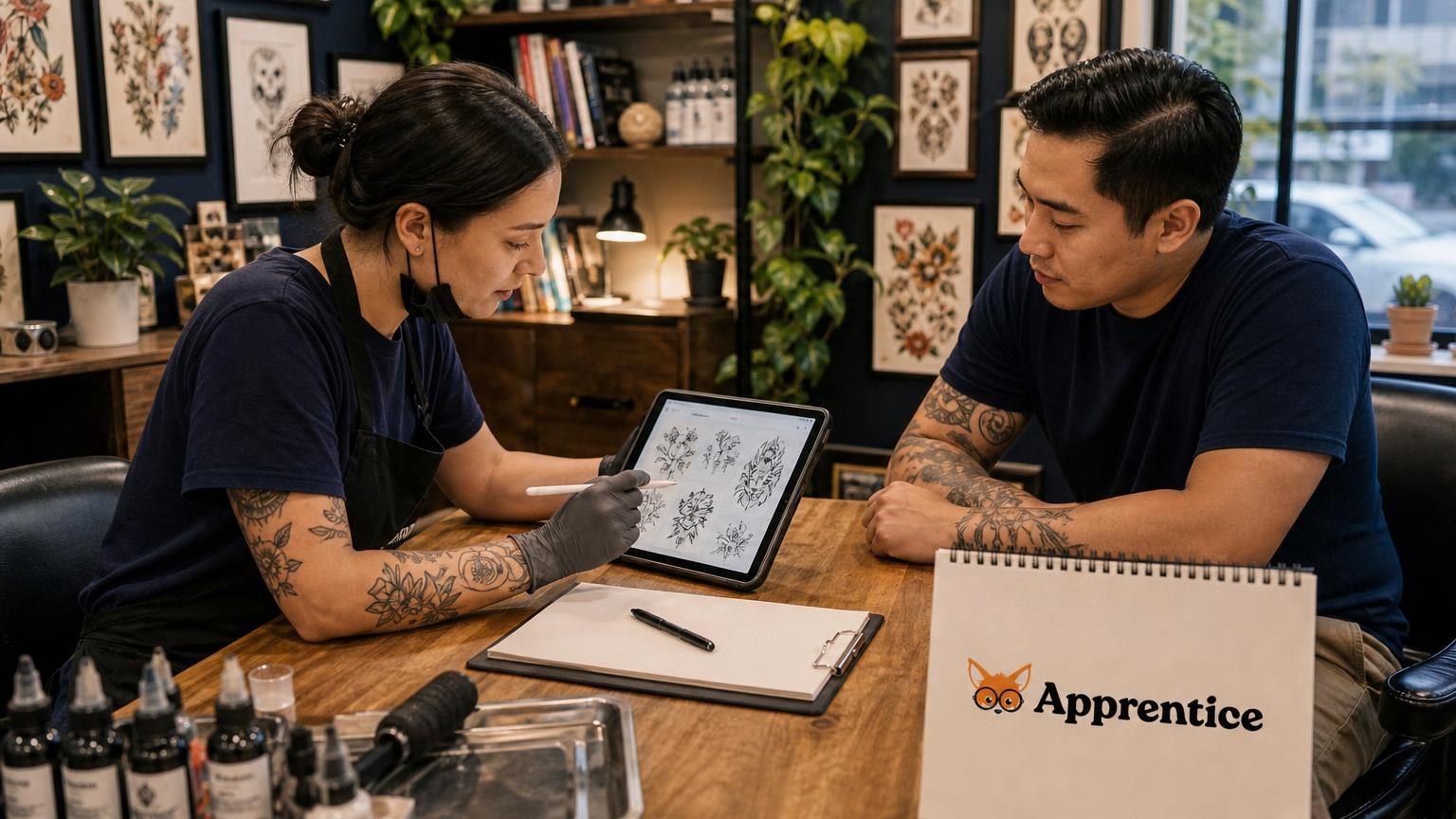
AI isn’t replacing artists. Let’s kill that fear right now. What it’s doing is handling the tedious parts of stencil prep so you can focus on the creative decisions that actually matter. AI tools can clean up rough sketches, generate concept variations from a client’s description, and help you iterate faster during consultations.
Apprentice offers AI-powered design tools that help with concept generation, stencil cleanup, and client placement previews. That means less time redrawing and more time tattooing. The artists who adopt these tools aren’t lazy. They’re efficient. And efficiency means more sessions per week without burning out.
Biocompatible Inks and Faster Healing Protocols
Ink chemistry is quietly going through a revolution. New biocompatible formulations reduce allergic reactions and speed up healing times. Some manufacturers claim 30% faster healing with their latest pigment lines. That’s a big deal for clients who want summer tattoos that look healed before Labor Day.
Faster healing also means fewer touch-ups and happier clients. Pair better inks with automated aftercare delivery, and you’ve got a system that practically manages itself. Clients get their care instructions on time. You don’t have to chase anyone down. Everyone wins.
Cultural Resurgence: Modernizing Traditional Motifs
Tattoos in 2026 aren’t just trending: they’re evolving toward artwork that feels personal, artistic, and intentionally crafted. That evolution includes a hard look backward at traditional styles, then rebuilding them for modern tastes.
Deconstructed American Traditionalism
Bold lines. Saturated color. Iconic imagery. American Traditional is the backbone of Western tattooing. But in 2026, artists are pulling those elements apart and reassembling them. You’ll see a classic dagger, but the blade is fragmented into geometric shards. Or an eagle rendered in traditional color palettes but with abstract negative space replacing the background.
This style respects the roots while pushing the form forward. It appeals to clients who want something that feels timeless but doesn’t look like their grandfather’s anchor tattoo. For artists, it’s a playground. You get to honor the craft’s history while proving you’re not stuck in it.
Abstract Tribalism and Fluid Geometry
Tribal tattoos carry baggage. Decades of poorly executed armbands and culturally insensitive appropriation left a bad taste. But 2026 is seeing a thoughtful revival. Artists with genuine connections to Indigenous, Polynesian, and Maori traditions are creating abstract tribal work that honors source cultures while incorporating fluid, organic geometry.
The key word is “thoughtful.” Clients are doing their homework. They’re asking about cultural significance, artist heritage, and design meaning. That’s a good thing. It means the work being produced is more respectful and more beautiful than the tribal boom of the late ’90s ever was. If you’re offering tribal-inspired work, know your sources. Do the research. Respect the lineage.
Sustainable Inking: The Eco-Conscious Studio Movement
Your clients care about sustainability. Maybe not all of them, but enough that it’s affecting booking decisions. Eco-conscious studios are gaining traction, and the changes aren’t just cosmetic.
Vegan inks are standard in many shops now. Single-use plastics are being replaced with biodegradable alternatives. Some studios run on renewable energy and use recycled furniture. It’s not performative. It’s practical. The US tattoo market alone is projected to reach USD 1.25 billion by 2032, and a growing slice of that revenue flows toward studios that align with their clients’ values.
Going green doesn’t have to be expensive. Start small. Switch to plant-based ink caps. Use recycled paper for consent forms, or better yet, go paperless with digital consent and prep flows. Reducing waste in your studio is good ethics and good business. Clients notice. And clients who feel good about where they get tattooed come back.
Here’s the reality check: sustainability also means sustaining yourself. Burnout is the industry’s ugly secret. Running a shop that’s organized, automated, and not drowning in admin work is its own form of sustainability. Collecting deposits upfront, automating reminders, and managing walk-ins digitally aren’t glamorous. But they keep the lights on and keep you sane.
The summer 2026 tattoo scene is a collision of art, technology, and cultural awareness. Styles are getting more precise. Clients are getting more informed. And the artists who thrive will be the ones who stay curious, stay honest, and stay organized. It’s permanent. It’s personal. People want it to be perfect. Your job is to make that possible, session after session.
If you’re ready to spend less time on admin and more time on the work that matters, let clients book your summer 2026 tattoo appointment online while you focus on the art. Apprentice lets you get started with a free 14-day trial. Set up your bookings, deposits, and client prep in about five minutes, then get back to doing what you love.

Jason Howie
Founder & CEO
Jason Howie is the founder of Apprentice, passionate about empowering tattoo artists and shops with better tools to manage their business and serve their clients.