The tattoo world keeps shifting. What men want on their skin today looks nothing like what was popular five years ago. And the places they’re choosing to put ink? Those are changing just as fast. Whether you’re an artist trying to stay ahead of client requests or a collector planning your next session, understanding current men’s tattoo trends, popular styles, and smart placements gives you a real edge. The craft is booming: the global tattoo market is projected to reach USD 5.99 billion by 2034, growing at a CAGR of 10.67%. That kind of growth means more clients walking through your door with bigger ideas and higher expectations. But it also means more competition. Knowing what’s hot, what’s fading, and what’s about to break through isn’t just trivia. It’s how you stay relevant. It’s how you book better projects. It’s how you build a portfolio that actually attracts the clients you want.
The Evolution of Modern Masculine Tattoo Aesthetics
Men’s tattoo culture used to be pretty simple. You picked a flash design off the wall, sat down, and got it done. Anchors, skulls, eagles, pin-ups. The designs were bold, the lines were thick, and nobody spent six months on a Pinterest board before their appointment.
That era built the foundation. But the last decade flipped the script entirely. Social media turned every tattoo into a portfolio piece. Instagram made artists visible worldwide. Clients started showing up with reference folders, mood boards, and hyper-specific requests.
The result? Men’s tattoo aesthetics fractured into dozens of specialized lanes. You’ve got guys who want photorealistic portraits next to guys who want abstract geometry. Some want full traditional coverage. Others want a single fine-line piece on their hand. The old gatekeeping around “masculine” tattoos has mostly dissolved.
What hasn’t changed is the core motivation. Men still want tattoos that mean something. They want pieces that look good on their body, age well, and tell a story. The difference now is that they have way more visual literacy. They know what’s possible because they’ve seen thousands of tattoos online before they ever sit in your chair.
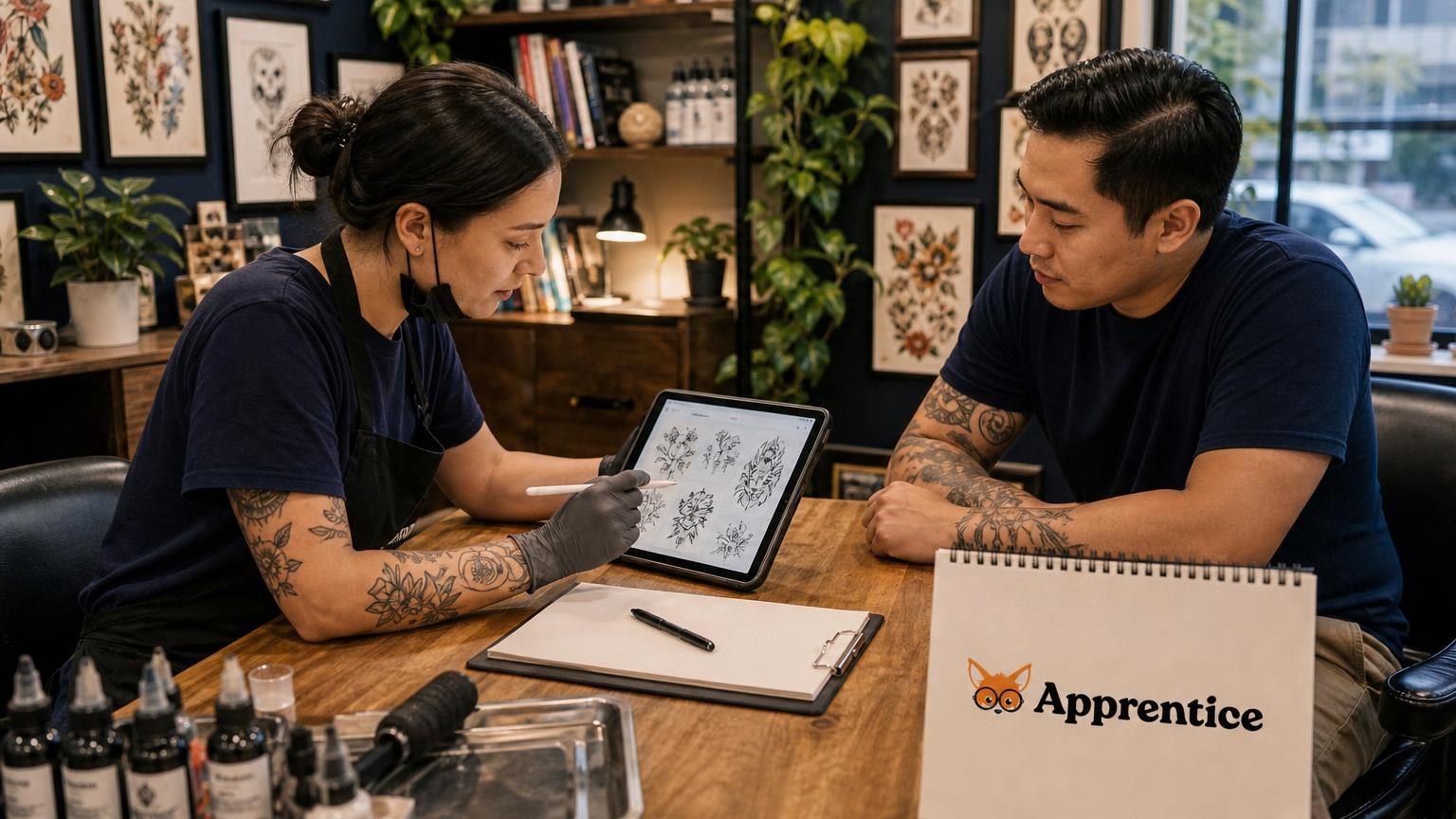
For artists, this means consultations are more complex. Clients come prepared, but they also come with unrealistic expectations pulled from heavily filtered photos. Part of your job is guiding them toward what actually works on skin, not just on a screen. And for shop owners, managing that consultation pipeline matters. Tools like Apprentice let you collect references, handle deposits, and prep clients before they walk in, so you’re not burning chair time on back-and-forth emails.
The aesthetic evolution isn’t slowing down. But the fundamentals of good tattooing remain: solid lines, proper saturation, designs that respect the body’s contours. Trends come and go. Craftsmanship doesn’t.
Top Trending Tattoo Styles for Men
Neo-Traditional and American Traditional
American Traditional is the cockroach of tattoo styles. I mean that as a compliment. It survives everything. Bold outlines, limited color palettes, iconic imagery. Daggers, roses, panthers, ships. The rules are strict, and that’s exactly why it endures. Those thick lines and heavy saturation hold up for decades.
Neo-Traditional takes that same DNA and pushes it further. You get more color range, more detail, more dimension. The outlines are still prominent, but artists play with shading, texture, and composition in ways that old-school Traditional never did. Think of it as Traditional’s louder, more expressive cousin.
Men gravitate toward these styles because they read well at any size. A small neo-trad piece on the forearm hits just as hard as a full sleeve. And they age beautifully compared to styles that rely on fine detail or light shading. If a client asks you what style will still look good in 20 years, Traditional and Neo-Traditional are always safe answers.
The demand for these styles hasn’t dipped. If anything, there’s a resurgence among younger clients who discovered them through social media. They want that classic look but with a modern artist’s touch.
Blackwork and Geometric Patterns
Blackwork has exploded. Pure black ink, heavy saturation, graphic compositions. It ranges from ornamental patterns to full blackout sections to intricate dotwork mandalas. The appeal is obvious: it’s striking, it photographs well, and it creates incredible contrast on skin.
Geometric tattoos fall under this umbrella too. Sacred geometry, tessellations, architectural patterns. These pieces demand precision. One wobbly line in a geometric sleeve and the whole thing falls apart. That’s why clients seeking this style tend to do serious research on their artist.
The trend toward blackwork also connects to a practical reality. Black ink ages better than color. It’s more forgiving on different skin tones. And for artists, it removes the variable of color matching and fading. You’re working with one ink, and the challenge becomes composition, density, and flow.
Men are requesting blackwork on forearms, shins, and chest panels especially. Large-scale geometric pieces that wrap around the body create a visual impact that’s hard to match with other styles.
Hyper-Realism and Portraiture
This is the style that makes people do a double-take. Hyper-realistic tattoos look like photographs printed on skin. Portraits of loved ones, animals, movie characters, landscapes. The technical skill required is enormous.
Realism has always been popular with men, but the quality ceiling keeps rising. Artists are using techniques borrowed from fine art: layered shading, color theory, understanding of light sources. The best realism artists have waiting lists measured in years, not months.
Here’s the honest reality check, though. Realism is high-risk, high-reward. A slightly off portrait is worse than no portrait at all. These pieces also require more touch-ups over time because the subtle gradients and fine details are the first things to soften with age. Clients need to understand that upfront.
For artists specializing in realism, managing your project pipeline is critical. Each piece requires extensive reference gathering, multiple drafts, and long sessions. Having a system that keeps all those references and client notes in one place, like Apprentice’s project management tools, saves you from the chaos of scattered DMs and lost files.
Strategic Placements for Impact and Longevity
Placement matters as much as the design itself. A great tattoo in the wrong spot loses its power. A mediocre design in the perfect placement can actually look incredible. One expert insight that keeps proving true: placement as part of the design enhances the body’s flow, and smart artists think about both from the start.
Full Sleeves and Forearm Statements
The arm remains the most common and versatile area for men’s tattoos. And for good reason. It offers a flat, visible canvas that works with almost every style. Full sleeves create a cohesive visual story. Half sleeves and forearm pieces offer flexibility for guys who need to cover up for work.
Forearm tattoos have become the entry point for a lot of men. They’re visible enough to show off, easy enough to cover with a long sleeve, and the skin holds ink well. The inner forearm is especially popular for script, portraits, and detailed single pieces.
Full sleeves require planning. You can’t just stack random tattoos and expect them to flow. The best sleeves are designed as unified compositions, even if they’re built over multiple sessions and years. Talk to your clients about long-term vision early. A forearm piece done without considering the upper arm limits your options later.
Chest and Back Pieces for Large-Scale Art
The chest and back are where men go big. These are statement pieces. Full back panels, chest-spanning designs, sternum pieces. The flat, broad surfaces allow for compositions that simply aren’t possible anywhere else.
Back pieces remain the ultimate canvas for detailed work. Japanese-style bodysuits, massive realism scenes, ornamental blackwork: the back handles it all. But these are multi-session commitments. We’re talking 20, 30, sometimes 40+ hours of work. Clients need to be prepared for the time and financial investment.
Chest tattoos have surged in popularity. Symmetrical designs across the pectorals, script across the collarbone, and full chest panels that extend to the shoulders are all trending hard. The chest is also one of the more painful areas, so managing client expectations about comfort is part of the job.
For large-scale projects, booking and scheduling become logistical puzzles. Multiple sessions over months require a system that tracks progress, stores design iterations, and handles deposits for each appointment.
Minimalist Locations: Hands, Neck, and Behind the Ear
These used to be “job stopper” placements. That stigma is fading fast. Hand tattoos, neck pieces, and behind-the-ear designs are now mainstream requests from men across all professions.
Hand tattoos are particularly trendy. Small symbols, single words, finger tattoos, and knuckle designs are everywhere. But here’s what clients need to hear: hands are brutal on ink. The skin regenerates quickly, you use your hands constantly, and sun exposure is unavoidable. Hand tattoos fade faster than almost any other placement. Touch-ups are part of the deal.
Neck tattoos carry a different weight. They’re always visible, and they signal a certain level of commitment. Behind-the-ear pieces are subtler but still carry that “I don’t care what you think” energy that appeals to a lot of guys.
Artists should have honest conversations about these placements. Some shops still have policies about not tattooing hands or necks on people who aren’t already heavily tattooed. Whether you agree with that policy or not, the reasoning is sound: these are permanent, highly visible decisions.
Emerging Cultural and Niche Influences
Cyberpunk and Glitch Art Aesthetics
This is one of the freshest movements in men’s tattooing. Cyberpunk-inspired designs pull from sci-fi, technology, and digital culture. Circuit board patterns, glitch effects, biomechanical elements, and futuristic typography. The aesthetic feels like a tattoo designed by a graphic designer who grew up on anime and video games.
Glitch art tattoos use intentional distortion, pixel effects, and fragmented imagery. They look like a digital file that’s been corrupted in the most beautiful way possible. These pieces work especially well in blackwork or with limited color palettes: neon accents against black ink create a striking contrast.
The client base for this style skews younger and tech-savvy. They’re often looking for something that feels genuinely new, not a variation on existing traditions. For artists, it’s a chance to push creative boundaries. But it also requires a different skill set. You’re not just drawing: you’re designing with digital aesthetics in mind.
This niche is still growing. Artists who establish themselves in cyberpunk and glitch work now will own that space as demand increases. The North American tattoo market was valued at USD 861.68 million in 2024, and niche specialization is one of the best ways to carve out your share.
Modern Tribal and Polynesian Revival
Tribal tattoos are back, but they’re different this time. The generic “barbed wire” tribal of the 1990s is dead. What’s replacing it is a respectful, educated approach to Polynesian, Maori, and other indigenous tattoo traditions.
Modern tribal work honors the cultural origins. Artists study the meaning behind specific patterns. Clients research their heritage or work with artists who specialize in culturally accurate designs. Tribal tattoos are making a comeback with popular placements including shoulders, chest, and calves.
This revival brings responsibility. Artists working in this space need to understand the cultural weight of these designs. A Polynesian tattoo isn’t just decoration: it carries genealogical and spiritual significance. The best practitioners in this style either come from those traditions or have trained extensively within them.
For men seeking tribal work, the advice is simple. Do your homework. Find an artist who respects the tradition. And understand that these designs aren’t just about looking cool. They carry meaning that goes deeper than aesthetics.
Practical Considerations for Your Next Piece
Pain Thresholds by Body Part
Nobody wants to talk about pain, but everybody asks about it. Here’s the honest breakdown:
- Outer arms and shoulders are among the least painful spots. Thick skin, good muscle padding.
- Inner arms, ribs, and sternum are significantly more intense. Thin skin, lots of nerve endings.
- Hands, feet, elbows, and kneecaps are brutal. Bone proximity makes every line feel sharper.
- The spine and back of the knee are surprisingly rough for most people.
- Neck and behind the ear vary wildly. Some people barely flinch. Others tap out fast.
Pain tolerance is personal. Two clients can get the same tattoo in the same spot and have completely different experiences. What you can control is preparation: hydration, food, rest, and mindset all matter. Clients who show up hungover and sleep-deprived have a much harder time.
For artists, managing pain expectations is part of the client experience. Be honest about what hurts. Don’t downplay it, and don’t exaggerate it. Trust is built on honesty.
Long-term Maintenance and Ink Quality
A tattoo is only as good as its aftercare. And its long-term maintenance. The first two weeks matter most: proper washing, moisturizing, and sun avoidance during healing set the foundation. But the years after that matter too.
Sunscreen is the single best thing you can do for a healed tattoo. UV exposure breaks down ink pigments faster than anything else. A tattoo that’s been protected from the sun for ten years will look dramatically better than one that hasn’t.
Ink quality plays a role too. Premium inks from reputable manufacturers hold their vibrancy longer. Cheap ink fades faster and can cause reactions. Artists should be transparent about what inks they use. Clients should feel comfortable asking.
Touch-ups are normal. They’re not a sign of bad work. Even the best tattoos may need minor refreshing after five to ten years, especially in high-friction areas or spots with heavy sun exposure. Build that expectation into your client conversations from the start.
Finalizing Your Design and Choosing the Right Artist
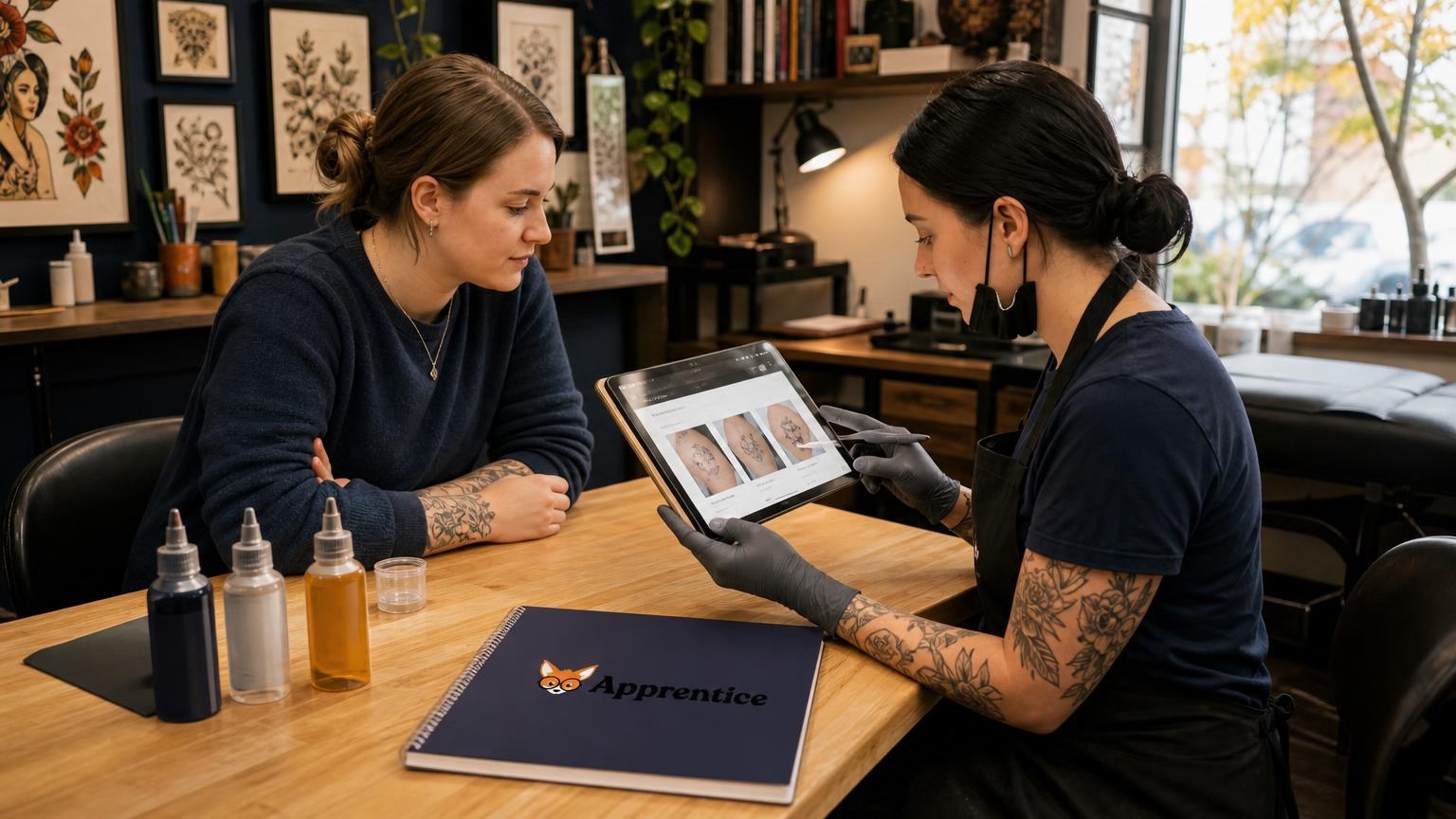
Getting the right tattoo starts with getting the right artist. Not every tattooist excels at every style. A killer realism artist might struggle with traditional work, and vice versa. Look at portfolios. Look at healed work, not just fresh photos. Healed tattoos tell you the truth about an artist’s skill.
The consultation process matters. A good artist will ask questions about your vision, suggest improvements, and be honest if something won’t work. If an artist just says “yeah, sure” to everything, that’s a red flag. You want someone who pushes back when a design needs adjusting.
And the US tattoo market is projected to reach USD 0.69 billion by 2026, which means more artists entering the field. More options for clients, but also more noise to cut through. As an artist, your booking process is your first impression. A smooth, professional experience from inquiry to appointment builds confidence before you even pick up a machine.
For shop owners and artists looking to tighten up that client journey, Apprentice lets you handle bookings, collect deposits, manage design references, and automate pre-appointment prep, all in one place. Less admin chaos means more time doing what you actually love: tattooing. If you want to see how it works, get started with a free 14-day trial and start booking clients in minutes.
The bottom line? Great tattoos happen when great design meets great placement meets the right artist. Do your research. Trust the process. And respect the craft. It’s permanent. It’s personal. Make it count.

Jason Howie
Founder & CEO
Jason Howie is the founder of Apprentice, passionate about empowering tattoo artists and shops with better tools to manage their business and serve their clients.