A no-show doesn’t just cost you the session. It costs you the slot you turned away, the stencil you already drew, and the hour you spent setting up your station. That’s the whole reason deposits exist. The trick is taking them in a way that holds up when a client decides they want their money back.
Here’s how to do it without getting burned.
Why deposits are non-negotiable
Picture a Saturday afternoon piece. Three hours blocked. You prepped the design, cleaned the station, turned away two walk-ins to protect the slot. The client texts at noon: “something came up, can we move it?”
Without a deposit, you ate all of that for nothing. With one, at least the no-show paid for the time they wasted.
A deposit is a signal. It tells you who’s actually showing up. People who put money down before the appointment cancel a lot less than people who just say “yeah, I’ll be there.” The deposit filters the serious clients from the maybes, and it does it before you’ve cleared your whole afternoon.
It also sets the tone. When you ask for money up front, the client knows you run a business, not a hobby. That one move shuts down half the casual cancellations before they happen.
Setting up a deposit system that doesn’t scare people off
The goal is simple. Make it easy to pay, impossible to misunderstand, and clean to track.
Say the numbers out loud
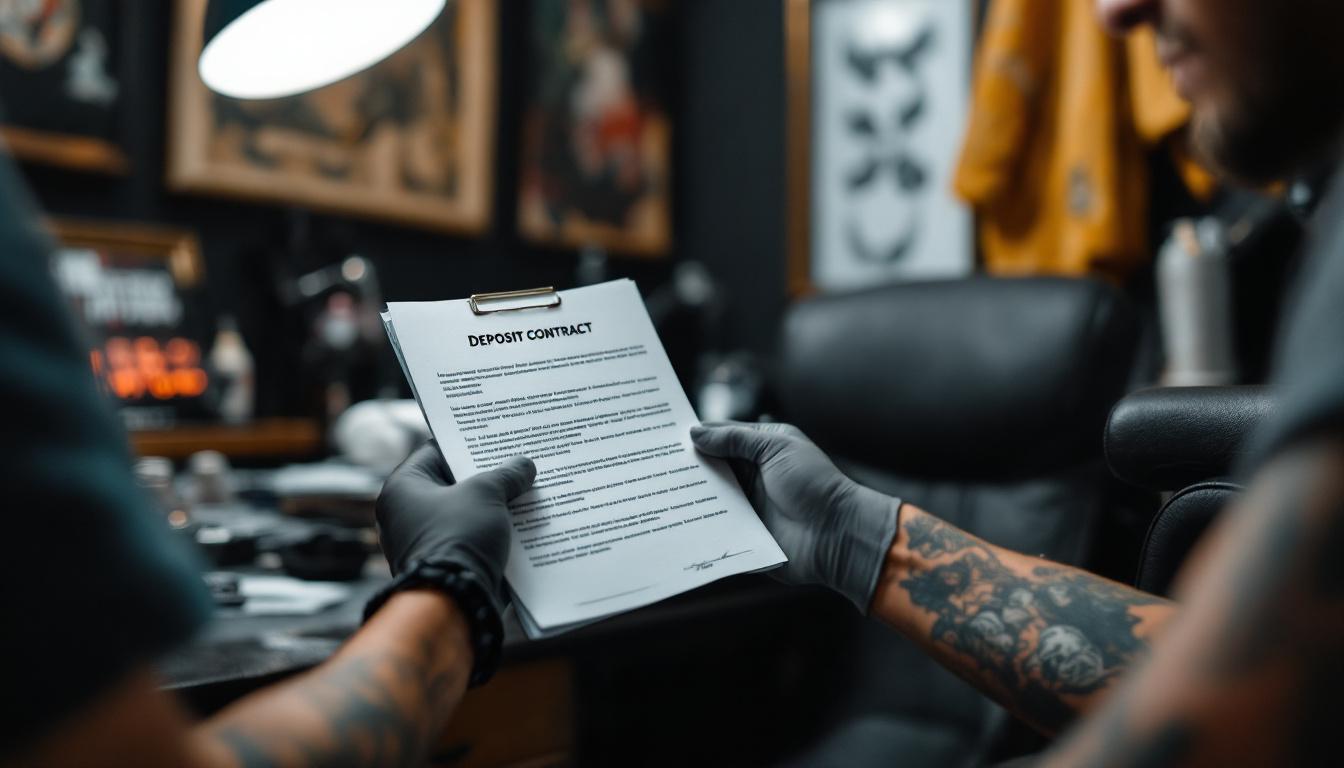
Tell the client the deposit amount, what it covers, and what happens if they cancel. Do it before they book, not after. A flat fee or a percentage both work. What matters is that there’s no surprise.
Say it plainly: “The deposit is $100. It comes off your final price. Cancel with 48 hours notice and we’ll move it to a new date. Cancel later than that and the deposit’s gone.” That’s the whole conversation. Put it in writing so you can point back to it later.
Not sure where to land on the amount? Here’s a breakdown of how much to charge for a tattoo deposit. And if you want a ready-made deposit and cancellation policy to copy from, start there instead of writing one from scratch.
Use a payment method that leaves a trail
Card processors, PayPal, Venmo, Cash App. Any of them work, as long as there’s a record. The record is the point. When a client disputes the charge three weeks later, a screenshot and a timestamp are what win the argument.
Avoid loose cash deposits unless you’re handing someone a receipt in person. Cash with no paper is the easiest deposit to argue about and the hardest to defend.
The cleanest setup ties the deposit to the booking itself, so the payment and the appointment live in the same place. No chasing a Venmo note to figure out which session it covered.
Keep records you can actually find
Track every deposit. Who paid, how much, which appointment, what date. A spreadsheet works if you’re disciplined. Booking software works better because it does the logging for you and you can’t forget.
You’ll want those records for two reasons. One, disputes. Two, you’ll start to notice patterns, like which days get cancelled on most, and you can adjust how you book around them.
When clients try to wiggle out
Even with a tight system, someone will eventually want their deposit back after they blew the appointment. Here’s how to hold the line without turning into the bad guy.
Have a cancellation policy and stick to it
Most artists ask for 24 to 48 hours notice. Cancel inside the window, keep the deposit. Cancel outside it, move the appointment and roll the deposit forward. Decide your rule, write it down, and say it the same way every time.
The policy only works if it’s there before the booking, not invented after the no-show. Put it in the booking agreement and repeat it in the reminder text. When a client knows the rule going in, they argue a lot less coming out.
Reach out before you write someone off
Running late isn’t the same as ghosting. If a client misses the start time, text them. People get stuck in traffic, mix up the date, have a kid get sick. A quick message sorts the honest mistakes from the actual no-shows.
But if it’s silence, no call, no text, no reply to your reminder, the deposit is yours. That’s what it was for. You held the slot, they didn’t show, you don’t owe a refund for that.
Offer a reschedule, once
Goodwill keeps clients coming back. Let someone move their deposit to a new date if they give you fair notice. One free reschedule is reasonable. After that, a fresh deposit is fair, because every move costs you a slot you could’ve sold.
That balance, flexible once, firm after, is what keeps you from looking rigid while still protecting your calendar.
A couple of things that make deposits work harder
Scale the deposit to the work. A tiny script piece doesn’t need the same hold as a full back session that eats your whole day. Bigger commitment, bigger deposit. Clients get it.
And talk people through the process before they book, especially first-timers. When someone knows how pricing works, how long it’ll take, and why the deposit exists, they show up calmer and cancel less. Half of no-shows are really just nerves nobody addressed.
Run your deposits inside your booking, not on sticky notes
Apprentice keeps the deposit, the policy, and the appointment in one spot, so the payment is tied to the booking and the cancellation rule is right there when a client tries to bend it. No more cross-referencing Venmo against a calendar to figure out who actually paid.
Start your free trial and take your next deposit without the guesswork.

Jason Howie
Founder & CEO
Jason Howie is the founder of Apprentice, passionate about empowering tattoo artists and shops with better tools to manage their business and serve their clients.