The early 2000s were a strange and beautiful time for tattooing. Flip phones, low-rise jeans, and frosted tips ruled the culture. And tattoos? They went from underground to absolutely everywhere. If you were tattooing or getting tattooed between 2000 and 2008, you remember the vibe. Tribal armbands. Kanji characters. Lower back pieces that launched a thousand jokes. But here’s the thing: those designs weren’t random. They were products of a specific cultural moment, driven by reality TV, celebrity worship, and a generation figuring out self-expression through ink. The tattoo trends of the Y2K era shaped the industry we work in today. They pushed tattooing into the mainstream, built the client base we now serve, and set the stage for a market that’s projected to reach USD 6.3 billion by 2033. Love them or cringe at them, those early 2000s tattoo trends deserve a real look back. They tell us where we’ve been, where we’re going, and why nostalgia keeps cycling back into the chair.
The Cultural Shift and Rise of Mainstream Tattooing
Before the 2000s, tattoos still carried a whiff of rebellion. Bikers, punk rockers, and military folks were the primary clientele. Shops were often tucked into strip malls or side streets, and the general public kept its distance. That changed fast.
The turn of the millennium brought a perfect storm. Pop culture embraced body art. The internet made tattoo imagery accessible to anyone with a dial-up connection. And a new wave of tattoo media turned artists into household names. Suddenly, your neighbor, your coworker, and your mom all wanted ink. It was just one chapter in a much longer story, and you can trace how tattoo styles evolved across every decade to see how the Y2K era fits in. The US tattoo industry now generates an annual revenue of $1.6 billion, and the seeds of that growth were planted squarely in the Y2K era.
The Influence of Reality TV: Miami Ink and Beyond
Miami Ink debuted on TLC in 2005, and it changed everything. The show didn’t just feature tattoos. It told stories. Clients walked in with emotional baggage and walked out with meaningful ink. Viewers ate it up.
For the first time, millions of non-tattooed people saw the inside of a shop. They watched consultations, saw machines in action, and heard the buzz. It demystified the process. Shows like LA Ink and Inked followed, each one pulling more people through shop doors.
But here’s the reality check. Those shows also created unrealistic expectations. Clients started walking in expecting a deep emotional experience and a custom masterpiece, all in one sitting. The TV edit didn’t show the hours of drawing, the back-and-forth on design, or the healing process. Artists suddenly had to manage not just skin, but expectations shaped by entertainment.
Pop Culture Icons and the Celebrity Effect
Celebrities drove Y2K ink harder than any ad campaign could. Pamela Anderson’s barbed wire armband became iconic. Angelina Jolie’s Khmer script and coordinates turned text tattoos into a movement. David Beckham’s sleeves made full arm coverage aspirational for a whole generation of men.
The pattern was simple. A celebrity got tattooed. Tabloids ran photos. Clients brought those photos to shops. Artists tattooed the same design dozens of times. It was the original “Pinterest reference” before Pinterest existed.
This era also gave rise to the “tattoo as accessory” mindset. Ink wasn’t just about identity or rebellion anymore. It was fashion. That shift brought massive volume into shops but also a wave of impulse decisions that would later fuel the tattoo removal industry.
Defining Motifs of the Y2K Aesthetic
Every era has its signature designs. The early 2000s had more than most. These motifs were everywhere: on arms, ankles, lower backs, and magazine covers. They defined a generation’s visual language.
Tribal Patterns and the Neo-Tribal Movement
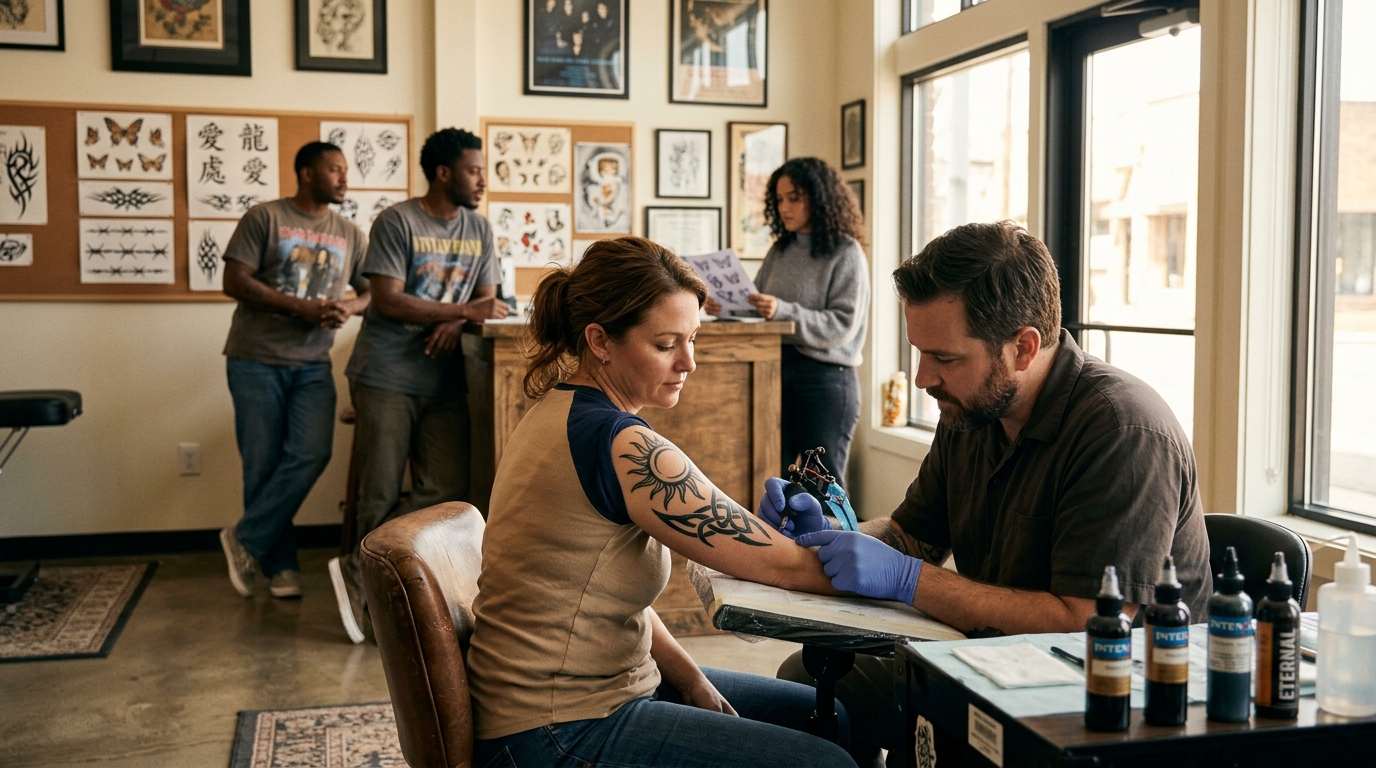
Tribal tattoos dominated the late ’90s and carried hard into the 2000s. Bold black patterns, usually on upper arms and shoulders, became the default choice for men getting their first tattoo. The designs borrowed heavily from Polynesian, Maori, and Borneo traditions, though most clients had zero connection to those cultures.
The neo-tribal movement tried to push things forward. Artists experimented with flowing shapes, symmetrical compositions, and custom layouts. Some of that work was genuinely impressive. But the bulk of tribal tattoos from this era were flash-sheet copies, cranked out in under an hour.
The cultural conversation around tribal tattoos has shifted significantly. Questions about appropriation and respect for indigenous art forms are now part of the consultation process. That’s a good thing. It means we’re thinking more carefully about where designs come from and what they mean.
Lower Back Tattoos and Cultural Stigma
No tattoo trend from the early 2000s carries more baggage than the lower back piece. Butterflies, tribal swirls, floral vines: these designs were wildly popular among women from roughly 2000 to 2006. The placement made sense. It was easy to show off with low-rise jeans and equally easy to hide in professional settings.
Then the jokes started. The derogatory nickname caught on, and an entire category of tattoo placement became a punchline. Women who’d gotten these pieces often felt embarrassed, not because the tattoos were bad, but because culture decided to mock them.
Here’s what we should actually say about lower back tattoos: they were a legitimate trend that brought thousands of women into shops for the first time. Many of those women became lifelong tattoo clients. The stigma says more about society’s attitude toward women’s bodies than it does about the art itself.
Barbed Wire, Butterflies, and Nautical Stars
Beyond tribal and lower back pieces, the Y2K era had a deep bench of popular motifs. Barbed wire armbands were everywhere, thanks largely to Pamela Anderson’s Baywatch fame. Butterflies were the go-to for women wanting something feminine and colorful. Nautical stars, often in black and gray or red and black, became a staple on wrists, elbows, and shoulders.
These designs shared a common trait: they were quick, affordable, and easy to execute. A solid barbed wire armband took maybe 45 minutes. A nautical star was a 20-minute piece. For shops, this meant high volume and fast turnover. For clients, it meant accessible entry points into tattoo culture.
Stars and butterflies are actually making a comeback now, reimagined with finer lines and more sophisticated shading. The bones of those Y2K designs were solid. They just needed better execution and a fresh eye.
The Spiritual and Symbolic Boom
The early 2000s also saw a massive surge in tattoos meant to carry spiritual or cultural meaning. People wanted ink that said something about their beliefs, their heritage, or their inner life. The intention was good. The execution? Often questionable.
Kanji and Asian Script Misinterpretations
Chinese and Japanese characters were arguably the single most popular tattoo category of the early 2000s. Clients wanted words like “strength,” “courage,” “love,” or “warrior” inked in Kanji or Chinese script. The problem was accuracy.
Most clients couldn’t read the characters they were getting tattooed. Neither could most artists. Flash sheets with supposed translations circulated through shops, and many of them were flat-out wrong. Stories of people discovering their “inner peace” tattoo actually said “chicken soup” became internet legend, but they weren’t all urban myths. It happened constantly.
This trend taught the industry a painful lesson about due diligence. If you’re tattooing a language you don’t speak, verify the translation with a native speaker. Period. It’s permanent. It’s personal. People want it to be perfect.
Celtic Knots and Heritage Art
Celtic knotwork was the other major player in the spiritual tattoo boom. Irish, Scottish, and broadly “Celtic” designs showed up on arms, chests, and calves across the English-speaking world. Crosses with knotwork borders were especially common.
Unlike Kanji tattoos, Celtic pieces generally aged well both culturally and physically. The interlocking patterns held up in skin over time, and the connection to heritage gave them staying power. Many clients who got Celtic work in the early 2000s still wear it proudly.
The craft challenge with Celtic knots was precision. Those interlocking lines had to be perfect, or the whole design fell apart visually. It was a good training ground for artists developing their line work, and it pushed many tattooers toward the technical discipline that defines quality work today.
Technical Trends: Color Palettes and Placement
Y2K-era tattooing wasn’t just about what people got. It was about how it was done and where it went. The technical side of the industry was evolving fast, driven by better equipment, new ink formulations, and a client base hungry for variety.
The Popularity of Fine Line and New School Styles
The early 2000s saw two technical styles rise to prominence. Fine line work, influenced by the single-needle tradition of Chicano tattooing, started gaining mainstream appeal. Delicate script, small symbols, and minimalist designs became popular among clients who wanted something subtle.
On the opposite end, New School exploded. Think exaggerated proportions, vivid colors, cartoon-like imagery, and heavy outlines. New School was loud, fun, and unapologetically bold. Artists like Jesse Smith pushed the style into gallery-worthy territory.
These two styles represented the expanding range of what tattooing could be. You could get a tiny fine-line heart on your wrist or a full-color cartoon sleeve. The industry was stretching in every direction, and clients loved having options.
Daring Placements: Ankles, Wrists, and Necks
Placement trends in the early 2000s reflected the era’s push toward visibility. Ankle tattoos were huge, especially small dolphins, stars, and flowers. Wrist tattoos gained traction as the decade progressed. And neck tattoos, once reserved for the heavily tattooed, started creeping into the mainstream.
The wrist, in particular, became prime real estate. Small text, symbols, and minimalist designs turned the inner wrist into a canvas that was both personal and public. This placement trend has only accelerated since then, paving the way for the tattoo trends of 2018 and 2019 that followed, when fine-line precision really took over.
Neck and hand tattoos were still controversial in the early 2000s. Most reputable artists wouldn’t tattoo those areas unless a client was already heavily covered. That gatekeeping has loosened considerably, but the conversation about “job stoppers” still happens in shops every week.
The Modern Resurgence and Nostalgia Cycle
Fashion is cyclical. Music is cyclical. And tattoo trends? Absolutely cyclical. The designs that defined the Y2K era are coming back around, filtered through a new generation’s aesthetic sensibility.
Gen Z’s Reimagining of Y2K Ink
Millennials and Gen Z now make up 59% of the tattoo clientele, and the younger half of that group is obsessed with Y2K aesthetics. But they’re not getting exact replicas. They’re remixing.
Tribal patterns are being reworked into Cyber Sigilism, a style that mixes “old-fashioned magic with tech vibes” through geometric patterns and circuit-board-inspired designs. Butterflies are back, but rendered in fine line with watercolor accents. Even lower back tattoos are making a quiet return, reclaimed with confidence rather than irony.
Gen Z approaches ink differently than millennials did. They’re less interested in deep backstories and more focused on vibes, visuals, and flexibility. Tattoos are becoming emotional diaries written in ink, capturing personal experiences and pop culture obsessions without needing a ten-minute explanation. For artists, this means faster consultations but higher expectations for visual execution.
If you’re fielding a surge of nostalgia-driven requests, tools like Apprentice can help you manage the influx. Its AI tools assist with design concept generation and stencil cleanup, so you can spend more time perfecting those reimagined Y2K pieces and less time on admin.
From Regret to Retro: The Evolution of Tattoo Removal
The early 2000s tattoo boom inevitably created an early 2010s removal boom. Laser removal technology improved dramatically, and clinics popped up in every major city. Tribal armbands, misspelled Kanji, and ex-partner names were the most common removal requests.
But something interesting happened around 2020. The removal trend slowed for certain Y2K designs. Nostalgia imagery that was once considered “trashy” started having a chic, modern feel. People who’d been embarrassed by their butterfly ankle tattoo suddenly felt cool again.
This shift matters for working artists. Cover-up requests for Y2K tattoos are declining in some markets. Rework requests are rising. Clients want their old tribal freshened up, not buried. They want their nautical star sharpened, not lasered off. That’s a different conversation and a different skill set.
For shops handling a mix of new work, reworks, and cover-ups, keeping client histories organized is essential. Apprentice stores full client records, appointment timelines, and design references in one place, so you know exactly what a returning client got ten years ago and what they want now.
The Bottom Line: Y2K Ink Shaped the Industry You Work In
Those early 2000s tattoo trends weren’t just fads. They were the engine that drove tattooing from subculture to mainstream culture. They filled shops, trained a generation of artists, and built the client base that supports a market now worth over $4 billion globally.
The nostalgia cycle means Y2K designs are relevant again. Your younger clients are asking for them. Your older clients are coming back to rework them. Either way, understanding where these trends came from makes you a better artist and a better businessperson.
Whether you’re fielding walk-ins for reimagined tribal or booking full sessions for Cyber Sigilism sleeves, the right tools keep your shop running smoothly. If you’re tired of chasing deposits and managing bookings by hand, get started with Apprentice: it’s free for 14 days and takes about five minutes to set up. Spend your time on the art. Let the software handle the rest.

Jason Howie
Founder & CEO
Jason Howie is the founder of Apprentice, passionate about empowering tattoo artists and shops with better tools to manage their business and serve their clients.