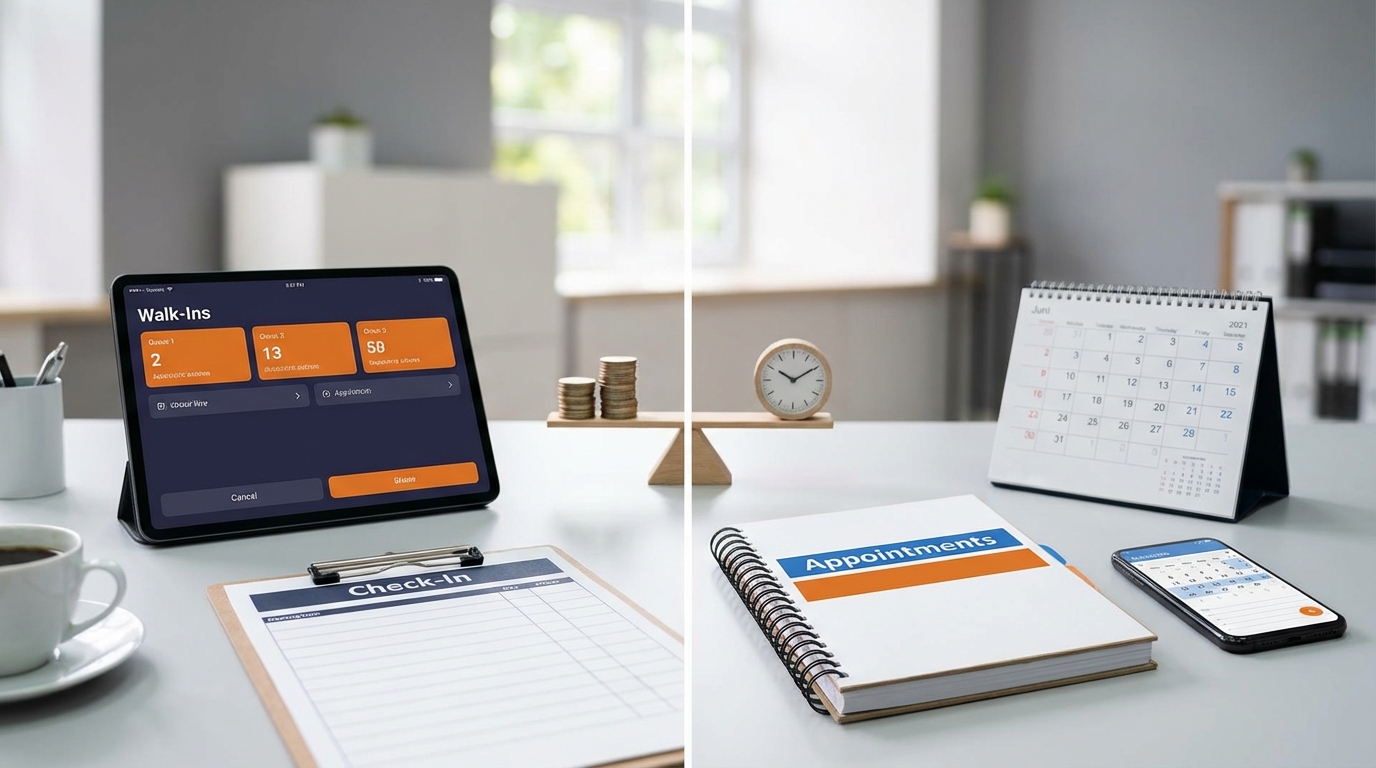
Your front door swings open. A couple walks in wanting matching tattoos. At the same time, your 2 PM texts that they’re running twenty minutes late. You know this scene.
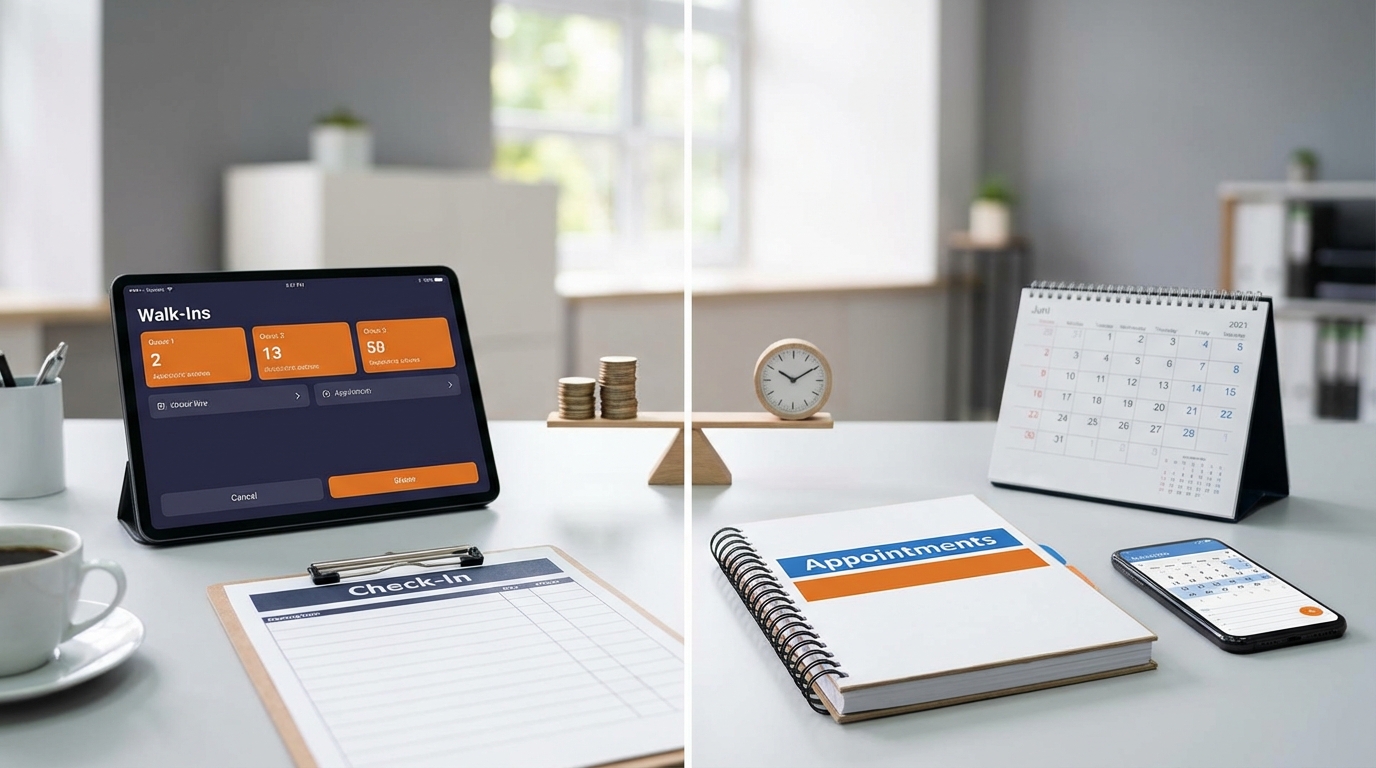
Most shops handle it badly. They pick a side. Walk-ins only, or booked only. Both choices leave money behind. The shops that make the most run both at once, on purpose, with a system. That’s the whole argument of this post.
What each model actually is
A walk-in is someone who comes in, looks at flash, and gets tattooed that day. No deposit, no calendar, no plan beyond “I want this.” It’s impulse meeting an open chair.
An appointment is the opposite. The client booked weeks or months out, put down a deposit, and showed up knowing exactly what they want. They researched the artist. They’re ready.
Most shops sit somewhere between the two extremes, and that’s correct. A beach-town tourist shop runs heavy on walk-ins. A custom portrait artist books solid for months. Your mix should match where you are and who works for you, not some ideal you read about.
Where the money actually comes from
Walk-ins tend to be smaller pieces. Flash, script, little symbols. Lower ticket per client. But volume covers it. Ten walk-ins on a busy Saturday is ten tickets your appointment-only competitor down the street never saw.
Appointments bill higher per session. Custom work commands a premium, and a multi-hour sleeve session adds up to real money from one person. The cost is the gap a no-show leaves in your day, which is why deposits matter so much. More on how much to charge for a deposit if you haven’t set yours.
The shops that get this right track their own numbers instead of guessing. Walk-in count by day. Average ticket by type. Appointment fill rate. Whether you price walk-ins hourly or flat rate changes those numbers too, so it belongs in the same spreadsheet. Once you can see payments broken out by artist and by client, the patterns show up. Maybe Saturdays are pure walk-in gold and Tuesdays should be all booked work. You can’t feel that. You have to see it.
The part people forget: the long game
Direct revenue is only half the picture. The $100 flash piece you do today might be the first of a $2,000 backpiece next year. The walk-in who becomes a regular is worth far more than the ticket says.
Appointments build the relationship a different way. The consultation, the back-and-forth on the design, the collaboration. That investment is why those clients send you their friends.
This is where keeping client notes and history in one place earns its keep. You can see which walk-ins came back. You can spot your highest-value repeat clients and treat them like it. Treating every walk-in as a one-time transaction is the most common way shops leave growth on the table.
Running a hybrid schedule
A hybrid system isn’t complicated. You give certain hours or certain artists to walk-ins, and you protect your appointment blocks. The trick is doing it on purpose instead of reacting all day.
Start with your own traffic. When do walk-ins actually come in? For most shops it’s weekends, evenings, and during local events. Map it before you build anything.
A setup that works for a lot of shops looks like this:
- Mornings: appointments only. Artists prep and execute planned work without interruption.
- Early afternoon: mixed. One artist takes walk-ins while the rest stay on booked work.
- Evenings, especially Friday and Saturday: heavier walk-in staffing.
- A dedicated walk-in artist during peak hours, someone who’s fast and comfortable with flash and small pieces.
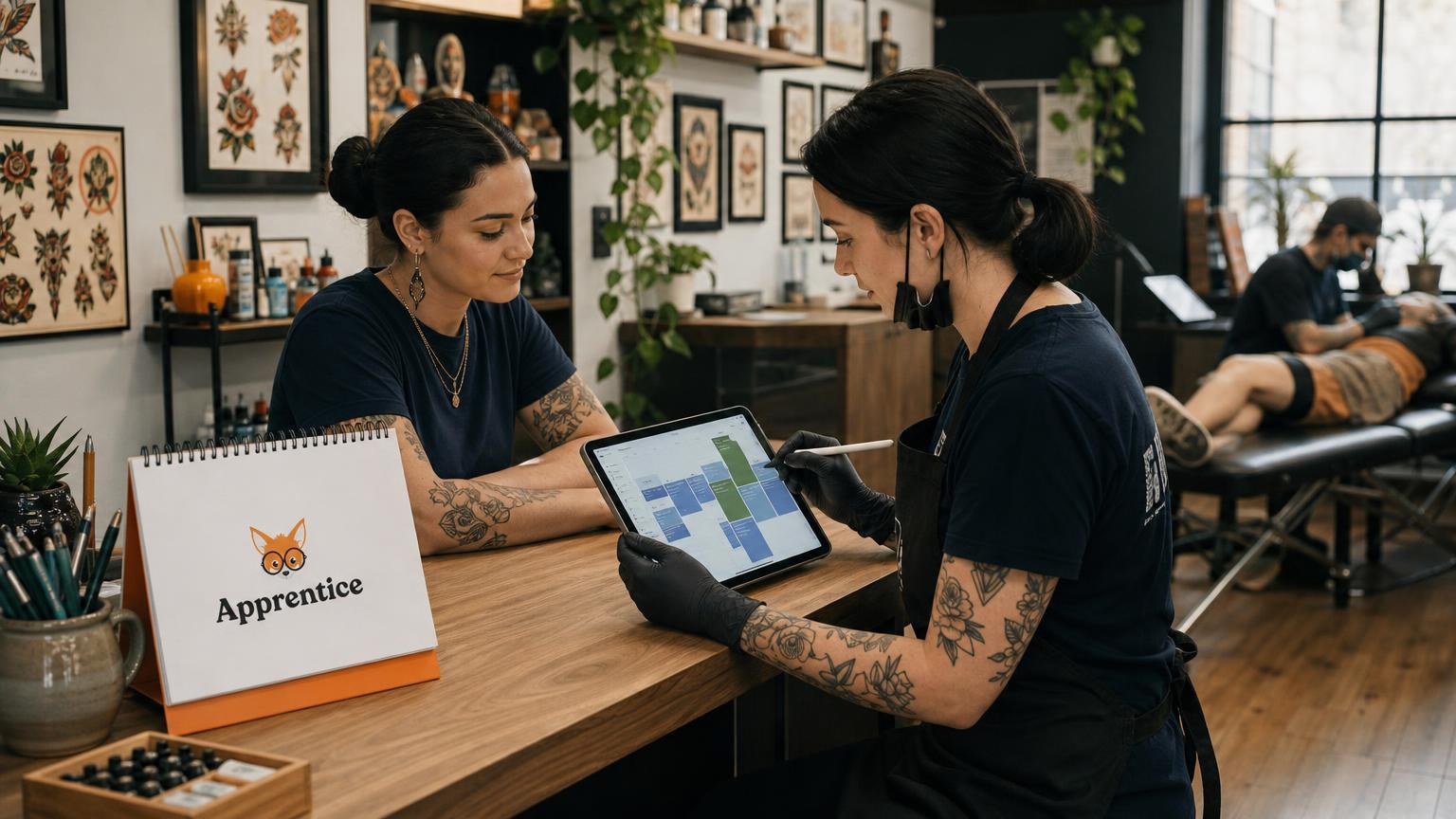
Be honest about capacity. How many stations, how many artists on shift, what’s your real throughput. Overpromising walk-ins you can’t deliver is how you wreck a Friday. A calendar that shows every artist’s schedule in one view stops that. See a gap in Sarah’s afternoon? That’s open walk-in capacity. Marcus booked solid? Don’t promise him out.
Let the waitlist do the babysitting
Paper sign-up sheets get lost. Verbal wait estimates turn out wrong. Frustrated people leave. You’ve watched it happen on a busy day.
A digital waitlist fixes the worst of it. Clients add themselves, see their spot in line, and get a text when their turn is close. Walk-in list management built into your booking flow means nobody’s chained to the front desk reading names off a clipboard.
The piece that earns the most: turning a waitlist entry into a future booking. The wait’s too long today, so instead of losing that person, you book them. “We’re slammed, but I can get you in Tuesday at 3 with a $50 deposit.” They leave with a date. You kept revenue that was about to walk out.
Automated appointment reminders cut no-shows, deposits cut them further, and deposit reminders keep your cash flow steady. All of it is less time managing logistics and more time tattooing.
What this looks like in a real shop
Take a downtown shop in a nightlife district. Friday nights were a mess, walk-ins pouring in while booked clients sat there annoyed. The fix was physical: walk-in stations up front, appointment work in the back, clear signage about wait times. Splitting the space cut the feeling of chaos and stopped them from turning paying walk-ins away.
A suburban strip-mall studio had the opposite problem. Walk-in traffic was too thin to justify staffing for it. So they went appointment-heavy and kept one artist on walk-ins for weekends only. Anyone who walked in on a weekday got offered a same-week appointment instead of being sent away.
Across very different shops, the same handful of habits hold up:
- Track everything. Walk-in counts, average tickets, peak hours. Data beats gut.
- Staff to your patterns, not your hopes. Last month predicts this month.
- Set clear expectations with signage, your website, and how your team quotes waits.
- Train everyone to explain the waitlist and the booking options the same way.
- Review monthly. What worked, what didn’t, adjust the mix.
For peak hours specifically, build buffer time between appointments. A 15 to 30 minute gap absorbs the client who runs late and quietly opens a walk-in window. And remember staffing isn’t only the calendar. Walk-in-heavy shops need artists who think fast and handle a range of flash. Appointment shops want people who shine in consultations and custom design. Hire for the model you actually run.
The shops that win treat this like an experiment that never really ends. They try a ratio, measure it, change it. There’s no permanent answer, just a better one than last quarter.
FAQ
How do I know if my shop should focus more on walk-ins or appointments?
Look at your location, your clientele, and what your artists are good at. Tourist and nightlife areas favor walk-ins. Residential neighborhoods with established clients lean booked. Track your current mix and revenue per type for 90 days, then let the data decide.
What’s a reasonable wait time to quote walk-in customers?
Be honest and a little conservative. If you think 45 minutes, say an hour. Underpromise, overdeliver. Most walk-ins will accept under 90 minutes for a small piece. Past that, offer to book them instead.
How do I handle walk-ins when all my artists are booked solid?
This is exactly what the waitlist and booking conversion are for. Add them with a realistic wait. If that’s more than they’ll sit through, pivot: “I can get you in Tuesday at 3 with a $50 deposit.” You’ve kept future revenue instead of losing the person.
Should I charge differently for walk-ins versus appointments?
Some shops add a small premium for the convenience. Some keep pricing identical to avoid confusion at the counter. Both work. Test it against your own market and watch what people accept.
Want every walk-in, waitlist, and deposit running in one place instead of three? Start with Apprentice free and see your whole floor on one calendar.

Jason Howie
Founder & CEO
Jason Howie is the founder of Apprentice, passionate about empowering tattoo artists and shops with better tools to manage their business and serve their clients.