Pricing is the part of the job nobody teaches you. You learn to tattoo for years, then someone walks in, points at a reference, and asks “how much?” and you’re guessing. The way you answer that question changes how much you make and whether the client trusts you before the needle ever touches skin.
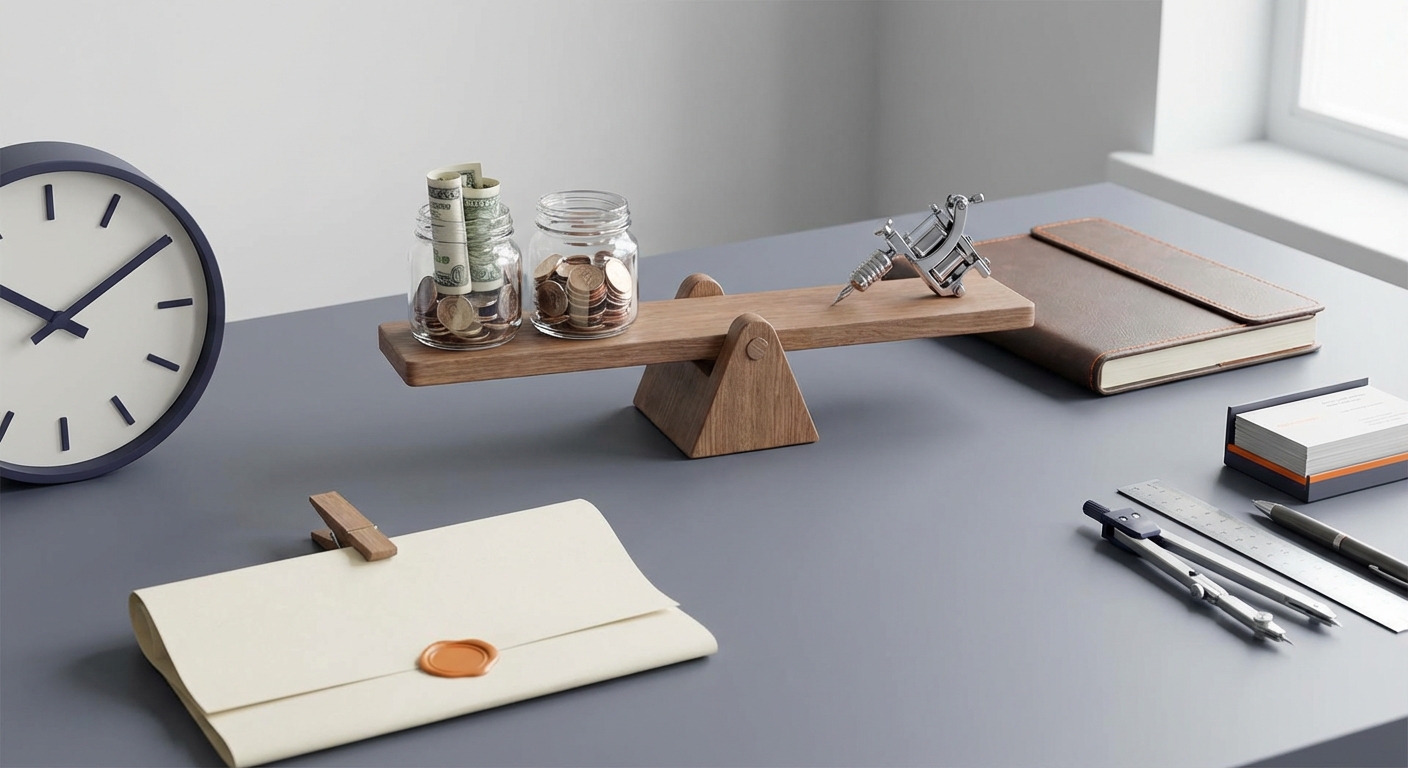
There are two real ways to charge. By the hour, or by the piece. Most artists end up doing both. Here’s how to know which one fits which job.
Charging by the hour
Hourly is the honest answer when you don’t know how long something will take. Big back pieces, sleeves, anything custom that’s going to evolve while you work. You can’t promise a session length on a half-sketched idea, and you shouldn’t try.
Rates in the US usually run $100 to $300 an hour. Artists with a waitlist and a recognizable style charge $500 or more, and they get it. The number reflects years of practice, not the cost of ink.
The clock usually starts when the needle hits skin. Whether you bill for consultation and setup is your call, but pick a policy and say it out loud before the appointment. The surprises that wreck a client relationship are almost always the ones you could have mentioned up front.
A few things to settle before you quote hourly:
- Whether you round time to the quarter hour or the hour
- Whether breaks pause the clock
- That multi-session pieces stay at the same rate
- That the deposit comes off the final total
What drives your rate up is no mystery. Rent in Manhattan costs more than rent in rural Ohio, so the artist’s hour does too. Experience matters. A twenty-year veteran charges more than someone six months out of an apprenticeship, and that gap is fair. Specialty work, photorealism, fine-line geometric stuff, commands a premium because the artist spent thousands of hours getting there.
Speed counts in a way clients miss. A fast artist at $200 an hour can cost less than a slow one at $150. Cheaper per hour doesn’t mean cheaper at the end.
The upside of hourly is that it’s transparent. The client pays for the work that happened, sees progress by the hour, and you’re never tempted to rush a detail to protect your margin. The downside is the anxiety. Somebody who budgeted for four hours and sat for six walks out rattled, even if the tattoo is perfect.
You fix most of that by quoting a range before you start. Give the high end and tell them to budget for it. Coming in under is a good day. Going over is the thing they’ll remember.
Charging a flat rate
Flat rate flips the risk onto you. You name a price, it doesn’t move, and you eat the difference if the piece runs long. That’s why a flat quote often looks higher than the hourly math, you’re charging for the gamble.
It works best when you already know how long the work takes because you’ve done it a hundred times. Flash, simple script, standard symbols, small defined pieces. The setup and supplies cost the same whether a tiny heart takes fifteen minutes or forty-five, which is why shops keep a minimum, usually somewhere between $50 and $150.
Where flat rate shows up most:
- Flash sheets with prices printed right on them
- Small tattoos under a set size
- Matching pieces for couples or groups
- Simple text and script
- Touch-ups and small additions
- Friday the 13th specials and shop promos
Cover-ups can work flat too, once you’re experienced enough to size up the existing tattoo and quote it accurately. And convention and guest-spot work almost demands flat pricing. When there’s a line at your booth, nobody has time to watch a clock.
The win for the client is certainty. They know the number weeks out, save the exact amount, and sit down without doing math in their head. The risk is on you. If their skin doesn’t take ink and the piece drags, you’re losing money by slowing down, and that’s a quiet pressure to speed up that you have to manage honestly.
One thing worth knowing about how people read prices. A $400 flat rate and three hours at $133 are the same money, but they don’t feel the same. The flat number lands cleaner. Some clients will trust it more for exactly that reason.
Picking one for the job in front of you
There’s no winner here. The right model depends on the piece and the person.
Small and defined leans flat. Big and custom leans hourly. A nervous first-timer usually wants the certainty of a fixed price. A regular who trusts you is fine watching the hours add up.
Ask yourself a few quick questions before you quote:
- How locked-in is the design?
- How much room does this client have in their budget?
- How big and how tricky is the placement?
- Do you already have a relationship here?
- How does this kind of skin usually take ink?
Plenty of artists just offer both and let the client pick. That confidence reads well. It tells them you’ve done the math enough times to stand behind either number.
Talk about money before the needle
Nobody should feel weird bringing up price, and that goes for you too. The pros have this conversation every day, and they’d rather explain a quote than deal with a sour client at checkout.
Cover this before the appointment:
- Hourly or flat for this kind of work
- The rate, or the estimated flat number
- Whether the deposit applies to the total
- What happens if it runs long
- Whether touch-ups are included
- When payment is due and what you accept
- Your cancellation and reschedule policy
Give a range when you can. Decent reference images and a placement are enough for an experienced artist to land close.
Getting paid cleanly
Most shops take a deposit to book, usually $50 to a few hundred, applied to the balance. Cash still rules in a lot of places, though plenty take cards now. Whatever you do, say so ahead of time so nobody’s hunting for an ATM after a long sit.
This is the part where good software earns its keep. Apprentice lets clients see their balance, pay a deposit securely, and pull up their appointment details without texting you for them. You spend less time chasing money and more time tattooing. If you’re still tracking deposits in a notebook, start a free account and let the booking flow handle it.
A few common questions
How do I know my hourly rate is fair?
Check what artists with your experience and style charge in your actual market. Cities run higher than small towns. A number that looks high might be normal for your skill and location.
Should clients tip on top of the price?
Tipping is customary, usually 15 to 20 percent of the total, more for standout work. Cash is preferred. It’s the client’s call, but it’s worth knowing the norm.
Can clients negotiate?
Generally no. The price reflects your skill, time, and overhead. If it’s out of budget, a smaller piece is the honest answer, not a discount.
What if a flat-rate piece runs long?
Your policy, your call. Most artists honor the quote no matter the time. If you’ll charge more for a real scope change, say that before you start, not after.
Price the work, not the clock, and match the method to the job. Pick an artist whose work you love first and sort the pricing together. A great tattoo at any price beats a cheap one you settled for.

Jason Howie
Founder & CEO
Jason Howie is the founder of Apprentice, passionate about empowering tattoo artists and shops with better tools to manage their business and serve their clients.