Tattoo History 17 min read

Russian Prison Tattoos: Every Mark Tells a Story

Discover the fascinating history of Russian prison tattoos, their meanings, and cultural significance.

Jason Howie
Jason Howie

Founder & CEO

The Fascinating History of Russian Prison Tattoos

The Fascinating History of Russian Prison Tattoos

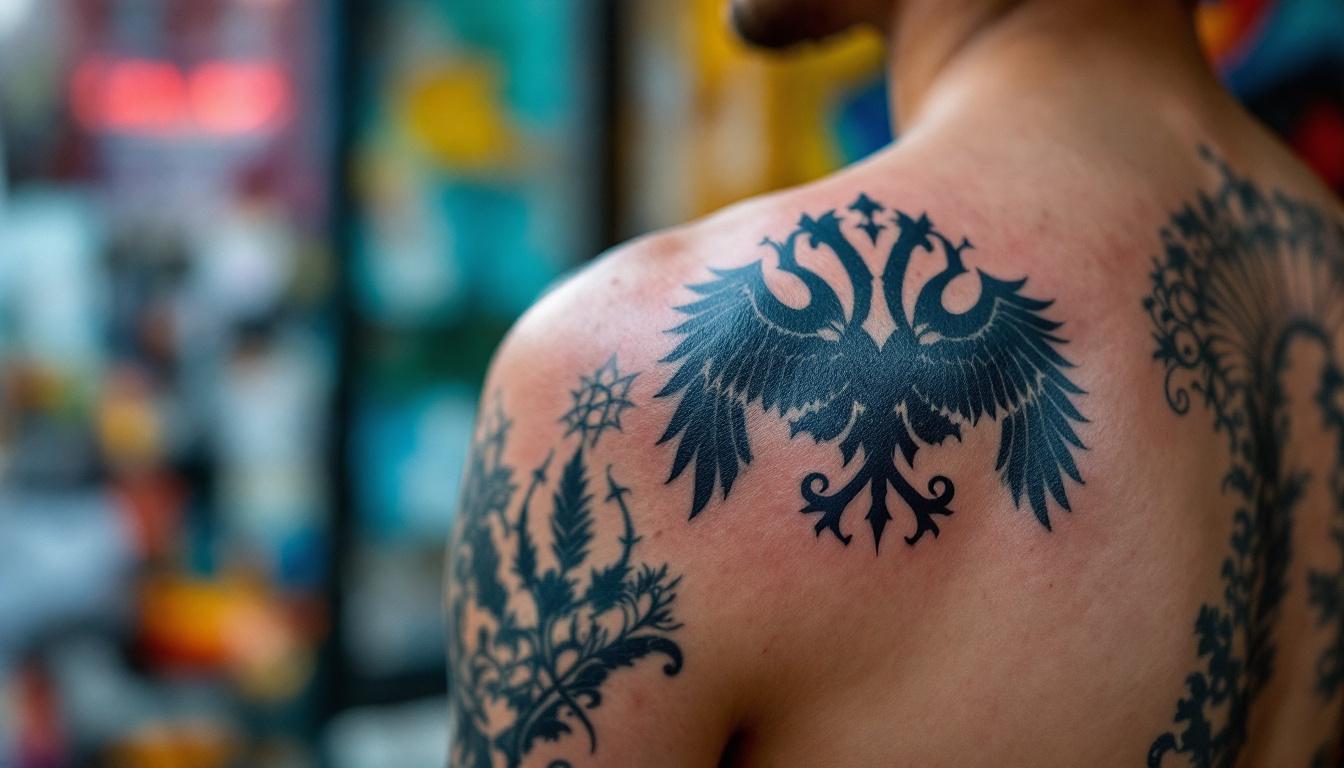
A gritty, raw symbol of rebellion and survival, Russian prison tattoos have long held a mirror to a brutal world behind closed doors. In some circles, these body marks aren’t just art – they’re living records of a criminal’s past, carrying tales of triumph, betrayal, and hard-fought hierarchies. Even a casual glance can unravel layers of untold stories, from mid-1960s mark-making to modern narratives of organized rebellion. Readers interested in the roots of this phenomenon might check out a detailed guide from Confidential - Sensitive Data Law Enforcement Use Only.

The Dark Origins and Cultural Roots

It starts with survival. Far beyond a simple act of marking the skin, prison tattoos in Russia began as symbols, a language spoken in silence among inmates. They captured the essence of life in a system where freedom was a luxury. Back when the mid-1960s to the 1980s era was in full swing, reports have noted that roughly 28 to 30 million Russian inmates were tattooed according to law enforcement sources. These markings weren’t random doodles; they were carefully planned, meticulously executed signals that told a story only those within the confines of prison walls could fully understand.

The tattoos represented everything from a thief’s complete service record to specific instructions about capabilities and past mistakes. This wasn’t mere self-expression-it was a coded history of one’s journey through one of society’s most challenging institutions. In the world of Russian prisons, a tattoo could be both a badge of honor and a warning, simultaneously validating one’s reputation while cautioning others about the person’s past deeds.

A Symbolic Code: Meanings Behind the Ink

Within these intricate designs, every line carved into the skin signified a deeper meaning. The art wasn’t arbitrary. Each tattoo was a carefully constructed piece of a larger narrative. Experts in the field have often explained that these tattoos spell out lives of crime and establish the hierarchy of inmates. For instance, a renowned insight from a group known as Gate City Tattoo details how these marks serve as an indelible record of both achievement and failure.

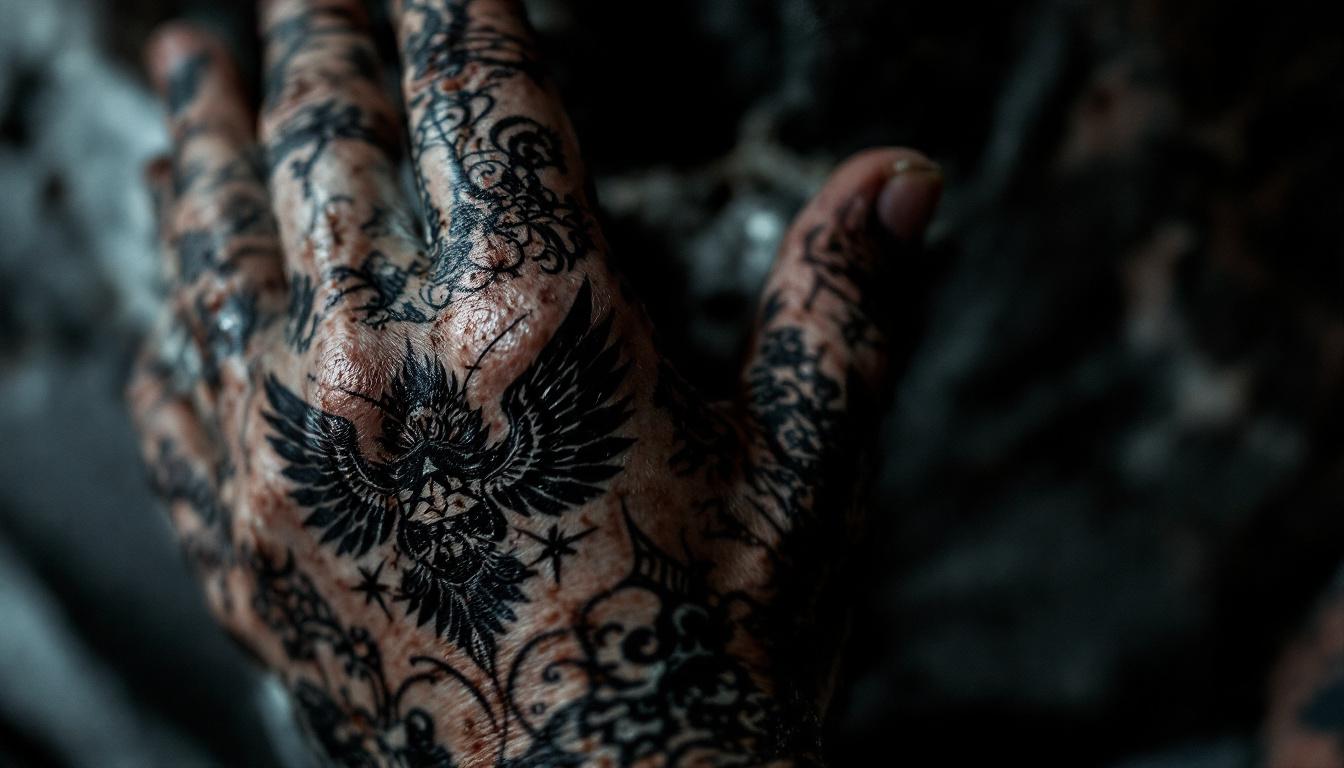
Every curve, symbol, or image often denoted a rank, territory, or simply a history of misfortune survived. A tiny skull might be a nod to a hard lesson learned, whereas a sprawling, complex artwork might indicate years spent deep in the criminal underworld. The subtle differences between these designs made all the difference in a world where a slight misinterpretation could lead to deadly consequences.

The language of tattoos, in this case, isn’t just art-it’s a complete criminal lexicon. No two markings were exactly alike, and even slight variations conveyed an abundance of meaning that could be understood only by those familiar with the system within the confines of the prison environment.

The Role of Rebellion and Identity Building

Beyond their surface appearance, these body modifications served as a method of rebellion against the oppressive forces of the prison system. In a place where the inmate was often reduced to a number, tattoos were a way to narrate one’s own story. For many, it was about creating a personal identity in an environment designed to strip it away.

In a fascinating twist, these tattoos have even been found to play a role among Russian immigrants in Israeli prisons. As detailed in a SpringerLink study, prison tattoos among these groups have become a visible marker of their criminal subculture. Here, the tattoos are not a token of past transgressions alone, but an ongoing dialogue-a silent yet powerful means of expressing who they are and where they come from.

The act of tattooing itself can be seen as a final confirmation of one’s loyalty to the subculture, an inward identification with a life ruled by a unique code of behavior. It carries the tension of having been in a space where every gesture was a statement, and every mark a piece of a larger puzzle.

Reliving the Past: Historical Significance and Fascination

There’s an old saying among those who understand the underbelly of society: every mark has a story. Modern exploration of these tattoos has brought to light a treasure trove of information about the hidden rituals of Russian prisons. In 2016, a groundbreaking guide titled "Thief in Law" was published by British police officer Mark Bullen. This work examined the meaning behind various prison tattoos, contributing significantly to the understanding of a once-opaque system. The guide received substantial recognition, with discussions featured in various reputable sources like Russia Beyond.

This renewed interest in Russian prison tattoos isn’t just academic. It pierces the veil on an era when every mark functioned as a badge of both punishment and pride, revealing the emotional and psychological imprint that a life behind bars could leave on its inhabitants.

The historical allure of these tattoos lies in their dual role as both an act of narrative inscription and a silent warning. The designs captured moments of human frailty, resilience, and cunning that were critical in the formation of underground networks. These marks could determine alliances, announce enmity, or simply serve as personal hellos across the vast, shadowy corridors of a prison’s internal society.

The Criminal Underpinnings and Hierarchy

There’s no escaping the fact that Russian prison tattoos have long been intertwined with the criminal hierarchy. Every inked symbol served as an unspoken indicator of status within the inmate community. An expert insight famously described how these tattoos provide a detailed account of “promotions and demotions” in an inmate’s criminal career from law enforcement archives. This wasn’t just body art; it was an official ledger of one’s life of crime.

Within maximum-security facilities, this visual system of hierarchy becomes even more pronounced. Studies have revealed that a significant majority of convicts in strict prisons sport tattoos – with figures suggesting that between 95 to 98 percent of inmates in maximum-security environments bear these marks as reported by Vice. The same isn’t as pronounced in minimum-security facilities, where the tattoo trend is slightly less prevalent.

This spread is no accident. In the harshest conditions, a tattoo not only stands as a sign of experience but also fosters a climate of mutual respect and caution. It creates a silent hierarchy that dictates who can be trusted and who might be a liability. The tattoos effectively become a self-regulating system within the chaotic world of prison life, mapping alliances and rivalries with a permanence reaching far beyond the physical realm.

The Artistry of Pain

For those who study art and subculture, Russian prison tattoos present a fascinating blend of aesthetics and brutality. The artistry, though often crude by traditional standards, is laden with symbolism that can shift rapidly depending on context. A single design could indicate redemption or repeated stumble, bravery or a call for vengeance. The artistic style varies with each individual, reflecting not only personal history but also the prevailing trends within the inmate hierarchy.

The process is as significant as the result. Tattooing in such harsh conditions isn’t performed in a sterile studio but under conditions where danger and desperation inform every decision. The pain endured during the procedure is a form of ritual – proof of loyalty and a test of one’s ability to withstand physical agony. In this way, each tattoo simultaneously betrays the pain of the process while showcasing the inner strength to wear that pain for a lifetime.

Even as modern tattoo studios around the world elevate ink to high art, the raw, unfiltered art of Russian prison tattoos remains a stark counterpoint to modern aesthetics. Its rough edges serve as a window into a socio-cultural reality where every mark is laden with a history that goes beyond skin deep.

Modern Implications and Continuing Influence

The legacy of Russian prison tattoos isn’t confined to the boundaries of oppressive institutions; its influence has seeped deep into modern criminal subcultures and even into popular media. The fascination with these marks has led to in-depth research and retrospection. Collections such as Arkady Bronnikov’s, which houses over 3,600 Russian prison tattoos, have played a crucial role in criminal investigations, offering insights into inmate hierarchies and behavioral patterns as covered by News24.

Modern storytelling, whether through documentaries or literature, frequently taps into the narratives that these tattoos represent to offer a glimpse into a closed-off world. While many of these stories are dark and introspective, they also speak to human resilience and survival. The act of bearing such permanent marks becomes a memoir written in skin, narrating a life that has been anything but ordinary.

There’s even a psychological dimension to consider. Recent studies hint at the idea that those bearing concentrated prison tattoos often exhibit patterns of criminal thinking. Research has pointed out that inmates with such markings are at a higher risk of recidivism, suggesting that the tattoos could symbolize an unyielding connection to a life on the fringes of society. Such findings underscore that these tattoos carry consequences that extend far beyond aesthetics.

Behind the Ink: The Stories of Rebellion and Conformity

Embedded within every tattoo is a story of defiance-a personal manifesto against a system designed to erase individuality. In a world characterized by stark power imbalances and a relentless drive for conformity, these tattoos mark not only a body but a soul’s story of rebelling against an unjust system. The symbolism encapsulated in these designs is powerful; it is the body’s way of speaking out when words fall short.

Stories passed down among inmates often highlight how a single tattoo could denote everything from the valor shown during a prison riot to secret allegiances in the criminal underground. Each tattoo is a counterpoint to society’s labels, a testament to survival when every inch of life is under constant threat. And while the art form has evolved over the decades, its roots in rebellion remain unyielding.

This dual nature-being both a badge of honor and a cautionary tale-creates an intriguing paradox. They are refined details of a coded language and firmly entrenched signifiers in a system where each mark has a prescribed interpretation. This interplay of rebellion and conformity makes Russian prison tattoos a subject of endless fascination and deep study.

The Impact on Society and Criminal Networks

Beyond the prison walls, the influence of these tattoos can be observed in how they contribute to contemporary organized crime. The detailed imagery of a tattoo often offers a window into the intricate structure of criminal networks. One can trace exchanges of underground respect, rivalry, and even mentorship in the lines etched on the skin. Tattoos have long been the unsung record keepers of a hidden society where rules differ vastly from the outside world.

In maximum-security prisons, where adherence to this occult system is most intense, the prevalence of tattoos is nearly universal-indicating a shared artistic and social language among convicts. The stark contrast with lower-security environments, where their presence is somewhat lower, suggests that the environment profoundly influences one’s need to identify and associate visibly with a criminal subculture. This kind of cultural marker has a ripple effect, influencing various aspects of organized crime, from communication methods to operational hierarchies.

Linkages between past and present become evident when these tattoos are considered in the context of ongoing criminal investigations. The intricate work of researchers and investigators like those analyzing Bronnikov’s extensive collection reveals that every tattoo is a puzzle piece-an essential component in understanding the networks behind the criminal enterprise. Such evidence can, at times, bridge the gap between the vague undercurrents of criminal organization and tangible, decipherable records embedded in human flesh.

Tattooing as a Psychological Marker

It isn’t just the aesthetic or symbolic value that explains the allure of Russian prison tattoos. There’s a whole psychological narrative involved. Studies indicate that inmates adorned with these tattoos may have a predisposition towards what experts call “criminal thinking styles.” Such patterns of thought and behavior not only emphasize the durability of the tattoos as markers of past misdeeds but can also serve as predictors for further criminal activity as supported by PubMed research.

Section Image

This kind of thinking doesn’t vanish when one steps out of prison walls. Instead, it can cement the wearer’s identity firmly in the ethos of their past, leading to higher risks of recidivism. The tattoos then become more than a record of former actions; they serve as triggers that keep an individual locked in a perpetual cycle of crime and punishment-an external reminder of a past that might be too heavy to escape.

The psychological impact is profound and multifaceted. While many see the tattoos as rebellious art, they are also emblematic of deep, internalized narratives of defiance and inevitability. These narratives push individuals closer to the path they once trod, effectively keeping them tethered to a lifestyle that’s as much about identity as it is about survival.

Modern Reflections and Cultural Shifts

As time marches on, the public’s perception of Russian prison tattoos continues to evolve. While once seen solely as symbols of a seedy criminal past, they have now found a place in broader cultural discussions about art, resilience, and identity. With the rise of global interest in subcultures and alternative histories, these tattoos serve as a compelling story about life at the fringes of society.

Section Image

Modern renditions of these tattoos have even started to appear in legal graffiti, music videos, and films that explore the gritty realities of life under duress. Despite being rooted in a world of violence and betrayal, their influence has generated admiration from unexpected quarters-a stark reminder that even in the darkest places, art can emerge as a form of storytelling. Each design continues to influence contemporary art, intertwining aesthetics with the historical narrative of resistance and survival.

Yet the stigma remains. For many, the mere act of sporting such an inked legacy is met with a complex mix of fear and fascination. In contexts where these tattoos signal membership in tightly knit criminal networks, they continue to provoke questions about redemption and change even as modern society attempts to reframe the narratives of its most marginalized citizens.

Legacy and Lessons from the Underworld

The legacy of Russian prison tattoos is one of layered meaning and lasting impact. Their evolution over time-from crude makeshift drawings to elaborate, deeply meaningful works of art-mirrors the transformation of urban subcultures worldwide. They serve as historical documents that articulate the triumphs and tragedies of lives lived on the edge. Every design speaks to the resilience of the human spirit when faced with insurmountable obstacles.

Today, the fascination with these tattoos isn’t driven solely by morbid curiosity; it’s a quest to understand a subculture that has defined itself through survival. The tattoos have become a part of a broader conversation about identity, punishment, and the human capacity for reinvention. A symbol once used strictly for criminal codification now challenges observers to rethink the complex interplay between art and personal history.

The marks on the skin act as dual memoirs-they record a past that is both brutal and deeply human, reflecting social hierarchies and personal reckonings. They remind society that behind every statistic and every mark lies a unique story, often filled with hard choices, regret, and the relentless pursuit of dignity amidst chaos.

The Cultural Bridges Between Past and Present

Russian prison tattoos act as cultural bridges, uniting disparate groups by a shared language of pain and pride. They are a universal reminder that art can manifest in the most unexpected places-on skin that has absorbed more than just ink. The detailed narratives present in the tattoos echo far beyond prison walls, influencing everything from modern subcultures to international criminal studies.

In today’s globalized world, these tattoos have also emerged as significant reference points in academic and artistic fields. They challenge researchers to look at the ways in which subcultural identities are constructed and maintained through art. Documentaries, books, and exhibitions have all highlighted the stark contrast between the formality of traditional art galleries and the wild, unrestrained expressions found within these tattooed histories.

Today, the dialogue surrounding these tattoos is as complex as the designs themselves. They function both as relics of an unforgiving past and as dynamic symbols that continue to evolve. They invite society to reflect on issues of power, identity, and transformation-making them not just marks on the skin, but marks on history.

A Lasting Impression on Modern Society

The story of Russian prison tattoos is one that continues to reverberate today. It’s a tale of survival, a coded language of an underground world, and an art form that captures the rawness of human existence in its most unfiltered state. While modern depictions-whether in film, literature, or art-tend to glamorize the mystique of criminal rebellion, the reality behind these tattoos is far more complex and somber.

The impact these inks have on both individual identity and organized crime structures cannot be overstated. They are markers of loyalty, defiance, and past transgressions, serving as unyielding reminders of a system that thrived on chaos and hierarchy. The very skin that bears these marks transforms the individual into a canvas of history, one that tells the tale of life on society’s fringes.

For those studying criminal psychology and sociology, Russian prison tattoos offer an abundant well of insight. Their continued prevalence even in an era of modern technology suggests that, no matter how much society evolves, there remains an undercurrent of primal expression that is as relevant today as it ever was.

Conclusion: Inked Legacies and Unscripted Narratives

Russian prison tattoos constitute a realm where art, history, and criminal identity meld into a fascinating narrative of survival and rebellion. They provide a unique lens through which to view a world that is often misunderstood-where every line drawn is a story of conflict, resilience, and sometimes, redemption.

This tradition of inking the skin as a permanent record of one’s life choices has left an indelible impact on society. Whether viewed through the lens of criminal investigations, as in the meticulously detailed collections of aficionados, or as grim reminders of life behind bars, these tattoos ensure that every bearer carries with them a coded memoir of hard-fought battles.

As modern society continues to explore themes of identity and defiance, the cultural significance of Russian prison tattoos remains as potent as ever. They serve not only as historical records but as ongoing, dynamic symbols that challenge observers to confront the deeper narratives of human nature, consequence, and the relentless fight for individual autonomy. And in that regard, the ink on the skin is a silent testament to lives lived fiercely, even when the odds were stacked against them. For those captivated by the legacy of criminal art, these tattoos remain an area rich with lessons and unscripted narratives-an enduring testament to the complexity of survival and the art of rebellion.

Elevate Your Tattoo Artistry with Apprentice

As you delve into the intricate world of Russian prison tattoos and the stories they tell, consider how your own tattoo studio can become a part of this rich history. With Apprentice, you can streamline your studio's operations and focus on creating tattoos that carry their own legacy. Start your journey towards enhancing your artistry and client experience by taking advantage of our comprehensive suite of tools. Start your free trial today and join a community that values the deep connection between art and efficiency.

Jason Howie

Jason Howie

Founder & CEO

Jason Howie is the founder of Apprentice, passionate about empowering tattoo artists and shops with better tools to manage their business and serve their clients.

Related Articles