Someone wants a tattoo. The first thing they do is pull out their phone and search. They don’t open Instagram, and they definitely don’t type your studio name. They type “tattoo shop near me” and tap whatever looks legit. If your studio isn’t in those results, you don’t exist to that person.
That search habit is the whole game. About 93% of consumers used the internet to find a local business in the last year, and over 46% of all Google searches have local intent. People aren’t searching in the abstract. They’re searching for someone close enough to book this week.
Your Google Business Profile is what shows up when they do. It’s free, it’s the first thing most clients see, and a lot of artists treat it like an afterthought. Big mistake. A filled-out profile is your storefront, your portfolio teaser, and your reputation, all stacked into one little card that decides whether a stranger taps “directions” or scrolls to the next shop.
Get the basics exactly right first
Before anything clever, the boring stuff has to be correct. Studio name, address, phone number, hours. That’s it.
Here’s why it matters more than it sounds. If your phone number on Google doesn’t match your website, or your hours say you’re open when you’re not, Google notices and clients notice. Both lose trust. Somebody who drives across town to a closed shop isn’t coming back, and they might leave a review about it. Make every detail match across your profile, your website, and any other listing you have. Consistency is what tells Google your business is real.
Photos do the selling
This is where tattoo artists have an edge over almost every other local business. You make visual work. Use it.
Upload real photos of your healed pieces, your station, the front of the shop, the waiting area. Show range if you have it, and show specialty if you’ve got one. Somebody deciding between you and the shop down the street is going to scroll your photos and make a gut call in about four seconds. Blurry phone pics of a fresh tattoo under red light won’t win that call. Clean, well-lit shots of finished work will.
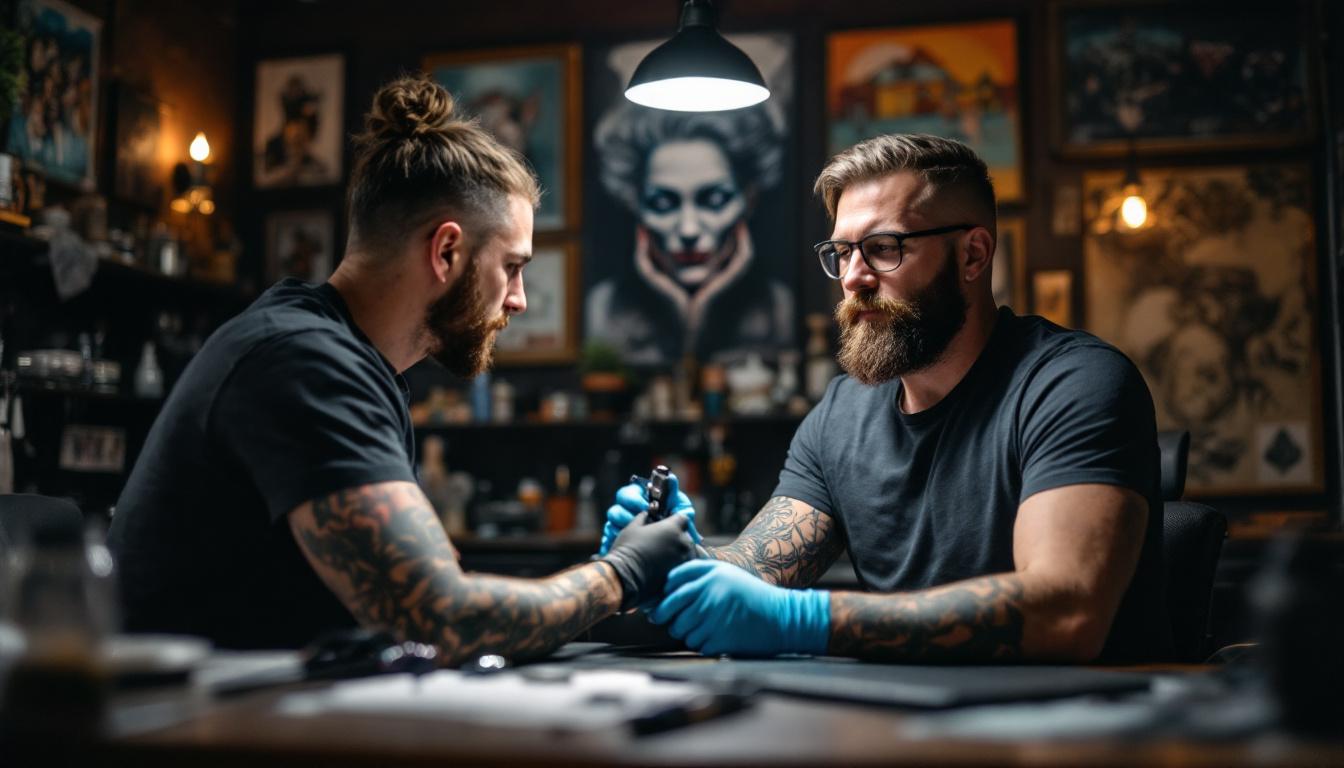
Swap photos in regularly. A profile that got its last upload two years ago reads as a shop that might be closed. Fresh work signals you’re active and booking.
Reviews are the part you can’t fake
Clients trust other clients more than they trust anything you say about yourself. A row of recent five-star reviews does more for a nervous first-timer than the slickest bio ever could.
Ask for them. The best moment is right after a session, when someone’s still staring at fresh work they love. A quick “if you’re happy with it, a Google review really helps me out” gets a yes most of the time. And reply to the reviews you get, the good ones and the rough ones. A calm, professional answer to a complaint tells every future reader that you handle problems like a grown-up. That matters as much as the complaint itself.
Winning “tattoo shops near me”
Local SEO sounds technical. For your profile, it mostly comes down to being thorough and staying active.
Write a real description that uses the words people actually search. If you do fine line, blackwork, cover-ups, or walk-ins, say so in plain language. Pick accurate categories. Keep your hours current. Google ranks profiles it believes are legit and active, and every one of these signals feeds that.
Use Google Posts
Google lets you post updates straight to your profile, the same way you’d post to social. Drop a recent piece, a flash day, a guest spot, an open slot for next week. It takes two minutes and it does two things at once: it keeps your profile fresh in Google’s eyes and it gives a browsing client a reason to book now instead of later. Post when you’ve got something worth showing, not on a forced schedule.
What an active profile actually does
A local shop that committed to this saw it pay off. After they updated their profile with strong photos, detailed service descriptions, and regular posts, they reported a 180% increase in client consultation bookings within six months, along with big jumps in organic traffic and local keyword rankings. One studio, one set of basic, repeatable moves.
You don’t need that exact number to take the point. A profile you tend to beats a profile you set up once and forgot. Updated photos, answered reviews, current hours. Small things, done consistently, are what keep you visible while the shop down the block stays buried on page two.

A short checklist
If you only do a few things this week, do these:
- Confirm your name, address, phone, and hours match everywhere they appear online.
- Upload eight to ten of your best healed pieces plus a couple of studio shots.
- Ask your next three happy clients for a review before they leave the chair.
- Reply to every review you already have, even the old ones.
- Post one recent piece or open slot to your profile.
None of it is hard. It’s just the kind of work that’s easy to skip when you’re busy actually tattooing. The artists who don’t skip it are the ones strangers find first.
Run the booking side as well as the search side
Getting found is half of it. The other half is what happens after someone taps “book.” If they hit a clunky DM thread or a deposit you have to chase by hand, you can lose the client you just worked to attract.
That’s the part Apprentice handles. Take appointments, manage deposits, share designs, and keep your client info in one place instead of scattered across texts and notes. Your Google profile brings people to the door. The right booking and studio tools make sure they actually walk through it. Start your free trial and tighten up the booking side while you sharpen the search side.

Jason Howie
Founder & CEO
Jason Howie is the founder of Apprentice, passionate about empowering tattoo artists and shops with better tools to manage their business and serve their clients.