Most people decide whether to book you before they ever message you. They find your shop, open it on their phone, scroll a few pieces, and either tap “book” or close the tab. Your website is the audition. In 2026 it has to do that job fast, on a small screen, with the lights low and someone half-paying attention on the bus.
So let’s talk about what actually earns the booking, and what just looks good in a redesign deck.
The design should look like the shop, not like a SaaS template
The temptation is to make it slick. Resist a little. A tattoo website that looks like every other startup landing page tells people nothing about what you do. Clean is good. Sterile is not. You want clear navigation and real photos of real work, lit honestly, not a stock-photo mood board.
The non-negotiable part is speed and mobile. If your portfolio page takes four seconds to load over a phone connection, a chunk of visitors are gone before they see a single tattoo. Big hero videos and uncompressed images are the usual culprits. Compress your images, keep the page light, and test it on an actual phone, not just your desktop browser. That one habit does more for bookings than any color choice.
Your portfolio is the whole pitch
This is the part people came for. Everything else supports it.
Show high-resolution photos of finished work, organized so someone can find the style they want. A fine-line client and a traditional client are looking for different things, and a wall of mixed thumbnails makes both of them work too hard. Group by artist, by style, or both. Put your strongest pieces first, because most people don’t scroll as far as you think.
Artist bios matter more than studios admit. A short, human paragraph next to each artist’s work answers the quiet question every client has: who is going to be holding the machine. That’s a trust decision, and a name plus a face plus a body of work settles it faster than any tagline.
Client reviews carry weight too. Honest quotes from people who sat in your chair tell a prospective client what the experience is actually like, which is something your own marketing copy can’t credibly do.

Make booking easy, or watch people give up
Here’s where a lot of good shops lose money. The work is great, the photos are great, and then “booking” is a DM to an Instagram account that gets 200 messages a day. People fall through the cracks, and you spend your evenings copy-pasting the same answers.
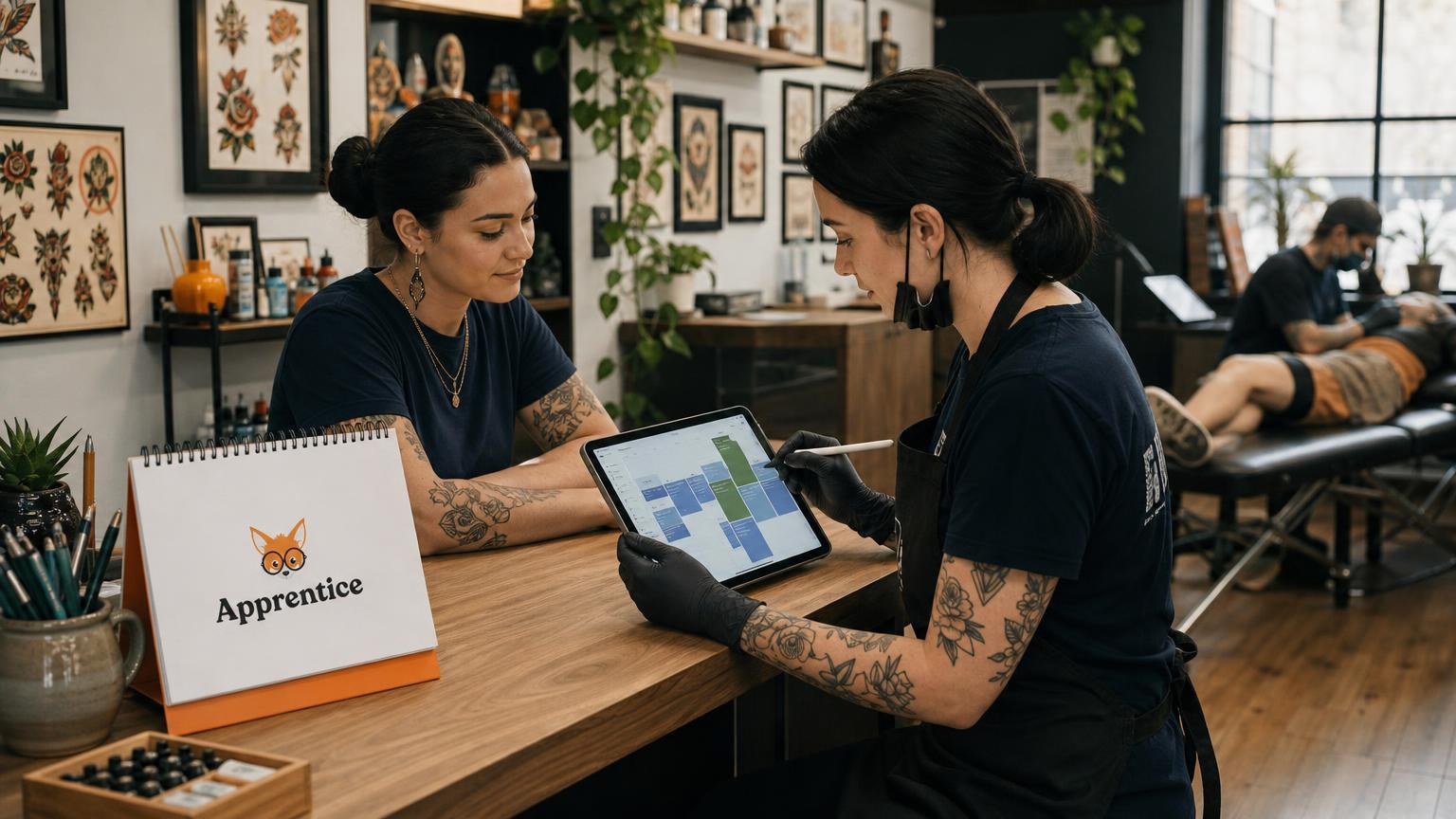
An online booking form that captures what you actually need, the idea, placement, size, budget, reference images, does two things at once. It filters out the inquiries that were never going to book, and it gives you everything you need to quote without three rounds of back-and-forth. A calendar tied to that form keeps two artists from getting booked into the same slot.
This is the part of the site we built Apprentice around, because the booking flow is where most studio websites quietly bleed clients. If a deposit can be collected at booking through a secured payment step, even better. People who put money down show up, and a protected payment page tells them you treat their card details seriously.
Local search is how new clients find you
Most people looking for a tattoo right now are typing some version of “tattoo shop near me.” If your site doesn’t show up for that, the work behind it doesn’t matter, because nobody sees it.
That means the basics of local SEO: your city and neighborhood in your page copy, a claimed and accurate listing on the big directories, and consistent name, address, and phone everywhere they appear. It’s worth doing because the audience is enormous. About a third of US adults have a tattoo, 32% according to a 2023 Pew Research Center survey, and a lot of them are repeat clients still searching for their next artist.
Style-specific pages help here too. A page that’s actually about, say, blackwork in your city will rank for people searching exactly that, and those are some of the easiest clients to convert because they already want what you do.
Tell the shop’s story, but keep it real
A website can do more than list services. A few behind-the-scenes clips, a short note on how the shop started, the thinking behind an artist’s signature style, this is the stuff that turns a browser into someone who feels like they already know you. Tattoo clients tend to care about that. They’re buying permanent art from a person, not ordering a product.
Keep it honest and short. Nobody reads a 1,200-word studio manifesto. A paragraph and a video do more than an essay.
Don’t skip security
You’re collecting more sensitive data than you might think: reference photos, contact details, sometimes payment information, occasionally health notes on intake forms. That deserves protection.
Use a secured payment gateway rather than asking for card numbers over DM. Keep your site’s software and plugins updated, because outdated frameworks are the most common way small sites get compromised. None of this is glamorous, but a breach that leaks client photos or card data is the kind of thing a small shop’s reputation doesn’t recover from quickly. Treat it as part of the job.
Watch what’s actually working
Once the site is live, it’s not finished. Basic analytics tell you which pages people open, where they leave, and how often the booking form gets filled out versus abandoned. If everyone’s bailing on step two of your booking flow, that’s a fixable problem you’d never see otherwise.
A live chat or a quick contact option can catch the people with one question standing between them and a booking. Answer it in the moment and they book. Make them wait two days for a DM reply and they’ve already booked someone else.

Where the industry is headed
The demand is there and it’s growing. US tattoo industry revenue hit $1.7 billion in 2022, and tattoos have moved from subculture to mainstream over the last decade. That’s a bigger pool of potential clients every year, and most of them start the search online.
The shops that win that search aren’t the ones with the flashiest sites. They’re the ones whose sites load fast, show the work clearly, make booking painless, and treat client data with respect. Get those four right and the rest is decoration.
If your booking process is the weak link, Apprentice handles scheduling, deposits, client records, and design collaboration in one place so you can spend less time on your phone and more time tattooing. Start a free trial and see how it fits your shop.

Jason Howie
Founder & CEO
Jason Howie is the founder of Apprentice, passionate about empowering tattoo artists and shops with better tools to manage their business and serve their clients.