The tattoo industry is growing fast. The global tattoo market was valued at USD 2.43 billion in 2025 and is on track to nearly double by the end of the decade. That kind of growth doesn’t happen without evolution, and you can see how tattoo styles evolved over the decades to get here. New styles are popping up. Old ones are getting reinvented. And the technology behind the ink itself is changing what’s possible on skin. Whether you’re an artist looking to expand your repertoire or a shop owner trying to stay ahead of client requests, understanding emerging tattoo styles and fresh ideas is how you stay relevant. Tattoos are permanent. They’re personal. And people want them to be perfect. That means the trends shaping this craft matter to your bottom line. The US tattoo artist industry alone has a market size of $1.3 billion in 2025, and the artists who capture the biggest slice of that pie are the ones paying attention to what clients actually want. So let’s talk about what’s happening right now, what’s coming next, and how you can put these ideas to work in your shop.
The Rise of Minimalist Aesthetics
Minimalism isn’t new. But the way it’s being executed today is a far cry from the simple wrist tattoos of five years ago. Clients are asking for pieces that look effortless but require enormous skill. The demand for precision has skyrocketed. And the tools, techniques, and inks available now let artists deliver detail that was impossible a decade ago.
This shift isn’t just aesthetic. It’s economic. Smaller tattoos mean shorter sessions, faster turnover, and more bookings per day. But here’s the reality check: micro work is unforgiving. There’s no hiding mistakes in a piece the size of a quarter. If you’re adding minimalist styles to your menu, invest the practice hours. Your reputation depends on it.
Micro-Realism and Single Needle Precision
Micro-realism is the art of shrinking photorealistic portraits and scenes down to incredibly small scales. Think a detailed eye on someone’s inner forearm, no bigger than a coin. Single needle work makes this possible. The lines are impossibly thin. The shading is subtle. And the result looks like a tiny photograph embedded in skin.
This style demands a steady hand and serious patience. Sessions can be short, but the concentration required per square inch is intense. Artists who master this niche often command premium prices, which is a big part of why microrealism is the trend defining 2026. Clients travel across state lines for the right micro-realist. If you’re building this skill, document everything on social media. Before-and-after shots and close-up videos are your best marketing tools.
Fine-Line Florals and Script
Fine-line florals and delicate script have become some of the most requested styles, especially among first-time clients. These pieces feel approachable. They’re elegant without being intimidating. And they photograph beautifully for Instagram, which drives even more demand.
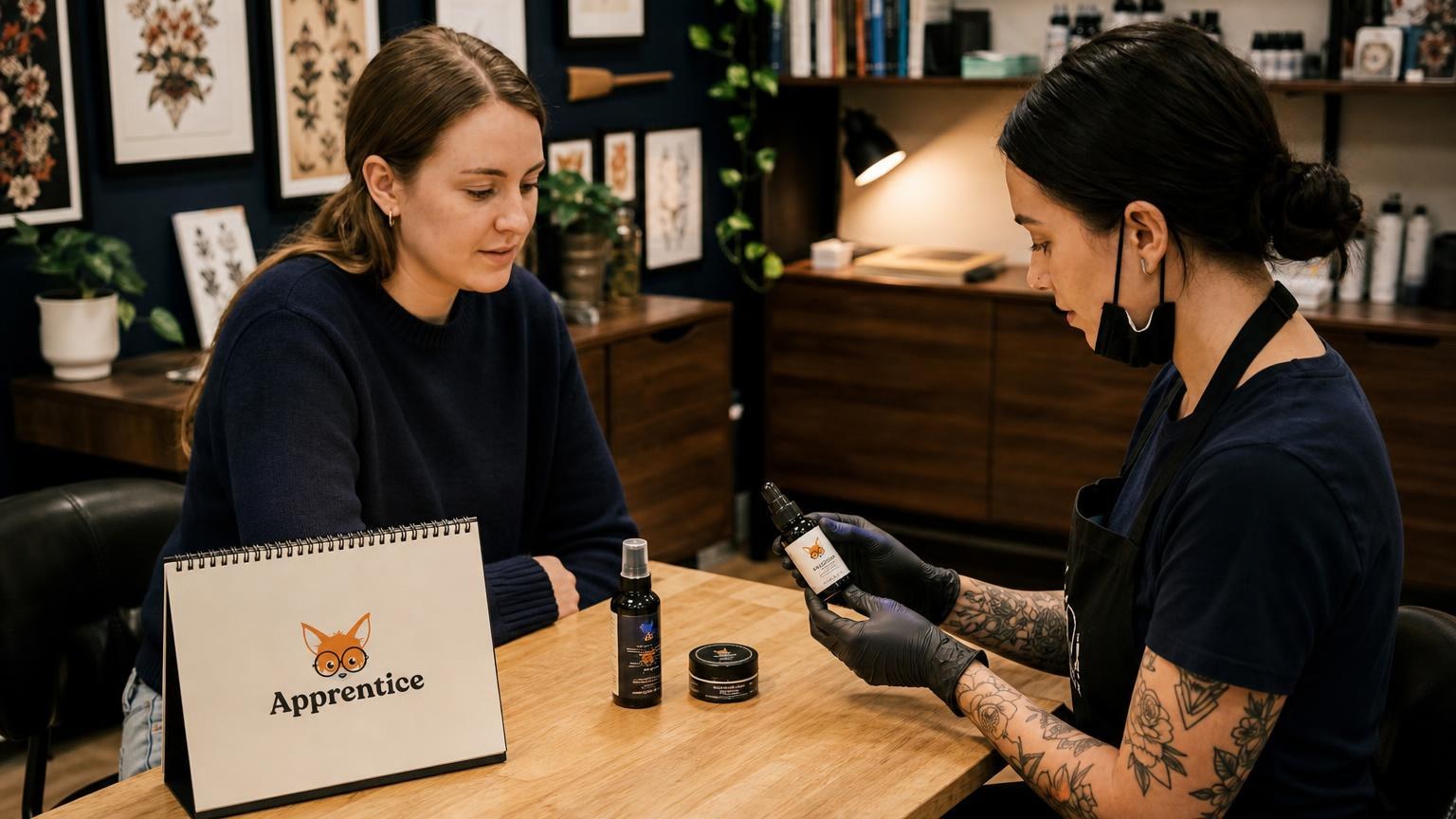
The trick here is longevity. Ultra-thin lines can blur over time if the ink isn’t placed at the right depth. Educating your clients about proper aftercare and realistic aging expectations is part of the job. A tool like Apprentice can help you automate aftercare instructions so every client gets the right info after their session, without you having to repeat yourself fifty times a week.
Negative Space and Geometric Minimalism
Negative space tattoos use the skin itself as part of the design. Instead of filling every area with ink, the artist leaves strategic gaps that create shapes, depth, and contrast. Geometric minimalism takes this further, building intricate patterns from simple lines and shapes.
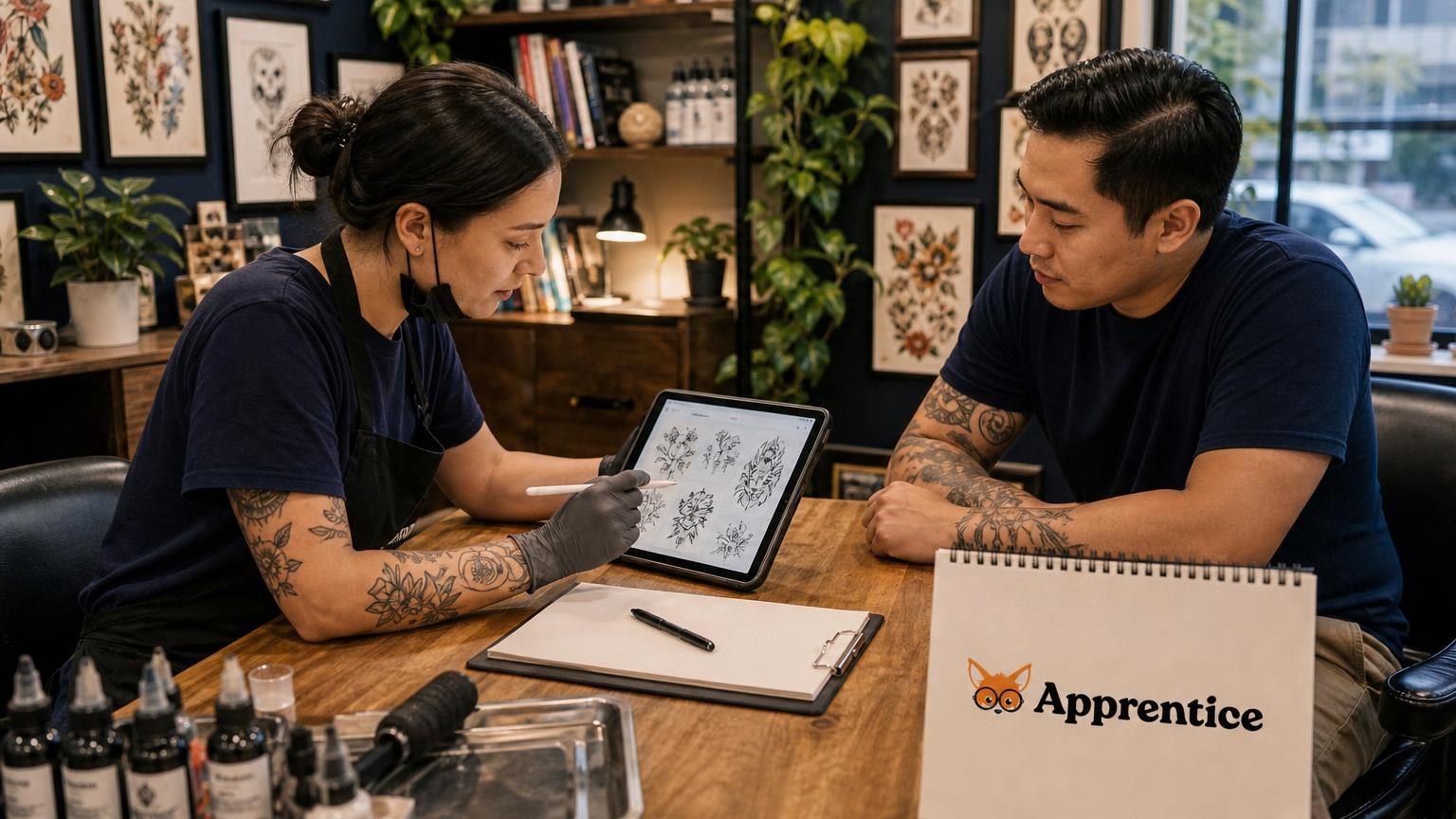
These designs require meticulous planning. A misplaced line throws off the entire composition. Stencil work is critical. And client consultations need to be thorough so expectations match reality. This is where project management tools really earn their keep, keeping reference images, design drafts, and client notes in one place so nothing gets lost between consultation and appointment day.
Technological Innovations in Body Art
Tattooing has always been a craft rooted in tradition. But technology is pushing the boundaries of what ink on skin can do. Some of these innovations are gimmicks. Others are genuinely changing the client experience and opening up new revenue streams for shops willing to experiment.
Augmented Reality and Interactive Tattoos
AR tattoos are exactly what they sound like. A client gets a tattoo, then scans it with a phone app to trigger an animation, a video, or a 3D effect layered over the design. The tattoo itself is real ink. The interactive element lives in software.
This is still a niche market. The technology requires clients to download specific apps, and the novelty can wear off. But for certain clients, like tech enthusiasts, gamers, or couples wanting a shared interactive piece, it’s a compelling offering. The key is managing expectations. The tattoo needs to stand on its own without the AR component. If it only looks good through a phone screen, you’ve failed as a tattoo artist.
UV and Glow-in-the-Dark Inks
UV-reactive inks glow under blacklight. They’ve been around for years, but the formulations have improved significantly. Modern UV inks are safer, more vibrant, and longer-lasting than earlier versions. Some artists use them as accents within a traditional piece. Others create entire designs that are nearly invisible in daylight but come alive in clubs, concerts, or under blacklight at home.
There are legitimate safety considerations. Not all UV inks are created equal. Do your homework on suppliers. Stick with brands that have transparent ingredient lists and a track record of safety testing. Your clients trust you with their skin. Don’t cut corners on ink quality to save a few bucks.
Revival and Reimagining of Traditional Styles
Old styles never really die in tattooing. They get remixed. Right now, we’re seeing a massive wave of artists taking traditional foundations and pushing them into new territory. The roots are recognizable, but the execution feels fresh.
Cyber-Tribal and Neo-Tribal Patterns
Traditional tribal tattooing carries deep cultural significance. The new wave of cyber-tribal and neo-tribal work respects those roots while adding futuristic elements. Think Polynesian-inspired patterns merged with circuit board motifs, or Maori-style curves integrated with geometric tech aesthetics. It overlaps heavily with cybersigilism and the Gen Z aesthetic taking over right now.
This is sensitive territory. Cultural appreciation and cultural appropriation are separated by a thin line. Artists working in this space need to educate themselves about the origins of tribal patterns. Credit the source cultures. Have honest conversations with clients about meaning and respect. The best neo-tribal artists are the ones who study the history as deeply as they study the technique. Clients are increasingly seeking custom designs that capture memories and heritage, so authenticity matters more than ever.
Modern American Traditional and Bold Color Palettes
American Traditional, or “old school,” is getting a color upgrade. The classic bold outlines and iconic imagery (eagles, roses, daggers) remain. But artists are expanding beyond the traditional red, green, yellow, and black palette into neons, pastels, and unexpected color combinations.
This style rewards confidence. Bold lines. Saturated color. No hesitation. It’s the opposite of micro-realism in execution, but it demands equal skill. The resurgence is partly driven by nostalgia and partly by a generation of artists who grew up admiring old flash sheets and want to put their own stamp on the tradition. If you’re running a shop, having at least one artist who can crush American Traditional is smart business. It’s a style that never goes out of demand.
Abstract and Experimental Expressions
Not every tattoo needs to be a recognizable image. The abstract and experimental movement is proof that tattooing is a legitimate art form, not just a service industry. These styles attract clients who want something truly one-of-a-kind.
Ignorant Style and Anti-Design
Ignorant style looks like it was drawn by a child. That’s the point. Rough lines, simple figures, crude humor, and a deliberate rejection of technical perfection. It’s punk rock on skin. And it’s wildly popular, especially among younger clients.
Don’t mistake simplicity for laziness. The best ignorant-style artists have strong foundational skills. They choose to break the rules because they understand them. The appeal is authenticity and humor. These pieces are conversation starters. They’re personal jokes, inside references, and tiny rebellions against the idea that every tattoo needs to be a masterpiece. For shops, this style also means faster sessions and high volume. A win for everyone.
Watercolor and Painterly Techniques
Watercolor tattoos mimic the look of paint splashes, color bleeds, and soft gradients. They often lack the bold outlines of traditional work, relying instead on color and form to create the image. The effect can be stunning, like wearing a painting on your body.
The honest truth? Watercolor tattoos age differently than heavily outlined pieces. Colors can fade and blur without strong borders to contain them. Smart artists incorporate subtle structural elements to help the design hold up over time. Be upfront with clients about touch-up schedules. That transparency builds trust and keeps them coming back to your chair instead of someone else’s.
Strategic Placement and ‘Invisible’ Tattoos
Where you put a tattoo matters as much as what the tattoo is. Placement trends are shifting toward subtlety, discretion, and personal meaning. Not every piece needs to be a full sleeve on display.
Ear, Finger, and Face Accents
Tiny tattoos on ears, fingers, and faces are everywhere. A small symbol behind the ear. A single word on a finger. A delicate dot or line near the hairline. These placements are intimate and often hidden in plain sight.
But let’s be real about the challenges. Fingers fade fast because of constant use and washing. Face tattoos carry social implications that you, as the artist, should discuss honestly with your client. Ear tattoos can be tricky due to the cartilage and thin skin. These aren’t beginner placements. If a client walks in wanting finger ink, explain the maintenance involved. Set the expectation that touch-ups will be needed. This honesty is what separates a professional from someone just chasing a quick buck.
The Popularity of Ephemeral and Semi-Permanent Ink
Semi-permanent tattoos are a booming segment. The temporary tattoo segment is expected to hold roughly 56% of the global tattoo market share by 2026. That’s more than half the market. These inks fade naturally over one to three years, giving clients the experience without the lifetime commitment.
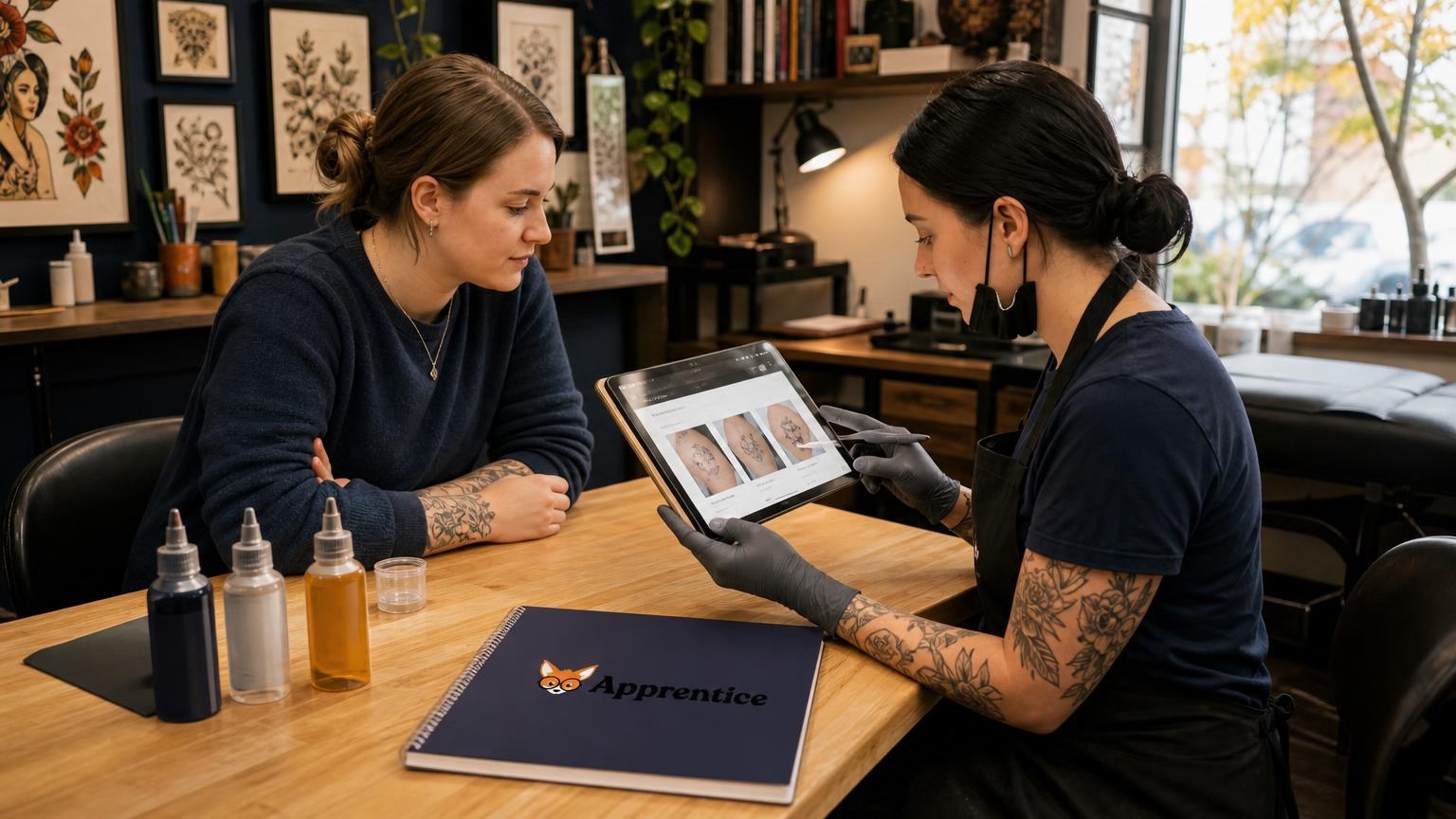
For shops, this is a real revenue opportunity. Semi-permanent options attract clients who would never walk into a traditional tattoo studio. They’re also great for “test drives,” letting someone live with a design before committing to permanent ink. If you’re not offering some version of this, you’re leaving money on the table. And because these clients are often new to the tattoo world, their booking experience needs to be smooth. Apprentice can handle that first interaction, from online booking to deposit collection, so the client feels taken care of before they even sit in your chair.
Sustainable and Ethical Tattooing Practices
The conversation around sustainability has hit the tattoo industry hard. Clients care about where their ink comes from, how supplies are sourced, and what happens to the waste. This isn’t a passing fad. It’s a shift in values that’s here to stay.
Vegan inks are in high demand. Traditional black inks sometimes contain bone char. Color inks can include animal-derived glycerin. Vegan-certified alternatives eliminate these ingredients without sacrificing quality. Stocking vegan options isn’t just ethical. It’s good business. You’ll attract a client base that’s loyal and vocal about supporting shops that align with their values.
Waste reduction is another area where shops can improve. Single-use plastics, ink caps, and packaging add up fast. Some studios are switching to biodegradable supplies, reusable grip covers, and eco-friendly cleaning products. The upfront cost is slightly higher, but the long-term brand value is significant.
North America’s tattoo market held a share of USD 861.68 million in 2024 and continues to grow. As the market expands, client expectations around ethics and sustainability will only get louder. Shops that get ahead of this curve will earn loyalty that no marketing budget can buy.
And here’s the unsexy side of sustainability that nobody talks about: documentation. Tracking your supply chain, maintaining records of ink ingredients for client safety, and managing consent forms for clients with sensitivities all take time. Automating that paperwork with a platform like Apprentice means you can focus on the craft while the admin runs itself.
The Bottom Line
Tattooing is evolving on every front. Styles are getting more diverse. Technology is expanding what’s possible. And clients are more informed, more intentional, and more demanding than ever before. That’s a good thing. It pushes the entire industry forward.
The artists and shops that thrive will be the ones who stay curious, keep learning, and treat their business with the same respect they give their art. Master a new style. Experiment with placement. Have honest conversations with your clients about what works and what doesn’t. That’s how you build a career, not just a following.
If you’re ready to spend less time on admin and more time perfecting your craft, Apprentice lets you get started in five minutes with a free 14-day trial. Your art deserves your full attention. Let the software handle the rest.

Jason Howie
Founder & CEO
Jason Howie is the founder of Apprentice, passionate about empowering tattoo artists and shops with better tools to manage their business and serve their clients.