
A client books a two-hour slot. You prep your station, clear your morning, and turn down two other requests for that window. Then they ghost. No call, no text. That empty chair just cost you a few hundred dollars and half a day you don’t get back.
Most artists know they need a no-show policy. What trips them up is writing one that protects the income without making every client feel like they’re signing a lease. Those two goals aren’t at war. A good policy does both, because good clients respect clear boundaries and flaky ones quietly take themselves out of your books.
The mistake almost everyone makes is being vague. “We may charge a fee for missed appointments” is worthless. What fee? Under what circumstances? Who decides? When the language is fuzzy, every enforcement turns into an argument, and you lose either the money or the relationship. Sometimes both.
What a no-show actually costs you
Lost session revenue is the obvious part. A four-hour session at $150 an hour walks out the door, that’s $600 gone. But the bill is bigger than the empty slot.
Before that client failed to show, you already spent money and time you can’t recover:
- Consultation: emails, reference gathering, a custom design you drew for free
- Setup: ink poured, needles opened, stencil printed
- The clients you turned away to hold that slot
- Rent, utilities, and insurance, which don’t pause when a chair sits empty
A late cancellation stings almost as bad. Even with 24 hours’ notice, you’re not filling a four-hour custom slot on short notice. Your calendar looked full. Your deposit account says otherwise.
And it wrecks more than money. One morning no-show throws off the rhythm of your whole day. If you run a shop with multiple artists, no-shows scattered across everyone’s calendar turn scheduling into a guessing game, and your most reliable clients end up waiting weeks while you scramble to backfill gaps left by people who couldn’t bother to text. That’s backwards. Your best clients should get priority, not the leftovers.
Define the terms so there’s nothing to argue about
Every word in your policy needs a definition that leaves no room for interpretation. Start with the obvious question: what counts as a no-show?
Spell out each of these:
- No-show: client doesn’t arrive within a set number of minutes of the appointment time, with no prior notice
- Late cancellation: cancellation inside a defined window, usually 48 hours
- Fees: exact dollar amount or percentage of the deposit, not “a fee”
- Rescheduling: how many times a client can move an appointment before fees kick in
- Exceptions: what qualifies for a waiver, and what proof you need
Here’s language that works, written out plainly:
A no-show means you miss your appointment without contacting us beforehand. Cancellations made less than 48 hours before your time are late cancellations. No-shows forfeit the full deposit. Late cancellations forfeit half. First-time emergencies with documentation can reschedule without penalty.
Notice there’s no wiggle room. No “we reserve the right to.” Just what happens, when. That specificity is what builds trust. A client who knows exactly what to expect feels respected, not threatened. The policy reads like a professional standard instead of a punishment waiting to drop.
Include how to reach you, too. Phone, text, email, app notification, whatever it is. Make doing the right thing easy.
Say it before they book, not after
A policy nobody reads might as well not exist. The client needs to run into it more than once, and always before they’re on the hook.
Put it in front of them at these moments:
- The booking page, visible before they pick a time
- The confirmation email, full text, easy to read
- The deposit invoice, with a checkbox they tick before paying
- The reminders going out before the session
- A small sign at the desk for walk-ins and regulars
Tone carries as much weight as timing. Don’t lead with threats. “We value your time and ours” lands completely differently than “Failure to appear will result in charges.” Same policy, different relationship.
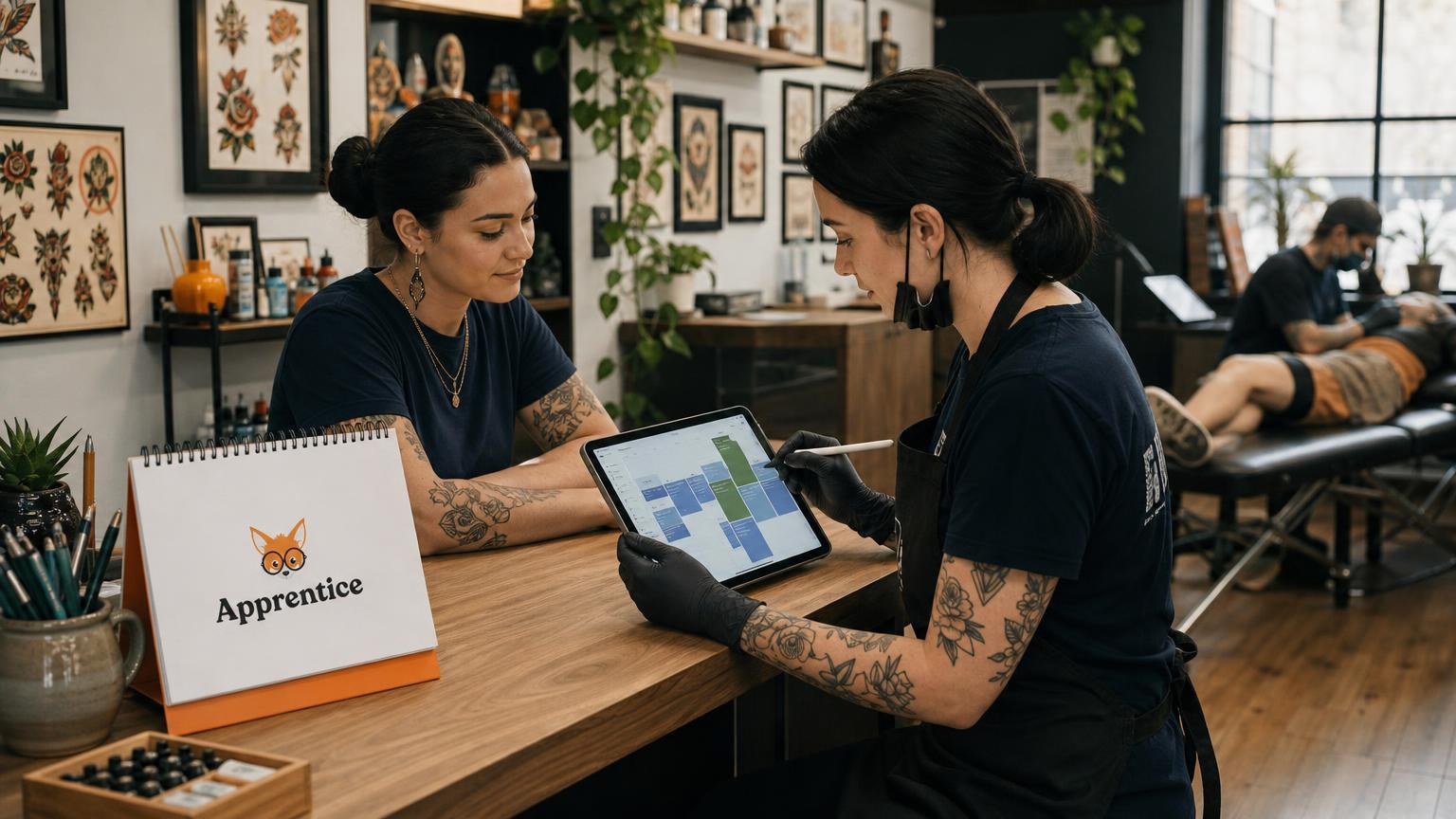
Automated reminders do most of this work for you. Send one a week out, one at 48 hours, one at 24. That spacing gives people real chances to reschedule without burying their inbox. If you’re still thumbing out reminder texts one at a time, you’re burning hours a week on something software handles for free. Apprentice sends appointment and deposit reminders automatically and keeps a record of every one, which matters a lot the day someone disputes a charge.
Enforce it the same way for everyone
A policy you don’t enforce is a suggestion. But enforcement without empathy just makes enemies. The fix is consistency.
This is the part most artists get wrong. You waive the fee for your big collector with the huge following, then charge the first-timer for the exact same no-show. Word gets around. Now your policy looks like favoritism, because it is. Your biggest client and your newest one should face the same consequence for the same behavior. No exceptions for spending history or follower count.
Consistency comes down to a few habits:
- Write down every no-show, every message sent, every fee applied
- Make sure everyone at the shop applies the same standard
- Let the policy decide, not whoever’s having a rough day
- Follow through on what you said you’d do, because empty threats kill future enforcement
Being consistent doesn’t mean being a robot. You can mean the sympathy and still keep the deposit: “I’m really sorry, I know things come up. Our policy is the same for everyone, so I do need to hold the deposit.” Most people accept that when they understand the reasoning. Telling someone you turned away three other clients for their slot makes the cost real. You’re not being greedy. You’re protecting your income.
When your booking system flags repeat offenders and tracks cancellation patterns for you, those calls get easier, because you’re working from a record instead of a hunch.
Leave room for real emergencies
Rigid policies snap under real life. People get sick. Family members die. Storms make the drive dangerous. A zero-tolerance rule protects your calendar and torches your relationship with good people who got blindsided.
Reasonable exceptions usually cover:
- Medical emergencies, with documentation when it’s possible
- A death in the immediate family
- Severe weather that makes travel unsafe
- One grace period for an established client’s first slip
- Any time you’ve rescheduled on them
Build these into the written policy. When clients can see that emergency provisions exist, they stop reading your rules as heartless, and they’re less likely to invent an emergency since the real ones already get handled.
Ask for some verification without being invasive. “If you need to cancel for an emergency, let us know as soon as you can with any details” invites honesty without demanding hospital paperwork. Spell out who decides and how fast they’ll hear back, so nobody’s left stewing.
Deposit rules protect your time. Your touch-up rules protect the work itself. Setting a fair touch-up policy alongside your no-show terms tells clients exactly where they stand on both, and that clarity is what keeps the good ones coming back.
Check the numbers and adjust
A policy isn’t a thing you write once and file away. What works for a packed downtown shop can flop in a small-town studio. Watch a few numbers every month:
- No-show rate: share of booked appointments that turn into no-shows
- Late cancellation rate
- How often you actually collect the fees you charge
- Whether you’re losing good clients over policy fights
If your no-show rate is climbing, the policy is probably too soft or buried where nobody sees it. If you’re getting heavy pushback, you may have swung too hard the other way. When 48 hours’ notice isn’t moving the needle, try 72. If your deposits aren’t deterring anyone, raise them. Let what you’re actually seeing in your books decide the next change, not a guess.
Empty chairs are a solvable problem. Specific language, reminders that go out on their own, and a record you can point to fix most of it. Start with Apprentice and let the booking system handle the reminders and the paper trail, so you can spend your day tattooing instead of chasing people who didn’t show.

Jason Howie
Founder & CEO
Jason Howie is the founder of Apprentice, passionate about empowering tattoo artists and shops with better tools to manage their business and serve their clients.