

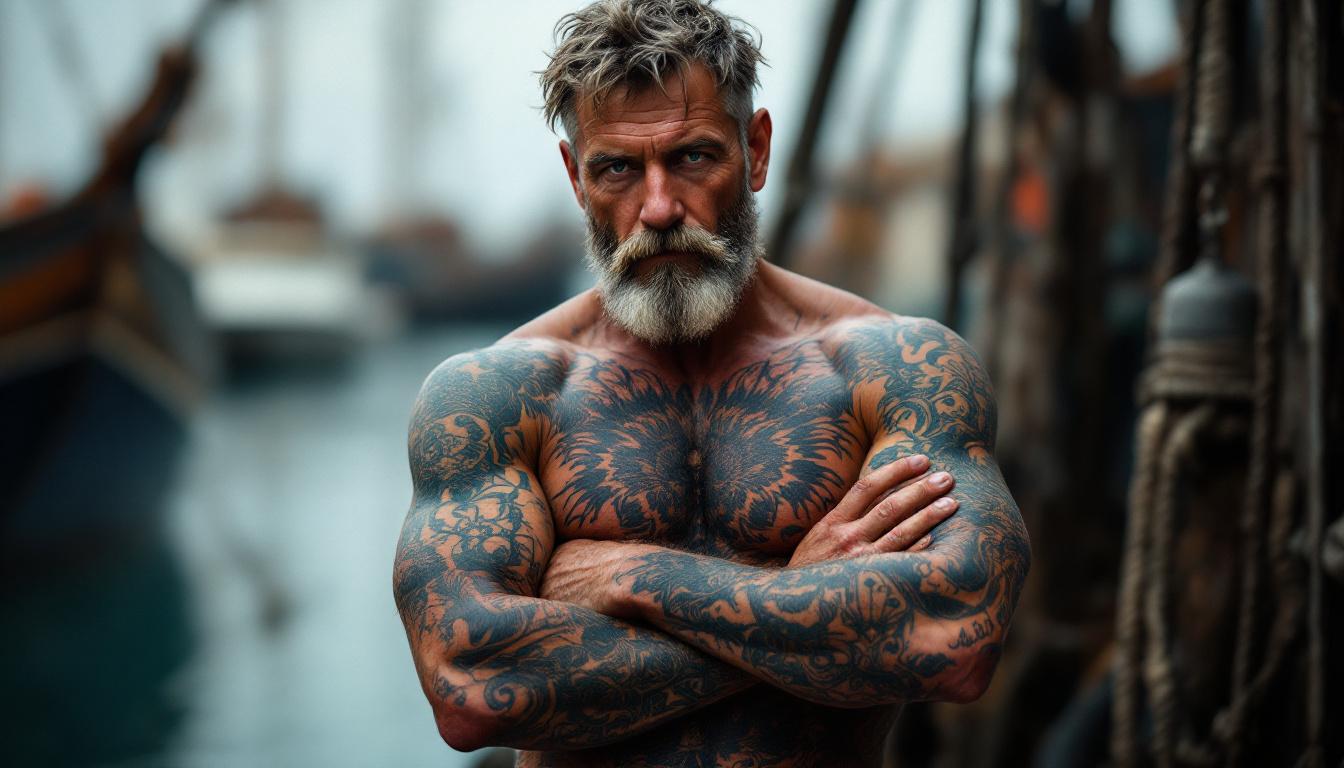
Picture this: a bustling port with salty air and the clink of ship rigging-a scene where tattoos not only mark skin but serve as living chronicles of life at sea. Stories of love, hardship, and adventure dive deep into the very ink that adorns these brave souls. Every mark tells a tale, and these narratives, steeped in tradition, have roots that run deeper than the ocean floor. For instance, British sailors sported tattoos on their arms with naval themes, religious symbols, and even personal dedications, as noted by Revista Pesquisa Fapesp. The evolution of these marks is as lively as a Philly street festival.
The Nautical Origin Story
The tradition of ink on skin among sailors is as old as the age of exploration. Sailors weren’t just roaming the high seas-they were spreading a culture that became a badge of honor amid waves and storms. These tattoos were not random doodles; they served as protective talismans and symbols of significant life experiences. Often, these markings recorded relationships, battles, or even personal losses.
In many port cities, sailors were practically ambassadors of tattoo culture themselves. They inked anchors, fish, sometimes hearts squeezing in initials, and even religious figures as they traded tales of the ocean. One expert insight from Revista Pesquisa Fapesp makes it clear that maritime iconography wasn’t merely decorative-it was a language that tied communities together.
This form of body art turned out to be more than a mark-it was a statement of identity that connected people across borders. Long before tattoo machines came into play, these marks were etched by hand using simple inks made often from soot and gunpowder, a sure sign that artistry and necessity met under the harsh conditions at sea.
Tattoos as Markers of Identity and Memory
Every old salt with tattoos has a story, something that goes way past the ink. Tattoos served as a personal diary, a record of voyages, tribulations, and the bonds formed with crewmates in the back of a creaking ship’s belly. They weren't only about marking time or showcasing bravado but were practical symbols that could safeguard them in an environment where misfortune lurked like hidden rocks in turbulent waters.
These vivid images on skin were more than mere personal statements; they became cultural symbols. For British convicts, detailed studies on their tattoos have revealed that these inky expressions depicted a range of interests, resonating with themes from broader popular culture rather than just criminal identities. As detailed in a Journal of British Studies article, it’s clear that the ink captured everything from personal sorrow to celebratory symbols of freedom.
For many sailors, the tattoos were like walking journals, encoded with memories of sea battles, port city escapades, and personal trials endured far from unsympathetic shores. They were meant to vanish with time if forgotten, but instead, they became chapters immortalized in skin, each telling a story that demanded respect.
Evolution of Tattoo Techniques and Tools
The evolution from rudimentary hand-etched designs to more refined methods marks an important chapter in sailor culture. The introduction of the electric tattoo machine in the 1890s revolutionized the way tattoos were done, making the process faster and more accessible to sailors who had little downtime between voyages. That innovation essentially democratized the art, propelling it from a niche craft to a widespread phenomenon, as chronicled on Wikipedia's Sailor Tattoos page.
Before the era of electricity, tattooing was a laborious process. Sailors would use needles and inks concocted from simple ingredients, such as soot and gunpowder-a testament to the resilience and ingenuity of those on the high seas. The manual process demanded endurance, precision, and a certain amount of pain tolerance, qualities well-suited to life aboard a creaking ship. This period showcased a raw form of craftsmanship that sounds like it came straight out of a classic tale of endurance and grit.
The shift from hand-tattooing to machine work wasn't just about speed and efficiency; it also influenced the aesthetics of the tattoos themselves. With electric tools providing more consistent lines and shading, sailors could afford designs that were not only meaningful but also artistically refined. The blending of function and form created a pure art that resonated deeply with both the wearer and the observer.
A Cultural Tapestry Woven Through Ink
Over time, the art of tattooing among sailors became a melting pot of styles and influences. Maritime iconography-like anchors and fish-mixed with personal symbols such as hearts and initials to form a vivid tapestry of human experience. It's a culture that crossed social and economic boundaries, moving from the lower decks to the higher echelons of society.
Surprisingly, by the late 19th and early 20th centuries, tattooing even found favor among European aristocrats, including members of the British royal family, as highlighted by Royal Museums Greenwich. This crossover into high society revealed that the allure of a tattoo wasn’t just confined to rugged seafarers. Instead, it resonated across classes, signifying a shared human desire for storytelling and identity marking through art.
The blend of the maritime and the aristocratic demonstrates how tattooing evolved beyond its utilitarian origins to become a respected, even celebrated, form of self-expression and art. Whether etched on rough hands after a storm or admired in an elegant gallery, tattoos began to command respect and admiration for the tales they told.
The Maritime Influence on Broader Tattoo Culture
Sailors were true pioneers, spreading that unique tattoo culture whenever they docked at ports. As they mingled with locals in foreign lands, the unmistakable symbols of the sea-anchors, love hearts, and fish-left a mark on communities far from the ocean. They bridged continents and social classes, creating a legacy that still colors modern tattoo art. For example, some scholars assert that sailors were "probably most responsible for spreading tattoo culture at port cities" with their distinctive marks, a point noted on Revista Pesquisa Fapesp.
This rich exchange of art and ideas didn't just stop at aesthetic appeal. Tattooing was also a language-a way to signal membership, bravery, and even superstition. For many deep-water sailors, getting inked during downtime wasn't just about passing the time. It was a ritual, complete with its own lore and set of traditions that extended beyond the ship's boundaries.
The stories embroidered in ink continue to echo in today's tattoo studios, where modern enthusiasts admire the simple yet profound meanings behind traditional designs. This heritage also adds a deep layer of respect and authenticity to contemporary tattoo art, reminding us that every design carries a legacy that’s been weathered and refined over centuries.
The Role of Rituals and Superstitions
The life of a sailor was fraught with dangers, and naturally, they turned to rituals and superstitions to ward off misfortune. Tattoos, in this context, turned into talismans of survival. They were believed to bring good luck, protect from rough seas, and even serve as a counter-spell against the dreaded kraken of old maritime lore. In the vast, unpredictable ocean, every little symbol of luck was a precious commodity.
Sailors often chose specific tattoos based on their personal or superstitious beliefs. For instance, many decided an anchor wasn't just a sign of their occupation, but also a safeguard against the unpredictable tides of fate. Other popular motifs included religious figures, which were thought to offer divine protection during perilous voyages.
Though any modern fan of ink might see these designs as purely decorative, back in the day, each tattoo was loaded with significant meaning. They were a reminder that life, no matter how turbulent, could be steered by symbols larger than oneself-a sentiment that still holds strong in many tattoo narratives today.
From the Convict’s Skin to the Aristocrat’s Canvas
Tattooing has always had a way of uniting disparate cultures and social classes. In Britain, it wasn’t uncommon for convicts to bear tattoos that represented everything from personal affiliations to defiant statements of individuality. A study on 75,448 written descriptions of tattoos on British convicts spanning from 1791 through 1925 reveals that these works of art celebrated generic themes rather than being solely linked to a criminal identity. This diverse expression through ink shows that even those on the fringes of society used tattooing to speak volumes.
The phenomenon wasn’t isolated to outcasts. By the late 1800s, tattooing transitioned into a symbol embraced by European aristocrats-a step that even saw members of the British royal family dabbling with ink. That unexpected crossover demonstrated that the allure of tattoos didn’t fade with class; if anything, it became a unifying medium that transcended social hierarchies. The same symbols that once marked a sailor's defiant spirit became a mark of sophistication, rebellion, and personal storytelling.
This blend of influences adds a certain bittersweet flavor to the whole narrative. It reminds us that tattooing was never just about aesthetics; it was about defiance, identity, and resilience. The skin became a canvas where both the outcast and the elite etched their stories, a tradition that continues to resonate today with every piece of ink laid down in modern tattoo studios.
Tattoos, Storytelling, and the Human Connection
At its heart, tattooing is a form of storytelling. For sailors navigating unpredictable oceans, each tattoo served as an anthology of experiences-a reminder of battles fought, loves lost, and futures dreamed. In many ways, every mark was a chapter in a grand, ongoing saga, filled with both triumphs and tribulations.
The ink on a sailor’s skin was like a traditional Philly mural, raw and real, with layers of meaning lost on those who only see a pretty picture. These symbols captured not just personal identity but were also a way of connecting with others: a shared visual language that spoke of common struggles, hopes, and a life lived at the mercy of nature’s whims. The tradition of tattooing was built on human connection, with stories passed down from one generation of sailors to the next.
Research indicates that tattoos among sailors were indeed records of important experiences and acts as markers of identity, in the sense that every image had a story behind it. This cultural continuum, partly documented on Wikipedia, shows how art and identity melded into one unforgettable tapestry of ink and memory.
The Legacy in Modern Tattoo Culture
Fast forward to today, and the legacy of European sailors' tattoos is alive and well. Modern tattoo artists often pay homage to these historical designs, whether by incorporating classic nautical themes into their work or by drawing on the rich symbolism found in traditional sailor tattoos. The meanings behind an anchor or a heart remain as potent as a shot of espresso on a cold Philly morning.
The migration of these tattoos from weather-beaten ship decks to contemporary urban canvases shows an evolution that is both respectful to the past and innovative in its modern interpretations. Modern tattoo enthusiasts might choose these designs for their aesthetic appeal, but there’s always a nod to the deeper meanings that have defined the sailor’s plight and triumph. Even as techniques have advanced, the narrative - the deep, storied connection between ink and identity - remains unchanged.
These tattoos still represent more than just art: they symbolize the spirit of adventure, resilience against the odds, and the beautiful chaos of life at sea. The cultural transfer from the maritime world to the urban landscape amplifies the timeless appeal of these symbols, ensuring that the stories of old continue to resonate in each new design.
Tattoos as a Symbol of Timeless Rebellion
Few things capture the essence of rebellion quite like a well-earned tattoo. For sailors, the act of getting inked was an act of defiance against a life of hardship and unpredictable fate. Even back in the day, having ink on one’s skin was a bold statement, one that challenged societal norms and questioned the status quo.
This rebellious spirit ran through the veins of every sailor who stood at the helm of a ship, embarking on a journey with nothing but the horizon ahead. The tradition of getting tattooed during long hours on the open sea became a way of asserting control over one’s destiny, a visible record of personal risks taken and battles survived. These inky declarations spoke of both vulnerability and unyielding courage-qualities that inspired countless others to stand tall in the face of adversity.
It’s a legacy that still finds its echo in today’s tattoo community. Whether etched with the precision of state-of-the-art machines or drawn in the spontaneous style of a street artist, the enduring charm of sailor tattoos embraces both history and modernity. Each design, each flourish, stands as a reminder that the human spirit, much like the sea itself, is capable of metamorphosis while retaining its raw, untamed nature.
Connecting the Past and Present Through Ink
The stories embedded in sailor tattoos remind us that every mark, no matter how small, has the power to connect the past and the present. What started as a survival mechanism among seafarers has morphed into an art form that unites individuals across time and space. Each tattoo is a patch in the quilt of human experience-a symbol of life’s trials, triumphs, and moments of profound vulnerability.

A statistic from 1908 reported that a whopping 90% of American deep-water sailors were tattooed, a testament to how deeply intertwined this art was with life at sea, as noted on Wikipedia's Sailor Tattoos page. From ornate designs that held secret meanings to simple motifs that reassured a soul amid fierce storms, sailor tattoos became a silent language that bound communities together.
While modern trends may favor flashier designs and vibrant colors, the inherent spirit of these traditional tattoos endures. They continue to serve as an inspiration for both artists and enthusiasts, reminding us that ink on skin isn’t just a fad-it’s a storytelling medium that charts the course of a life lived boldly.
Resonance with the Modern Urban Canvas
In the gritty backstreets of Philly, much like in the port cities of old, tattoos have become a form of personal expression that defies convention. The rich tapestry of sailor tattoos, with their intertwined narratives of love, adventure, and personal strife, still resonates with anyone who dares to challenge the ordinary. Their enduring spirit finds a new voice in modern urban art, creating a bridge between the courageous past and a dynamic present.
Today's tattoo studios often draw on these classic motifs, blending them lovingly with contemporary designs. The result is a fusion that caters to an ever-evolving audience yet still maintains a firm grip on tradition. Whether it's a minimalist emblem or a full-blown masterpiece, the roots of these inks run deep-from the raucous decks of ancient ships to the modern arms of artistic rebels.
This connection signifies a broader trend where identity is not defined by borders or status but by the stories we choose to wear. The timeless allure of the sailor’s journey turns a skin-deep design into a narrative of survival, courage, and beauty that can’t be washed away, even by time’s relentless tide.
A Lasting Legacy Carved in Ink
The rich tradition of European sailors' tattoos is more than just a fascinating historical footnote-it's a living, breathing art form that has transcended its origins and carved out a permanent niche in modern culture. The evolution from crude hand-drawn ink to polished modern designs mirrors a broader shift not only in technology and taste but also in the way personal histories are celebrated and remembered.

These tattoos are a testament to the resilience of those who dared to chase the horizon. Whether they were created as protective charms, personal diaries, or rebellious proclamations, each tattoo is imbued with the essence of those who lived on the edge of the world, facing both nature and fate head-on. The deep-rooted history and continuously evolving symbolism ensure that these works of art remain relevant, inspiring new generations to tell their own stories through ink.
As this legacy lives on, modern individuals and artisans alike are stoked by the challenge of blending the old with the new, paying tribute to a tradition that stretches back across centuries. In essence, every time a modern tattoo artist sets up their station, they’re not just applying ink-they’re connecting with an age-old narrative of adventure, passion, and unyielding spirit.
The Journey Continues
The journey of European sailors' tattoos is far from over. Today, their influence continues to perk up the creative scene, infusing modern tattoo culture with ancient maritime mystique. In communities here and abroad, each new design finds inspiration in the bustling port stories of the past-stories where every line and swirl in the ink speaks of daring voyages and raw, unbridled freedom.
From rough-and-ready sailors to modern-day urban creators, the legacy of these tattoos serves as a powerful reminder that true art never fades. It merely evolves, reflecting not only the wearer's personal experiences but also the shared history of a community bound by adventure and defiance. The art of tattooing remains a living record of human experience, as dynamic and resilient as the tides.
For anyone who’s ever wondered about the meaning behind a weathered anchor or a carefully drawn heart on a sailor's arm, these marks are more than just decorative-they’re chapters of history etched permanently in skin. As each new design emerges, the dialogue between past and present grows richer, drawing a continuous thread from the decks of ancient ships to modern tattoo parlors.
Echoes of the Past on Modern Skin
Today’s ink enthusiasts might notice that their modern designs-often intricate and bursting with color-carry whispers of a storied past. The strong connection between a sailor’s inked legacy and contemporary tattoo culture isn’t just about imitating a style; it’s about paying homage to a vibrant history steeped in meaning. That raw, soulful approach to body art reminds us that behind every design is a tale woven with passion, struggle, and an unwavering dedication to the spirit of adventure.
Echoing in every stroke of ink is the memory of stormy nights, shimmering port lights, and the silent promises whispered on a ship's deck. As modern tattoo artists embrace these time-honored symbols, they infuse each design with the same sense of honor and boldness that defined the golden age of sailor tattoos. It’s a powerful reminder that art is not just about the present-it’s a living bridge connecting generations across the churning oceans of time.
This enduring legacy ensures that every new tattoo holds more than just visual appeal-it becomes part of an epic narrative that has been built over centuries, driven by tradition, rebellion, and the desire to mark one's passage through life in a way that’s as unique and indelible as the sea itself.
Ink That Tells a Million Tales
Every inked line on a sailor’s arm speaks volumes, echoing stories of valor, heartbreak, and unbreakable bonds forged in the crucible of the deep blue sea. From the first rudimentary strokes to today’s ultra-detailed masterpieces, these tattoos embody a tangible connection to a rugged past-a history written not in books, but on the very skin of those who dared to dream beyond the horizon.
The tradition of letting the ink flow is much like the unpredictable currents of the ocean-full of surprises, hidden depths, and an allure impossible to resist. Modern tattoo enthusiasts carry forward that same ethos, ensuring that every piece of ink, no matter how modern in technique, is imbued with the vibrant spirit of a bygone era. Each mark, carefully designed and proudly worn, is a thread in the continuous tapestry of a culture that has stood the test of time.
In the end, the rich history of European sailors' tattoos is an invitation-a call to look beneath the surface and discover the countless narratives that lie beneath the skin. It challenges every individual to find meaning in their own story, recognizing that, just like the sailors of yore, life is a tapestry of bold choices, brave adventures, and the enduring symbolism of life lived fully.
Chart Your Studio's Course with Apprentice
As you navigate the storied traditions of sailor tattoos and chart new waters in your own artistic journey, let Apprentice be the compass that guides your tattoo studio to success. Embrace the spirit of innovation and join a community where appointment scheduling flows as smoothly as the tides, design collaboration soars like the gulls, and client management is as steady as a ship's helm. Embark on a voyage to enhance your studio's efficiency and creativity—Start Your Free Trial with Apprentice today and anchor your business in the future of tattoo artistry.