

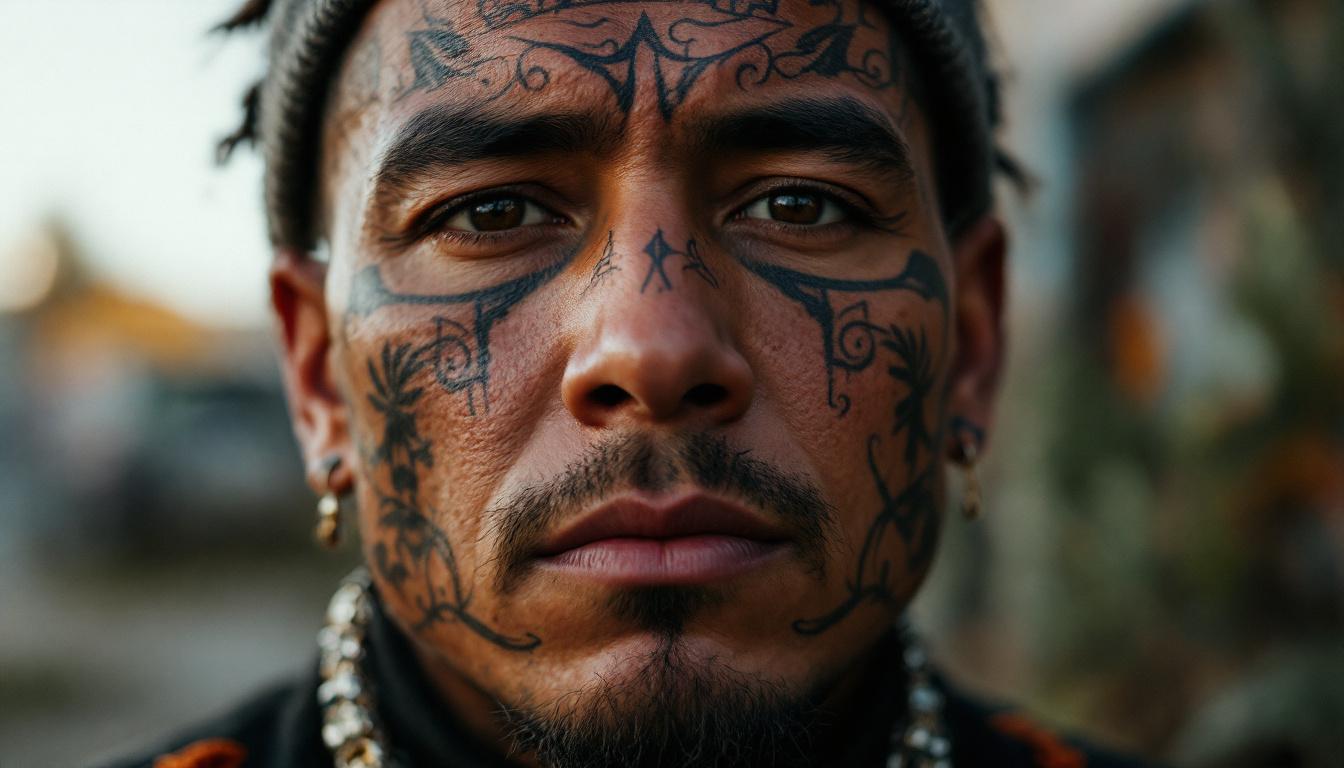
The streets tell a story that’s as raw as it is real. For many caught up in the urban grind, the visual language of tattoos has always been more than just ink on skin-it’s a declaration of allegiance, survival, and identity. The world of Mara Salvatrucha (MS-13) facial tattoos runs deep in symbolism and history. It’s more than art; it’s a chapter of hardened experiences, brutal realities, and a constant confrontation with identity.
Recent shifts in cultural symbols within the gang scene mirror deep-seated changes in society, law enforcement tactics, and individual decisions. An interesting read on MS-13 membership statistics reveals the sheer scale of this phenomenon even in a country like the United States.
Origins and Meaning: Tracing the Ink
Tattoos have long been a marker of belonging for groups living on the edge, and MS-13 is no different. These face markings, often brutal and raw, represent the struggles of broken communities and the relentless pursuit of survival. Some tattoos are meant to instill fear, while others serve as silent badges of honor and defiance. The harsh realities of life on the streets are captured in every line and shading.
As explained by experts when discussing the brutality of gang violence, weapons like machetes have become grim symbols of the physical reality that these tattoos often encapsulate. The well-known statement from Nassau County District Attorney Madeline Singas highlights the savagery behind the ideology, painting a picture where "limbs hacked off" isn’t just metaphorical-it’s a history carved into the skin of gang members. This visual record of violence can be seen as both a deterrent and a rite of passage for those involved. More details on these grim realities can be found in a detailed MS-13 overview.
The Culture of Violence and Identity
The culture of death and defiance has, over the years, seeped into the very fabric of gang practices, including the art of tattooing. In some cases, tattoos have been imbued with images of bones, devils, and satanic imagery, a testament to the beliefs that bind these groups together. An article from The Independent touched on how these symbols of death are part of a broader cultural narrative within the gang world.
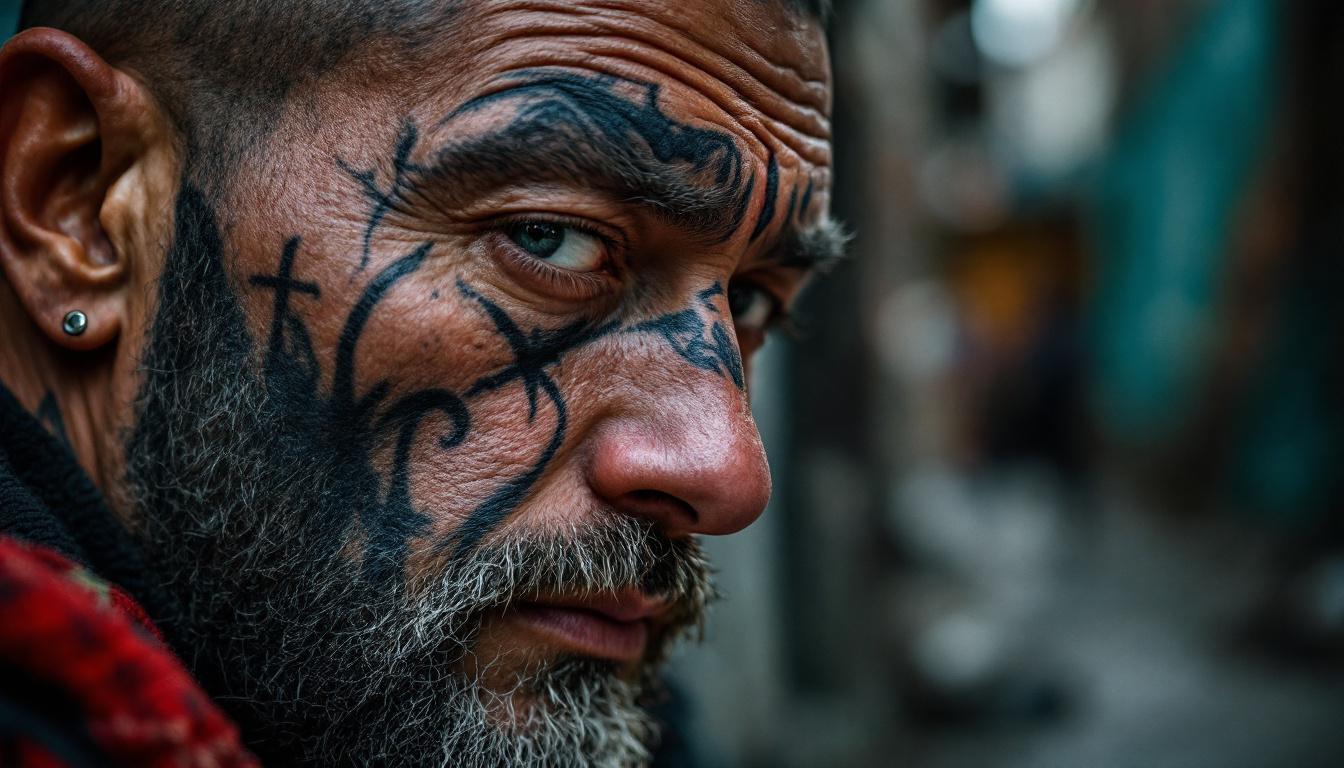
This isn't just about fear; it's about maintaining a code-a visual history of past wreckage and a continuous challenge to societal norms. Tattoos often tell a very personal story of struggle and the desire to be remembered. The brutal imagery serves as a constant reminder of the personal and collective hardships they’ve survived. Each line on the face, each detail etched into the skin, is a story of a life lived in a world that shows no mercy.
The symbolism in these tattoos isn’t random. Each mark is a purposeful declaration intended to evoke a specific reaction from onlookers-confidence in the face of adversity, or dread in the minds of foes. It’s an ongoing conversation between the bearer and their environment, constantly evolving as new experiences add fresh ink to an already complex canvas.
Facial Tattoos and Modern Technology
While traditional methods of tattooing have always been steeped in culture and history, modern challenges bring new complications. A significant study out in 2021 shed light on how facial tattoos impact face recognition systems. When large swaths of the face are covered in intricate designs, it’s not just a cultural challenge-it’s a technological hurdle as well. The study published on arXiv showed that when large areas are tattooed, facial recognition algorithms struggle to correctly identify individuals.
This intersection of technology and traditional culture raises questions. How does a tool designed to protect public safety adapt to cultural expressions that are deeply personal and historically grounded? With law enforcement increasingly reliant on technology, these tattoos might shield identities-as much as they signal loyalty or grit. The intricacies here extend beyond the technical, peering into the ethics of surveillance and cultural rights.
As the line blurs between art and identifier, debates are emerging about how best to integrate modern techniques with respect for individual expression. It’s a tightrope walk between innovation in public safety and understanding the historical context behind these designs.
Transformation and the Journey from Ink to Art
Recent trends in El Salvador show something intriguing: the transformation of what used to be gang-affiliated tattoos into genuine art. CNN reported earlier that tattoos in El Salvador are shifting away from overt gang symbols to designs that many consider personal art forms. The move is a sign of a society transitioning away from violence and towards personal reinvention. Check out the CNN report for more on this evolving narrative.
Former gang members are now actively removing or altering their tattoos to break free from the chains of their violent past. This transformation represents more than a change in aesthetics-it marks an attempt to reclaim identity and rewrite personal histories. As old symbols of violence are erased, new art evolves to document a journey towards a more hopeful future. It's a fascinating process when decades-old symbols of intimidation turn into canvases for artistic expression.
The significance of tattoo removal goes beyond just changing skin-deep; it serves as a turning point in an individual’s life. The act of erasing or modifying what once defined them as part of a notorious collective is, in itself, a quiet act of rebellion against a past that demanded constant warfare and bloodshed.
The Allure of Belonging and Codes of Family
Life on rough urban streets can isolate individuals, steering them toward groups that promise a sense of family and protection. In places where traditional family structures have crumbled, the Maras provide a rulebook and a unit where loyalty is keyed in with survival. As noted by a former gang member, what the gang provided was akin to a twisted version of a family for those coming from broken homes and abandoned spaces. For many, the choice to wear these tattoos is deeply intertwined with the longing for acceptance, a desire to belong in a larger narrative.
The scars of domestic neglect and societal mistreatment often drive youths into groups that offer safety in numbers. The tattoos are not just a mark-they're a badge of honor that signifies the trials of an existence often left to the fringes of formal society. Detailed accounts from communities have even emphasized that while violence is frequently associated with the gang lifestyle, the presence of these tattoos symbolizes a kind of cultural response to exclusion by mainstream families and institutions.
This dual role of tattoos-as both a symbol of belonging and a tool for enforcement-cements their place in the gang's visual identity. Each tattoo becomes a shorthand for the experiences that have forged a person’s character in an environment where trust is scarce. Such expressions of loyalty and fear blend seamlessly into daily survival strategies, painting a complex portrait of urban gang dynamics.
Cultural Implications and Societal Reflections
The cultural weight carried by MS-13 facial tattoos is immense. These marks encapsulate a history of violence, resilience, and defiance that often reflects the larger societal issues in regions plagued by economic hardship and inadequate state support. Discussions on tattoos have emerged as symbolic of a divide between obsolete societal norms and a new wave of self-expression born out of necessity and resistance.
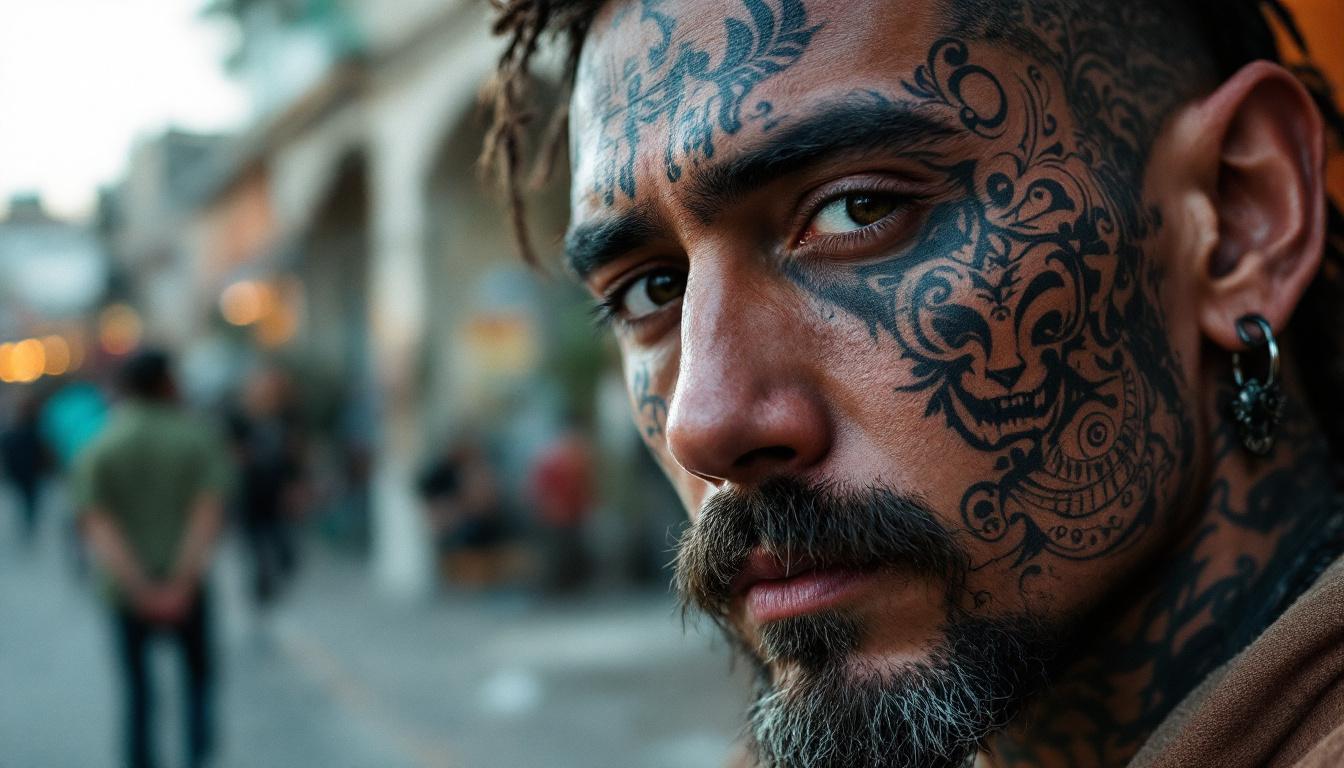
Observations of daily life in areas influenced by gang culture often reveal that these tattoos influence interactions on multiple levels-from law enforcement encounters to everyday street exchanges. The influence of tattoo art also permeates the realm of second-generation immigrants who inherit these visual codes, even if they are not directly involved with the violent operations of gangs.
The passion behind these tattoos is deeply rooted in more than just a craving for notoriety. It reflects the human need for identity in a fragmented world. As communities reckon with long histories of violence, the persistence of these symbols forces a conversation about tradition, change, and what it means to belong to a group defined as much by its resistance as by its brutality.
Challenges Facing Modern Law Enforcement
For law enforcement, the complexity of deciphering gang affiliation through facial tattoos is a constant challenge. The dramatic shifts in technology, like facial recognition systems, are faced with the task of identifying individuals whose faces have been altered by the art of resistance. This technological hurdle is not trivial; as studies have shown, tattoos covering large portions of the face notably disrupt the accuracy of automated systems.
Police forces, who are already dealing with the immediate dangers of high-risk confrontations, now find themselves navigating a labyrinth of facial data muddied by ink. These imprecise matches can lead to delays in identifying individuals, posing potential risks in situations where clarity is essential. The intersection of culture, art, and law enforcement practices lays bare a modern dilemma: how should authorities balance the need for effective policing with respect for cultural expressions?
Even beyond the technical challenges, there’s a growing debate on the ethics of profiling based entirely on physical markers that symbolize deeply personal histories. As the police community wrestles with these dilemmas, many argue that a more culturally aware approach may be necessary-one that looks beyond the superficial ink to understand the underlying human stories.
Understanding the Psychological Impact
There’s no denying that tattooing on the face leaves a permanent imprint, not just physically but emotionally. The very act of marking one’s face can instill a deep sense of commitment to a particular identity, whether that identity is built on defiance, loyalty, or a claim for belonging. For many individuals, these markings serve as emotional armor-a way to reinforce a personal narrative that has been shaped by relentless adversity.
The decision to modify or remove these tattoos can be viewed as a psychological crossroads. When former gang members choose to erase their old marks, it reflects a bold stand against a life defined by violence and a desire to start over. This rebranding isn’t just about aesthetics; it speaks to the internal reckoning of one’s past and the hope for a more stable future. The heavy cultural baggage of these tattoos underscores the challenges of breaking free from a dangerous legacy, and the profound courage it takes to reinvent oneself.
The act of re-tattooing, modifying, or completely removing facial tattoos allows individuals to transform painful memories into a narrative of recovery and renewal. It creates a visible timeline of change, taking a symbol that once broadcasted affiliation with a notorious group and reassigning it as a marker of a fresh start. Psychological studies often point out that identity reformation, however risky and complex, is an essential element of personal growth among those with troubled histories.
The Future of Gang-Related Facial Tattoos
Looking ahead, one can only guess how the landscape of gang-related facial tattoos might evolve. Today's trends suggest a movement toward reclaiming individual identity away from oppressive symbols. With modern treatment options and a social environment gradually shifting its focus, many are eager to leave behind the marks of a violent past. The transformation documented in recent media coverage shows a clear trend: cultural symbols are no longer static and irreversible; they change as people change.
The re-appropriation of ink signifies a broader cultural shift. In communities where the past was long defined by brutality and defiance through tattoos, there’s a newfound emphasis on personal reinvention. This cultural evolution signifies hope: a recognition that no identity is chained forever to its past expressions of pain. Tattoos that once solely signified fear and aggression now carry layers of reinterpretation, reflective of both the artist’s hand and the individual's evolving identity.
However, the road ahead is fraught with challenges. Balancing the preservation of personal and cultural history with the desire to move forward is not a straight-line journey. For many, the process of changing or erasing these symbols involves not only an aesthetic decision but also a deep emotional and societal reckoning. The conversation around these marks will continue to spiral into debates on art, justice, politics, and personal rights-all of which shape how these symbols will be viewed in decades to come.
Rethinking Tattoos: A Societal Shift in Symbolism
Communities on the ground are beginning to see facial tattoos through a new lens. For many observers, the once-intimidating symbols have started to seem like an intricate blend of history, art, and personal storytelling. Recent shifts-such as the recasting of tattoos in El Salvador-illustrate a broader societal willingness to move beyond old stereotypes. As these marks gradually transform from overt symbols of gang allegiance into nuanced forms of expression, what was once a shorthand for violence now holds a mirror up to the possibility of change.
These evolving ideas speak volumes about transformation in communities that have long been painted with the same broad strokes of fear and despair. While the history behind these tattoos remains undeniable, their current reinterpretation is fueling hopes for brighter futures. Rather than a fixed identity, these marks are now seen as fluid-a living testament to the idea that no history is unchangeable.
The transformation from an emblem of brutality to a marker of artistic journey can be found both in personal anecdotes and broader societal trends. It’s a brave step forward, one that acknowledges the past while daring to redefine the future. The journey is complex, but it’s also a powerful reminder that even the most permanent marks can be reworked over time.
Bridging Past and Future in a Shifting World
The evolution of MS-13 facial tattoos is more than just a saga of ink and pain-it’s a reflection of a broader human experience. Faced with isolation, violence, and societal neglect, many have turned to tattoos as a way of reclaiming identity, the scars of hardship transformed into a language of survival. Every mark tells a story of a past filled with struggle and a future laden with the possibility of transformation.
Each tattoo, whether a remnant of old allegiances or a reimagined work of art, speaks a universal truth about change. Even the harshest histories of violence and loss can eventually give way to moments of beauty and renewal. For those who still bear these marks, the hope is that society will understand the multilayered stories behind them-instead of judging solely based on appearance.
Law enforcement and community leaders are now challenged with the task of seeing beyond the superficial. Instead of solely targeting individuals for their appearances, there is a growing need for approaches that integrate a deep understanding of context, culture, and the human capacity for change. These are not just policy questions; they are moral and ethical dilemmas that have profound implications on community relations.
Conclusion: A Story Inked in Complexity
The world of Mara Salvatrucha facial tattoos is as layered and complex as the lives of those who wear them. Marked by brutal symbols of violence, evolving into signs of individual reinvention, these tattoos encapsulate the tug-of-war between a violent past and the potential for a better future. Each case is both personal and political-a story that intertwines survival, identity, and resilience in a harsh social landscape.
As discussions continue to flow across community centers, courtrooms, and digital platforms, the conversation about what these tattoos represent remains open-ended. Whether seen as expressions of defiance or as relics of a troubled past, the evolution of these marks challenges everyone to rethink preconceptions about identity, art, and redemption.
The journey from gang affiliation to artistic expression is not a linear path-it's more like a winding road with many twists and turns. This evolving dialogue is one that’s as multifaceted as the ink itself, constantly reshaping its own narrative in the backdrop of societal change. Even now, fresh insights and stories continue to emerge, each adding another layer to a history that refuses to be neatly categorized. For a deeper dive into the numbers and narratives behind this transformation, consider revisiting key insights from MS-13 membership statistics and reflections in regional media.
Ultimately, the face of a gang is not just skin deep-it’s a canvas of lived experiences, emotions, and hopes. Looking to the future, one thing is clear: the ink may fade or be reimagined, but the story behind it will continue to provoke thought, challenge norms, and perhaps, one day, lead to a new chapter of healing and understanding.
Transform Your Tattoo Studio with Apprentice
As we reflect on the transformative journey of Mara Salvatrucha facial tattoos, let your tattoo studio be part of the narrative that shapes the future of artistic expression. With Apprentice, you can embrace the evolution of tattoo artistry by streamlining your studio's operations and enhancing the creative process. Experience the power of our comprehensive suite of tools and join a community that values the blend of tradition and innovation. Start your free trial today and redefine the way you connect with clients and manage your tattoo business.