

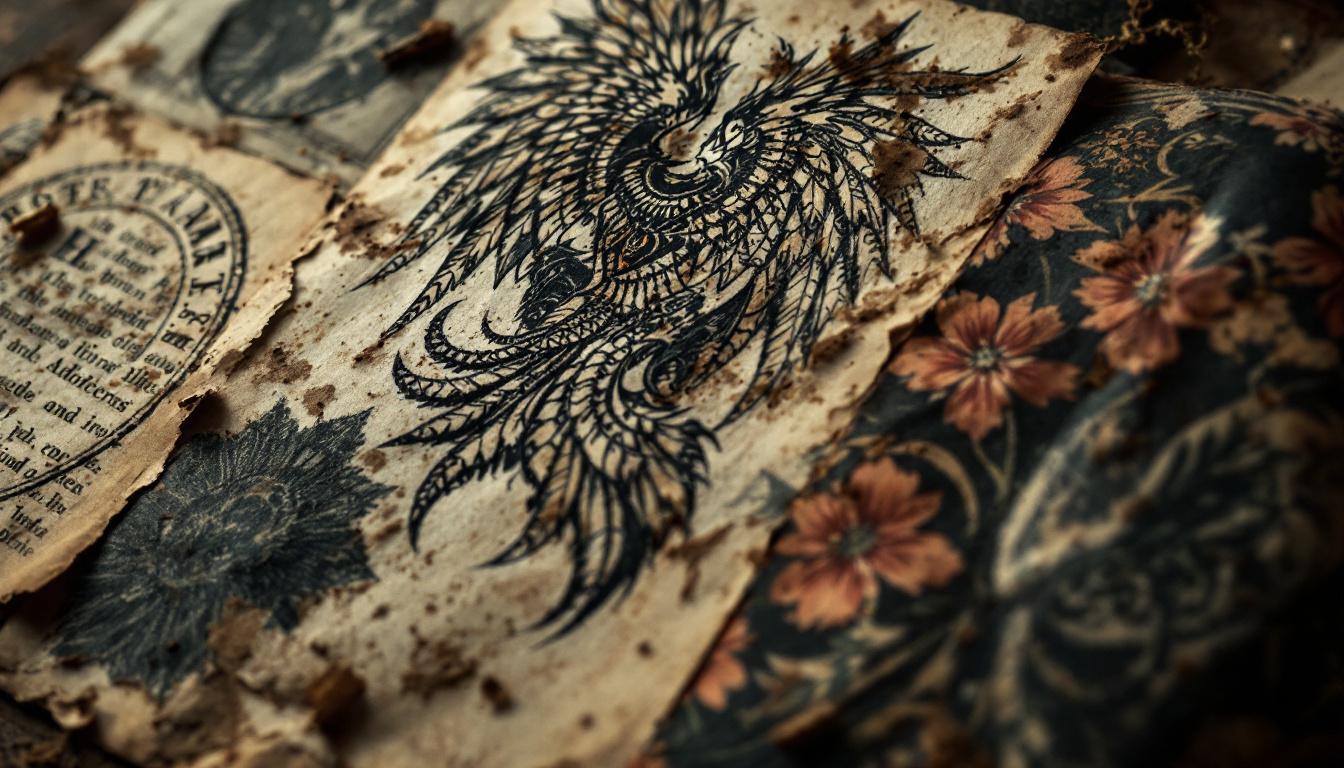
A clatter of ink and a sprinkle of rebellion – that's what the tattoo scene was all about in the early 20th century. In gritty cells and forgotten corners of Britain and Australia, convicts were scribbling stories on their skin, not just to defy authority but to record their inner world. The narrative wasn’t a simple “bad boy” tale; it was layered with art, memory, and even a pinch of mainstream culture. Dig a little deeper, and you'll find that these tattoos carried so much more than meets the eye, revealing personal histories, secret affiliations, and a bold statement of individuality. Interested in one of those fascinating convict tattoo descriptions? Check out this study on convict tattoos for a look at the detailed cataloging of ink across continents.
The Tattoo Tapestry of Victorian and Edwardian Prisons
The prison walls of early 20th-century Britain were not just barriers but canvases of identity. In a time when being in prison nearly meant an end to social recognition, these marks let inmates signal whom they were or what they longed for. Notably, by the early 20th century, roughly 80% of incarcerated men and women sported tattoos, a signifier that the art was deeply woven into the world of punishment and survival. It's not just about defiance or a criminal label-these designs were steeped in personal significance. One might even say that, far from being the banal symbols of criminality, the tattoos were patches of narrative and memory. Recognize that something profound was at play; prisoners weren’t merely marking their defiant nature, they were preserving love, loss, and life experiences in ink.
Symbols, Sentiments, and the Underlying Messages
Some convicts kept tattoos to track affiliations-a nod to rebellious camaraderie or urban mythologies circulating the streets. One historian explains that many of these marks nodded at more sentimental ties rather than conservative gangster styles. In fact, Dr. Matt Lodder from the University of Essex pointed out that prisoners often took care in choosing tattoos that evoked fond memories or paid tribute to lost connections, rather than just broadcasting criminal ties. Such insights paint a picture of vibrant internal life beneath the hard exterior of penal institutions.
The narrative becomes even richer when you consider that these designs were threaded through everyday culture. Even though we often think of prison tattoos as badges of defiance or criminality, many of these markings flowed from wider contemporary influences seen in popular culture of the time. That clash between the world outside and life inside the walls provided fertile ground for personal storytelling-each needle prick a testament to complexity beyond the cell block.
Forensic Frontiers: Modern Tools Meet Historic Ink
The convergence of modern technology and the study of historical tattoos is raising eyebrows in both criminology and art history. A groundbreaking 2024 study introduced the Tattoo Template Reconstruction Network (TattTRN), which boasted an impressive 99% accuracy in retrieving tattoo images from candidate lists, reshaping how forensic experts connect the dots between historical records and modern databases. For a deeper dive into this futuristic approach, visit this recent study on tattoo analysis.
Methodologies and Mindsets
The application of TattTRN isn’t just a nod to tech enthusiasts. It's a revolution that turns centuries of undocumented nuance into quantifiable data. By reconstructing tattoo images with near-perfect accuracy, researchers can now trace cultural trends, examine stylistic evolutions, and even suggest connections between historical inmates and larger societal movements. The shift from mere anecdotal evidence to a data-driven model makes the study of convict tattoos a cutting-edge field, blending art history with deep forensic science.
This methodology provides fresh ways to revisit historical records, giving weight and clarity to what might otherwise be considered marginal details. The marriage of technology and historical anthropology adds a new dimension to our understanding of 19th and early 20th-century punitive cultures, inviting us to re-read the past with a sharper lens.
Women, Youth, and the Broader Cultural Impact
Tattoos have moved well beyond just marking the hardcore criminal. Research shows that both adult and adolescent prisoners featured tattoos at rates three to five times higher than the general population. This trend underscores that tattooing was more than just a transgressive act-it was a multifaceted expression of identity, irrespective of age or gender. The interplay between punitive environments and personal expression speaks to a broader cultural phenomenon where art becomes an act of defiance and survival.
Cultural Affinities and Mainstream Influences
Interestingly, studies by experts such as Dr. Zoe Alker reveal that convict tattoos were often steeped in broader cultural narratives. Far from being mere markers of criminality, these tattoos often encapsulated trends and symbols circulating in mainstream culture. This cultural cross-pollination blurred the lines between “high art” and street art, suggesting that tattooing was a form of both resistance and acceptance. For a careful analysis of how mainstream culture influenced convict ink-making, this article from Cambridge offers a detailed exploration.
In this environment, tattoos bred a kind of counterculture that wasn't solely about criminal rebellion. They were personal memoirs drawn in ink-reminders of loved ones, symbols of lost professions, or simply icons of a once-vibrant personality having to find its voice in a suffocating environment. Instead of relegating these markings to purely criminal imagery, it's now clear they often served as a bridge between the stark realities of prison and nostalgic recollections of a freer world.
Decoding the Ink: Statistical Snapshots and Social Reflections
Numbers help to ground the narrative of this cultural evolution. One study analyzed more than 75,000 descriptions of tattoos on nearly 60,000 convicts and showed how pervasively tattooing swept through the incarcerated population between 1793 and 1925. Such staggering data points underline that tattooing was far from a fringe phenomenon-it was a mainstream act of self-expression even within the confines of prison life. Those statistics challenge the traditional notion that tattoos were exclusively reserved for the hardened criminal.
Tattooing Trends and Recidivism
Yet, not all numbers paint a rosy picture. Charles Perrier's 1897 study in Nîmes Central Prison noted that a significant proportion of tattooed inmates were repeat offenders, suggesting that some tattoo practices might have had a correlation with recidivism. This raises intriguing questions about the psychological and social undercurrents that link identity representation with repeated transgressions. The study pointed out that among tattooed individuals, a whopping 77% were recidivists (study on inmate tattooing).
While these numbers are eye-opening, they tell just one part of the story. The intent behind the tattoos always varied, intertwining personal history with a broader social statement. In the gritty confines of the prison yard, the ink became a visible narrative of struggle, resilience, and in some instances, a bid for redemption.
Tracing Cultural Journeys: From Marginality to Mainstream
By the end of the 19th century, tattooing morphed from a fringe practice to one that resonated with the broader society. Victorian tattoo culture became a trend that swept across different social classes, transforming into a fashionable art form adopted by commoners and celebrities alike. What once symbolized the misfortunes of incarceration now signaled a broader social identity, bridging the gap between the underground and the mainstream. The evolution, apparent in the shift of tattoo practices, mirrors societal transformations where boundaries between class and art began to blur.

Ink as a Marker of Social Sentience
Even though the tattoo world carried with it a legacy of rebellion, it also reflected the nuanced understanding of personal value. Tattoos conveyed messages that were often bittersweet-a touching tribute to lost loved ones, a memento of past careers, or even a personal charm meant to ward off misfortune. These multifaceted signals reframe our interpretation of criminal tattoos and remind us that behind every ink design was a singular story of hope, defeat, and ultimately, resilience.
In this context, a comprehensive account of tattoo culture unveils a broader canvas where both aesthetic and social elements coexist. It shows that tattooing, despite its deep roots in marginality and punishment, can also serve as a medium to capture human emotion and cultural trends. For more on the cultural significance of these markings, another detailed analysis is available in this in-depth article on Victorian tattoo culture.
Legacy and Learning: The Lasting Impact of Early 20th-Century Tattoo Anthropology
The rich tapestry of early 20th-century tattoo culture still informs contemporary discussions about identity, belonging, and self-expression. The journey from the dark corridors of prison cells to the glittering canvases of mainstream art carries a profound legacy-a reminder that the past never truly disappears but instead evolves through reinterpretations and new techniques. Tattoos have shifted from symbols of shame and punishment to banners of individuality and respect, a transition that underscores their inherent power as mediums of communication.

Bridging Past and Present
The forensic innovations and historical records paint a continuous picture that has propelled tattoo studies into a modern field of cultural inquiry. Just look at how cutting-edge technologies, like the TattTRN, are breathing new life into centuries-old puzzles. This blending of old and new not only revives interest in convict histories but also sets the stage for interdisciplinary research where forensic science, art history, and cultural studies intermingle. Witnessing the interplay of these worlds delivers an ever-evolving narrative that compels us to appreciate the artistry behind what might otherwise be dismissed as mere subculture.
As modern society continues to embrace and celebrate tattoos in all their multifarious forms, the lessons from the past remain a vivid reminder of how art can encapsulate the deepest human experiences, even in places of punishment. This ongoing dialogue between then and now reinforces that every mark, every symbol carved on skin, is a profound testament to human resilience and creativity.
Ink, Identity, and the Path Forward
The study of early 20th-century criminal tattoo anthropology is more than a historical curiosity-it’s a gateway into complex discussions about identity and power. From the high-incidence statistics of tattooed convicts to the deeply personal symbols that inmates chose, this subculture tells a broader story of human expression in the face of oppression. While tattoos once vividly outlined the margins of society, they now bridge gaps and fuel discourse across art, psychology, and forensic science.
Shaping Future Narratives
Today's researchers, armed with historical data and cutting-edge technology, are in a unique position to decode the layered meanings behind each tattoo. The legacy of inmate tattoo cultures challenges today’s observers to rethink the role of body art. Tattoos once signified both defiance and connection, a duality echoed in today’s cultural landscape where body art is celebrated for its uniqueness and storytelling. As society evolves, so too does the narrative of tattooing-a narrative rooted in personal evocations and collective memory.
This understanding calls for a deeper engagement with the cultural trajectories that have shaped these practices. Whether it’s through new forensic methods or revisiting archival accounts, the ongoing exploration of tattoo anthropology continues to reveal surprises about identity, community, and the human condition. The melding of past insights with modern techniques ensures that every tattoo, no matter how deeply carved, remains a living part of our cultural discourse.
Conclusion: A Living Legacy Inked on Skin
The ink that marks the skin of early 20th-century convicts is far more than a remnant of criminal rebellion. It is a vibrant document of personal journey, social evolution, and relentless human resilience. While the prison as an institution may have been confined by walls, the spirit of self-expression broke free-leaving behind traces of art that continue to inform modern perceptions of tattoos.
Dynamic, eclectic, and fiercely human, the legacy of criminal tattoo anthropology reflects an ever-changing narrative where every line and shade tells a story. It weaves together forensic breakthroughs, cultural insights, and historical accounts into a rich tapestry that resonates even today. As future studies build on these pioneering research findings, it remains clear that the past, inked on skin, speaks loudly to our shared journey through defiance, creativity, and identity.
For anyone curious about the cultural evolution behind early tattooing practices, the story is just as engaging as any modern tale. The clues laid out in studies like those at Cambridge's research on tattoo significance contribute to a broader understanding that transcends genre and time. The ink may have dried on some skins long ago, but its echoes continue to shape the art of modern self-expression.
Ink Your Business with Innovation
As we honor the rich history of tattooing and the personal stories etched in skin, it's time to carve a new chapter in your tattoo studio's legacy. Apprentice is here to transform your business with state-of-the-art tools that respect the artistry of tattooing while propelling you into the future of studio management. Embrace the evolution of tattoo culture and start your free trial today to experience a platform where tradition meets technology, and every appointment is a masterpiece in the making. Start Free Trial and join the community of studios writing history with every drop of ink.